
My Cat Caught a Bat: Rabies Steps for FL, NY and VA Pets
By RexVet Team | Reviewed by Dr. Tiffany Delacruz, DVM
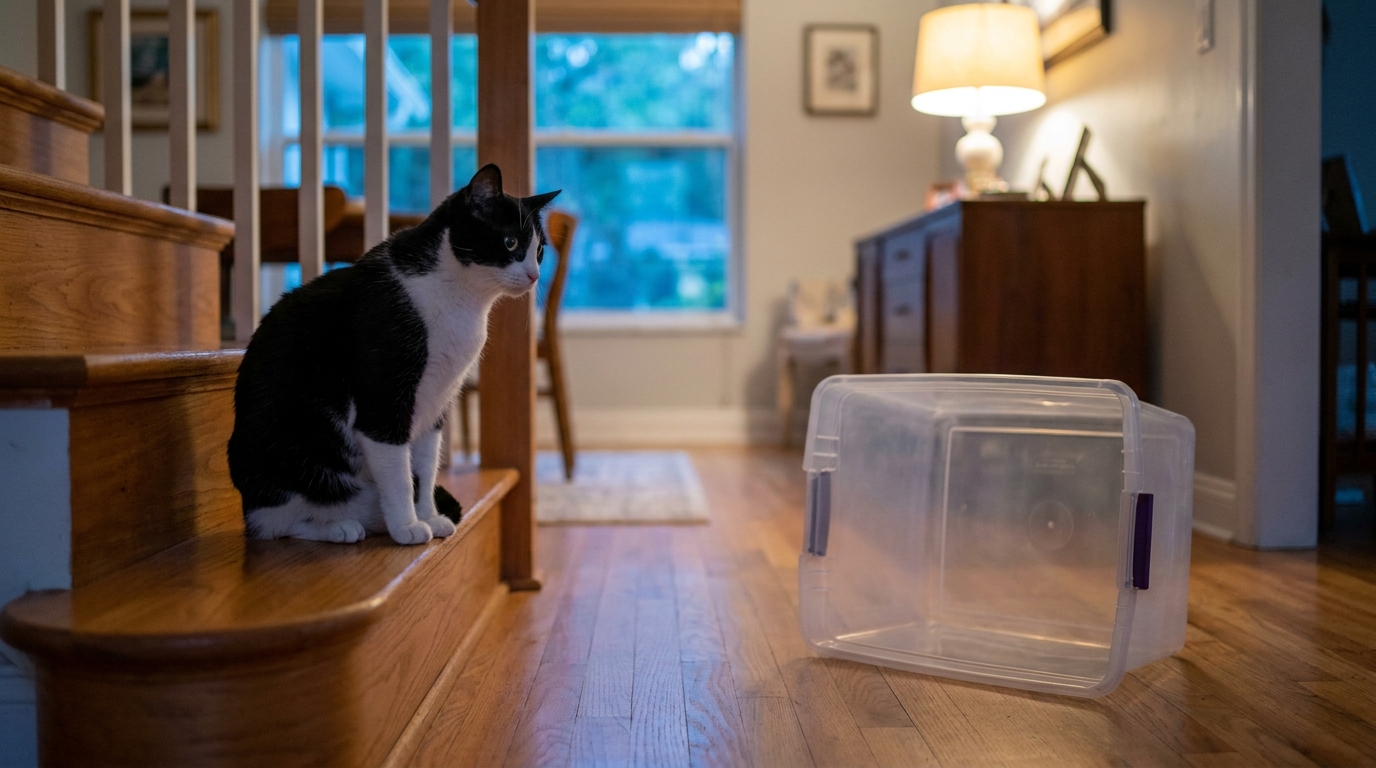
My cat caught a bat: don't touch it or throw it out. Contain it for testing, call your health department, and find your cat's rabies record.
If the bat touched, bit or scratched a person, or someone woke up with a bat in the room, call a doctor and your local health department now. If your pet is bleeding, weak or acting strangely, go to a vet in person now.
Finding a bat with your cat or dog is frightening, especially late at night. The steps below go in order: people first, then the bat, then your pet's rabies record, then your pet.
My cat caught a bat: why it counts as a possible rabies exposure
A bat in your pet's mouth, or a bat on the floor next to your pet, is something your health department wants to hear about. Health departments in Florida, New York and Virginia explain why:
- The Florida Department of Health says: "The main wildlife sources of rabies in Florida are raccoons and bats."
- NYC Health says: "Even indoor dogs and cats are at risk if they escape outside or if a rabid bat enters your home."
- The Virginia Department of Health's Prince William Health District says: "Bats are the leading cause of exposure to rabies in the US."
That is why health departments ask for the bat itself. Testing the bat is how the health department learns whether the bat had rabies, which shapes what your pet needs next.
People first: when to call a doctor tonight
Before you deal with the bat or your pet, think about everyone in the house. The New York State Department of Health says: "If you think a bat touched you, you should contact your local health department to see if you should be treated."
NYC Health describes the situations it wants people to act on, including being "In contact with a bat, found a bat in the room of a previously unattended child, or woke up to find a bat in the room." For those, NYC Health says: "Report it through 311 or to your health care provider."
Tonight, call a doctor or your local health department if any of these apply:
- Someone touched the bat, or the bat touched, bit or scratched someone.
- The bat was found in the room of a child who had been left alone.
- Someone woke up to find the bat in the room.
When you make that call, mention that your pet had the bat too.
Don't throw the bat away
It's natural to want the bat out of the house right away. Please don't put it in the trash, bury it or flush it. The Florida Department of Health in Bay County is blunt: "Never touch a bat!" It also says: "If your cat or dog brings home a bat, the bat should be tested for rabies."
The New York State Department of Health says: "If possible, capture the bat without touching it and without damaging its head." In practice, that looks like this:
- Move pets and children to another room and close the door.
- Put on thick gloves. Don't touch the bat with bare hands, even if it looks dead.
- Cover the bat with a container, slide a piece of stiff cardboard underneath to close it in, and take care not to crush it.
- Keep the closed container where no person or pet can reach it, and ask your health department how to store and submit it.
- Call your local health department or animal control about testing.
If the bat is alive and flying, don't swat at it or chase it. Close the room, keep everyone out, and ask the health department or animal control for help catching it.
If the bat got away before you could contain it, tell the health department that too. The FAQ below covers what that means for your pet.
Find your pet's rabies record now
Your pet's rabies vaccination status shapes what happens next, so find the record before you call. Look for the rabies certificate, your regular vet's invoice or online portal, or your adoption paperwork. Note the date of the last rabies shot and the date the next one is due.
Here is how the New York State Department of Health describes what happens to a pet after bat contact. For the booster, it says: "If the bat is rabid or is not available for testing, a veterinarian must give the pet a rabies booster vaccination within five days."
For a pet that was never vaccinated, it says: "If an unvaccinated animal has contact with a rabid bat or one that is thought to be rabid, the pet must be vaccinated and then quarantined."
If the bat tests negative, the health department tells you what, if anything, your pet needs. If the shot is overdue, don't try to work out on your own which of these two rules fits. Ask the health department directly and have the record in front of you.
State by state: what Florida, New York and Virginia say
Rabies cases are handled locally. Here is what each state's health department says, in its own words. Wherever you live, your local health department decides what applies to your pet.
New York
The New York State Department of Health's booster rule and its rule for unvaccinated pets are quoted in the section above. In New York City, NYC Health says a pet that may have been exposed to a bat should be reported to the Health Department, and that you can call 311 to arrange for a dead or contained bat to be collected and tested. People who had contact with the bat can report it through 311 as well.
Virginia
The Virginia Department of Health says: "If your pet is attacked or bitten by a wild animal, report it to the local health or animal control authorities." For vaccinated pets, it adds: "Be sure your vaccinated dog, cat, or ferret receives a booster vaccination."
On observation periods, the Virginia Department of Health's Prince William Health District says: "For those pets with current rabies vaccine, this observation period is far less strict, and only 45 days in length."
Florida
The Florida Department of Health in Bay County says: "If the wild animal cannot be tested or tests positive, your pet will need to be quarantined for either 45 or 180 days, depending on its vaccination status." In Florida, your county health department makes the call, so contact the one where you live.
If your pet is placed under observation
Follow the confinement instructions your health department gives you exactly. If your pet's behavior changes during the observation period, call the health department and get your pet seen in person.
Checking your pet for bites
The Virginia Department of Health's Prince William Health District says: "If you find a bat in your home, it is highly recommended that you file a report with Animal Control Services because their bites are often small and not visible to the human eye." So make that report even if you find nothing on your pet.
If your pet will let you, take a calm look:
- Wear gloves while you check.
- Use good light and look over the face, mouth and paws.
- Don't force it. If your pet pulls away, growls, hisses or tries to bite, stop and let a vet examine your pet in person.
- Note anything you see, such as a wound, blood or a wet, matted patch of fur. Take a photo if you can do it safely.
A bite or scratch from a bat is never a minor wound. Because a bat bite can be hard to see, report any wound to animal control or the health department and have a vet see your pet in person.
Go to a vet in person now if your pet:
- has a bite, scratch or puncture wound
- is bleeding
- seems weak
- is acting strangely in any way
Call the clinic before you arrive and tell them about the bat. If you aren't sure whether something counts as an emergency, our pet emergency checklist walks through it. For everyday scrapes that have nothing to do with wildlife, see minor pet wounds: when an online vet can help.
What a RexVet online vet can and cannot do after a bat encounter
Once people are safe, the bat is contained and the health department knows, a video visit can help you get organized. RexVet is a 501(c)(3) non-profit, and RexVet's veterinarians are licensed in Florida, New York and Virginia. A video visit is extra help alongside the health department and any in-person visit, never a replacement for them.
A RexVet vet can:
- Look your pet over on camera for wounds you may have missed.
- Review the rabies certificate with you and help you read the dates.
- Explain what the health department is likely to ask.
- Help you plan the in-person booster visit if one is needed.
- Check in with you during an observation period.
A RexVet vet cannot:
- Give a rabies booster. That shot is given in person.
- Test the bat. That goes through your health department.
- Replace the health department's decision about quarantine or observation.
- Stand in for an in-person exam of a bite wound or a pet acting strangely.
If the veterinarian decides medication is appropriate, they can prescribe where state rules allow. That does not replace the booster or the health department steps above.
If you have photos or a short video of a spot you're worried about, here's how to upload pet photos and videos for an online vet review.
If you'd like help reviewing the rabies certificate and planning the in-person visit, book a RexVet video visit. A visit is $64.99, vets are available 24/7, and RexVet's veterinarians are licensed in Florida, New York and Virginia, so video visits are for pet parents in those three states only.
When to be seen in person in Florida, New York or Virginia
Some steps after a bat encounter happen in a clinic, not on a screen:
- The booster visit itself. If the health department or your veterinarian says your pet needs a rabies booster (New York State Department of Health: when the bat is rabid or cannot be tested), it must be given in person; it cannot be given by video.
- Any bite wound or scratch. Have it examined in person, and tell the health department about it.
- A pet acting strangely. This applies tonight and at any point during an observation period. Call the health department and the clinic, and tell the clinic about the bat before you arrive.
For background on the core shots cats and dogs get, see essential vaccinations for pets.
Under Florida law (Fla. Stat. 474.2021), a telehealth vet must give "the contact information for at least one physical veterinary clinic in the vicinity of the patient's location."
To learn how video visits work where you live, see our pages for an online vet in Florida, an online vet in New York and an online vet in Virginia.
Frequently Asked Questions
Can my indoor cat get rabies from a bat?
Yes. As NYC Health's warning near the top of this article says, indoor pets are at risk if a rabid bat gets into your home. A bat inside the house counts, even if your cat never goes outdoors. Contain the bat without touching it and call your health department.
Do I need to keep the dead bat?
Yes. The Florida Department of Health in Bay County wants a bat that a pet brings home tested for rabies, and testing needs the bat. Wear gloves, close it in a container without crushing it, keep it away from people and pets, and let the health department tell you how to hand it over.
What if my cat's rabies shot is overdue?
Under the New York State Department of Health rule quoted above, an unvaccinated pet that had contact with a rabid bat, or one thought to be rabid, needs a rabies vaccination followed by quarantine. If your cat's shot is overdue, call your local health department; they decide whether your cat is handled as vaccinated or unvaccinated. Have the certificate in hand when you call.
Should I see a doctor too?
Yes, if anyone might have touched the bat. The New York State Department of Health tells anyone who thinks a bat touched them to ask the local health department whether they should be treated. NYC Health adds a bat found near a child left alone, or waking up with one in the room, and asks you to call 311 or your health care provider.
What if the bat got away?
Tell your health department it escaped. In New York, the State Department of Health's booster rule quoted earlier covers this case, because it applies when the bat cannot be tested. A booster alone is not the answer for every pet: for an unvaccinated animal and a bat that is rabid or "thought to be rabid," the Department says the pet "must be vaccinated and then quarantined," so if your pet was never vaccinated or is overdue, ask the health department which rule it applies. In Florida and Virginia, the county or local health department makes that decision.
Once the bat is boxed up and you've called the health department, you don't have to sort out the rest alone. Book a RexVet video visit to go over the rabies certificate, prepare for a clinic booster if one is needed, or check in during an observation period. Visits are $64.99 with vets on call 24/7. RexVet's veterinarians are licensed in Florida, New York and Virginia, serving pet parents in those three states only.
FAQs
Can my indoor cat get rabies from a bat?
Yes. As NYC Health's warning near the top of this article says, indoor pets are at risk if a rabid bat gets into your home. A bat inside the house counts, even if your cat never goes outdoors. Contain the bat without touching it and call your health department.
Do I need to keep the dead bat?
Yes. The Florida Department of Health in Bay County wants a bat that a pet brings home tested for rabies, and testing needs the bat. Wear gloves, close it in a container without crushing it, keep it away from people and pets, and let the health department tell you how to hand it over.
What if my cat's rabies shot is overdue?
Under the New York State Department of Health rule quoted above, an unvaccinated pet that had contact with a rabid bat, or one thought to be rabid, needs a rabies vaccination followed by quarantine. If your cat's shot is overdue, call your local health department; they decide whether your cat is handled as vaccinated or unvaccinated. Have the certificate in hand when you call.
Should I see a doctor too?
Yes, if anyone might have touched the bat. The New York State Department of Health tells anyone who thinks a bat touched them to ask the local health department whether they should be treated. NYC Health adds a bat found near a child left alone, or waking up with one in the room, and asks you to call 311 or your health care provider.
What if the bat got away?
Tell your health department it escaped. In New York, the State Department of Health's booster rule quoted earlier covers this case, because it applies when the bat cannot be tested. A booster alone is not the answer for every pet: for an unvaccinated animal and a bat that is rabid or "thought to be rabid," the Department says the pet "must be vaccinated and then quarantined," so if your pet was never vaccinated or is overdue, ask the health department which rule it applies. In Florida and Virginia, the county or local health department makes that decision.
Once the bat is boxed up and you've called the health department, you don't have to sort out the rest alone. Book a RexVet video visit to go over the rabies certificate, prepare for a clinic booster if one is needed, or check in during an observation period. Visits are $64.99 with vets on call 24/7. RexVet's veterinarians are licensed in Florida, New York and Virginia, serving pet parents in those three states only.
Medically Reviewed
Reviewed by Dr. Tiffany Delacruz, DVM — licensed veterinarian and CEO of RexVet. Last reviewed September 26, 2026.
Content is for informational purposes and does not replace professional veterinary advice.
Chief Executive Officer · Licensed Veterinarian
Dr. Delacruz is a licensed Doctor of Veterinary Medicine specializing in preventive care and veterinary telehealth. She reviews all health content on RexVet to ensure accuracy and clinical relevance.
Sources & References
- · American Veterinary Medical Association — Telehealth Guidelines
- · AVMA — Pet Care Resources
- · U.S. FDA — Animal & Veterinary
Need an Expert Opinion on This Topic?
Connect with a certified vet via video call in minutes
Talk to Vet Now