
Dog Stung by a Jellyfish? Lift Off Tentacles, Then Check
By RexVet Team | Reviewed by Dr. Tiffany Delacruz, DVM
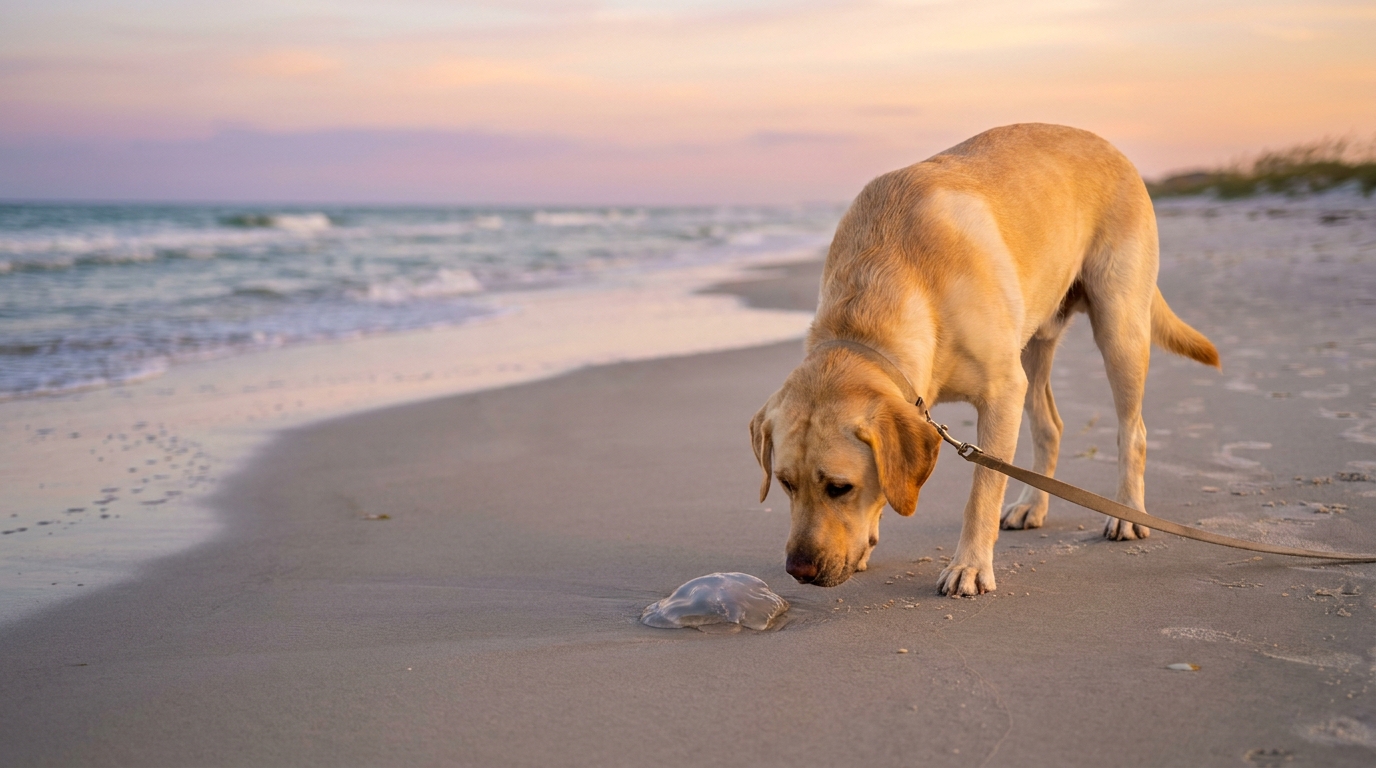
Dog stung by a jellyfish? Lift tentacles off with a towel or stick, don't rub or use home chemicals, and check the face and mouth for swelling.
Go to an emergency vet now if your dog has trouble breathing, a swelling face, lips or throat, keeps vomiting or retching, collapses, or chewed or ate a jellyfish and is drooling heavily or gagging.
Finding your dog stung by a jellyfish can turn a calm beach walk into a scramble. This guide walks you through what to check first, how to get tentacles off safely, what to watch for afterward, and when your dog needs to be seen in person. If your dog licked or chewed a jellyfish, check the emergency signs above before you read on.
Dog stung by a jellyfish: why dogs get stung on the sand
Dogs explore with their noses and mouths. A jellyfish lying on wet sand looks and smells interesting, so a curious dog may sniff it, lick it, roll on it or pick it up.
The Veterinary Poisons Information Service (VPIS), a UK veterinary poisons service, asks pet owners to "keep a look out for the presence of dead, dying or stranded jellyfish which dogs will naturally tend to investigate and/or eat." A jellyfish that looks lifeless is not harmless. VPIS says plainly: "Dead jellyfish can sting for several weeks after death."
Here is how the sting happens. According to VPIS, "Contact with a jellyfish tentacle can trigger millions of nematocysts to pierce the skin and inject venom, causing pain and swelling." Nematocysts are tiny stinging structures inside cells along the tentacles. VPIS advises lifting off any tentacle pieces left on the skin, and the first-aid steps below show how.
VPIS lists swelling of the face and lips among the most commonly reported signs, so the face and mouth are the first places to check.
Emergency signs: go to an ER now
VPIS reports that "The most commonly reported signs are vomiting or retching, oedema (facial, lips, limb, laryngeal), and hypersalivation." In plain words, oedema means swelling, laryngeal means the throat, and hypersalivation means heavy drooling.
Go to the nearest emergency vet now, without waiting to see if things settle, if you see any of these:
- Trouble breathing
- Swelling of the face, lips or throat
- Vomiting or retching that keeps happening
- Collapse
- Your dog chewed or ate a jellyfish and is drooling heavily or gagging
Throat swelling is on the VPIS list of common signs, and every sign above needs hands-on care. Call the emergency clinic on the way so the team knows you are coming. If you are not sure whether something counts as an emergency, this practical pet emergency checklist can help you decide quickly.
First aid on the beach
If your dog is breathing normally and none of the emergency signs are showing, start here. Stay calm and move slowly. A dog in pain can snap, even at someone it loves.
- Move your dog off the beach. Walk your dog away from the tide line and any other jellyfish on the sand, into shade if you can.
- Lift the tentacles off, do not rub them. VPIS advises: "Remaining tentacles should be pulled off the skin (not rubbed off) with a towel or stick." Do not rub, wipe or brush the area, and do not rub it with sand.
- Protect your own hands. VPIS also notes that "Care should be taken not to expose the rescuer/ handler." Use a towel, a stick, or a plastic bag over your hand. Never pick tentacles off with bare fingers.
- Ask a vet before you pour anything on the sting. See the note on chemicals and rinses below.
- Keep your dog from licking the spot, so it does not lick up tentacle pieces.
On chemicals, VPIS is clear: "Chemicals such as alcohol, meat tenderiser, ammonia or baking soda should not be used as they may cause discharge of the nematocysts." In other words, they can make the stinging structures fire.
The VPIS protocol for skin stings also includes a rinse step. Rather than guessing which liquid to use, ask a veterinarian before putting any rinse or liquid on the sting, including vinegar.
Once the tentacles are off, check your dog's face, lips and paws for any swelling. Any emergency sign from the list above means the ER.
If your dog chewed, licked or ate a jellyfish
Stings in and around the mouth need extra care, because VPIS lists swelling of the throat among the most commonly reported signs. Here is what to do:
- Check the emergency list first. If your dog chewed or ate a jellyfish and is drooling heavily, gagging, retching or vomiting, go to an emergency vet now.
- Look at the lips and gums only if your dog is calm. Gently lift the lip from the outside to look for tentacle pieces or swelling. If your dog pulls away or growls, stop.
- Never put your fingers in your dog's mouth. A dog with a painful mouth may bite without meaning to.
- Do not try to make your dog vomit. Do not give anything to bring it up.
- Call a vet now. If your dog ate a jellyfish and seems fine, call a vet right away for advice.
Watch the drooling closely after a dog licked a jellyfish: heavy drooling (hypersalivation) is one of the signs VPIS reports most often.
Beaches in Florida, Virginia and New York
Whether you walk your dog on the Gulf or Atlantic coast of Florida, at Virginia Beach or on Long Island, keep an eye out for jellyfish on the sand.
Stranded jellyfish and Portuguese man o' war can wash up on these beaches. If you do not know what stung your dog, cover your hands, move your dog away and let a veterinarian guide anything beyond that. The VPIS advice in this guide comes from a UK service responding to jellyfish on British beaches, so for anything beyond those first steps, ask a veterinarian rather than guessing.
A few habits help on any beach walk:
- Keep your dog leashed near the tide line.
- Steer your dog away from anything clear, blue or jelly-like on the sand, even if it looks dried out or dead.
- Bring a towel and a plastic bag so you can lift tentacles off without touching them.
If you live near the Virginia coast, our Virginia Beach online vet page explains how video visits work locally. Jellyfish are not the only thing that stings dogs outdoors. For other stings, see our guides to fire ant bites on dogs in Florida and a dog's swollen face after a bee or wasp sting.
Watching your dog for the rest of the day
Even after the tentacles are off and your dog seems settled, keep watching closely for the rest of the day. Keep your dog somewhere cool and quiet where you can see it.
Your dog needs to be seen in person if you notice:
- Swelling that spreads beyond the sting
- Repeated vomiting or retching
- Weakness
- Drooling that gets worse instead of better
- Your dog will not eat
Any emergency sign from the list above still means the ER, not a clinic appointment. Ask the vet whether and when to offer food and water if your dog's mouth seems sore.
What a RexVet online vet can and cannot do
A video visit is for a dog that is stable: breathing normally and showing none of the emergency signs. If any emergency sign appears, go straight to the ER. Do not stop for a video call first.
For a stable dog, a veterinarian on video can:
- Guide you through lifting off tentacles live, step by step
- Look at the face, lips, gums and paws on camera
- Check your dog's breathing effort
- Advise on rinses and what not to put on the sting
- Help you decide between the ER now, a clinic visit, or watching at home
A video vet cannot give injections, treat swelling in person, or look down your dog's throat. That is why any breathing change or throat swelling still means the ER. Clear photos and short videos of the sting help the vet see more; our guide on how to upload pet photos and videos for an online vet review shows how.
If the veterinarian decides medication is appropriate, they can prescribe where state rules allow. In Florida, a veterinarian who has seen your pet only by video may prescribe only FDA-approved animal drugs used as labeled, for up to 14 days (1 month for flea-and-tick-only products), and cannot renew without an in-person exam.
If your dog is breathing normally but you are unsure about a sting, book a RexVet video visit. A visit is $64.99, veterinarians are available 24/7, including nights, weekends and holidays, and RexVet's veterinarians are licensed in Florida, New York and Virginia, so visits are for pet parents located in those states.
When to be seen in person in Florida, New York or Virginia
Some jellyfish stings need hands-on care no matter how the video call goes. Have your dog seen in person if there is:
- Any emergency sign from the list above (go to the ER for these)
- Swelling that keeps growing
- A sting in the mouth of a small dog
- A sting on or near the eye
- Signs that come back after your dog seemed to settle
In Florida, the law also covers what happens when a video vet decides your dog needs a clinic. Under Florida Statutes 474.2021, a Florida telehealth vet must give "the contact information for at least one physical veterinary clinic in the vicinity of the patient's location."
To learn how video visits work in your state, see our pages for an online vet in Florida, an online vet in New York and an online vet in Virginia.
Frequently Asked Questions
Should I put vinegar on my dog's jellyfish sting?
Ask a veterinarian before putting vinegar or any other rinse or liquid on the sting. The Veterinary Poisons Information Service says chemicals such as alcohol, meat tenderizer, ammonia or baking soda should not be used, because they may cause the stinging structures to fire. Lift the tentacles off with a towel or stick and let a vet guide the rest.
Can a dead jellyfish on the beach still sting my dog?
Yes. According to the Veterinary Poisons Information Service, dead jellyfish can sting for several weeks after death, and dogs will naturally tend to investigate and/or eat stranded ones. Keep your dog leashed and away from anything jelly-like on the sand.
What if my dog ate a jellyfish?
Call a vet now. Heavy drooling, gagging, swelling or any change in breathing means the ER right away. Do not try to make your dog vomit, and never put your fingers in its mouth.
How do I get jellyfish tentacles off my dog?
Lift them off with a towel or a stick, or with a plastic bag over your hand. The Veterinary Poisons Information Service says remaining tentacles should be pulled off, not rubbed off, so do not rub or wipe the area. Protect your own skin and never use bare fingers.
Can I give my dog something for the pain or swelling?
No. Do not give your dog any human medicine for a jellyfish sting. Call a veterinarian instead, and go to the ER if the swelling spreads or breathing changes.
Any emergency sign means the nearest emergency vet first, in person. For a stable dog after a jellyfish sting, when you are not sure whether to watch at home or go in, RexVet, a 501(c)(3) non-profit, can help. Book a RexVet video visit for $64.99, 24/7, including nights, weekends and holidays. RexVet's veterinarians are licensed in Florida, New York and Virginia.
FAQs
Should I put vinegar on my dog's jellyfish sting?
Ask a veterinarian before putting vinegar or any other rinse or liquid on the sting. The Veterinary Poisons Information Service says chemicals such as alcohol, meat tenderizer, ammonia or baking soda should not be used, because they may cause the stinging structures to fire. Lift the tentacles off with a towel or stick and let a vet guide the rest.
Can a dead jellyfish on the beach still sting my dog?
Yes. According to the Veterinary Poisons Information Service, dead jellyfish can sting for several weeks after death, and dogs will naturally tend to investigate and/or eat stranded ones. Keep your dog leashed and away from anything jelly-like on the sand.
What if my dog ate a jellyfish?
Call a vet now. Heavy drooling, gagging, swelling or any change in breathing means the ER right away. Do not try to make your dog vomit, and never put your fingers in its mouth.
How do I get jellyfish tentacles off my dog?
Lift them off with a towel or a stick, or with a plastic bag over your hand. The Veterinary Poisons Information Service says remaining tentacles should be pulled off, not rubbed off, so do not rub or wipe the area. Protect your own skin and never use bare fingers.
Can I give my dog something for the pain or swelling?
No. Do not give your dog any human medicine for a jellyfish sting. Call a veterinarian instead, and go to the ER if the swelling spreads or breathing changes.
Any emergency sign means the nearest emergency vet first, in person. For a stable dog after a jellyfish sting, when you are not sure whether to watch at home or go in, RexVet, a 501(c)(3) non-profit, can help. Book a RexVet video visit for $64.99, 24/7, including nights, weekends and holidays. RexVet's veterinarians are licensed in Florida, New York and Virginia.
Medically Reviewed
Reviewed by Dr. Tiffany Delacruz, DVM — licensed veterinarian and CEO of RexVet. Last reviewed September 24, 2026.
Content is for informational purposes and does not replace professional veterinary advice.
Chief Executive Officer · Licensed Veterinarian
Dr. Delacruz is a licensed Doctor of Veterinary Medicine specializing in preventive care and veterinary telehealth. She reviews all health content on RexVet to ensure accuracy and clinical relevance.
Sources & References
- · American Veterinary Medical Association — Telehealth Guidelines
- · AVMA — Pet Care Resources
- · U.S. FDA — Animal & Veterinary
Need an Expert Opinion on This Topic?
Connect with a certified vet via video call in minutes
Talk to Vet Now