
Dog or Cat Stuck on a Glue Trap? How to Get It Off Safely
By RexVet Team | Reviewed by Dr. Tiffany Delacruz, DVM
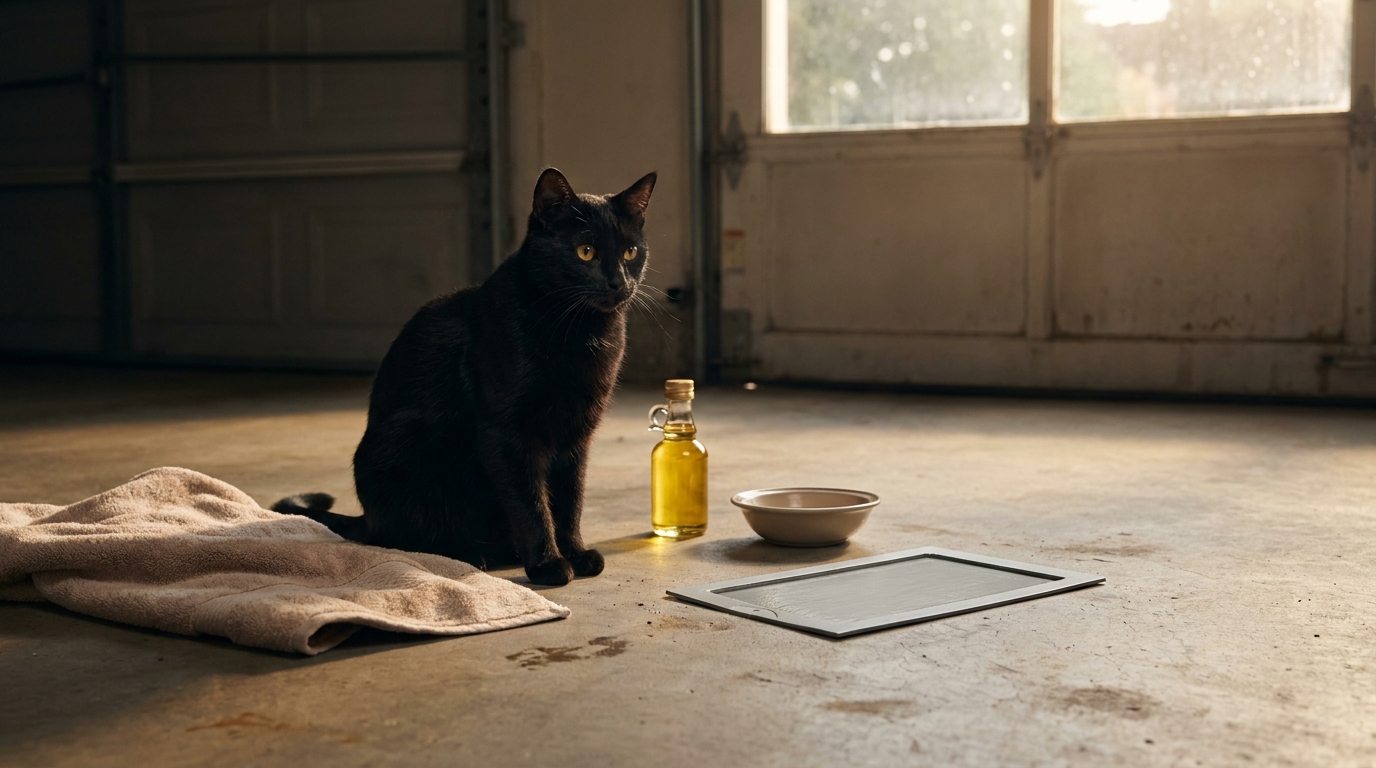
Dog or cat stuck on a glue trap? Stay calm, work cooking oil into the glue slowly, never pull or cut near the skin, then wash with dish soap.
Go to an emergency vet now if the trap is stuck over your pet's face, nose or mouth, your pet is struggling to breathe, the skin is torn or bleeding, your pet swallowed glue or chewed the trap, or the trap also held rat or mouse poison bait (call a poison line on the way).
Dog or cat stuck on a glue trap: first, stop it getting worse
A mouse or rat glue board grips fur and skin hard, and a frightened pet makes it worse. Every time your dog shakes a paw or your cat twists away, the board can flip and catch a leg, the belly or the face. Your first job is not to get the trap off. It is to stop the problem from spreading.
- Keep your pet still. Speak quietly and move slowly. If you can, wrap your pet loosely in a large towel so only the stuck paw or patch of fur is showing.
- Do not pull the board. The skin under the glue tears easily. Pulling can rip out fur and take skin with it.
- Cover any exposed glue. ASPCA Poison Control says to "cover the sticky section of fur with paper towels or apply baby powder to prevent the substance from spreading." Press paper towels onto the open, sticky side of the board too, so it cannot grab another paw or the tail.
Then protect your own hands. ASPCA advises you to "put on rubber gloves." Gloves keep glue and oil off your skin and give you a little protection if a scared pet nips or scratches. If anyone else is home, call them over now: one person holds, one person works.
Emergency signs: go to an ER now
A board stuck to a paw or a patch of fur can often be worked off at home. These situations cannot. Go to an emergency vet now if:
- The trap is stuck over your pet's face, nose or mouth.
- Your pet is struggling to breathe.
- The skin is torn or bleeding.
- Your pet swallowed glue or chewed the trap.
- The trap held rat or mouse poison bait, on it or in it.
Do not try to work a board off your pet's face at home. Keep your pet as calm and still as you can and get to the nearest emergency clinic, with someone else driving if possible.
Poison bait turns a sticky problem into a poison emergency. If the trap had rat or mouse poison bait on it or in it, or bait sat nearby where your pet could reach it, head to an emergency vet and call a poison line on the way: ASPCA Animal Poison Control at (888) 426-4435 or Pet Poison Helpline at (855) 764-7661. Both lines are open 24/7, and a fee may apply. Bring the trap and any bait packaging with you.
If you are not sure whether your pet ate any bait, treat it as if they did. Our guide to dead mice and rodent poison risk explains why bait exposure needs fast action, and our practical pet emergency checklist covers other signs that mean go now.
Step by step: the oil method
Once you have ruled out the emergency signs above, you can start loosening the glue. Oil loosens the glue's hold on fur, so the trap slides off instead of being torn off.
- Get set up. Two people work best. One holds your pet wrapped in a towel with the stuck paw or fur showing; the other does the work. Keep your gloves on.
- Warm the oil, gently. Humane World for Animals, in advice written for wildlife caught in glue traps, suggests running hot water over the oil bottle for a couple of minutes until the oil feels warm on your wrist but is not hot enough to burn. If it feels hot, let it cool before it touches your pet.
- Massage it in. ASPCA Poison Control advises you to "massage a small amount of butter, margarine, vegetable oil, olive oil or mayonnaise into the sticky area. Let it sit for five to 10 minutes."
- Stay with your pet. ASPCA adds: "do not leave your pet unsupervised during this time as you’ll want to prevent licking and further exposures."
- Work from the edge inward. Start at the edge of the board and ease the fur or paw free a little at a time. Humane World for Animals notes, "It will take several minutes for the oil to start to soften the glue." When a spot resists, add more oil and wait again rather than pulling.
- Watch for the glue to change. ASPCA's cue for the next step is "Once the substance begins to bead or ball up." When the glue beads or balls up and the board is off, move on to the bath.
If your dog stepped on a glue trap, check between the toes and around the pads, where glue can pack in, and go toe by toe. If the glue is in your cat's fur, hold the fur close to the skin between your fingers as you work, so any tug lands on the fur and not the skin.
If the glue won't release after several rounds of oil and waiting, or your pet is getting more upset, stop. That is the point to get help in person.
The bath afterward
Once the trap is off, your pet is still coated in glue and oil, and both need to come off before your pet starts grooming. ASPCA Poison Control lays out the bath:
- Soap. "Use a mild liquid dish soap (not dishwasher detergent)." Lather it into the sticky area with gloved fingers.
- Rinse. Then "rinse your pet thoroughly" with clean, lukewarm water.
- Repeat. If the area still feels tacky, go again: "Repeat this process as needed until the sticky material is gone."
- Towel dry. "Do not use a blow dryer, as heat may further irritate the skin or spread any residues."
Keep watching for licking until the coat no longer feels sticky or greasy. A pet that grooms off leftover glue or oil ends up swallowing it.
What never to use
It is tempting to grab whatever takes glue off things around the house. Don't. The skin under the glue is easy to tear, and whatever you put on the coat is what your pet will lick off later. Never use:
- Paint thinner, mineral spirits, nail polish remover, gasoline, rubbing alcohol or any other solvent. A pet that licks the product off its coat swallows it.
- Scissors near the skin. Glue pulls the skin up with the fur, so it is easy to cut skin you cannot see.
- Force. Ripping the board off tears skin and pulls out fur.
- A hair dryer. ASPCA warns that heat can further irritate the skin or spread residues.
If oil and patience are not enough, the answer is not a stronger product. It is a veterinarian, who can clip the fur safely in person.
Cats are different
Writing about adhesives used in home repairs, ASPCA notes that "Cats can be notorious for walking through the adhesives, which can cause irritation and even burns to the skin." A cat stuck in a glue trap also tends to panic, and a panicking cat bites and scratches.
- Wear gloves and get a second person. A helper keeps your cat steady in the towel while you work the oil in.
- Use a towel wrap. Wrap your cat snugly in a towel with only the stuck leg or patch of fur showing.
- Stop if your cat is too frightened. If your cat is thrashing or trying hard to bite, stop and get help. A struggling cat can tear its own skin on the board.
- Prevent grooming. Keep your cat from licking the area until the glue and oil are washed off, and supervise until the coat is clean and dry.
After the trap is off: check the skin
Once your pet is clean and calmer, check the paw pads, between the toes, and the skin under the fur where the board was stuck. Look for redness or raw skin, missing patches of fur, small cuts, and limping or holding a paw up.
Raw, weeping or cut skin should be seen by a vet. Our guide to minor pet wounds and when an online vet can help walks through which scrapes can be watched and which need a visit. If your cat is limping afterward and you can't find anything wrong, read cat limping but no visible injury.
Keep two cases apart. If your pet swallowed glue or chewed the trap, go to an emergency vet now. If your pet only licked a little oil, keep a close eye on them and call a veterinarian if they seem unwell or you are worried.
Where glue traps turn up at home
Glue traps often go down in garages, basements and kitchens. Those are the same corners dogs sniff and cats slip into, so a board left on the floor is easy for a curious pet to find.
If you use glue boards, place traps only where pets cannot reach them, such as inside locked cabinets, or choose pet-safe pest control. Rat and mouse poison is its own hazard to pets, so swapping glue boards for poison bait is not a safer trade.
What a RexVet online vet can and cannot do
If none of the emergency signs apply, a RexVet veterinarian can help by video 24/7. RexVet is a 501(c)(3) non-profit, and RexVet's veterinarians are licensed in Florida, New York and Virginia.
On a video visit, the veterinarian can:
- Coach you through the oil method live on camera
- Tell you when to stop because the skin is at risk
- Look at the skin and paw pads once the trap is off
- Ask about bait on or near the trap
- Help you decide between home care, a clinic visit today, or the ER
A video vet cannot:
- Sedate a panicking pet
- Clip glued or matted fur under sedation
- Repair or treat torn skin
- Run tests after bait exposure
If the veterinarian decides medication is appropriate, they can prescribe where state rules allow. In Florida, a veterinarian who has seen your pet only by video may prescribe only FDA-approved animal drugs used as labeled, for up to 14 days (1 month for flea-and-tick-only products), and cannot renew without an in-person exam.
If you are in Florida, New York or Virginia and your pet has a paw or patch of fur stuck, or the trap is off and you want the skin checked, you can book a RexVet video visit 24/7. A visit is $64.99.
When to go in person in Florida, New York or Virginia
Go to an emergency vet now if the trap is over your pet's face, nose or mouth, your pet is struggling to breathe, the skin is torn or bleeding, or your pet swallowed glue, chewed the trap or got into bait. See a clinic today if:
- The skin is raw or irritated once the trap is off
- You cannot get the glue off with oil and patience
- Your pet is too frightened for you to handle safely
- Your pet is limping afterward
In Florida, a telehealth veterinarian must give you "the contact information for at least one physical veterinary clinic in the vicinity of the patient's location," so if a video visit ends with a recommendation to go in, you will know where to start. Read more about video care in Florida, New York and Virginia.
Frequently Asked Questions
How do I get a glue trap off my dog's paw?
Put on rubber gloves, keep your dog still, and cover exposed glue with paper towels. Massage a small amount of vegetable oil, olive oil, butter, margarine or mayonnaise into the glue, let it sit for five to 10 minutes, and ease the paw free from the edge inward, adding oil instead of pulling. Then wash with mild liquid dish soap, rinse thoroughly, and repeat until the stickiness is gone.
Is glue trap glue toxic to cats?
Don't assume it's harmless. Writing about adhesives used in home repairs, ASPCA notes that cats walking through them can get "irritation and even burns to the skin." If your cat licked a little glue, call a veterinarian; if it swallowed glue or chewed the trap, go to an emergency vet now.
What oil works to remove a glue trap from a pet?
ASPCA Poison Control lists butter, margarine, vegetable oil, olive oil or mayonnaise. Use a small amount, massage it into the sticky area, and let it sit for five to 10 minutes while you supervise so your pet doesn't lick it.
Should I cut the fur to get the trap off?
Not near the skin. Glue lifts the skin with the fur, so scissors can easily cut your pet. If the glue won't release, let a veterinarian clip the fur in person, since they can do it safely, with sedation if needed.
What if the trap had poison bait on it?
Treat it as a poison emergency. Go to an emergency vet now and call ASPCA Animal Poison Control at (888) 426-4435 or Pet Poison Helpline at (855) 764-7661 on the way; a fee may apply. Bring the trap and any bait packaging.
If you are in Florida, New York or Virginia and want a veterinarian to walk you through it or check the skin afterward, you can book a video visit now, 24/7, for $64.99.
FAQs
How do I get a glue trap off my dog's paw?
Put on rubber gloves, keep your dog still, and cover exposed glue with paper towels. Massage a small amount of vegetable oil, olive oil, butter, margarine or mayonnaise into the glue, let it sit for five to 10 minutes, and ease the paw free from the edge inward, adding oil instead of pulling. Then wash with mild liquid dish soap, rinse thoroughly, and repeat until the stickiness is gone.
Is glue trap glue toxic to cats?
Don't assume it's harmless. Writing about adhesives used in home repairs, ASPCA notes that cats walking through them can get "irritation and even burns to the skin." If your cat licked a little glue, call a veterinarian; if it swallowed glue or chewed the trap, go to an emergency vet now.
What oil works to remove a glue trap from a pet?
ASPCA Poison Control lists butter, margarine, vegetable oil, olive oil or mayonnaise. Use a small amount, massage it into the sticky area, and let it sit for five to 10 minutes while you supervise so your pet doesn't lick it.
Should I cut the fur to get the trap off?
Not near the skin. Glue lifts the skin with the fur, so scissors can easily cut your pet. If the glue won't release, let a veterinarian clip the fur in person, since they can do it safely, with sedation if needed.
What if the trap had poison bait on it?
Treat it as a poison emergency. Go to an emergency vet now and call ASPCA Animal Poison Control at (888) 426-4435 or Pet Poison Helpline at (855) 764-7661 on the way; a fee may apply. Bring the trap and any bait packaging.
If you are in Florida, New York or Virginia and want a veterinarian to walk you through it or check the skin afterward, you can book a video visit now, 24/7, for $64.99.
Medically Reviewed
Reviewed by Dr. Tiffany Delacruz, DVM — licensed veterinarian and CEO of RexVet. Last reviewed September 23, 2026.
Content is for informational purposes and does not replace professional veterinary advice.
Chief Executive Officer · Licensed Veterinarian
Dr. Delacruz is a licensed Doctor of Veterinary Medicine specializing in preventive care and veterinary telehealth. She reviews all health content on RexVet to ensure accuracy and clinical relevance.
Sources & References
- · American Veterinary Medical Association — Telehealth Guidelines
- · AVMA — Pet Care Resources
- · U.S. FDA — Animal & Veterinary
Need an Expert Opinion on This Topic?
Connect with a certified vet via video call in minutes
Talk to Vet Now