
Dog Drank Alcohol? Beer, Wine and Eggnog: What to Do Now
By RexVet Team | Reviewed by Dr. Tiffany Delacruz, DVM
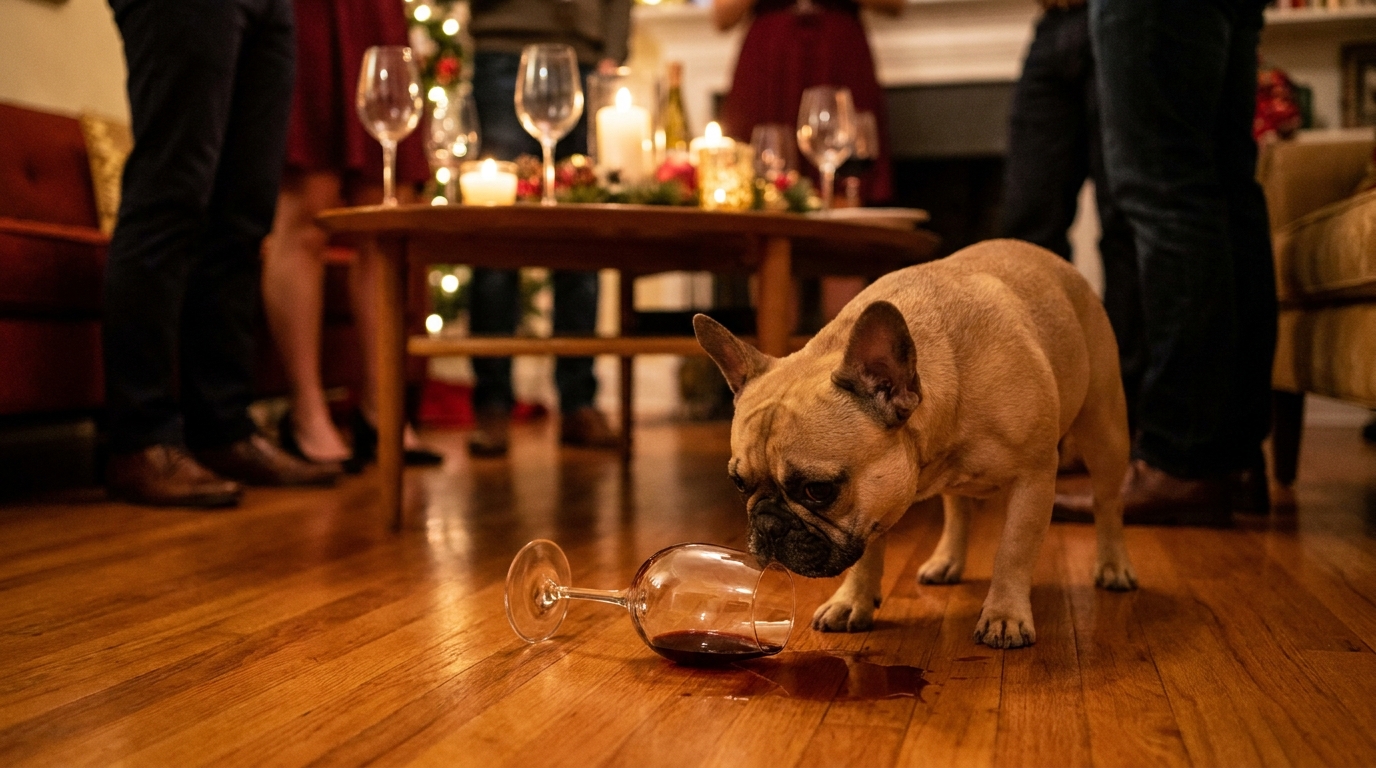
Any alcohol means a call to a poison line now. Which drinks and hidden sources are worst, the signs that mean the ER, and what not to do.
Quick answer: Alcohol is toxic to dogs, and even small amounts can be life-threatening, especially for small dogs (Pet Poison Helpline). If your dog drank beer, wine, a cocktail or eggnog, call a pet poison line or emergency vet now, even if your dog seems fine, and give nothing by mouth. Wobbling, vomiting, trembling, very slow breathing, a cold body or collapse means the ER now.
This article is general information, not a diagnosis. If you think your pet is in danger, go to the nearest emergency animal hospital.
Is alcohol toxic to dogs?
Yes: alcohol is toxic to dogs, and Pet Poison Helpline says even small amounts can cause life-threatening poisoning, especially in small dogs, so any drink means a call to a poison line or emergency vet now. Alcohol slows the brain and breathing and can drop blood sugar and body temperature, and a dog's smaller body absorbs it fast (Pet Poison Helpline).
The Merck Veterinary Manual says severe poisoning can progress to coma, seizures and depressed breathing, and death usually comes from breathing failure, low body temperature, low blood sugar or a dangerous acid buildup in the blood (metabolic acidosis).
Go to an emergency vet now if you see these signs
A dog that is wobbling or acting drunk, vomiting, very sleepy, breathing slowly, cold to the touch, having a seizure or collapsing after alcohol needs an emergency vet now; call a poison line on the way.
- Wobbling, acting drunk, confused, trembling or weak
- Vomiting, very sleepy or hard to wake
- Slow, shallow or labored breathing; pale, gray or blue gums; or a very slow, fast or irregular heartbeat
- A cold body, a seizure or collapse
- Coughing or noisy breathing after vomiting, even a day or two later, because vomit may have reached the lungs (Merck Veterinary Manual, ASPCA)
Go now even with no signs for a puppy, a small dog or a dog with an existing illness; for liquor or liqueur; for a sanitizer spill or chewed bottle, mouthwash, cough syrup, rubbing alcohol, vanilla or other extracts, perfume or cologne, raw yeast dough or homebrewing hops; for a drink that may contain xylitol or caffeine; or when you can't estimate how much is missing.
What to do right now
If a dog drank alcohol, take the drink away, note what it was, roughly how much is missing and when, and call a pet poison line or emergency vet now; do not make the dog vomit at home.
- Call ASPCA Animal Poison Control (888) 426-4435 (a consultation fee may apply) or Pet Poison Helpline (855) 764-7661 (a per-incident fee applies). Both poison lines take calls every day, including holidays. With any sign, call on the way to the emergency vet.
- Bring the bottle, can, recipe or label, and list your dog's medicines and anything else it ate, because a second substance worsens the outlook (Today's Veterinary Practice).
- Give nothing by mouth unless a veterinarian says to: no water, ice, milk, food, sugar, syrup or coffee. Skip activated charcoal; a review in Today's Veterinary Practice says it binds poorly to alcohol.
- Do not let your dog sleep it off or walk it off. Carry a wobbly dog and keep it away from stairs, pools and the road, since intoxicated animals are prone to injuries (Today's Veterinary Practice).
- Do not make your dog vomit at home. An ASPCA Animal Poison Control Center review in Today's Veterinary Practice says alcohol can slow or stop the muscles that close the epiglottis, the flap that guards the airway, so a drunk dog can breathe vomit into its lungs. Whether to empty the stomach is the veterinarian's call.
Alcohol poisoning symptoms and when they start
The Merck Veterinary Manual says signs of alcohol poisoning in pets generally begin within 30 to 60 minutes after a drink. Signs can start sooner after a large or strong drink, and a dog can keep getting worse for a couple of hours (Merck says alcohol peaks in the blood within 1.5 to 2 hours), so call now instead of waiting for signs.
Merck lists vomiting, diarrhea, wobbling (ataxia), disorientation, lethargy, tremors and trouble breathing, and Pet Poison Helpline adds drooling, weakness, collapse and low body temperature.
Raw yeast dough is the exception to this timeline: a dog that ate it can get sick quickly or not show signs for hours.
Which drinks are most dangerous?
The stronger the drink and the smaller the dog, the bigger the danger, so liquor and many liqueurs are worse than the same sip of beer, but any alcohol a dog drinks means a call to a poison line or emergency vet now.
| Drink | Extra risk | Do this |
|---|---|---|
| Beer | Volume lapped | Call now |
| Wine | Stronger than beer | Call now |
| Liquor or liqueur | High proof | ER now |
| Eggnog | Fat, dairy | Call now |
| Energy drink or cola mix | Caffeine | ER now |
| Sugar-free drink mix | Xylitol | ER now |
"Call now" means call a pet poison line or emergency vet now and follow their advice. Any sign, a puppy or small dog, any cat, a dog with an existing illness, or an amount you can't estimate means ER now, with a call to a poison line on the way.
Pet Poison Helpline's figures show liquor and many liqueurs are many times stronger than beer, and wine is stronger than beer. Shots and cocktails made mostly of liquor, such as a martini, count as liquor and mean the ER now; for a punch or spiked eggnog, call now.
Some sugar-free drink powders and mixes can contain xylitol (ASPCA). The FDA says xylitol can drop a dog's blood sugar within 10 to 60 minutes, though serious effects sometimes don't show for 12 to 24 hours. A drink or mix that may contain xylitol means an emergency vet now, even if your dog seems fine; call a poison line on the way.
Energy drinks, cola and coffee add caffeine, which can make a dog restless with a racing heart instead of sleepy (Pet Poison Helpline), so a caffeinated cocktail means an emergency vet now.
Treat eggnog as spiked unless you know it wasn't. Alcohol-free eggnog still needs the 4-day pancreatitis watch after fatty food.
Hidden alcohol: raw dough, rum desserts, hand sanitizer and more
Raw yeast dough, rum cakes and soaked fruitcake, vanilla and other extracts, mouthwash, liquid medicines and hand sanitizer can all give a dog enough alcohol to matter, so a dog that got into one needs a poison line or emergency vet now, and the table below shows which ones mean the ER now.
| Source | Extra risk | Do this |
|---|---|---|
| Raw yeast dough | Bloat | ER now |
| Rum cake or fruitcake | Raisins | Call, get seen |
| Liquor chocolates | Chocolate | Call now |
| Vanilla extract | Like liquor | ER now |
| Mouthwash | Xylitol | ER now |
| Cough syrup | Xylitol, drug | ER now |
| Hand sanitizer, spilled or chewed | Very strong | ER now |
| Rubbing alcohol | More toxic | ER now |
| Rotting fruit | Alcohol | Call now |
| Perfume, cologne | Very strong | ER now |
| Homebrew hops | Overheating | ER now |
Raw dough. Raw yeast dough rises in the stomach while its yeast makes alcohol, so any raw dough means an emergency vet now, even if your dog seems fine. Bloat signs are a swollen, tight belly or retching with nothing coming up. See what to do when a dog eats raw bread dough.
Rum desserts. Pet Poison Helpline says fruitcake soaked in rum or other alcohol may cause alcohol poisoning, and its raisins, grapes and currants can cause kidney failure in dogs. Call now and get your dog seen in person, as the guide on why any amount of grapes or raisins is an emergency explains. The same goes for grape pressings left over from home winemaking.
Mouthwash and medicines. Mouthwash and liquid medicines such as cough syrup can contain alcohol and xylitol (FDA, ASPCA), plus the medicine itself: go to an emergency vet now, call a poison line on the way and bring the bottle.
Hand sanitizer. A lick from sanitized hands is not expected to harm most pets (Pet Poison Helpline); a spill lapped off the floor or a chewed bottle means an emergency vet now. Sanitizer holds ethanol, or in some products isopropanol, which the Merck Veterinary Manual says is about twice as toxic as ethanol; neither is the ethylene glycol in antifreeze.
Homebrew hops. Any brewing hops (fresh, pellet or spent) means an emergency vet now, even with no signs. Signs look like overheating: heavy panting, a hot body and restlessness.
Is it alcohol, antifreeze or an edible?
Antifreeze and THC edibles also make dogs act drunk, and antifreeze is time-critical, so a dog that acts drunk needs an emergency vet now; tell the vet everything your dog could have reached.
The Merck Veterinary Manual says early antifreeze signs mimic alcohol intoxication. A pet poisoned by antifreeze acts drunk from about 30 minutes to 12 hours after drinking it and may seem better at about 12 to 24 hours while the poison keeps working. The antidote works best within about 8 hours in dogs and about 3 in cats, but go even if more time has passed: a dog that acts drunk with no known drink means ER now. Windshield washer fluid and 'pet-safe' antifreeze can also make a pet act drunk. Learn the antifreeze poisoning signs and timeline.
After a weed edible, signs usually start within 30 minutes to 2 hours, and the guide on what to do after a dog eats a THC edible warns not to assume it's weed, because antifreeze, xylitol and human medicines can look similar. Alcohol on the breath is a clue (Today's Veterinary Practice), but it does not rule out a second poison, and only a vet can sort these poisons out.
How a vet treats alcohol poisoning
A dog with alcohol poisoning is treated in the hospital, where the vet supports breathing, body temperature and blood sugar and gives IV fluids for support while the alcohol clears; the Merck Veterinary Manual says there is no specific antidote.
An ASPCA Animal Poison Control Center review in Today's Veterinary Practice says most animals recover within 12 to 24 hours with prompt supportive veterinary care, and Pet Poison Helpline says the outlook is best when a pet is treated before signs begin.
Once home, take questions about rechecks or discharge medicine to the hospital that treated your dog, and go back to the ER if any sign returns.
Holiday parties: Thanksgiving to New Year's Eve
To keep a dog away from alcohol at a holiday party, keep every glass above the dog's nose height, clear unfinished drinks and spills right away, and ask guests not to share drinks or food with the dog.
- Keep guests' bags off the floor; they can hold sanitizer, mouthwash, medicines or sugar-free gum.
- Let dough rise out of reach, and keep rum cakes, fruitcake and cookie tins up high.
- Save both poison line numbers and find the nearest emergency animal hospital before the party.
See also which Thanksgiving foods dogs can and cannot eat.
Cats and alcohol
A cat that drank any alcohol needs an emergency vet now, with a call to a poison line on the way; VCA Animal Hospitals says cats are especially sensitive to alcohol.
Alcohol on a cat's fur or skin also counts: the Merck Veterinary Manual says alcohols are well absorbed through the skin, including from alcohol-based flea sprays. Wrap the cat in a towel so it cannot groom, and call a poison line now. Never use rubbing alcohol on a pet, and never make a cat vomit at home.
When a video visit helps
A video visit is not the first step after a dog drinks alcohol: call a pet poison line or go to an emergency vet now.
RexVet, a nonprofit online vet service, serves pets located in Florida, New York and Virginia by video visit. A $64.99 live video visit is with a licensed RexVet vet, a veterinarian licensed in your pet's state, and the pet must be in that state during the visit. Live slots run about 8 AM to 11 PM ET. Holiday availability isn't confirmed, so check open slots. Out of state for the holidays? Use a local vet or emergency vet.
Not a fit: any sign, a puppy or small dog, any cat, a dog with an existing illness, liquor, a chewed sanitizer bottle, mouthwash, cough syrup, rubbing alcohol, vanilla or other extracts, perfume or cologne, raw dough, hops, possible xylitol or caffeine, or an amount you can't estimate means the ER now. During a poison-line home watch, any sign means an emergency vet now, not a video slot. After an ER stay, the treating hospital handles rechecks and discharge medicine; a returning sign means the ER, not a video visit.
A video visit cannot check blood sugar or temperature, give fluids, support breathing or make your dog vomit. No prescription is promised; any medicine is the veterinarian's decision after the visit.
A video visit fits the calmer moments:
- A poison line has already advised home monitoring, your dog is fully normal, and you want help following that plan.
- Your dog is home from the ER and you have questions while you follow the discharge plan.
- You want help planning a pet-safe holiday party for a counter-surfing dog.
For one of these, book a live video visit.
Need an Expert Opinion on This Topic?
Book a video visit with a licensed vet, evenings and weekends included
See open timesFrequently Asked Questions
Can dogs drink beer, or is a little beer OK?
No: even a small amount of beer can hurt a dog. Pet Poison Helpline calls a dog drinking alcohol a veterinary emergency, so call a poison line or emergency vet now. Beer is weaker than liquor, but dogs can lap up a lot of it. A puppy or small dog, or any wobbling, trembling, vomiting, heavy sleepiness, slow breathing or a cold body, means the ER now.
My dog drank some wine. Is that OK?
Call a pet poison line or emergency vet now: even small amounts of alcohol can be life-threatening, especially for small dogs (Pet Poison Helpline). Wine is stronger than beer, and signs generally begin within 30 to 60 minutes (Merck Veterinary Manual) and can worsen for a couple of hours, so a dog that seems fine now is not in the clear. Give nothing by mouth.
Will my dog be OK after drinking alcohol?
Usually, if treated promptly: a review in Today's Veterinary Practice says most animals recover within 12 to 24 hours with prompt supportive veterinary care. The outlook is more guarded if the dog breathed vomit into its lungs, swallowed a second poison or already has an illness (Today's Veterinary Practice). Coughing or labored breathing over the next day or two means the ER now.
Can I make my dog throw up after it drank alcohol?
No: do not make your dog vomit at home, because alcohol is absorbed fast and a drunk dog can breathe vomit into its lungs. A review in Today's Veterinary Practice limits vet-induced vomiting to animals with no signs, and even then it is the veterinarian's decision. Skip salt, activated charcoal, food and water, and call a poison line or emergency vet now.
My dog licked hand sanitizer. Is that dangerous?
A lick from sanitized hands is not expected to harm most pets (Pet Poison Helpline), but a spill or chewed bottle means the ER now. Sanitizer can be stronger than liquor, and puppies and small dogs are most at risk of low blood sugar. If your dog swallowed plastic, tell the vet so they can check for a blockage.
Is eggnog bad for dogs?
Yes: if you aren't sure the eggnog was spiked, treat it as alcohol and call a pet poison line or emergency vet now. Alcohol-free eggnog is still fat and dairy: the ASPCA says dairy can cause diarrhea and fat can cause vomiting, diarrhea and potentially pancreatitis; signs can appear up to 4 days later, and vomiting more than once, belly pain, weakness or collapse means an emergency vet now.
Can an online vet help if my dog drank alcohol?
Not at first: a dog that drank alcohol needs a poison line or emergency vet now, and a video visit fits only after that. For a pet located in Florida, New York or Virginia, a licensed RexVet vet can talk through a poison line's home-watch plan for a dog that is fully normal, answer questions while you follow an ER discharge plan, and help you plan a pet-safe holiday party. Checking blood sugar or temperature, giving fluids and treating any sign need in-person care. No prescription is promised, and if medicine comes up, state rules apply. Florida law (s. 474.2021) limits a prescription based only on a telehealth visit to FDA-approved animal drugs used as labeled, for up to 14 days (up to 1 month for products labeled solely for flea and tick control). It cannot be renewed without an in-person exam, and human-labeled drugs, compounded anti-infectives and controlled substances need an in-person exam first. Virginia allows the exam to be electronic, and New York's telehealth prescribing rules are not settled. In every state, federal rules (21 CFR 530.3) require an in-person exam before off-label or human-drug use. A pharmacy transfer fee applies if a prescription is sent to an outside pharmacy.
FAQs
Can dogs drink beer, or is a little beer OK?
No: even a small amount of beer can hurt a dog. Pet Poison Helpline calls a dog drinking alcohol a veterinary emergency, so call a poison line or emergency vet now. Beer is weaker than liquor, but dogs can lap up a lot of it. A puppy or small dog, or any wobbling, trembling, vomiting, heavy sleepiness, slow breathing or a cold body, means the ER now.
My dog drank some wine. Is that OK?
Call a pet poison line or emergency vet now: even small amounts of alcohol can be life-threatening, especially for small dogs (Pet Poison Helpline). Wine is stronger than beer, and signs generally begin within 30 to 60 minutes (Merck Veterinary Manual) and can worsen for a couple of hours, so a dog that seems fine now is not in the clear. Give nothing by mouth.
Will my dog be OK after drinking alcohol?
Usually, if treated promptly: a review in Today's Veterinary Practice says most animals recover within 12 to 24 hours with prompt supportive veterinary care. The outlook is more guarded if the dog breathed vomit into its lungs, swallowed a second poison or already has an illness (Today's Veterinary Practice). Coughing or labored breathing over the next day or two means the ER now.
Can I make my dog throw up after it drank alcohol?
No: do not make your dog vomit at home, because alcohol is absorbed fast and a drunk dog can breathe vomit into its lungs. A review in Today's Veterinary Practice limits vet-induced vomiting to animals with no signs, and even then it is the veterinarian's decision. Skip salt, activated charcoal, food and water, and call a poison line or emergency vet now.
My dog licked hand sanitizer. Is that dangerous?
A lick from sanitized hands is not expected to harm most pets (Pet Poison Helpline), but a spill or chewed bottle means the ER now. Sanitizer can be stronger than liquor, and puppies and small dogs are most at risk of low blood sugar. If your dog swallowed plastic, tell the vet so they can check for a blockage.
Is eggnog bad for dogs?
Yes: if you aren't sure the eggnog was spiked, treat it as alcohol and call a pet poison line or emergency vet now. Alcohol-free eggnog is still fat and dairy: the ASPCA says dairy can cause diarrhea and fat can cause vomiting, diarrhea and potentially pancreatitis; signs can appear up to 4 days later, and vomiting more than once, belly pain, weakness or collapse means an emergency vet now.
Can an online vet help if my dog drank alcohol?
Not at first: a dog that drank alcohol needs a poison line or emergency vet now, and a video visit fits only after that. For a pet located in Florida, New York or Virginia, a licensed RexVet vet can talk through a poison line's home-watch plan for a dog that is fully normal, answer questions while you follow an ER discharge plan, and help you plan a pet-safe holiday party. Checking blood sugar or temperature, giving fluids and treating any sign need in-person care. No prescription is promised, and if medicine comes up, state rules apply. Florida law (s. 474.2021) limits a prescription based only on a telehealth visit to FDA-approved animal drugs used as labeled, for up to 14 days (up to 1 month for products labeled solely for flea and tick control). It cannot be renewed without an in-person exam, and human-labeled drugs, compounded anti-infectives and controlled substances need an in-person exam first. Virginia allows the exam to be electronic, and New York's telehealth prescribing rules are not settled. In every state, federal rules (21 CFR 530.3) require an in-person exam before off-label or human-drug use. A pharmacy transfer fee applies if a prescription is sent to an outside pharmacy.
Medically Reviewed
Reviewed by Dr. Tiffany Delacruz, DVM — licensed veterinarian and CEO of RexVet. Last reviewed November 3, 2026.
Content is for informational purposes and does not replace professional veterinary advice.
Chief Executive Officer · Licensed Veterinarian
Dr. Delacruz is a licensed Doctor of Veterinary Medicine specializing in preventive care and veterinary telehealth. She reviews all health content on RexVet to ensure accuracy and clinical relevance.
Sources & References
- · American Veterinary Medical Association — Telehealth Guidelines
- · AVMA — Pet Care Resources
- · U.S. FDA — Animal & Veterinary