
My Dog Ate Grapes or Raisins: Why Any Amount Is an Emergency
By RexVet Team | Reviewed by Dr. Tiffany Delacruz, DVM
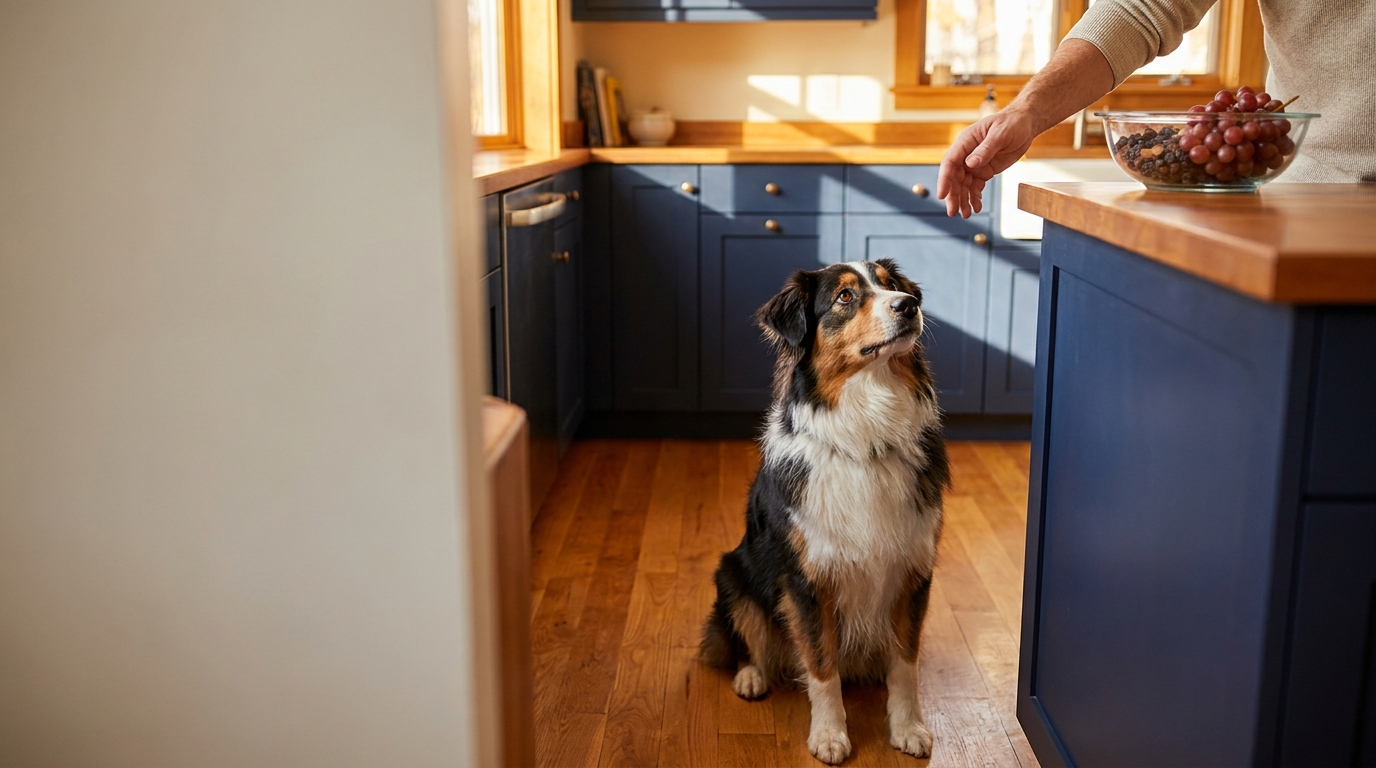
There is no safe amount of grapes or raisins for dogs. Learn why kidney damage can build silently and what to do in the first hour.
Quick answer: If your dog ate even one grape, raisin, sultana or dried currant, call an emergency vet or an animal poison-control line now and get your dog seen in person, even if it seems completely fine. No safe amount has been established, and kidney failure can develop silently within 24 to 72 hours. Do not try to make your dog vomit unless a vet tells you to. Dogs treated quickly, with vet-induced vomiting and IV fluids, usually avoid kidney damage. Waiting is the biggest risk.
If your dog ate grapes or raisins: call your veterinarian or the nearest 24-hour emergency animal hospital now, or a pet poison line: ASPCA Animal Poison Control at (888) 426-4435 or Pet Poison Helpline at (855) 764-7661 (fees may apply). Then take your dog in to be seen. If you cannot reach anyone quickly, drive straight to the emergency vet and call on the way.
This article is general information, not a diagnosis. It does not replace an in-person veterinary exam or emergency care.
Why Grapes and Raisins Are Dangerous to Dogs
Grapes, raisins and their relatives can cause acute kidney injury in dogs. What makes them so dangerous is that the reaction is unpredictable. Some dogs eat a handful without becoming ill, while others have become sick after eating a single grape, and no one can predict in advance which dogs will react. Veterinary references say there is no established safe amount, and the reaction does not reliably depend on how much was eaten.
The likely cause is tartaric acid, which grapes contain in widely varying amounts. ASPCA Animal Poison Control veterinarians proposed the link in 2021, after two dogs that ate cream of tartar (potassium bitartrate) developed the same kidney injury seen in grape-poisoned dogs. Dogs appear to lack the transporters that let other species clear tartaric acid, so it accumulates in the cells lining the kidney tubules. Veterinary references still describe tartaric acid as the proposed cause rather than a proven one.
Because the amount of tartaric acid varies from fruit to fruit, there is no way to know how dangerous any one grape or raisin is. For the same reason, tamarind, cream of tartar and homemade playdough (which is also very salty) can cause the same kidney injury and need the same urgent response.
Which Fruits and Foods Count
Treat all of these as an emergency:
- Grapes of any kind: red or green, seeded or seedless, organic or not, store-bought or from a garden vine
- Raisins and sultanas
- Dried currants sold for baking, which are usually Zante currants, a small dried grape
- Foods made with them: trail mix, raisin bread, bagels, granola and cereal bars, oatmeal raisin cookies, fruitcake, mince pies and holiday baked goods
- Grape pressings, fallen grapes in a yard, and grapes in compost or trash
Fresh blackcurrants and other true currants (a different plant family) have not been linked to kidney injury. If you are not sure which kind your dog ate, treat it as a grape. Grape juice, grape jelly and grape seed extract have not been clearly linked to the same kidney injury, but they come from the same fruit, so call your vet or a pet poison line for advice if your dog had any. Wine and other alcohol are dangerous to dogs for other reasons.
Many of these foods also contain chocolate, xylitol, macadamia nuts or raw yeast dough, which are separate emergencies. Tell the vet everything that was in the food. If chocolate was involved, see how much chocolate is toxic to dogs, and for homemade bakes, see what to check in a homemade recipe.
Symptoms and Timeline
A dog can look completely normal while its kidneys are being damaged. That is why waiting for symptoms is the most dangerous mistake.
| Time after eating | What can happen |
|---|---|
| First few hours to 24 hours | Vomiting and diarrhea are usually first, most often within 6 to 12 hours. Pieces of fruit may be seen in the vomit or stool. Some dogs show no signs at all. |
| 24 to 72 hours | Kidney injury can develop. Kidney values in the blood start to rise, sometimes before the dog looks sick. |
| As kidney failure progresses | Lethargy, loss of appetite, belly pain, dehydration, more drinking and urinating, then less urine or none at all. |
Any exposure needs a vet now, with or without signs. These signs mean kidney injury may already be developing, so go to the emergency vet immediately:
- Vomiting or diarrhea, especially with pieces of fruit
- Lethargy, weakness or loss of appetite
- Belly pain, dehydration, shivering or tremors
- Wobbliness, a head tilt or disorientation
- Heavy drinking and urinating, then little or no urine
- Breath that smells of ammonia
A drop in urine after a period of heavy urination is a serious warning sign of kidney failure.
What to Do Right Now
- Call now. Phone your vet, the nearest 24-hour emergency hospital, or a pet poison line, then take your dog in to be seen. Do not wait for signs.
- Do not let a phone call delay care. If you cannot reach anyone quickly, or a hotline fee is a problem, drive straight to the nearest emergency vet and call ahead on the way so they can prepare.
- Bring the packaging or a sample of the food, and tell the vet the product, whether it was fresh grapes, raisins or a baked good, roughly how much, when it was eaten and your dog's weight. No lab test confirms grape poisoning, so these details guide treatment.
- Go in even if your dog already vomited. Fruit has been found in vomit more than 12 hours after a dog ate it, so the vet may still be able to remove more.
Should You Make Your Dog Vomit at Home?
No, not on your own. Pet Poison Helpline warns that the hydrogen peroxide method found online can be dangerous and is not appropriate in every situation. Induce vomiting only if the emergency vet or poison-control veterinarian handling this exposure tells you to, and follow their exact instructions. Many vets prefer to do it in the clinic, where they can use safer medications.
Never use salt, syrup of ipecac or mustard, and never put a finger or object down your dog's throat. Do not give milk, food, oil or other home remedies, and do not give store-bought activated charcoal.
What the Vet Will Do
There is no antidote, and nothing an owner can give at home treats grape poisoning. Treatment is hands-on:
- Decontamination. The vet may give medication to make your dog vomit and often gives activated charcoal.
- IV fluids. Because no amount is known to be safe, many dogs, and any dog already showing signs, are hospitalized on IV fluids for at least 48 hours to protect the kidneys. Your vet decides based on what was eaten, when, and your dog's blood work.
- Kidney blood tests. Kidney values are checked at the start and then about every 24 hours for around 72 hours. If the blood work is normal after three days, kidney failure is unlikely. The all-clear comes from the blood work, not from how your dog looks at home.
The outlook is very good with quick treatment. In one study of 139 dogs treated at three US university hospitals, 99% survived, and dogs seen within 4 hours of eating grapes or raisins were about half as likely to develop kidney injury as dogs seen later. Once the kidneys are injured, the outlook is much more guarded: in one series, only about half of the dogs that developed kidney failure survived, and some survivors are left with chronic kidney disease.
After treatment, complete every recheck blood test your vet orders. Return immediately if your dog urinates less or not at all, vomits, becomes very lethargic, wobbles or has ammonia-smelling breath.
Common Myths About Grapes and Raisins
- "A few won't hurt." Some dogs have become sick after very small amounts. There is no safe number.
- "There's a safe number of grapes per pound of body weight." No amount has been shown to be safe for any dog. Any exposure needs a call to a vet or a pet poison line now.
- "Only moldy or sprayed grapes are toxic." Dogs have been poisoned by organic, pesticide-free and homegrown fruit. Testing for pesticides, metals and mold toxins has come back negative.
- "My dog ate them before and was fine." A past exposure without problems does not predict the next one.
- "He already threw up, so he's fine." Vomiting can be an early sign of kidney risk. Your dog still needs to be seen.
Halloween, Thanksgiving and Holiday Risks
Some households hand out small boxes of raisins at Halloween as a healthier alternative to candy, and those boxes end up in trick-or-treat bags and on the floor. At Thanksgiving, raisins, grapes, currants and sultanas appear in stuffing, salads and baked goods, and many stuffing recipes also contain onion and garlic, which are toxic to dogs too. December brings fruitcake, mince pies and holiday baking. In a large UK study, 22% of grape and raisin cases in dogs happened in December, and processed fruit such as raisins and baked goods was eaten more often than fresh grapes.
- Never use grapes or raisins as treats or training rewards.
- Keep raisin boxes, lunchboxes, trail mix and baked goods out of reach, and tell children and guests.
- Clear plates and serving dishes promptly, and keep them above your dog's nose height.
- Know where your nearest 24-hour emergency hospital is before you need it.
Are Grapes and Raisins Dangerous to Cats?
The risk to cats is less clear. Veterinary references report only anecdotal cases of kidney failure in cats and ferrets, so the true risk is unknown. Do not take chances: call a vet or poison line and have your cat seen. Never give hydrogen peroxide to a cat, because nothing can safely make a cat vomit at home.
After the Emergency: Follow-Up Questions
An online video visit cannot treat grape or raisin poisoning, and it is never a substitute for poison control or an emergency hospital. Once your dog has been treated and is home, a follow-up conversation can help with general questions about recovery or how to keep it from happening again. Recheck blood tests and any new warning sign stay with your treating or emergency vet. RexVet is a 501(c)(3) nonprofit with licensed veterinarians for pet parents in Florida, New York and Virginia. A live video visit is $64.99, and the Family Plan is a one-time $120 for four visits over 12 months, with no subscription.
Frequently Asked Questions
How many grapes are toxic to a dog?
No safe number has been established. Some dogs have become sick after one grape while others eat many without problems, and there is no way to predict which group your dog is in. Treat any amount as an emergency.
My dog ate one grape and seems fine. Should I still go to the vet?
Yes. Kidney damage can develop silently over 24 to 72 hours, and treatment works best before any signs appear. Call your vet, an emergency hospital or a pet poison line now and get your dog seen.
How long after eating grapes will a dog show symptoms?
Vomiting or diarrhea usually comes first, most often within 6 to 12 hours, though it can be delayed up to 24 hours. Signs of kidney failure can follow within 24 to 72 hours. Some dogs show nothing until the kidneys are already injured.
Can a dog survive grape or raisin poisoning?
Yes, usually, when treatment starts quickly. In one study of 139 dogs treated at three US university hospitals, 99% survived, and dogs seen within 4 hours were about half as likely to develop kidney injury. Once kidney failure develops, survival drops sharply, which is why early treatment matters so much.
Are the pet poison hotlines free?
No. ASPCA Animal Poison Control at (888) 426-4435 says a consultation fee may apply. Pet Poison Helpline at (855) 764-7661 charges a per-incident fee that includes follow-up calls. If a fee would stop you from calling, drive straight to the nearest emergency vet instead.
Can an online vet in Florida, New York or Virginia treat grape poisoning?
No. Grape and raisin poisoning needs in-person treatment: decontamination, IV fluids and repeated kidney blood tests. Call poison control or an emergency hospital now and get your dog seen in person. A RexVet video visit can help with general follow-up questions after your dog has been treated.
FAQs
How many grapes are toxic to a dog?
No safe number has been established. Some dogs have become sick after one grape while others eat many without problems, and there is no way to predict which group your dog is in. Treat any amount as an emergency.
My dog ate one grape and seems fine. Should I still go to the vet?
Yes. Kidney damage can develop silently over 24 to 72 hours, and treatment works best before any signs appear. Call your vet, an emergency hospital or a pet poison line now and get your dog seen.
How long after eating grapes will a dog show symptoms?
Vomiting or diarrhea usually comes first, most often within 6 to 12 hours, though it can be delayed up to 24 hours. Signs of kidney failure can follow within 24 to 72 hours. Some dogs show nothing until the kidneys are already injured.
Can a dog survive grape or raisin poisoning?
Yes, usually, when treatment starts quickly. In one study of 139 dogs treated at three US university hospitals, 99% survived, and dogs seen within 4 hours were about half as likely to develop kidney injury. Once kidney failure develops, survival drops sharply, which is why early treatment matters so much.
Are the pet poison hotlines free?
No. ASPCA Animal Poison Control at (888) 426-4435 says a consultation fee may apply. Pet Poison Helpline at (855) 764-7661 charges a per-incident fee that includes follow-up calls. If a fee would stop you from calling, drive straight to the nearest emergency vet instead.
Can an online vet in Florida, New York or Virginia treat grape poisoning?
No. Grape and raisin poisoning needs in-person treatment: decontamination, IV fluids and repeated kidney blood tests. Call poison control or an emergency hospital now and get your dog seen in person. A RexVet video visit can help with general follow-up questions after your dog has been treated.
Medically Reviewed
Reviewed by Dr. Tiffany Delacruz, DVM — licensed veterinarian and CEO of RexVet. Last reviewed October 8, 2026.
Content is for informational purposes and does not replace professional veterinary advice.
Chief Executive Officer · Licensed Veterinarian
Dr. Delacruz is a licensed Doctor of Veterinary Medicine specializing in preventive care and veterinary telehealth. She reviews all health content on RexVet to ensure accuracy and clinical relevance.
Sources & References
- · American Veterinary Medical Association — Telehealth Guidelines
- · AVMA — Pet Care Resources
- · U.S. FDA — Animal & Veterinary
Need an Expert Opinion on This Topic?
Connect with a certified vet via video call in minutes
Talk to Vet Now