
Dog Diarrhea on Antibiotics: Keep Giving Them or Stop?
By RexVet Team | Reviewed by Dr. Tiffany Delacruz, DVM
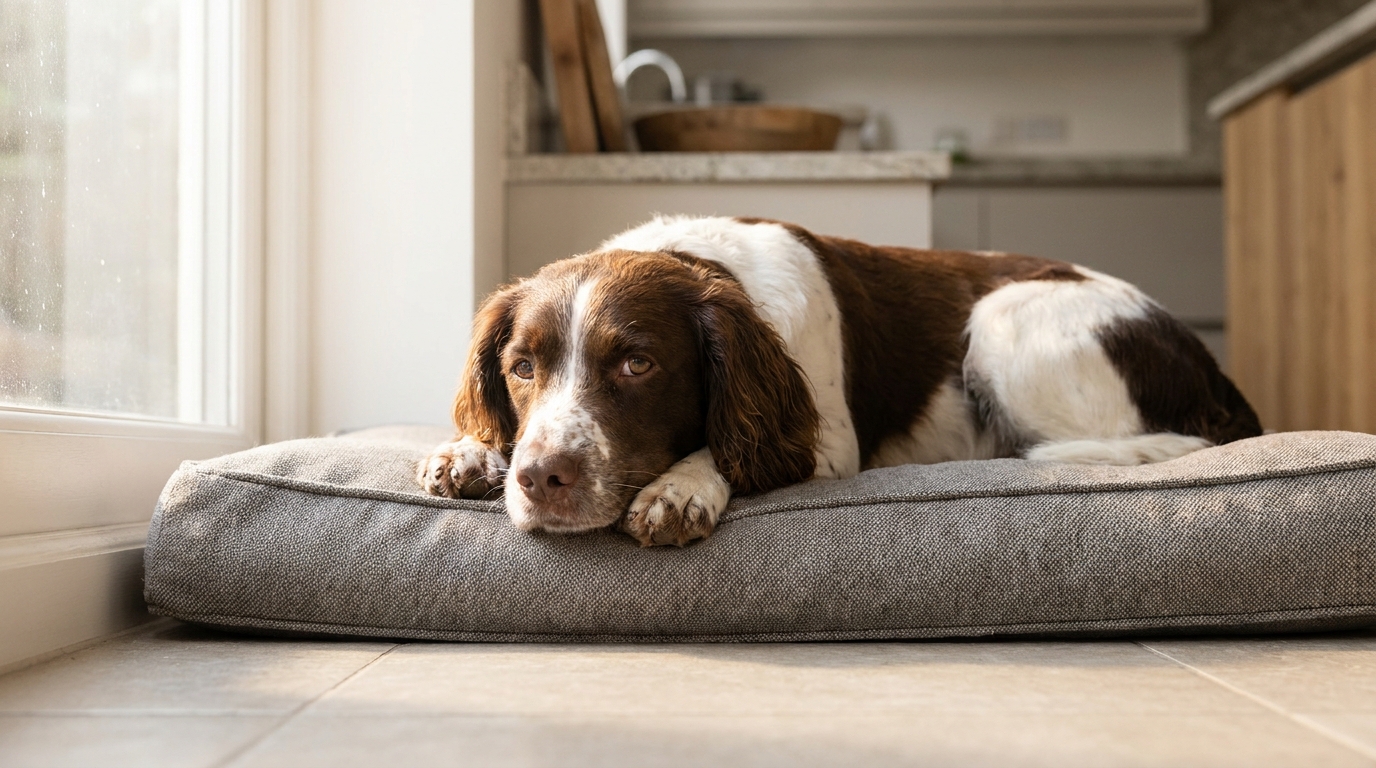
Loose stool is a common antibiotic side effect in dogs. Learn when to call the prescriber, when to go in today and which signs mean an ER now.
Quick answer: Soft stool or mild diarrhea is a common antibiotic side effect in dogs. For a bright dog eating and drinking, don't stop or change the antibiotic yourself; call the prescribing vet before the next dose. One vomit, refusing food or any puppy means an in-person vet today. Black or jam-like stool, repeated vomiting, weakness, hives, face swelling, trembling, or a puppy under 6 months that also vomits or won't eat means an emergency vet now.
This article is general information, not a diagnosis. If you think your pet is in danger, go to the nearest emergency animal hospital.
When is diarrhea on antibiotics an emergency?
A dog with diarrhea on an antibiotic needs an emergency vet now for black, tarry or raspberry-jam stool, blood in the stool with vomiting, vomiting more than once, a swollen or painful belly, dry retching with nothing coming up, weakness or collapse, pale gums, water that won't stay down, any hives or face swelling, breathing trouble, or trembling, wobbling or a seizure. If any of these signs appears, give no more doses until a vet tells you to, and go now with the bottle.
The Merck Veterinary Manual lists hives, angioedema (swelling under the skin) and anaphylaxis among possible reactions to sulfonamide antibiotics. Sudden vomiting or diarrhea with pale gums, weakness or drooling soon after a dose of a new antibiotic can be a severe allergic reaction even with no hives and means an emergency vet now; the guide to dog hives and sudden bumps explains the signs. Skin that blisters, peels, turns purple or bruise-like, or opens into sores after a new medicine needs an in-person vet the same day, or an emergency vet now if the dog is weak or feverish.
Nerve signs are rare but urgent: the Merck Veterinary Manual says high doses of metronidazole may cause tremors, muscle spasms, wobbly walking and even convulsions in dogs, and a 2018 study of 26 dogs found nerve signs at lower doses than previously reported. Wobbly walking, trembling, muscle spasms or a seizure on metronidazole means an emergency vet now; give no more doses until a vet says to.
A puppy 6 weeks to 6 months old, or one not fully vaccinated, with diarrhea plus vomiting, low energy or no appetite needs an emergency vet now because of the parvo risk.
For an accidental extra dose or a chewed-open bottle, call a vet or a poison line now: ASPCA Animal Poison Control, (888) 426-4435 (a consultation fee may apply), or Pet Poison Helpline, (855) 764-7661 (a per-incident fee applies). These lines handle extra doses and toxins, not mild side-effect diarrhea.
Should I stop giving the antibiotic?
For mild diarrhea in a dog that is bright, eating and drinking, do not stop or change the antibiotic on your own; call the vet who prescribed it before the next dose, and follow any side-effect instructions the prescriber already gave. The 2022 AAFP/AAHA antimicrobial stewardship guidelines say to give an antibiotic as the veterinarian directed, including timing and how many days. Say what the antibiotic was for and when the diarrhea started compared with the first dose; the vet may keep the plan, change how it is given or change the drug.
If the prescribing clinic is closed before the next dose and your dog is bright, ask another veterinarian (a video visit fits here; see below) or the pharmacist who filled it. Never double a dose, and never re-give a vomited dose on a guess. The AAFP/AAHA guidelines also say owners should consult a veterinarian before any antibiotic use, so never restart leftover antibiotics.
Is my dog's diarrhea mild or serious?
Soft stool in a dog on an antibiotic is mild when the dog is bright, eating and drinking; one vomit, refusing food or any puppy means an in-person vet today, and a puppy under 6 months or not fully vaccinated that also vomits, is dull or won't eat needs an emergency vet now.
| What you see | Next step | How soon |
|---|---|---|
| Soft stool, bright dog | Call prescriber | Before next dose |
| Red streaks with mucus, bright | Vet visit | Within 24 hours |
| Watery, many times | Call a vet | Today |
| Loose stool past 2 days | Call a vet | Today |
| One vomit | In person | Today |
| Won't eat | In person | Today |
| Any puppy | In person | Today |
| More than a streak of blood | In person | Today |
| Refuses water, dry gums, sunken eyes | ER or vet | Now |
| Very dull, low energy | ER or vet | Now |
| Vomits more than once | ER | Now |
| Black or jam-like stool | ER | Now |
| Blood plus vomiting | ER | Now |
| Hives or face swelling | ER | Now |
| Wobbly, trembly or seizure | ER | Now |
| Weak, pale gums, sore belly, dry retching | ER | Now |
| Water won't stay down | ER | Now |
| Puppy under 6 months or not fully vaccinated, vomits, dull or won't eat | ER | Now |
Why do antibiotics cause diarrhea in dogs?
Antibiotics can upset a dog's gut: Pet Poison Helpline says stomach and gut upset, seen as vomiting, diarrhea or loss of appetite, is one of the most common side effects of antibiotics in pets. The Merck Veterinary Manual lists vomiting and diarrhea among possible side effects of several common antibiotic groups, including cephalosporins and fluoroquinolones.
Merck also says overuse or prolonged oral antibiotic treatment can harm the gut itself, for example by disrupting its normal bacteria (intestinal dysbiosis). The infection being treated can cause loose stool as well. This advice applies to common dog antibiotics such as amoxicillin, cephalexin, doxycycline and metronidazole.
Does giving the antibiotic with food help?
Food helps with some antibiotics and gets in the way of others, so give a dog's antibiotic the way the label says and ask the veterinarian or pharmacist before changing how you give a dose. The Merck Veterinary Manual says stomach upset from doxycycline might be reduced by giving it with food, but food impairs the absorption of ampicillin and may delay absorption of fluoroquinolones.
Can I give my dog probiotics with antibiotics?
Ask the veterinarian whether a dog on antibiotics should get a probiotic, which one and how to space it. A few small studies in healthy laboratory dogs and cats found that certain probiotic or synbiotic products helped some animals keep eating during antibiotics, and one study in cats given amoxicillin-clavulanate found less diarrhea, but other trials found no clear difference in diarrhea.
In a 2019 trial by Whittemore, Moyers and Price in 22 healthy research dogs given two antibiotics together, a synbiotic reduced changes in food intake but did not clearly reduce diarrhea. The Cornell Riney Canine Health Center says a veterinarian may send a dog home with a veterinary probiotic. The FDA lists dietary supplements among products that may contain xylitol, which is toxic to dogs, so never give a human probiotic without the vet's OK.
What should a dog with diarrhea on antibiotics eat and drink?
A dog with diarrhea on an antibiotic should have fresh water available at all times and no treats or table food, and the owner should ask the vet before any fast or bland diet, because veterinary advice differs; never fast a puppy, a toy or small-breed dog, a senior or a diabetic dog.
If the vet suggests a bland diet, ask how much to feed and how to switch back; Cornell's mild-case bland diet is not balanced for long-term feeding. Toy breeds and seniors need a same-day call instead of a 2-day wait. A dog also on a daily NSAID pain reliever or steroid needs a call to the vet who prescribed that drug before its next dose, and black stool or repeated vomiting in that dog means an emergency vet now. A diabetic dog needs a same-day call to the vet who manages the insulin, before changing meals or insulin. For holiday scraps, see the guide to diarrhea after table food or holiday leftovers.
Can I give my dog human anti-diarrhea medicine?
A dog on an antibiotic should not get a human anti-diarrhea medicine unless a vet says so, because bismuth subsalicylate is an aspirin-like salicylate that turns stool black, and loperamide can cause nerve toxicity in dogs with the MDR1 gene mutation.
The Merck Veterinary Manual says bismuth subsalicylate's salicylate is almost fully absorbed and its black stool can hide bleeding, so black, tarry stool still means an emergency vet now. Merck adds that salicylate poisoning is possible, especially in cats, so never give it to a cat. Washington State University says the MDR1 mutation is most common in herding breeds such as collies, Australian shepherds and Shetland sheepdogs but also occurs in long-haired whippets, silken windhounds and mixed breeds, and only a genetic test shows which dogs carry it. The guide to over-the-counter stomach medicines for dogs covers each one.
| Item | Concern | Next step |
|---|---|---|
| Bismuth remedy | Salicylate, black stool | Ask a vet |
| Loperamide | MDR1 nerve risk | Ask a vet |
| Antacids | Block some antibiotics | Ask a vet |
| Iron or calcium pills | Block some antibiotics | Ask a vet |
| Milk or yogurt | May worsen diarrhea | Ask a vet |
| Human probiotic | May contain xylitol | Ask a vet |
What if diarrhea lasts after the antibiotics are finished?
Diarrhea that lasts more than 2 days after a dog's last antibiotic dose, or keeps coming back, needs a vet recheck, often with a stool test done in person. Start with the vet who prescribed the course. The vet might not add another antibiotic: the 2022 AAFP/AAHA guidelines say most cases of acute diarrhea are not caused by harmful bacteria or clear up on their own, and in those cases antibiotics do not speed recovery. The guide to a dog that still has diarrhea after metronidazole covers what the vet checks next.
Cats on antibiotics: what is different?
A cat on an antibiotic that eats less, has repeated or watery diarrhea, or has blood in the stool needs an in-person vet the same day, as does any kitten. About 24 hours without food is the latest point to be seen, sooner for a kitten, senior, overweight or diabetic cat. The Cornell Feline Health Center says fatty liver almost always follows or comes with a loss of appetite, so never fast a cat.
A diabetic cat with vomiting and diarrhea, a kitten not fully vaccinated, black stool, weakness, pale gums or hard breathing means an emergency vet now. For milder signs that started after a new medicine, call the treating vet the same day and do not stop or change it yourself. Follow each pill with water or food as directed: Merck links doxycycline and clindamycin pills to food-pipe injury in cats, and drooling, gagging or trouble swallowing after pills needs an in-person vet the same day. The guide to cat vomiting and diarrhea at the same time lists other cat red flags. Sudden vision loss or bumping into things in a cat on a fluoroquinolone-type antibiotic means no more doses until a vet says so, and a vet or emergency vet now: the Merck Veterinary Manual says retinal degeneration (damage to the back of the eye) can occur suddenly in cats, with the risk greatest for enrofloxacin.
When a video visit helps, and when it does not
If your dog is bright, drinking and eating at least some food but has soft stool or mild diarrhea on an antibiotic, and the prescribing clinic is closed, a live video visit can help you decide whether to keep giving it until you reach the prescriber, call the prescriber in the morning, or go in today.
For a dog in Florida, New York or Virginia that has soft stool or mild diarrhea on an antibiotic but is still bright, drinking and eating, RexVet, a nonprofit online vet service, offers a $64.99 live video visit with a veterinarian licensed in the dog's state, about 8 AM to 11 PM Eastern, every day. RexVet is a 501(c)(3) nonprofit that serves pets located in Florida, New York and Virginia by video visit; your dog must be in one of those states during the call, a same-day slot is not guaranteed, and holiday hours are not confirmed.
Have the bottle or label, the reason it was prescribed, the time of each dose and each stool, a stool photo, and a list of anything else your dog takes. On camera, a licensed RexVet vet reviews the pattern and the label, looks at the stool photos, gum color and posture, and checks hydration signs with you. The veterinarian then gives a feeding and watch plan, tells you what to report to the prescribing vet, and says whether your dog needs to be seen in person and how soon. If your dog fits, check open slots and book a live video visit.
From RexVet's visit study: About 1 in 8 RexVet video visits (12.5%) ended with a prescription; the rest ended with the veterinarian's advice and care plan. Across all RexVet visits, not dogs alone, the visit study found: Of the main concern groups, visits for vomiting, diarrhea or digestive problems were among the most likely to end with a prescription (21%), while only 5% of skin and itching visits did. Whether any medicine fits is the veterinarian's decision; no prescription is promised.
A video visit cannot feel the belly, take a temperature, run a stool test or bloodwork, or give fluids, and it cannot be counted on to start, switch or extend an antibiotic; changing an antibiotic another veterinarian prescribed usually belongs with that veterinarian. Go to an emergency vet now, not a video visit, for black, tarry or raspberry-jam stool, blood in the stool with vomiting, vomiting more than once, a swollen or painful belly, dry retching with nothing coming up, weakness or collapse, pale gums, water that won't stay down, any hives or face swelling, breathing trouble, trembling, wobbling or a seizure. See a vet in person today, not by video, for one vomit with the diarrhea, refusing food, more than a streak of blood or any puppy with diarrhea; a dog that refuses water, has dry gums or is very dull needs an in-person vet now, and a puppy under 6 months or not fully vaccinated that also vomits, is dull or won't eat needs an emergency vet now. Outside about 8 AM to 11 PM ET, if no slot is open, or if your dog is getting worse, go to an emergency vet; if you are traveling outside these three states, use a local vet.
If medicine comes up: in Florida, s.474.2021 limits telehealth-only prescriptions to FDA-approved animal drugs used as labeled, for up to 14 days (1 month for flea- or tick-only products), with no renewal without an in-person exam, and federal rules (21 CFR 530.3) require an in-person exam for any off-label or human-drug use, in every state. RexVet is not a pharmacy; a pharmacy transfer fee applies when RexVet sends a prescription to an outside pharmacy.
Need an Expert Opinion on This Topic?
Book a video visit with a licensed vet, evenings and weekends included
See open timesFrequently Asked Questions
Is diarrhea a normal side effect of antibiotics in dogs?
Yes, soft stool or diarrhea is one of the most common antibiotic side effects, but call the prescribing vet before the next dose. One vomit, refusing food or any puppy means an in-person vet today, and black stool, repeated vomiting, weakness, hives, face swelling, trembling or a seizure means an emergency vet now, as does a puppy under 6 months or not fully vaccinated that also vomits, is dull or won't eat.
Should I stop the antibiotic if my dog has diarrhea?
No, not on your own for mild diarrhea: call the vet who prescribed it before the next dose. If an emergency sign appears, give no more doses until a vet tells you to, and go to an emergency vet now with the bottle. Never double a dose or restart leftover antibiotics.
How long does diarrhea from antibiotics last in dogs?
Antibiotic diarrhea in dogs has no set length, so call the prescribing vet before the next dose. Call a vet again if loose stool lasts more than 2 days; Cornell's Riney Canine Health Center uses that two-day line. Diarrhea that lingers after the last dose or keeps coming back needs a vet recheck.
My dog is not eating on antibiotics. What do I do?
See a vet in person today if your dog refuses food on an antibiotic, and call the prescriber before the next dose. A dog that eats a little less but is bright and drinking needs just that call. Never fast a puppy, a toy breed, a senior or a diabetic dog.
Can I give my dog yogurt for diarrhea on antibiotics?
Ask the veterinarian first: yogurt is dairy, and the ASPCA says dairy products can cause diarrhea or digestive upset in pets. The Merck Veterinary Manual also lists milk products among items that impair absorption of tetracycline-type antibiotics, with doxycycline and minocycline as exceptions.
Can an online vet help if my dog has diarrhea on antibiotics in Florida, New York or Virginia?
Yes, if your dog is in Florida, New York or Virginia during the visit and is bright, drinking and eating with mild diarrhea. On camera, the veterinarian can review the label and dose times, look at stool photos and gum color, check hydration signs with you, set a feeding and watch plan, and say whether your dog needs to be seen in person. A belly exam, temperature, stool test and fluids need an in-person visit, and any emergency sign means an ER now. Changing an antibiotic is usually the prescribing vet's decision, and no prescription or switch is promised. If medicine comes up: in Florida (s.474.2021), a video-only prescription must be an FDA-approved animal drug used as labeled, for up to 14 days (1 month for flea- or tick-only products), with no renewal without an in-person exam, and human-labeled, controlled or compounded antibacterial drugs need an in-person exam first. Federal rules (21 CFR 530.3) require an in-person exam for off-label or human-drug use. Virginia allows an electronic exam, but prescribing is still the veterinarian's call, and New York's rules are not settled.
FAQs
Is diarrhea a normal side effect of antibiotics in dogs?
Yes, soft stool or diarrhea is one of the most common antibiotic side effects, but call the prescribing vet before the next dose. One vomit, refusing food or any puppy means an in-person vet today, and black stool, repeated vomiting, weakness, hives, face swelling, trembling or a seizure means an emergency vet now, as does a puppy under 6 months or not fully vaccinated that also vomits, is dull or won't eat.
Should I stop the antibiotic if my dog has diarrhea?
No, not on your own for mild diarrhea: call the vet who prescribed it before the next dose. If an emergency sign appears, give no more doses until a vet tells you to, and go to an emergency vet now with the bottle. Never double a dose or restart leftover antibiotics.
How long does diarrhea from antibiotics last in dogs?
Antibiotic diarrhea in dogs has no set length, so call the prescribing vet before the next dose. Call a vet again if loose stool lasts more than 2 days; Cornell's Riney Canine Health Center uses that two-day line. Diarrhea that lingers after the last dose or keeps coming back needs a vet recheck.
My dog is not eating on antibiotics. What do I do?
See a vet in person today if your dog refuses food on an antibiotic, and call the prescriber before the next dose. A dog that eats a little less but is bright and drinking needs just that call. Never fast a puppy, a toy breed, a senior or a diabetic dog.
Can I give my dog yogurt for diarrhea on antibiotics?
Ask the veterinarian first: yogurt is dairy, and the ASPCA says dairy products can cause diarrhea or digestive upset in pets. The Merck Veterinary Manual also lists milk products among items that impair absorption of tetracycline-type antibiotics, with doxycycline and minocycline as exceptions.
Can an online vet help if my dog has diarrhea on antibiotics in Florida, New York or Virginia?
Yes, if your dog is in Florida, New York or Virginia during the visit and is bright, drinking and eating with mild diarrhea. On camera, the veterinarian can review the label and dose times, look at stool photos and gum color, check hydration signs with you, set a feeding and watch plan, and say whether your dog needs to be seen in person. A belly exam, temperature, stool test and fluids need an in-person visit, and any emergency sign means an ER now. Changing an antibiotic is usually the prescribing vet's decision, and no prescription or switch is promised. If medicine comes up: in Florida (s.474.2021), a video-only prescription must be an FDA-approved animal drug used as labeled, for up to 14 days (1 month for flea- or tick-only products), with no renewal without an in-person exam, and human-labeled, controlled or compounded antibacterial drugs need an in-person exam first. Federal rules (21 CFR 530.3) require an in-person exam for off-label or human-drug use. Virginia allows an electronic exam, but prescribing is still the veterinarian's call, and New York's rules are not settled.
Medically Reviewed
Reviewed by Dr. Tiffany Delacruz, DVM — licensed veterinarian and CEO of RexVet. Last reviewed November 20, 2026.
Content is for informational purposes and does not replace professional veterinary advice.
Chief Executive Officer · Licensed Veterinarian
Dr. Delacruz is a licensed Doctor of Veterinary Medicine specializing in preventive care and veterinary telehealth. She reviews all health content on RexVet to ensure accuracy and clinical relevance.
Sources & References
- · American Veterinary Medical Association — Telehealth Guidelines
- · AVMA — Pet Care Resources
- · U.S. FDA — Animal & Veterinary