
Can I Give My Dog Pepto, Imodium or Tums? Vet Safety Guide
By RexVet Team | Reviewed by Dr. Tiffany Delacruz, DVM
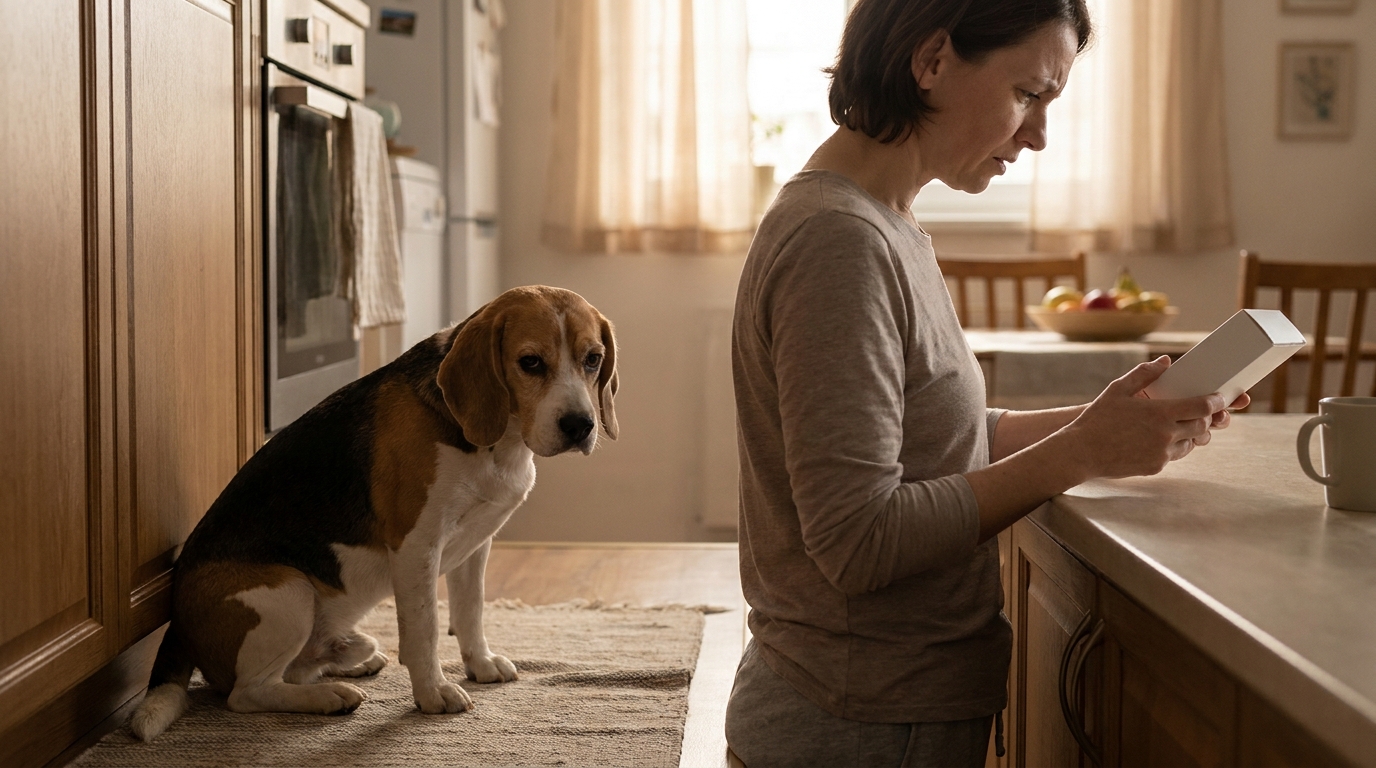
Who should never get Pepto-Bismol, Imodium, Tums or Pepcid, the signs that need an ER, and what helps a mild upset stomach without a pill.
Quick answer: Ask a vet before giving a dog Pepto-Bismol, Imodium or Tums. Pepto-Bismol contains an aspirin-like salicylate and turns stool black, which can hide bleeding. Imodium can cause nerve toxicity in dogs with the MDR1 mutation and is risky with a possible blockage or infection. Tums is for heartburn. Call a vet if an adult dog's diarrhea lasts past two days (puppies: today); black, tarry stool or weakness: emergency vet now.
This article is general information, not a diagnosis. If you think your pet is in danger, go to the nearest emergency animal hospital.
Go to an emergency vet, not the medicine cabinet, for these signs
A dog that has black, tarry or "raspberry jam" stool, a swollen or painful belly, dry retching, pale gums, weakness or collapse, can't keep water down, or vomits more than once along with diarrhea needs an emergency vet now, not an over-the-counter stomach medicine.
A dog that may have eaten a poison, or chewed into any medicine bottle or pack, needs a poison line or an emergency vet now; keep the package. A dog that drools, pants, stumbles or can't stand after Imodium, or vomits, breathes hard, runs a fever, bleeds longer than normal or turns weak after Pepto-Bismol or Kaopectate, needs an emergency vet now; call a poison line on the way.
Also go now for vomiting with bloody stool or blood in the vomit; refusing water; straining again and again with little or nothing coming out, or straining to pee with little or no urine; tremors or a seizure; a toy-breed puppy that turns weak, trembly or wobbly, or stops eating; a puppy 6 weeks to 6 months old, or not fully vaccinated, with diarrhea plus vomiting, low energy or no appetite (the risk is parvo); and a dog on a daily NSAID or steroid with black stool or repeated vomiting.
A dog that retches with nothing coming up, drools, is restless or has a swollen belly needs an emergency vet now; no gas-relief product treats bloat. The Merck Veterinary Manual says bloat mainly affects large, deep-chested dogs and needs immediate medical and surgical treatment.
The FDA says xylitol can drop a dog's blood sugar within 10 to 60 minutes and that serious effects may not show for 12 to 24 hours, so a dog that ate anything containing xylitol needs an emergency vet now, even if it seems fine; call a poison line on the way. The FDA lists over-the-counter medicines, chewable vitamins and supplements among possible sources.
The poison lines are ASPCA Animal Poison Control, (888) 426-4435 (a consultation fee may apply), and Pet Poison Helpline, (855) 764-7661 (a per-incident fee applies). Never make a dog vomit unless a vet or poison line tells you to.
Can I give my dog Pepto-Bismol?
A dog should get Pepto-Bismol only if a vet who has examined the dog in person says so, because its bismuth subsalicylate is a relative of aspirin and is risky for dogs on an NSAID or steroid, dogs with ulcers or bleeding problems, puppies, and pregnant or nursing dogs.
The Merck Veterinary Manual says nearly all of the salicylate in Pepto-Bismol is absorbed into a dog's body, and that it turns stool black, which can hide bleeding. Merck also says aspirin can erode a dog's stomach lining and slow blood clotting, so a dog on a blood thinner should not get Pepto-Bismol unless its vet says so. The FDA says never to give aspirin or a steroid such as prednisone with a dog's NSAID.
Kaopectate sold in the US today contains bismuth subsalicylate, the same ingredient as Pepto-Bismol, so the same cautions apply. Bismuth can also cause constipation and interfere with some tests, such as X-rays, so tell the vet if your dog got any.
Never give Pepto-Bismol or Kaopectate to a cat: Pet Poison Helpline says cats are much more sensitive to aspirin poisoning than dogs. It also warns that aspirin-like salicylates hide in some upset-stomach remedies; see Tylenol, ibuprofen and aspirin for dogs.
Can I give my dog Imodium?
Imodium (loperamide) can cause serious nervous-system signs in dogs with the MDR1 gene mutation, which Washington State University says is most common in herding breeds such as collies and Australian shepherds, and it should never be given to a dog that may have a blockage, a toxin or an infection.
Washington State University says about three of every four collies in the US carry the MDR1 mutation, which also turns up in Shetland sheepdogs, Old English sheepdogs, German shepherds, McNabs, long-haired whippets, silken windhounds and mixed breeds, especially herding crosses; only a genetic test shows whether a dog carries it.
The Merck Veterinary Manual says affected dogs can drool, pant, wobble and be unable to stand, which means an emergency vet now. A herding breed or mix, or any dog of unknown MDR1 status, that got Imodium needs a call to a vet or poison line now, even if it seems fine.
Merck says opiates such as loperamide should not be used for infectious diarrhea, because slowing the gut may increase absorption of bacterial toxins. A puppy's diarrhea may be parvo, so never give a puppy Imodium. Constipation is a common side effect. Never give Imodium to a dog that might have swallowed an object or has a swollen or painful belly; a dog that may have swallowed an object such as a sock, toy, corn cob or bone needs an in-person vet now, and a swollen or painful belly means an emergency vet now. See these signs of an intestinal blockage in dogs.
Can dogs have Tums?
A dog should get Tums only if a vet says so: it is a calcium antacid labeled for heartburn in people, not for diarrhea or vomiting. Pet Poison Helpline says too much calcium usually causes only stomach upset in a healthy pet but can cause severe poisoning in a pet with serious kidney disease or from a product that also contains vitamin D or xylitol.
Pet Poison Helpline says eating a lot can cause vomiting, diarrhea or constipation and a short-lived rise in blood calcium. Call a poison line now and keep the package if your dog has kidney disease, the label lists vitamin D, your dog chewed open the bottle, or you can't tell how many are missing; if the label lists xylitol, go to an emergency vet now.
The Merck Veterinary Manual says antacids often interfere with the absorption of other drugs given at the same time, so a dog on any daily medicine should not get one without the prescribing vet's OK.
Can I give my dog Pepcid or Prilosec?
A dog should get famotidine (Pepcid) or omeprazole (Prilosec) only when a vet who has examined it in person picks the product and amount; the Merck Veterinary Manual says vets commonly use both, but they are human-labeled drugs.
Combination products that add antacids such as calcium carbonate and magnesium hydroxide to famotidine are not the same as plain famotidine, and added magnesium is a concern for a dog with kidney disease (Merck).
Don't stop a prescribed acid reducer suddenly; Merck warns of rebound acid. Don't add one on your own to protect the stomach of a dog on an NSAID, either: Merck says omeprazole is contraindicated for long-term treatment, and rodent studies found drugs like omeprazole can worsen NSAID damage to the intestines.
Over-the-counter stomach products compared
None of the over-the-counter stomach products in this guide (Pepto-Bismol, Kaopectate, Imodium, Tums, Pepcid, Prilosec) is FDA-approved for dogs; ask a vet before a dog gets any of them.
| Product | Main concern | Before giving |
|---|---|---|
| Pink Pepto | Salicylate, black stool | Ask a vet |
| Kaopectate | Salicylate too | Ask a vet |
| Imodium | MDR1, blockage | Ask a vet |
| Tums | Calcium, not for diarrhea | Ask a vet |
| Pepcid | Combo pills differ | Ask a vet |
| Prilosec | Not long-term | Ask a vet |
| Gas relief | Can't fix bloat | ER if bloated |
Pink Pepto means pink Pepto-Bismol (bismuth subsalicylate). Read the active ingredient, not the brand: products sold under one brand name can contain different drugs.
Dogs that should never get these without a vet
Puppies, seniors, pregnant or nursing dogs, herding breeds and their mixes, and dogs on an NSAID, a steroid or a blood thinner, or with kidney or liver disease, should not get any of these products without a vet.
| Dog | Why | What to do |
|---|---|---|
| Herding breed or mix | MDR1 risk | No Imodium |
| On NSAID or steroid | Ulcer risk | Call your vet |
| Kidney disease | Calcium, magnesium | Call your vet |
| Puppy | Parvo risk | Vet today; ER if vomiting |
| Pregnant or nursing | Drug cautions | Ask a vet |
| Diabetic | Insulin plan | Call today |
| Senior | Drug cautions | Call today |
A dog on a daily NSAID or steroid that has vomiting or diarrhea needs a call to the prescribing vet before the next dose; hold the NSAID until that vet says otherwise, but don't stop a steroid on your own. The American Animal Hospital Association's diabetes guidelines say to contact the veterinarian if a diabetic pet does not eat; for a diabetic dog with vomiting or diarrhea, call the vet who manages the insulin the same day, before changing meals or insulin.
What actually helps a mild upset stomach at home
A bright adult dog with soft stool and no other signs can usually be watched at home with fresh water and no treats or table food, and Cornell's Riney Canine Health Center advises calling a vet if loose stool lasts more than two days.
A single vomit with no diarrhea can be watched in a healthy adult that keeps sips of water down, acts normal and can't have swallowed a toxin or object; more than two vomits in 24 hours means an in-person vet the same day.
An in-person vet should see the dog today for diarrhea in any puppy, diarrhea plus one vomit, refusing food, more than a streak of blood, or any vomiting in a puppy, senior or diabetic dog. Call a vet the same day for diarrhea after fat, skin, drippings or trash; toy breeds and seniors with diarrhea; and dogs with kidney or heart disease, past pancreatitis or diabetes. This guide to diarrhea after table food or holiday leftovers covers the pancreatitis watch.
Red streaks with mucus call for a vet within 24 hours, and diarrhea that keeps coming back, lasts for weeks or comes with weight loss needs an in-person exam.
Ask a vet before trying a fast or a bland diet, and never fast a puppy, a toy breed or a diabetic dog. If a vet suggests pumpkin, use plain 100% canned pumpkin, never pie filling; see whether pumpkin helps dog diarrhea. Photograph each stool and keep any packaging to show the vet.
When a video visit helps
A live video visit can help when an adult dog is bright, drinking and keeping water down, and has soft stool or mild diarrhea with no vomiting, or vomited once with no diarrhea, and cannot have eaten a toxin, xylitol or an object.
RexVet, a nonprofit online vet service, serves pets located in Florida, New York and Virginia by video visit with a licensed RexVet vet, a veterinarian licensed in your pet's state (with your dog located there during the visit).
The veterinarian asks about breed (herding breeds and their mixes can carry the MDR1 mutation, which only a genetic test confirms), every medicine, supplement and product already given, and what your dog ate and when, and can tell you to stop a product. They look at stool photos, gum color, posture and belly shape on camera, tell you whether home care is enough or your dog needs to be seen in person and how urgently, and can point you to a nearby clinic or emergency hospital.
A visit is $64.99, with live slots about 8 AM to 11 PM ET; holiday availability is not guaranteed. Outside those hours, if no slot is open, or if your dog is getting worse, go to an emergency vet; if you are traveling outside these three states, use a local vet.
A video visit cannot feel the belly, run tests or take X-rays. Any human medicine, over-the-counter ones included, is decided by a vet who has examined your dog in person, and none of the products in this guide is FDA-approved for dogs. State rules limit what can be prescribed after a video-only visit (see the FAQ); no prescription is promised.
Not a fit, and where to go instead:
- In-person vet today: any vomiting with the diarrhea, refusing food, more than a streak of blood, any puppy with diarrhea, or a single vomit after fatty scraps.
- Emergency vet now: black, tarry or jam-like stool (even after Pepto-Bismol or Kaopectate), repeated vomiting, a swollen or painful belly, dry retching, pale gums, weakness, drooling or stumbling after Imodium, possible xylitol, or a puppy with diarrhea plus vomiting, low energy or no appetite.
- Poison line or emergency vet first: a chewed-open medicine bottle or a possible poison.
- In-person vet now, with no Imodium: a possible swallowed object.
- Your own vet the same day: a diabetic dog (the vet who manages the insulin) or a dog on a daily NSAID or steroid (the prescribing vet, before the next dose).
If your dog fits, check open slots and book a live video visit.
Need an Expert Opinion on This Topic?
Book a video visit with a licensed vet, evenings and weekends included
See open timesFrequently Asked Questions
Can I give my dog Pepto-Bismol for vomiting or diarrhea?
Not unless a vet tells you to, because Pepto-Bismol contains a salicylate, a relative of aspirin, and turns stool black, which can hide bleeding. A healthy adult dog that vomited once with no diarrhea, keeps sips of water down, acts normal and can't have eaten a toxin or object can usually be watched; diarrhea plus one vomit means an in-person vet today. More than two vomits in 24 hours means an in-person vet the same day. Sips coming back up, dry retching, a swollen belly, blood in the vomit, or diarrhea with vomiting more than once means an emergency vet now.
Why is my dog's poop black after Pepto-Bismol?
Pepto-Bismol can turn stool black, but black, tarry stool can also mean gut bleeding, so treat it as an emergency and tell the vet. The Merck Veterinary Manual warns that bismuth's black color makes it hard to check stool for bleeding, and that black, tarry stool can come from bleeding in the stomach or upper small intestine.
Is Imodium safe for dogs?
No, not without a vet: Imodium (loperamide) causes nerve toxicity in dogs with the MDR1 mutation, which only a genetic test can rule out. Affected dogs can drool, pant, wobble and be unable to stand, which means an emergency vet now. Never give Imodium to a dog that might be blocked, might have eaten a toxin, or is a puppy.
My dog ate some Tums. Is that dangerous?
Usually not in a healthy adult dog: Pet Poison Helpline says too much calcium typically causes only stomach upset in a healthy pet. Watch for vomiting, diarrhea or constipation. Call a poison line now and keep the package if your dog has kidney disease, the label lists vitamin D, your dog chewed open a bottle, or you can't tell how many are missing. If the label lists xylitol, go to an emergency vet now, even if your dog seems fine. Don't make your dog vomit unless a vet or poison line tells you to.
I already gave my dog Pepto-Bismol or Imodium. What should I do now?
Stop giving more, note the product, its active ingredient and the time, and call a vet today; go to an emergency vet now for any red-flag sign. After Imodium, drooling, panting, stumbling or being unable to stand means an emergency vet now, and a herding breed or mix, or any dog of unknown MDR1 status, needs a call to a vet or poison line now even if it seems fine. After Pepto-Bismol or Kaopectate, vomiting with or without blood, heavy breathing, fever, weakness, or bleeding that lasts longer than normal means an emergency vet now, and black, tarry stool should be treated as an emergency anyway. For a dog on an NSAID or steroid, call the prescribing vet before the next dose. Bring the box and a stool sample or photo to the visit.
Can I give my cat Pepto-Bismol?
No. Pepto-Bismol and US Kaopectate contain a salicylate, and cats are far more sensitive to it than dogs; never give either to a cat. The Merck Veterinary Manual says cats are deficient in an enzyme they need to clear aspirin-like drugs, and it warns that Imodium can cause nervous-system effects, especially in cats. If a cat swallowed any human stomach medicine, call a vet or poison line now.
Can a video vet tell me what to give my dog for diarrhea in Florida, New York or Virginia?
Partly: a video vet can triage diarrhea and plan home care, but human drugs like Pepto-Bismol or Imodium need an in-person exam first. This fits a bright adult dog with diarrhea but no vomiting, located in Florida, New York or Virginia during the visit. On camera the veterinarian can check stool photos, gums and posture but cannot feel the belly; a puppy with diarrhea, refusing food, more than a streak of blood or a possible swallowed object needs an in-person vet. In Florida (s.474.2021), after a video-only visit a vet can prescribe only an FDA-approved animal drug used as labeled, for up to 14 days (1 month for products labeled only for fleas and ticks), with no renewal without an in-person exam, and no human-labeled, controlled or compounded anti-infective drugs. Federal rules allow off-label or human-drug use only after an in-person exam, even in Virginia, where the exam may otherwise be electronic, and New York's telehealth prescribing rules are not settled. No prescription is promised, and a pharmacy transfer fee applies if a prescription is sent to an outside pharmacy.
FAQs
Can I give my dog Pepto-Bismol for vomiting or diarrhea?
Not unless a vet tells you to, because Pepto-Bismol contains a salicylate, a relative of aspirin, and turns stool black, which can hide bleeding. A healthy adult dog that vomited once with no diarrhea, keeps sips of water down, acts normal and can't have eaten a toxin or object can usually be watched; diarrhea plus one vomit means an in-person vet today. More than two vomits in 24 hours means an in-person vet the same day. Sips coming back up, dry retching, a swollen belly, blood in the vomit, or diarrhea with vomiting more than once means an emergency vet now.
Why is my dog's poop black after Pepto-Bismol?
Pepto-Bismol can turn stool black, but black, tarry stool can also mean gut bleeding, so treat it as an emergency and tell the vet. The Merck Veterinary Manual warns that bismuth's black color makes it hard to check stool for bleeding, and that black, tarry stool can come from bleeding in the stomach or upper small intestine.
Is Imodium safe for dogs?
No, not without a vet: Imodium (loperamide) causes nerve toxicity in dogs with the MDR1 mutation, which only a genetic test can rule out. Affected dogs can drool, pant, wobble and be unable to stand, which means an emergency vet now. Never give Imodium to a dog that might be blocked, might have eaten a toxin, or is a puppy.
My dog ate some Tums. Is that dangerous?
Usually not in a healthy adult dog: Pet Poison Helpline says too much calcium typically causes only stomach upset in a healthy pet. Watch for vomiting, diarrhea or constipation. Call a poison line now and keep the package if your dog has kidney disease, the label lists vitamin D, your dog chewed open a bottle, or you can't tell how many are missing. If the label lists xylitol, go to an emergency vet now, even if your dog seems fine. Don't make your dog vomit unless a vet or poison line tells you to.
I already gave my dog Pepto-Bismol or Imodium. What should I do now?
Stop giving more, note the product, its active ingredient and the time, and call a vet today; go to an emergency vet now for any red-flag sign. After Imodium, drooling, panting, stumbling or being unable to stand means an emergency vet now, and a herding breed or mix, or any dog of unknown MDR1 status, needs a call to a vet or poison line now even if it seems fine. After Pepto-Bismol or Kaopectate, vomiting with or without blood, heavy breathing, fever, weakness, or bleeding that lasts longer than normal means an emergency vet now, and black, tarry stool should be treated as an emergency anyway. For a dog on an NSAID or steroid, call the prescribing vet before the next dose. Bring the box and a stool sample or photo to the visit.
Can I give my cat Pepto-Bismol?
No. Pepto-Bismol and US Kaopectate contain a salicylate, and cats are far more sensitive to it than dogs; never give either to a cat. The Merck Veterinary Manual says cats are deficient in an enzyme they need to clear aspirin-like drugs, and it warns that Imodium can cause nervous-system effects, especially in cats. If a cat swallowed any human stomach medicine, call a vet or poison line now.
Can a video vet tell me what to give my dog for diarrhea in Florida, New York or Virginia?
Partly: a video vet can triage diarrhea and plan home care, but human drugs like Pepto-Bismol or Imodium need an in-person exam first. This fits a bright adult dog with diarrhea but no vomiting, located in Florida, New York or Virginia during the visit. On camera the veterinarian can check stool photos, gums and posture but cannot feel the belly; a puppy with diarrhea, refusing food, more than a streak of blood or a possible swallowed object needs an in-person vet. In Florida (s.474.2021), after a video-only visit a vet can prescribe only an FDA-approved animal drug used as labeled, for up to 14 days (1 month for products labeled only for fleas and ticks), with no renewal without an in-person exam, and no human-labeled, controlled or compounded anti-infective drugs. Federal rules allow off-label or human-drug use only after an in-person exam, even in Virginia, where the exam may otherwise be electronic, and New York's telehealth prescribing rules are not settled. No prescription is promised, and a pharmacy transfer fee applies if a prescription is sent to an outside pharmacy.
Medically Reviewed
Reviewed by Dr. Tiffany Delacruz, DVM — licensed veterinarian and CEO of RexVet. Last reviewed November 3, 2026.
Content is for informational purposes and does not replace professional veterinary advice.
Chief Executive Officer · Licensed Veterinarian
Dr. Delacruz is a licensed Doctor of Veterinary Medicine specializing in preventive care and veterinary telehealth. She reviews all health content on RexVet to ensure accuracy and clinical relevance.
Sources & References
- · American Veterinary Medical Association — Telehealth Guidelines
- · AVMA — Pet Care Resources
- · U.S. FDA — Animal & Veterinary