
Dog Diarrhea After Boarding: Stress or Something Worse?
By RexVet Team | Reviewed by Dr. Tiffany Delacruz, DVM
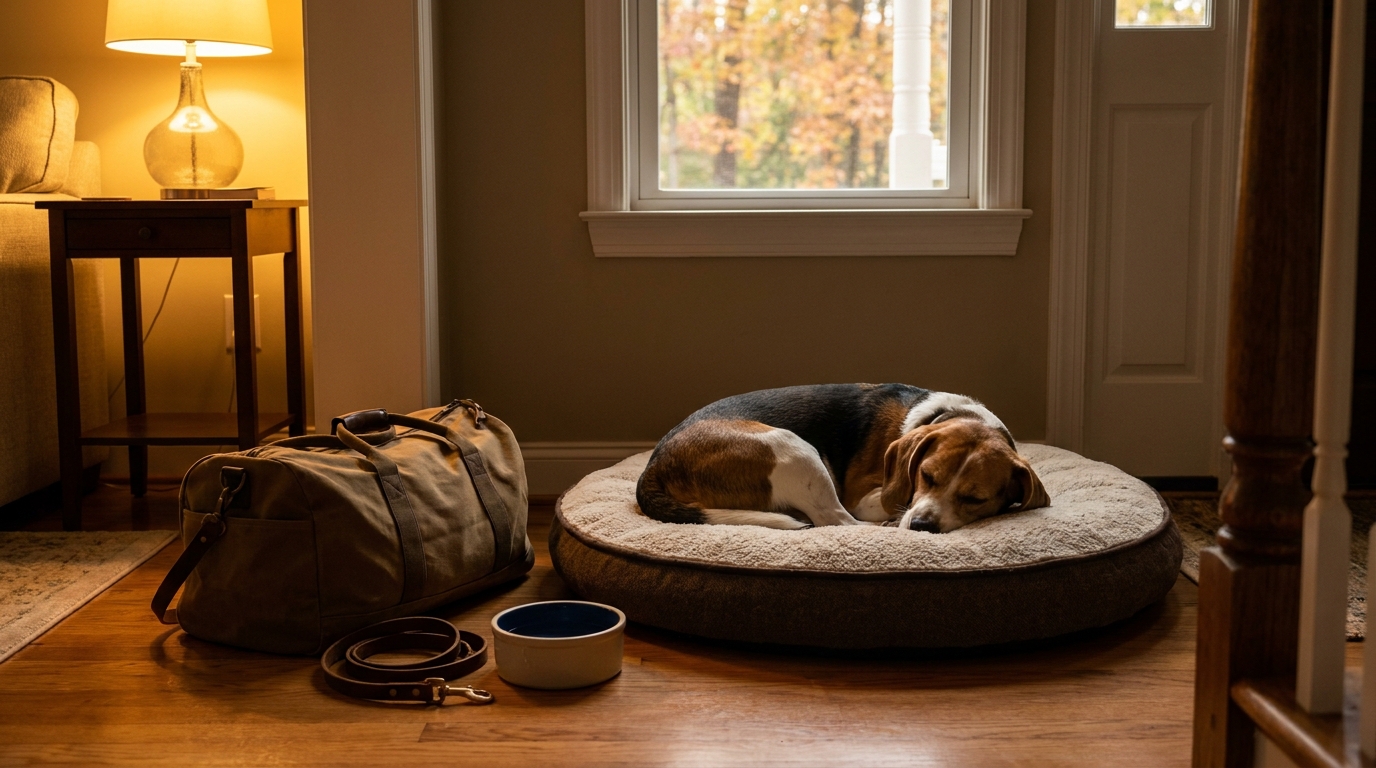
Dog diarrhea after boarding is often stress colitis: small, urgent stools, sometimes with mucus. Here are the signs that mean it's more than stress.
Go to an emergency vet now if your dog is vomiting again and again, has a lot of blood or raspberry-jam-like diarrhea, is weak or collapses, has a swollen or painful belly, or is a puppy or toy breed that won't eat or drink.
You picked your dog up, you got home, and the first trip to the yard was loose, urgent and maybe a little slimy. This guide walks through why that happens, which signs can't wait, what to do tonight, and when a kennel stay calls for a veterinarian in person.
Dog diarrhea after boarding: why it happens
Boarding changes almost everything in a dog's day at once: the place, the people, the sounds, the other dogs, the schedule and sometimes the food. VCA Animal Hospitals lists this among the causes of diarrhea in dogs: "Stress, especially following travel, boarding, or other changes in the environment".
When stress upsets the gut, it often shows up in the large bowel, the colon. VCA's colitis guide puts it plainly: "Stress colitis is one of the leading causes of large bowel diarrhea in all dogs."
So loose stool after a kennel stay does not mean anyone did anything wrong. The same goes for a long day at daycare, a road trip or a stay with a sitter. A big change in routine is reason enough.
Stress is not the only possibility, though. VCA's list of causes also includes infections, parasites and changes in diet. The sections below help you sort out where your dog stands, starting with the signs that can't wait.
Emergency signs: go to an ER now, not a video call
Some dogs with diarrhea after a kennel stay need hands-on care right away. VCA advises: "If your dog has severe, bloody diarrhea or shows more generalized signs of illness, the cause may be serious, and you should seek medical attention as soon as possible."
Go to an in-person emergency vet, rather than waiting or booking a video call, if you see any of these:
- Vomiting that keeps coming back
- A lot of blood in the stool, or stool that looks like raspberry jam
- Weakness, wobbliness or collapse
- A belly that looks swollen or seems painful when touched
- A puppy or toy breed that won't eat or drink
The raspberry-jam look matters. VCA describes acute hemorrhagic diarrhea syndrome as "an acute (sudden) disorder of dogs characterized by vomiting and bloody diarrhea ('raspberry jam' diarrhea)." You don't need to know which condition is behind it. Bloody, jam-like stool is a reason to go now, not something to figure out at home.
If you're not sure whether what you're seeing counts, the pet emergency checklist for dog and cat owners walks through common red flags. When in doubt, go.
What stress colitis in dogs looks like
If your dog is bright, drinking and interested in food, and none of the emergency signs apply, stress colitis is one possible explanation. VCA describes the usual picture: "Most dog owners report seeing frequent, small volumes of semi-formed or liquid feces."
Other things you may notice, according to VCA:
- Urgency. "Most dogs with colitis exhibit a sense of urgency and need to defecate frequently." Your dog may ask to go out again and again, or have an accident indoors.
- Straining. "Many dogs exhibit straining during and after defecation."
- A little blood at the end. VCA notes that "small amounts of bright red blood are often passed near the end of defecation."
- Mucus. VCA describes colitis as causing "frequent, small amounts of diarrhea, often with mucus or blood." The stool may look slimy or jelly-coated.
Small streaks of red at the very end of a stool are different from a lot of blood. A lot of blood, or stool that looks like raspberry jam, belongs on the emergency list above. For more on what different kinds of blood can mean, read blood in dog stool: what it means and when to get online vet guidance.
Stress, or something picked up at the kennel?
Besides stress, VCA lists causes that can fit a kennel stay:
- "Infection with bacteria, viruses, coccidia, or parasites such as worms"
- "Changes in diet or food intolerances"
Working out which cause fits your dog is a veterinarian's job. VCA's colitis guide says: "Colitis is diagnosed based on your pet's clinical signs and history. Additional testing such as microscopic evaluation of the feces, rectal examination, blood tests and X-rays may be recommended." A veterinarian decides whether your dog needs any of those tests.
The history part is where you can help. A quick, friendly call to the kennel can fill in the details a veterinarian will want. Ask:
- What food and treats did my dog get, and was it only the food I packed?
- Were any other dogs sick while my dog was there?
- Did my dog eat normally during the stay?
Keep it a conversation, not a complaint. You are gathering facts, not assigning blame. Write the answers down or save them in your phone's notes so you have them for a vet.
If your dog is also coughing after the stay, that is a separate problem worth reading about. See kennel cough symptoms, duration and treatment.
Home care tonight
For a dog with no emergency signs who is bright and alert, tonight is mostly about water, watching and gathering information.
Start with water. VCA says: "It is important to always provide easy access to water, because a dog with diarrhea can quickly become dehydrated." Keep a clean, full bowl within easy reach, including overnight.
Do not give your dog any human medicine. That covers anything from the medicine cabinet, and it's wise to check with a veterinarian before offering any home remedy or supplement, too.
Ask a veterinarian before changing your dog's food or withholding meals. Don't start a fasting plan on your own.
Save the evidence for a vet. VCA notes: "Your veterinarian will likely request a sample of fresh fecal material to be brought to your appointment." Tonight, you can:
- Pick up a fresh sample in a sealed bag or a clean container, and label it with the date and time.
- Take clear photos of the stool in good light before you clean up.
- Keep a simple log: each trip outside, whether there was mucus or blood, and whether your dog ate and drank.
Give your dog a calm spot to rest, keep walks short and easy, and go out with them each time so you can see what comes out. Check once more before bed and again first thing in the morning. The emergency list above applies overnight, too.
How long is too long?
There is no fixed timeline for diarrhea after a kennel stay. VCA gives one clear line: "If frequent liquid or semi-liquid stools persist for more than two days, you should consult your veterinarian."
That two-day line applies only to a dog who is otherwise bright, eating and drinking. The emergency signs above override any timeline.
You also don't have to wait out the full two days. If the stool is getting worse instead of better, or your dog just doesn't seem like themselves, call a veterinarian sooner.
For a closer look at when watching and waiting is reasonable, read mild diarrhea in dogs: when to wait it out vs when to call a vet.
What a RexVet online vet can and cannot do after boarding
For a dog with none of the emergency signs above, a video visit is one way to get a veterinarian's view tonight.
RexVet is a 501(c)(3) non-profit veterinary telehealth service that sees pets by video for pet parents located in Florida, New York and Virginia.
What the vet can do by video
- Review your stool photos and videos
- Look at your dog's gums, energy and hydration signs you show on camera
- Go through the kennel history: food, treats, other sick dogs and how your dog ate
- Help you decide between a home-care plan, an in-person stool test, or the ER
What the vet cannot do by video
- Run a fecal test
- Run bloodwork
- Give fluids
- Feel your dog's belly
If the veterinarian decides medication is appropriate, they can prescribe where state rules allow. In Florida, a veterinarian who has seen your pet only by video may prescribe only FDA-approved animal drugs used as labeled, for up to 14 days (1 month for flea-and-tick-only products), and cannot renew without an in-person exam.
Having your photos and notes ready makes the call more useful. See how to upload pet photos and videos for an online vet review.
RexVet's veterinarians are licensed in Florida, New York and Virginia, and video visits are available 24/7, including nights, weekends and holidays. A visit is $64.99. If you are in one of those three states and your dog has no emergency signs, book a RexVet video visit.
When to be seen in person in Florida, New York or Virginia
Some situations need a veterinarian's hands and a lab. Anything on the emergency list goes to the ER. Otherwise, book an in-person visit with a local veterinarian when:
- You see blood beyond small streaks at the end of a stool
- Your dog vomited once but is otherwise bright and drinking
- Frequent liquid or semi-liquid stools have gone on for more than two days
- Your dog is a puppy or a small dog
- A veterinarian you spoke with by video recommends a stool test
In Florida, a telehealth veterinarian must give you the contact information for at least one physical veterinary clinic in the vicinity of your pet's location. Wherever you live, it helps to know where your nearest emergency clinic is before you need it.
For state-specific details, see the guides for an online vet in Florida, an online vet in New York and an online vet in Virginia.
Before the next trip, pack your dog's own food. VCA lists changes in diet among the causes of diarrhea, so keeping your dog's usual meals is one less change during the stay. Ask that your dog get only their usual food and treats, and label each meal so the routine stays the same. Don't switch foods right before a trip; if a diet change is needed, ask your veterinarian how and when to do it.
Frequently Asked Questions
Is diarrhea after boarding normal for dogs?
It has a well-known cause. VCA lists stress, especially following travel, boarding, or other changes in the environment, as a cause of diarrhea in dogs. VCA also lists infections, parasites and diet changes, so check your dog against the emergency signs and let a veterinarian decide whether any tests are needed.
How long does stress diarrhea last in dogs?
There is no fixed timeline. VCA advises that if frequent liquid or semi-liquid stools persist for more than two days, you should consult your veterinarian. If things are getting worse rather than better, call sooner.
Should I tell the kennel my dog has diarrhea?
Yes. A calm call helps you gather the history a veterinarian will want. Ask what food and treats your dog got, whether other dogs were sick, and whether your dog ate normally during the stay. Share the answers with your veterinarian.
Can I give my dog human anti-diarrhea medicine?
No. Do not give your dog human anti-diarrhea medicine. Call a veterinarian instead, and check with them before offering any home remedy or supplement.
Does mucus in my dog's stool mean an infection?
Not necessarily. VCA describes colitis as causing frequent, small amounts of diarrhea, often with mucus or blood, and notes that stress colitis is one of the leading causes of large bowel diarrhea in dogs. VCA also says colitis is diagnosed based on clinical signs and history, with further testing sometimes recommended, so a veterinarian decides whether a fecal test is needed.
If your dog has none of the emergency signs and you'd like help sorting out stress from something more, RexVet's veterinarians are available 24/7 by video for pet parents in Florida, New York and Virginia only. A visit is $64.99. Have your stool photos and kennel notes ready, then book a video visit now.
FAQs
Is diarrhea after boarding normal for dogs?
It has a well-known cause. VCA lists stress, especially following travel, boarding, or other changes in the environment, as a cause of diarrhea in dogs. VCA also lists infections, parasites and diet changes, so check your dog against the emergency signs and let a veterinarian decide whether any tests are needed.
How long does stress diarrhea last in dogs?
There is no fixed timeline. VCA advises that if frequent liquid or semi-liquid stools persist for more than two days, you should consult your veterinarian. If things are getting worse rather than better, call sooner.
Should I tell the kennel my dog has diarrhea?
Yes. A calm call helps you gather the history a veterinarian will want. Ask what food and treats your dog got, whether other dogs were sick, and whether your dog ate normally during the stay. Share the answers with your veterinarian.
Can I give my dog human anti-diarrhea medicine?
No. Do not give your dog human anti-diarrhea medicine. Call a veterinarian instead, and check with them before offering any home remedy or supplement.
Does mucus in my dog's stool mean an infection?
Not necessarily. VCA describes colitis as causing frequent, small amounts of diarrhea, often with mucus or blood, and notes that stress colitis is one of the leading causes of large bowel diarrhea in dogs. VCA also says colitis is diagnosed based on clinical signs and history, with further testing sometimes recommended, so a veterinarian decides whether a fecal test is needed.
If your dog has none of the emergency signs and you'd like help sorting out stress from something more, RexVet's veterinarians are available 24/7 by video for pet parents in Florida, New York and Virginia only. A visit is $64.99. Have your stool photos and kennel notes ready, then book a video visit now.
Medically Reviewed
Reviewed by Dr. Tiffany Delacruz, DVM — licensed veterinarian and CEO of RexVet. Last reviewed September 26, 2026.
Content is for informational purposes and does not replace professional veterinary advice.
Chief Executive Officer · Licensed Veterinarian
Dr. Delacruz is a licensed Doctor of Veterinary Medicine specializing in preventive care and veterinary telehealth. She reviews all health content on RexVet to ensure accuracy and clinical relevance.
Sources & References
- · American Veterinary Medical Association — Telehealth Guidelines
- · AVMA — Pet Care Resources
- · U.S. FDA — Animal & Veterinary
Need an Expert Opinion on This Topic?
Connect with a certified vet via video call in minutes
Talk to Vet Now