
Cat Vomiting or Not Eating on Antibiotics: What to Do
By RexVet Team | Reviewed by Dr. Tiffany Delacruz, DVM
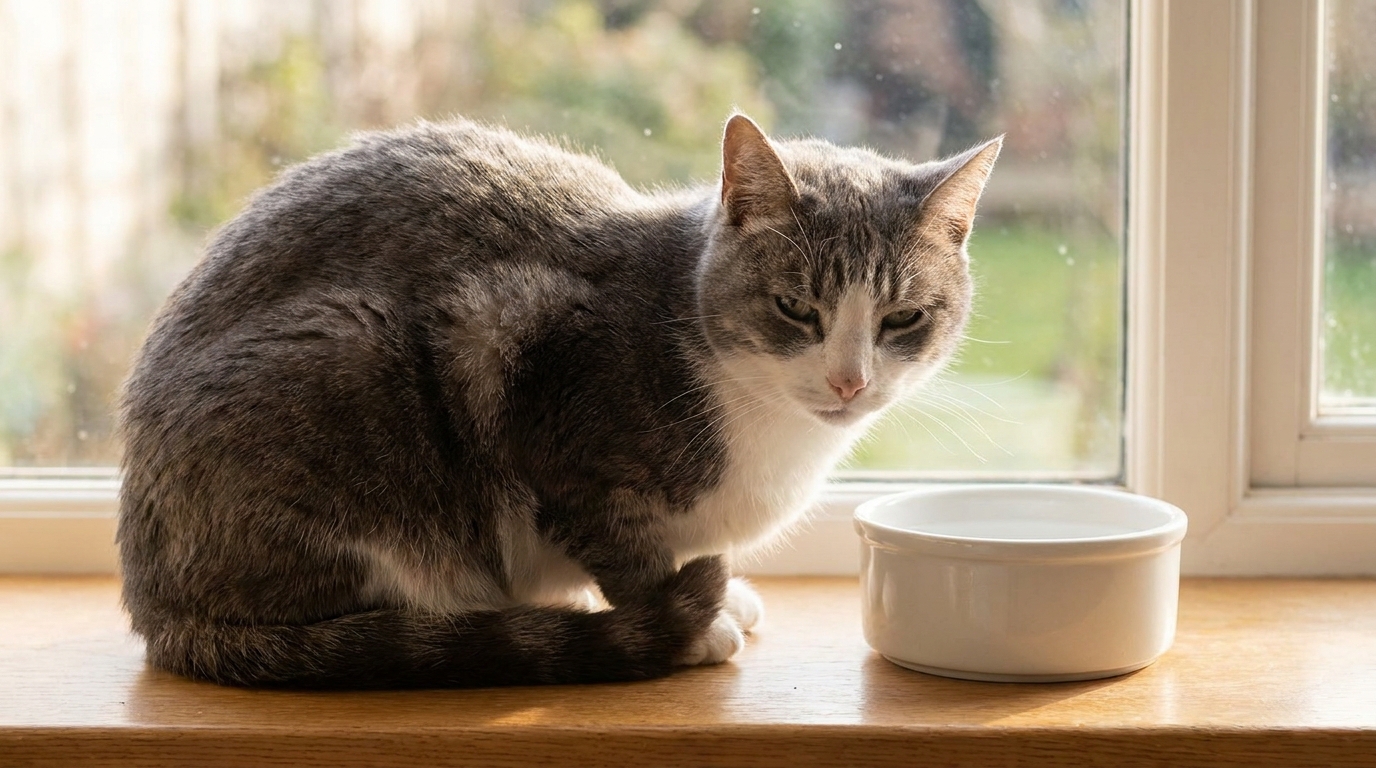
Stomach upset is a common antibiotic side effect in cats. Learn when to call the prescriber, see a vet today or go to the ER now.
Quick answer: If your cat vomits once or has soft stool on an antibiotic but is still eating and acting normally, don't stop or change it yourself; call the prescribing vet before the next dose. Eating less, a second vomit in a day or water that won't stay down means an in-person vet today. Red or coffee-ground vomit, black stool, face swelling, hives, weakness or wobbling means emergency care now.
This article is general information, not a diagnosis. If you think your pet is in danger, go to the nearest emergency animal hospital.
When is vomiting on antibiotics an emergency?
Go to an emergency vet now if a cat on an antibiotic has red or coffee-ground vomit, black stool, weakness or collapse, pale, gray or yellow gums, face swelling, hives, hard breathing, wobbling, trembling or a seizure, is straining to pee with little or no urine, is diabetic and vomiting or not eating, or is a kitten not fully vaccinated that is vomiting; give no more doses until a vet says to, and take the bottle with you.
Allergic reactions can appear after any dose, even late in the course; VCA Animal Hospitals notes that drug sensitivities can develop with repeated exposure. Sudden vomiting or diarrhea with pale gums, weakness or hard breathing after a dose means an emergency vet now.
| Sign | What it means | Next step |
|---|---|---|
| One vomit, still eating | Drug upset | Call prescriber |
| Soft stool, bright cat | Drug upset | Call prescriber |
| Drool right after a dose | Bitter taste | Watch; vet today if it lasts |
| Eating less | Needs exam | Vet today |
| Vomits twice today, or water won't stay down | Needs exam | Vet today |
| Repeated, watery or bloody stool | Needs exam | Vet today |
| No food about 24 hours | Liver risk | Vet today |
| Gulping, food coming back | Sore food pipe | Vet today |
| Any kitten vomiting | Needs exam | Vet today |
| Red or coffee grounds vomit, black stool | Bleeding | ER or vet now |
| Bloody stool, repeat vomits | Bleeding | ER or vet now |
| Face swelling, hives | Allergy | ER now |
| Wobbly, trembling, seizure | Nerve signs | ER now |
| Weak; pale, gray or yellow gums; cold ears or paws | Serious | ER now |
| Hard, fast or open-mouth breathing, blue gums | Serious | ER now |
| Straining, little or no pee | Blockage | ER now |
| Urinary signs, vomiting | Maybe blocked | ER now |
| Diabetic, vomits or won't eat | Serious | ER now |
| Kitten not fully vaccinated, vomits | Serious | ER or vet now |
"Call prescriber" means the same day, before the next dose. For "No food about 24 hours", go sooner for a kitten, senior or overweight cat. If a same-day sign appears after your clinic closes, go to an emergency animal hospital tonight.
Regurgitation followed by coughing or fast breathing also means an ER now, and a newly adopted shelter cat that vomits needs an ER or vet now; keep it, and any vomiting kitten that is not fully vaccinated, apart from other cats. With a diabetic cat, call the vet who manages its insulin on the way to the ER, and never change the insulin yourself. Sudden blindness, dilated pupils or bumping into things on a fluoroquinolone-type antibiotic means a vet or emergency vet now, with no more doses until a vet says so; the Merck Veterinary Manual says retinal degeneration can occur suddenly in cats, with the risk greatest for enrofloxacin.
A cat that got a person's or a dog's medicine by mistake needs an ER now; call ASPCA Animal Poison Control at (888) 426-4435 (a consultation fee may apply) or Pet Poison Helpline at (855) 764-7661 (per-incident fee) on the way. For an accidental extra dose of the cat's own antibiotic or a chewed-open bottle, call a vet or one of these lines now, and go to an ER now if weakness, trembling or repeated vomiting follows. Never make a cat vomit at home.
Should I stop giving the antibiotic?
For a cat on an antibiotic that is bright and eating, do not stop, skip or change the antibiotic on your own; call the vet who prescribed it before the next dose.
The 2022 AAFP/AAHA antimicrobial stewardship guidelines say to give medications as the veterinarian directed, including timing and duration of use, and to consult a veterinarian before any antibiotic use, so never give leftover antibiotics. For dogs, see RexVet's guide to dog diarrhea on antibiotics.
A vomited, spat-out or half-swallowed dose is a different question: call the prescribing vet or the pharmacist who filled it before giving anything again, and never double the next dose.
If the prescribing clinic is closed before the next dose and your cat is bright and eating, ask another veterinarian or the pharmacist.
Why do antibiotics upset a cat's stomach?
Antibiotics can disturb a cat's normal gut bacteria along with the infection, and VCA Animal Hospitals lists vomiting and diarrhea as side effects of amoxicillin-clavulanate, clindamycin, doxycycline and metronidazole, with poor appetite also listed for the last two.
| Drug type | Common upset | Ask the vet or pharmacist about |
|---|---|---|
| Penicillin type | Vomiting, diarrhea | Giving with food |
| Clindamycin | Vomiting, drooling | Water or food after |
| Doxycycline | Vomiting, no appetite | Water or food after |
VCA Animal Hospitals lists nausea, vomiting, diarrhea, decreased appetite and drooling for metronidazole, which tastes very bitter. For a cat on metronidazole that vomits or stops eating, call the prescribing vet right away, before the next dose, and see a vet in person the same day if it is not eating. A wobbly walk, trembling, eye twitching or a seizure on metronidazole means an emergency vet now; give no more doses until a vet says to.
My cat stopped eating on antibiotics. How long is too long?
Call the prescribing vet the day a cat on an antibiotic starts eating less and get an in-person exam that day; about 24 hours without food is the latest point, because the Cornell Feline Health Center says anorexia can have a severe impact on a mature cat's health if it persists for as little as 24 hours.
Cornell adds that for a kitten younger than six weeks, food avoidance for just 12 hours can pose a lethal threat. Such a kitten needs a vet now if it stops eating; an older kitten that stops eating needs an in-person vet the same day.
The danger is fatty liver (hepatic lipidosis), which the Merck Veterinary Manual calls "the most common acquired and potentially lethal feline liver disease"; Merck says anorexia sets the stage for it in overweight cats. Yellow gums, eyes or skin mean an emergency vet now.
Never fast a sick cat, and never force food into its mouth: Cornell's Dr. Carolyn McDaniel warns that forcing food can make a cat's aversion to food even worse.
Why is my cat foaming or drooling after its antibiotic?
Brief drooling or foaming right after a correctly given, prescribed dose of a bitter medicine is common in cats, and Cornell University Hospital for Animals' pharmacy calls it normal and not harmful; drooling that lasts, comes back, or comes with not eating, gulping or trouble swallowing needs a vet the same day.
The Merck Veterinary Manual lists giving medicine, particularly in cats, as a cause of drooling, and VCA says cats may drool after bitter clindamycin. Don't split, crush or open a pill or capsule unless the vet or pharmacist says to.
Foam or drool not tied to a dose is a different problem: RexVet's guide to a cat throwing up white foam sends foam or drool with no heaving to a vet or a poison line now.
Why is my cat gagging or regurgitating after a pill?
Doxycycline and clindamycin tablets or capsules can stick in a cat's food pipe (esophagus) and cause painful injury and scarring, so ask your vet or pharmacist what to follow each dose with: the Merck Veterinary Manual and the 2022 AAFP/AAHA antimicrobial stewardship guidelines advise following each doxycycline dose with liquid, and VCA Animal Hospitals says clindamycin should never be given as a dry pill.
Two Journal of Feline Medicine and Surgery case series describe this: a 2005 series by A.J. German and colleagues of four cats injured after doxycycline, one after only two doses, and a 2006 series by Beatty and colleagues of five cats with suspected injury after clindamycin capsules given without food or water.
Signs of food-pipe injury can start during the course or in the days to weeks after the last dose. The Merck Veterinary Manual lists regurgitation as the classic sign, along with drooling, repeated swallowing and trouble swallowing; any of these, or gagging, trying to eat and walking away, or weight loss, needs an in-person vet the same day.
Cornell University Hospital for Animals' pharmacy advises following a tablet or capsule right away with water from a dropper or oral syringe; ask the vet or pharmacist how much.
Is it the antibiotic or something else?
If a cat's vomiting started before the first antibiotic dose, keeps going after the course ends, or comes with litter-box straining, low energy or a swollen belly, the antibiotic may not be the cause and the cat needs a vet check: straining means an emergency vet now, and low energy or a swollen belly means an in-person vet the same day.
Many cats on antibiotics are being treated for urinary signs, and an antibiotic does not rule out a blockage. RexVet's guide to stress cystitis in cats explains that any cat straining with little or no urine, any male cat peeing often in small amounts, and any cat with urinary signs that vomits needs an emergency vet now.
An abscess or swelling that keeps growing, fever, hiding, a hunched posture, a sore belly, tacky or dry gums, or a cat that won't drink needs an in-person vet the same day; sunken eyes, weakness or collapse mean an ER now. RexVet's guide to cat vomiting and diarrhea at the same time covers other causes.
Can I give my cat probiotics or a human stomach medicine?
Ask the prescribing vet before giving a cat on antibiotics any probiotic or supplement, and never give a cat a human anti-diarrhea, anti-nausea or stomach medicine.
VCA and the Merck Veterinary Manual both say antacids and iron interfere with doxycycline.
My cat won't take its antibiotic pill: what are my options?
If a cat fights its antibiotic, ask the prescribing vet or pharmacist whether another form of the drug, or giving it with a small amount of food, is allowed, and never hide a dose in a full meal the cat may not finish.
VCA's pill guide agrees: use only a little food the cat is certain to eat. For liquids, Cornell University Hospital for Animals' pharmacy advises squirting small amounts slowly and pausing so the cat can swallow. If you cannot get a dose in, call the prescribing vet before the next one is due.
When a video visit helps, and its limits
A live video visit fits an adult cat on an antibiotic that is still bright, eating, drinking and peeing normally and has had one vomit, mild soft stool, brief drooling right after a dose, or keeps refusing the pill, when the prescribing clinic is closed before the next dose.
For a cat in Florida, New York or Virginia that has vomited once or has soft stool on an antibiotic but is still bright, eating and drinking, RexVet, a nonprofit online vet service, offers a $64.99 live video visit with a veterinarian licensed in the cat's state, about 8 AM to 11 PM Eastern, to decide whether it can wait for the prescribing vet or needs to be seen in person today. RexVet serves pets located in Florida, New York and Virginia by video visit; your cat must be in one of them during the call, a same-day slot is not guaranteed, and holiday hours are not confirmed.
On camera, a licensed RexVet vet reviews the label and dose timing, checks gum color, breathing and hydration with you, and says whether this looks like an expected side effect to raise with the prescriber, needs an in-person exam today or needs an emergency hospital now.
Whether any medicine fits is the veterinarian's decision; no prescription is promised.
From RexVet's visit study: More than half of RexVet visits (52%) took place outside standard weekday hours of 8 AM to 6 PM, Monday to Friday. Have the bottle, dose times and photos of any vomit or stool ready. If your cat fits, check open slots and book a live video visit.
A video visit cannot feel the belly or bladder, take a temperature, run tests or give fluids, and it cannot be counted on to start, switch or extend an antibiotic. Changes to another veterinarian's prescription usually belong with that veterinarian or the pharmacist who filled it.
Go to an emergency hospital now, not a video visit, for red or coffee-ground vomit, black stool, weakness or collapse, pale, gray or yellow gums, face swelling, hives, hard or fast breathing, wobbling, trembling or a seizure, straining to pee, a diabetic cat that vomits or won't eat, or a kitten not fully vaccinated that is vomiting. See a vet in person the same day, not by video, for a second vomit in a day, water that won't stay down, eating less, watery or bloody diarrhea, gulping or gagging after pills, or any other kitten that is vomiting. Outside about 8 AM to 11 PM ET, if no slot is open, or if your cat is getting worse, go to an emergency vet.
Several antibiotics cats commonly get, such as doxycycline and metronidazole, are human-labeled or used off-label in cats, and federal rules (21 CFR 530.3) require an in-person exam for any off-label or human-drug use, so a video-only visit cannot supply these drugs, or clindamycin capsules or tablets, for a cat. Florida s.474.2021 also limits telehealth-only prescriptions to FDA-approved animal drugs used as labeled, for up to 14 days (1 month for products labeled solely for flea and tick control), with no renewal without an in-person exam and no human-labeled, controlled or compounded anti-infective drugs. Virginia allows an electronic exam, but prescribing is still the veterinarian's call, and New York's rules are not settled. RexVet is not a pharmacy; a pharmacy transfer fee applies when RexVet sends a prescription to an outside pharmacy.
Need an Expert Opinion on This Topic?
Book a video visit with a licensed vet, evenings and weekends included
See open timesFrequently Asked Questions
Should I keep giving my cat antibiotics if it threw up once?
Don't decide on your own: call the prescribing vet before the next dose, and don't stop, skip or re-give a dose without their advice. A second vomit in a day, eating less or water that won't stay down means an in-person vet today, and red or coffee-ground vomit, black stool, hives or weakness means an ER now.
How long does diarrhea last after antibiotics in cats?
There is no set length for cats, so call the prescribing vet before the next dose. Repeated, watery or bloody diarrhea needs an in-person vet the same day, black stool means an ER now, and diarrhea that lasts past the course needs a recheck.
Can I give my cat's antibiotic with food?
Ask the prescribing vet or pharmacist, because some antibiotics are meant to go with food and food gets in the way of others. VCA Animal Hospitals says amoxicillin-clavulanate, doxycycline and metronidazole are given with food and clindamycin never as a dry pill, while the Merck Veterinary Manual says food impairs the absorption of ampicillin.
My cat foams at the mouth after the liquid antibiotic. Is that dangerous?
Usually not: brief foaming or drooling right after a correctly given, prescribed dose of a bitter medicine is common in cats. Drooling that lasts or comes with not eating or gulping needs an in-person vet the same day, and drooling with weakness, pale gums or hard breathing means an ER now.
My cat won't eat on antibiotics. What can I do tonight?
Call the prescribing vet tonight. A cat that eats less on an antibiotic needs an in-person vet the same day, or an emergency animal hospital if no clinic can see it. About 24 hours without food is the latest point, sooner for a kitten, senior or overweight cat. A diabetic cat that won't eat needs an emergency vet now. Never fast or force-feed it, and give no human medicine or supplement.
My cat threw up right after its antibiotic. Should I give the dose again?
No, not on a guess: call the prescribing vet or the pharmacist who filled it before giving anything again, and never double the next dose; the same goes for a spat-out or half-swallowed pill. A cat that keeps bringing up food or water, gulps, gags or drools after pills needs an in-person vet the same day, because pills such as doxycycline and clindamycin can injure the food pipe.
Can an online vet help with my cat's antibiotic side effects in Florida, New York or Virginia?
Yes, if your cat is in Florida, New York or Virginia and is still bright, eating and drinking with only one vomit or soft stool. The veterinarian can review the label and dose timing and check gum color, breathing and hydration; bloodwork, a belly exam and fluids need an in-person visit, and a cat that is eating less or has an emergency sign needs a clinic or ER, not video. No prescription or switch is promised. If medicine comes up, Florida s.474.2021 limits video-only prescriptions to on-label FDA-approved animal drugs for up to 14 days with no renewal without an in-person exam. Federal rules (21 CFR 530.3) require an in-person exam for off-label or human-drug use. Virginia allows an electronic exam, but prescribing is still the veterinarian's call, and New York's rules are not settled.
FAQs
Should I keep giving my cat antibiotics if it threw up once?
Don't decide on your own: call the prescribing vet before the next dose, and don't stop, skip or re-give a dose without their advice. A second vomit in a day, eating less or water that won't stay down means an in-person vet today, and red or coffee-ground vomit, black stool, hives or weakness means an ER now.
How long does diarrhea last after antibiotics in cats?
There is no set length for cats, so call the prescribing vet before the next dose. Repeated, watery or bloody diarrhea needs an in-person vet the same day, black stool means an ER now, and diarrhea that lasts past the course needs a recheck.
Can I give my cat's antibiotic with food?
Ask the prescribing vet or pharmacist, because some antibiotics are meant to go with food and food gets in the way of others. VCA Animal Hospitals says amoxicillin-clavulanate, doxycycline and metronidazole are given with food and clindamycin never as a dry pill, while the Merck Veterinary Manual says food impairs the absorption of ampicillin.
My cat foams at the mouth after the liquid antibiotic. Is that dangerous?
Usually not: brief foaming or drooling right after a correctly given, prescribed dose of a bitter medicine is common in cats. Drooling that lasts or comes with not eating or gulping needs an in-person vet the same day, and drooling with weakness, pale gums or hard breathing means an ER now.
My cat won't eat on antibiotics. What can I do tonight?
Call the prescribing vet tonight. A cat that eats less on an antibiotic needs an in-person vet the same day, or an emergency animal hospital if no clinic can see it. About 24 hours without food is the latest point, sooner for a kitten, senior or overweight cat. A diabetic cat that won't eat needs an emergency vet now. Never fast or force-feed it, and give no human medicine or supplement.
My cat threw up right after its antibiotic. Should I give the dose again?
No, not on a guess: call the prescribing vet or the pharmacist who filled it before giving anything again, and never double the next dose; the same goes for a spat-out or half-swallowed pill. A cat that keeps bringing up food or water, gulps, gags or drools after pills needs an in-person vet the same day, because pills such as doxycycline and clindamycin can injure the food pipe.
Can an online vet help with my cat's antibiotic side effects in Florida, New York or Virginia?
Yes, if your cat is in Florida, New York or Virginia and is still bright, eating and drinking with only one vomit or soft stool. The veterinarian can review the label and dose timing and check gum color, breathing and hydration; bloodwork, a belly exam and fluids need an in-person visit, and a cat that is eating less or has an emergency sign needs a clinic or ER, not video. No prescription or switch is promised. If medicine comes up, Florida s.474.2021 limits video-only prescriptions to on-label FDA-approved animal drugs for up to 14 days with no renewal without an in-person exam. Federal rules (21 CFR 530.3) require an in-person exam for off-label or human-drug use. Virginia allows an electronic exam, but prescribing is still the veterinarian's call, and New York's rules are not settled.
Medically Reviewed
Reviewed by Dr. Tiffany Delacruz, DVM — licensed veterinarian and CEO of RexVet. Last reviewed November 22, 2026.
Content is for informational purposes and does not replace professional veterinary advice.
Chief Executive Officer · Licensed Veterinarian
Dr. Delacruz is a licensed Doctor of Veterinary Medicine specializing in preventive care and veterinary telehealth. She reviews all health content on RexVet to ensure accuracy and clinical relevance.
Sources & References
- · American Veterinary Medical Association — Telehealth Guidelines
- · AVMA — Pet Care Resources
- · U.S. FDA — Animal & Veterinary