
Cat Licking Belly Bald? Fleas, Pain, Allergy or Stress
By RexVet Team | Reviewed by Dr. Tiffany Delacruz, DVM
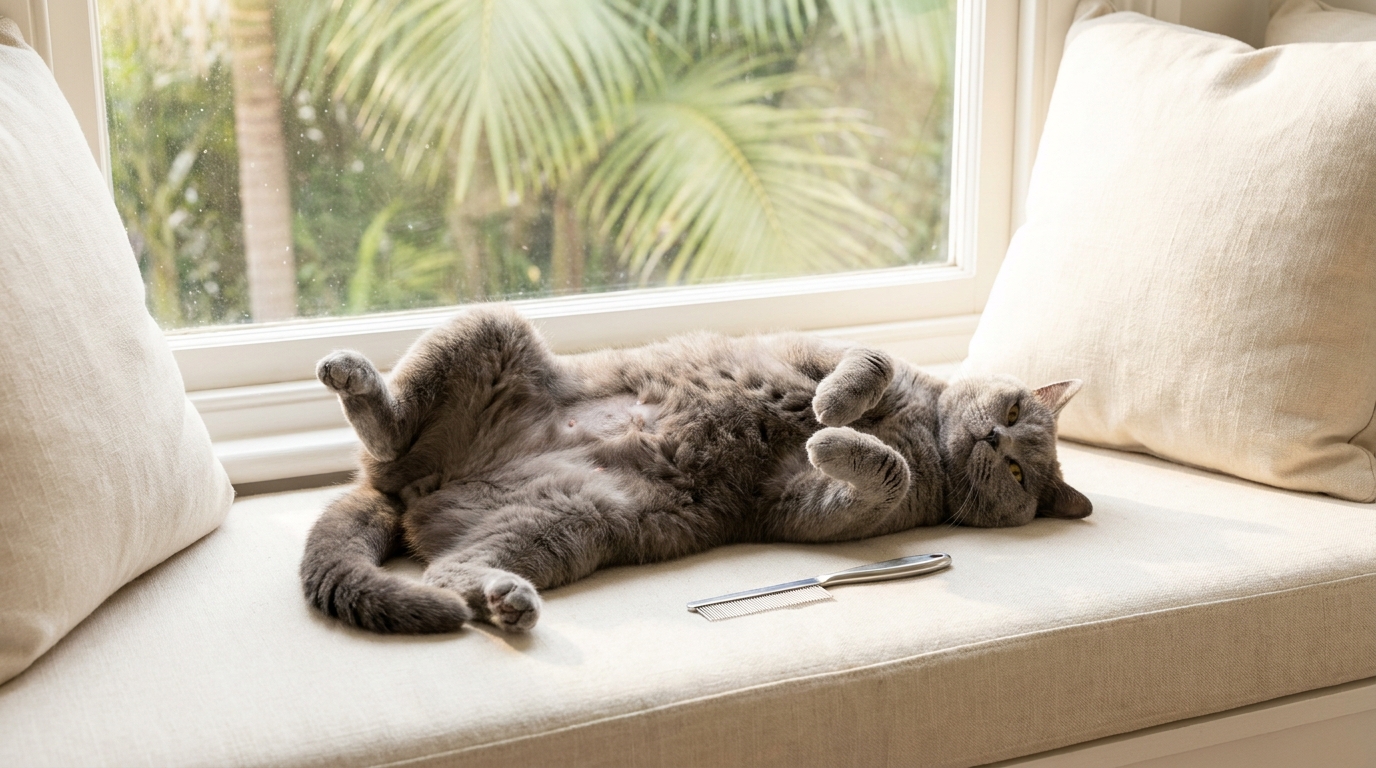
Cat licking belly bald? Fleas, allergies, bladder pain and stress can all look alike, so check for fleas first and let a vet sort out the rest.
Go to an emergency vet now if your cat, especially a male, is straining in the litter box with little or no urine, crying while trying to pee, or vomiting and hiding; licking the lower belly can be a sign of bladder pain, and a blocked bladder is an emergency.
Maybe your cat rolled over in a patch of sun and you saw it: a belly that looks shaved, or inner thighs with only thin stubble left. Maybe you have caught your cat licking there again and again. It is a sign that something, whether itch, pain or stress, is driving your cat to groom too much.
Cat Licking Belly Bald: What Fur Mowing Looks Like
Overgrooming does not always look like a skin problem. It can look like a neat haircut. PetMD describes cats that lick too much this way: they "can lose fur in strips along their back, belly, or inner legs. The affected areas may be completely bare or have very short stubble."
Veterinarians at the Cornell Feline Health Center call these cats "fur mowers." Cornell notes that "owners usually don't notice a problem until they observe significant hair loss or skin lesions."
Look closely at the skin under the missing fur. It may look normal, or it may be red, scabbed or crusty. Broken or scabbed skin is a reason to see a vet, as the in-person section below explains.
Emergency First: The Bladder
Before you think about fleas or stress, rule out the one cause that can quickly become life-threatening. If your cat, especially a male, is straining in the litter box with little or no urine, crying while trying to pee, or vomiting and hiding, go to an emergency vet now. Do not wait to see if it passes.
Why does this belong in an article about fur loss? Because belly licking and bladder pain can go together. PetMD explains that "A urinary tract infection or anal sac impaction may encourage excessive grooming of the lower belly, the genitals, or the area around their anus."
Our guide to a male cat straining to pee explains the warning signs and why they cannot wait, and our cat urinary blockage and FLUTD guide covers what happens next.
Cause 1: Fleas and Other Parasites
Fleas are the first thing to check, even if your cat never goes outside. Cornell notes that "compulsive licking at the tail head may indicate a flea infestation," so a thin patch near the base of the tail is a useful clue. Indoor cats are not off the hook: our guide to flea prevention for indoor cats in Florida and New York explains why indoor cats still need protection.
Here is how to do a flea check at home:
- Lay a white paper towel on a table or the floor and set your cat on or over it.
- Run a fine-toothed flea comb through the fur, especially along the lower back, the base of the tail and the belly.
- Tap the comb onto the paper towel after each pass.
- Look at what lands on the towel, and take a clear photo of anything you find to show your vet.
If you see live fleas, tell your vet, and keep going through the rest of this list with them. A cat can have fleas and an allergy, or fleas and bladder pain, at the same time.
If the comb comes up clean, still mention fleas to your vet rather than crossing them off yourself. A vet may plan a flea-control trial first, before looking at other causes.
Ask your vet which flea control is right for your cat and for any other pets in the home, and use only what your vet recommends for your cat.
Lice and fur mats belong on the checklist too. Cornell advises that "The owner can check for fleas, lice and fur mats, but beyond that, a veterinarian should intervene."
Cause 2: Allergies
Allergies can make a cat itch, and an itchy cat licks. According to Cornell, "cats with pollen or food allergies may lick their backs, abdomens or other areas of the body." PetMD adds that skin can be irritated by "an infection, an allergy to certain foods, parasites, or substances in the environment."
Flea allergy belongs on this list too. PetMD points to irritation at the base of the tail as a flea-allergy clue, which is one more reason the flea check comes first.
Sorting out an allergy is a job for your vet. A vet may plan a flea-control trial first and a strict diet trial later. Plan any diet change with your vet rather than switching foods on your own.
While you wait, do not put human creams, ointments or sprays on the bald skin; ask your vet before putting anything on it. For more on this, see what an online vet can do for skin allergies.
Cause 3: Pain
A bald patch can be a clue to pain, not only itch. Cornell puts it simply: "If pain is the issue, the licking is focused on the painful area, like in cases of disc disease or anal sac impaction."
That makes the location of the bald patch worth noting for your vet:
- Lower belly, genitals or around the anus: PetMD links both a urinary tract infection and anal-sac impaction to overgrooming in these areas, as quoted in the emergency section above. If you see any of the emergency signs there, go now.
- Along the back: PetMD notes that back pain may make a cat overgroom a specific part of the back.
The location is a clue, not a diagnosis. Cornell says the mowed area gives a clue to the cause, "but there is great overlap," so let your vet put the pieces together.
Cause 4: Stress, and Why It Comes Last
Stress can make a cat groom its fur off. The medical name is psychogenic alopecia. Cornell notes that "A recent move, the addition or loss of another pet in the home, or even a change of schedule can cause anxiety in cats."
Still, stress is the last cause a vet will settle on, not the first. Veterinary Partner (VIN) explains that psychogenic alopecia "typically serves as a diagnosis of exclusion, meaning all possible medical causes must be ruled out" before a behavioral diagnosis can be made. Because stress can only be diagnosed after medical causes are ruled out, those come first.
Cornell says the same thing from the other side: "If all medical problems have been ruled out, then we normally treat over grooming as the result of some form of stress in a cat's life."
If your household has changed lately, tell your vet, but check for fleas, allergy and pain first.
What You Can Do at Home This Week
These steps are simple, and they give your vet much better information:
- Flea-comb and check. Use the paper-towel method above, and repeat it over a few days.
- Take photos in daylight. Photograph the bald areas near a window, with one close-up and one wider shot that shows where on the body they are. Our guide on how to upload pet photos and videos for an online vet review shows how to share them.
- Keep a short log. Note when the licking happens, how long it lasts, and anything that seems to set it off, such as visitors or a noisy day.
- Watch the litter box. Write down any litter-box changes to tell your vet. For the signs that cannot wait, see the emergency section above.
- Keep routines steady. Feed, play and clean the litter box at the same times each day.
- Play every day. Among its tips for easing stress, Cornell suggests finding a few minutes to play with your cat each day, and says "ten to 15 minutes daily" will do.
- Do not scold. PetMD advises, "don't punish them or try to interfere."
- Skip human products. No human creams, sprays or medicines on or in your cat.
What a RexVet Online Vet Can and Cannot Do
For a cat with a bald belly who is otherwise eating, peeing normally and acting like themselves, a video visit is a practical first step, especially for a cat who hates the carrier. RexVet's veterinarians are licensed in Florida, New York and Virginia.
On a video visit, the vet can:
- Look at the pattern of fur loss and the skin on camera and in your photos.
- Walk you through a flea check while you comb.
- Ask the urinary and stress questions that help narrow the cause.
- Build a plan: flea control first, what to track, and which in-person tests, such as skin scrapings, an allergy work-up or a urine test, are worth it.
- Help you decide whether an in-person exam is needed.
A video vet cannot take skin scrapings or cultures, test urine or run bloodwork; they can tell you which in-person tests are worth it. Any straining, crying in the litter box or vomiting goes to an emergency vet first, not a video visit.
If the veterinarian decides medication is appropriate, they can prescribe where state rules allow. In Florida, a veterinarian who has seen your pet only by video may prescribe only FDA-approved animal drugs used as labeled, for up to 14 days (1 month for flea-and-tick-only products), and cannot renew without an in-person exam.
If your cat is eating and peeing normally and you want a vet to look at the bald patch, you can book a RexVet video visit. A visit is $64.99, vets are available 24/7, and visits are for pet parents in Florida, New York and Virginia only.
When to Be Seen In Person in Florida, New York or Virginia
Some signs mean your cat needs a hands-on exam. Book an in-person visit if you see:
- Broken, scabbed or oozing skin. Cornell explains that licking can abrade the skin and lead to infection, and that infection intensifies the licking, so "a vicious cycle" is set up.
- Any urinary signs or litter-box changes. The emergency signs above still come first.
- Weight loss.
- Not eating.
- Baldness that keeps spreading.
If the bald spots are on the neck and back and come with scabs, our guide to cat scabs on the neck and back covers that pattern. You can also read about RexVet in your state: online vet in Florida, online vet in New York and online vet in Virginia.
Under Florida law, a telehealth vet must give you the contact information for at least one physical veterinary clinic near you.
Frequently Asked Questions
Why is my cat licking its belly bald?
Fleas, allergies, pain (including bladder pain) and stress can all lead to it. Cornell notes that owners usually do not notice a problem until they see significant hair loss or skin lesions, so check the litter box and skin too. A vet rules out the medical causes before settling on stress.
Will my cat's belly fur grow back?
PetMD notes that after you seek help from your vet, "it may take a month or so for an overgrooming behavior to resolve, and even longer for your cat's fur to grow back." Keep taking daylight photos so you and your vet can see whether the patch is filling in. If the bald area keeps spreading, tell your vet.
Can stress make a cat lick its fur off?
Yes. Moves, schedule changes and a new or lost pet can all cause anxiety in cats, and some cats respond by overgrooming. But stress is a diagnosis of exclusion, so a vet will first rule out fleas, allergies, pain and bladder problems.
Can indoor cats get fleas that cause belly hair loss?
Yes, indoor cats still belong on the flea checklist. A flea comb over a white paper towel is an easy first check. If the comb comes up clean, still mention fleas to your vet, who may plan a flea-control trial.
Is belly licking a sign of a bladder problem?
It can be. If your cat, especially a male, is straining with little or no urine, crying while trying to pee, or vomiting and hiding, go to an emergency vet now. PetMD notes a urinary tract infection may encourage grooming of the lower belly. Tell your vet about any other litter-box changes promptly.
A bald belly is worth taking seriously, and working through fleas, allergies, pain and stress in order is the way to an answer. If your cat is peeing normally and you would like help making a plan, you can book a video visit now. A visit is $64.99, RexVet's vets are available 24/7, and visits are for pet parents in Florida, New York and Virginia only.
FAQs
Why is my cat licking its belly bald?
Fleas, allergies, pain (including bladder pain) and stress can all lead to it. Cornell notes that owners usually do not notice a problem until they see significant hair loss or skin lesions, so check the litter box and skin too. A vet rules out the medical causes before settling on stress.
Will my cat's belly fur grow back?
PetMD notes that after you seek help from your vet, "it may take a month or so for an overgrooming behavior to resolve, and even longer for your cat's fur to grow back." Keep taking daylight photos so you and your vet can see whether the patch is filling in. If the bald area keeps spreading, tell your vet.
Can stress make a cat lick its fur off?
Yes. Moves, schedule changes and a new or lost pet can all cause anxiety in cats, and some cats respond by overgrooming. But stress is a diagnosis of exclusion, so a vet will first rule out fleas, allergies, pain and bladder problems.
Can indoor cats get fleas that cause belly hair loss?
Yes, indoor cats still belong on the flea checklist. A flea comb over a white paper towel is an easy first check. If the comb comes up clean, still mention fleas to your vet, who may plan a flea-control trial.
Is belly licking a sign of a bladder problem?
It can be. If your cat, especially a male, is straining with little or no urine, crying while trying to pee, or vomiting and hiding, go to an emergency vet now. PetMD notes a urinary tract infection may encourage grooming of the lower belly. Tell your vet about any other litter-box changes promptly.
A bald belly is worth taking seriously, and working through fleas, allergies, pain and stress in order is the way to an answer. If your cat is peeing normally and you would like help making a plan, you can book a video visit now. A visit is $64.99, RexVet's vets are available 24/7, and visits are for pet parents in Florida, New York and Virginia only.
Medically Reviewed
Reviewed by Dr. Tiffany Delacruz, DVM — licensed veterinarian and CEO of RexVet. Last reviewed September 23, 2026.
Content is for informational purposes and does not replace professional veterinary advice.
Chief Executive Officer · Licensed Veterinarian
Dr. Delacruz is a licensed Doctor of Veterinary Medicine specializing in preventive care and veterinary telehealth. She reviews all health content on RexVet to ensure accuracy and clinical relevance.
Sources & References
- · American Veterinary Medical Association — Telehealth Guidelines
- · AVMA — Pet Care Resources
- · U.S. FDA — Animal & Veterinary
Need an Expert Opinion on This Topic?
Connect with a certified vet via video call in minutes
Talk to Vet Now