
Carbon Monoxide Poisoning in Dogs and Cats: Signs, First Aid
By RexVet Team | Reviewed by Dr. Tiffany Delacruz, DVM
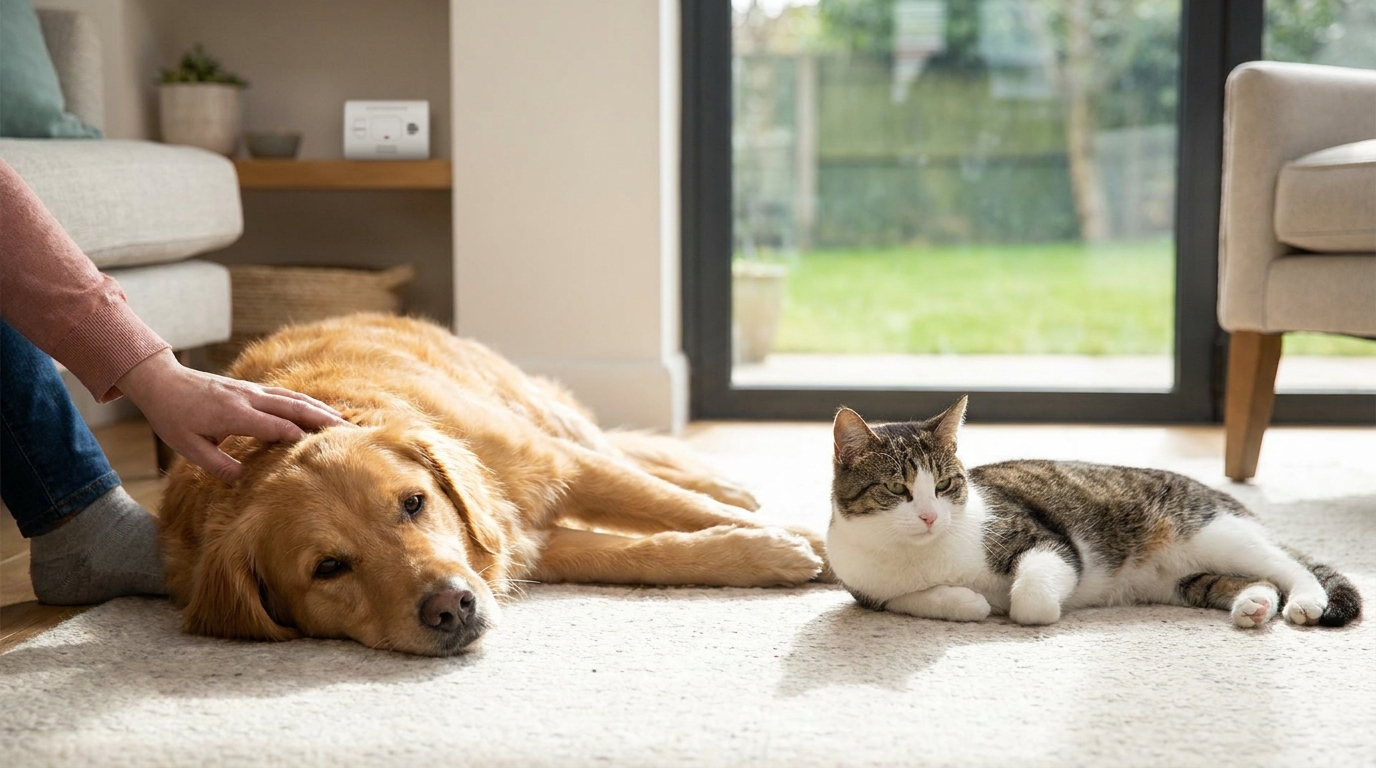
How to spot carbon monoxide poisoning in a dog or cat, what to do first, why pets can't smell it, and which signs can show up days later.
Quick answer: If a carbon monoxide (CO) alarm sounds, get every person and pet outside and call 911 from outside. A dog or cat needs an emergency vet now if it is weak, wobbly, sleepy, confused, vomiting, breathing fast or hard, or collapses, or was shut in with a running car, generator or fuel-burning heater, even if it seems fine. Watch a recovered pet at least 3 to 6 days for delayed nerve signs, the ASPCA says.
This article is general information, not a diagnosis. If you think your pet is in danger, go to the nearest emergency animal hospital.
Get everyone outside first: take every person and pet into fresh air and call 911 from outside. Then go to an emergency vet now, calling ahead, for:
- Sleepiness, weakness, a wobbly walk, confusion or agitation, vomiting, fast or hard breathing, or bright red or bluish gums.
- A seizure, collapse or a pet you cannot wake, even if it seems to recover in fresh air.
- A pet shut in a garage, room, basement or shed with a running car, generator or fuel-burning heater, left in an idling car, or in a home where people also feel sick, even if it seems fine.
- A pet pulled from a house fire or a smoky home, even if it looks fine.
Call on the way, not instead of going: ASPCA Animal Poison Control at (888) 426-4435 (a consultation fee may apply) or Pet Poison Helpline at (855) 764-7661 (a per-incident fee applies).
What to do right now if your pet may have breathed carbon monoxide
If a dog or cat may have breathed carbon monoxide, get every person and pet outside into fresh air, call 911 from outside, and do not go back in until responders say the home is safe. When a CO alarm sounds, the U.S. Consumer Product Safety Commission (CPSC) says: "Get outside immediately. Then call 911."
- Take every pet out, including birds and caged pets. Birds are more sensitive to carbon monoxide, the ASPCA says, so a bird needs an emergency or avian vet now, even if it seems fine.
- Do not stay inside to open windows or switch off appliances. If a pet is still inside, tell the 911 dispatcher instead of going back in.
- If the source may be in an attached garage, do not start the car there. Ask responders, or get another ride to the emergency vet.
- Tell the emergency vet what was running and roughly how long your pet was inside.
- Do not give home or canned oxygen, make your pet vomit, or give activated charcoal.
If your pet shows no signs, was not shut in with the source and no one in the home feels sick, call an emergency vet or a poison line from outside, follow their advice, and go to the emergency vet at once if anything seems off. The ASPCA's professional guidance says a pet with no signs may be watched at home only after the fire department or a utility company has found the home safe.
Signs of carbon monoxide poisoning in dogs and cats
Early signs of carbon monoxide poisoning in dogs and cats are sleepiness, weakness, dizziness (often seen as a wobbly walk), vomiting, confusion and fast breathing, VCA Animal Hospitals and the ASPCA say; severe signs are hard breathing, seizures, collapse and coma, and any of them means an emergency vet now.
VCA says bright cherry-red gums and ears may be noted, and the Merck Veterinary Manual lists bluish or muddy-looking gums among the signs. Gum color varies, so normal-looking gums do not rule carbon monoxide out.
The CDC lists headache, dizziness, weakness, upset stomach, vomiting, chest pain and confusion as signs in people, so when people and pets in one home feel sick at once, suspect carbon monoxide: get everyone outside and call 911 from outside. A dog that is vomiting and wobbly after a power outage, with a generator running nearby, needs fresh air with everyone else, a 911 call from outside, then an emergency vet now.
| Sign | What it means | Do now |
|---|---|---|
| Sleepy or weak | Early sign | ER now |
| Wobbly walk | Early sign | ER now |
| Confused | Early sign | ER now |
| Vomiting | Early sign | ER now |
| Fast breathing | Low oxygen | ER now |
| Hard breathing | Severe | ER now |
| Seizures | Severe | ER now |
| Collapse | Severe | ER now |
| Bright red gums | May appear | ER now |
| Blind, deaf days later | Delayed sign | Back to ER |
| Odd behavior days later | Delayed sign | Back to ER |
Sources: VCA and the ASPCA (signs and delayed signs).
Can dogs or cats smell carbon monoxide?
No: carbon monoxide has no color or smell, Pet Poison Helpline says, so a dog or cat cannot be relied on to warn you; only a working CO alarm can detect it. The rotten-egg smell of a gas leak comes from an odorant added to natural gas, not from carbon monoxide, so not smelling anything never rules carbon monoxide out.
Stories of a dog that "warned" its family usually come from a pet reacting to the alarm or to feeling ill. A restless, confused or unusually sleepy pet may already be poisoned.
Do pets get sick from carbon monoxide before people?
Pets may show signs of carbon monoxide poisoning earlier than people because, VCA says, they are smaller, breathe faster and spend more time indoors, not because they are closer to the floor; the ASPCA says carbon monoxide is roughly the same density as room air. Only a working CO alarm can detect carbon monoxide; a pet acting normal does not mean the air is safe.
The idea that carbon monoxide sinks to the floor is a myth. The ASPCA says animals close to the ground are at no more risk than taller animals, and the Merck Veterinary Manual describes the gas as slightly lighter than air.
Where carbon monoxide comes from in winter and after storms
The usual sources of carbon monoxide in a home with pets are furnaces, gas space heaters, fireplaces, water heaters, a car warming up in a garage, and generators or grills used during power outages. The ASPCA says winter is the peak time because home furnaces are one of the most common sources, and the Merck Veterinary Manual says fatal carbon monoxide outbreaks in animals classically happen in cold weather, particularly after a power outage.
The CDC says to keep generators outside, at least 20 feet from doors, windows and vents, and never to use generators, grills or camp stoves inside a home, garage or carport. The CPSC adds that open doors or windows do not give enough ventilation to stop a deadly buildup. In Florida, that matters most when hurricanes and tropical storms knock out power; the NOAA National Hurricane Center puts the Atlantic season at June 1 to November 30.
In New York and Virginia, take the most care in furnace season and winter storms. VCA notes that a blocked car exhaust pipe can cause carbon monoxide buildup, so clear snow from the tailpipe before starting a car and never leave a pet in an idling car.
| Source | When | Safe rule |
|---|---|---|
| Generator | Outages | Outside, at least 20 feet |
| Car | Warm-ups | Never run in garage |
| Snowed-in car | Snowstorms | Clear tailpipe |
| Gas heater | Cold snaps | Vented, plus alarm |
| Furnace | Winter | Yearly service |
| Water heater | All year | Yearly service |
| Grill, charcoal | Outages | Outdoors only |
| Fireplace | Winter | Clean, vented |
Sources: the CPSC and the CDC (generators, cars, fuel appliances); VCA (blocked exhaust pipes and chimneys); the ASPCA (fireplaces).
Is a garage or heated shed safe for a dog or cat in winter?
A garage or heated shed is not safe for a dog or cat when a car, generator or fuel-burning heater runs there; keep the pet in a warm room indoors, and never run a generator in a garage or shed. The CDC says never to run a car or truck in an attached garage, even with the garage door open.
The temperature chart for dogs by size and coat explains when a garage bed can work: an insulated space, a dry bed off the floor, and no heater that carries fire, carbon monoxide or shock risk. Cats have their own safe temperatures and warning signs. Garages also hold coolant, and antifreeze poisoning can kill a dog or cat that seems fine at first.
Electric heaters make no carbon monoxide but are still a burn and fire risk. The CPSC says to keep portable heaters at least 3 feet from beds, clothes, curtains and sofas and to be mindful of pets around them.
What the emergency vet will do
Oxygen is the main treatment for carbon monoxide poisoning in dogs and cats; the Merck Veterinary Manual calls 100% oxygen the mainstay of treatment, and an emergency vet decides how much a pet needs.
A standard pulse oximeter can give a falsely normal reading in carbon monoxide poisoning, the Merck Veterinary Manual warns, so a normal reading, including on a home device, does not rule it out; an emergency vet may check a blood carboxyhemoglobin level or use a CO-oximeter if one is available. Hyperbaric oxygen is offered at only a few veterinary hospitals, and its added value is still uncertain; it never replaces getting to the nearest emergency vet.
The Merck Veterinary Manual says airway injury from house-fire smoke can peak 12 to 24 hours or later after exposure, so a pet pulled from a fire or a smoky house needs an emergency exam even if it looks fine. Soot in the nose or mouth, coughing, noisy or hard breathing, or burns on the face or mouth make it more urgent, and if any of them start after your pet comes home, go back to the ER now.
Can signs show up days after a pet seems fine?
Yes: the ASPCA says dogs and cats that recover from carbon monoxide poisoning should be watched for at least 3 to 6 more days, because nerve signs can return or suddenly get worse. The ASPCA also says permanent deafness and blindness are possible.
In one published 2005 case series of 4 dogs and 2 cats exposed to generator exhaust, all surviving animals had delayed nerve problems, and about two weeks after the pets went home the owner reported possible hearing problems, which testing confirmed and which resolved about six weeks later. That is one small report, not a rule for every pet.
Go back to the treating hospital or an ER now for any new or returning confusion, unusual sleepiness, personality change, wobbly walk, seizure, vomiting, breathing change, bumping into things, or not reacting to sounds.
How to protect pets from carbon monoxide
To protect pets from carbon monoxide, put a battery-operated or battery-backup CO alarm on every level of the home and outside sleeping areas, have fuel-burning appliances serviced every year, and never run an engine or generator indoors or in a garage, the CPSC and CDC say.
- Add a CO alarm near where your pets sleep, following the maker's height instructions.
- Test alarms monthly. A plain smoke alarm is not a CO alarm unless it is a combination unit (CPSC).
- Keep leashes and carriers by the door, so every pet gets out fast if the alarm sounds.
When a RexVet video visit helps, and when it does not
RexVet, a nonprofit online vet service that serves pets located in Florida, New York and Virginia by video visit, cannot treat carbon monoxide poisoning: if a CO alarm sounds or a dog or cat shows any sign, get everyone outside, call 911, then get the pet to an emergency vet. A video vet cannot give oxygen, run blood tests, check hearing or eyesight, or tell by camera that a pet is safe. A standard pulse oximeter can read falsely normal, and normal-looking gums do not rule carbon monoxide out.
Any new or returning sign after carbon monoxide, including confusion, unusual sleepiness, a wobbly walk, vomiting, fast or hard breathing, a personality change, trouble seeing or hearing, a seizure or collapse, means going back to the treating hospital or an ER now, not a video visit.
A video visit can help only after your pet has been examined or treated in person and sent home, and is acting normally. A live video visit with a licensed RexVet vet, a veterinarian licensed in your pet's state, costs $64.99; slots run about 8 AM to 11 PM ET, and a same-day slot is not guaranteed.
The veterinarian can go over the discharge notes with you (the treating hospital stays your first call), help you plan the watch of at least 3 to 6 days the ASPCA describes, explain which new signs mean going straight back to the hospital, and remind you to keep the in-person recheck the hospital set. They can also talk through a gradual return to normal activity and a pet-safe home, from CO alarm placement to where a generator goes during a storm outage.
No prescription is promised: carbon monoxide is treated with oxygen in a hospital, not a medicine sent home. If a prescription for another problem is ever sent to an outside pharmacy, a pharmacy transfer fee applies, because RexVet is not a pharmacy. A one-time $120 Family Plan covers 4 visits over 12 months for every pet in the home and never auto-renews.
Need an Expert Opinion on This Topic?
Book a video visit with a licensed vet, evenings and weekends included
See open timesFrequently Asked Questions
Can a dog recover from carbon monoxide poisoning?
Yes: VCA says a dog caught early with mild signs has a good outlook for full recovery, though severe cases can be fatal despite treatment. Recovery starts with oxygen at an emergency vet, and the ASPCA says a recovered pet should be watched for at least 3 to 6 more days because nerve signs can return or suddenly get worse. Any new sign means the treating hospital or an ER now.
How long does it take carbon monoxide to make a dog or cat sick?
There is no safe waiting time; it depends on how much carbon monoxide is in the air and how long the pet breathed it. The CDC warns that people who are asleep can die from carbon monoxide before they ever have symptoms, and a sleeping pet can keep breathing it too. Never wait for signs: when a CO alarm sounds, get everyone out first, then call 911 from outside.
My carbon monoxide alarm went off but my dog seems fine. Does my dog still need a vet?
Yes: call an emergency vet or a poison line now, from outside, and go to the emergency vet at once if your dog acts odd. Go to the ER now, even if your dog seems fine, if the dog was shut in a garage or room with a running car, generator or fuel-burning heater, or if anyone in the home feels sick. Normal gums and normal behavior do not rule it out. Keep your dog out until the fire department or gas utility has found and fixed the source, and keep watching over the next days: any sign means the ER.
Can cats get carbon monoxide poisoning?
Yes: cats get carbon monoxide poisoning the same way dogs do, and VCA says they may show signs earlier than people. The signs run from sleepiness and confusion to seizures and collapse, and any of them means an emergency vet now. Cats often hide in closets, basements or garages, so if a cat is still inside when the alarm sounds, tell the 911 dispatcher instead of going back in to search.
Can a space heater give my dog carbon monoxide poisoning?
Yes, if it burns gas, propane or kerosene; electric heaters make no carbon monoxide but can still cause burns and fires. The CPSC warns that unvented heaters burning natural gas, liquefied petroleum or other fuels pose the greatest carbon monoxide threat, so use only vented fuel heaters and keep a CO alarm nearby.
Is my bird at higher risk from carbon monoxide than my dog or cat?
Yes: the ASPCA says birds are more sensitive to carbon monoxide than other animals because of their unique respiratory system. When a CO alarm sounds, take birds and any other caged pets outside with everyone else, then get a bird to an emergency or avian vet right away, even if it seems fine.
Can a vet treat carbon monoxide poisoning over a video call if my pet is in Florida, New York or Virginia?
No: a pet in Florida, New York or Virginia with possible carbon monoxide poisoning needs an emergency vet in person first. Oxygen and blood tests need a hospital. Once your pet is home from the hospital and acting normally, a licensed RexVet vet can go over the discharge notes on camera and help plan the watch of at least 3 to 6 days. No prescription is expected, because carbon monoxide is treated with oxygen. If medicine comes up for another problem, Florida law limits a telehealth-only prescription to FDA-approved animal drugs used as labeled, for up to 14 days (1 month for products labeled only for flea and tick control), with no renewal without an in-person exam and no human-labeled, controlled or compounded anti-infective drugs by video alone. Federal rules require an in-person veterinarian-client-patient relationship before extra-label or human-drug use. Virginia allows an electronic exam; New York's rules are less settled, so the veterinarian may ask for an in-person exam first.
FAQs
Can a dog recover from carbon monoxide poisoning?
Yes: VCA says a dog caught early with mild signs has a good outlook for full recovery, though severe cases can be fatal despite treatment. Recovery starts with oxygen at an emergency vet, and the ASPCA says a recovered pet should be watched for at least 3 to 6 more days because nerve signs can return or suddenly get worse. Any new sign means the treating hospital or an ER now.
How long does it take carbon monoxide to make a dog or cat sick?
There is no safe waiting time; it depends on how much carbon monoxide is in the air and how long the pet breathed it. The CDC warns that people who are asleep can die from carbon monoxide before they ever have symptoms, and a sleeping pet can keep breathing it too. Never wait for signs: when a CO alarm sounds, get everyone out first, then call 911 from outside.
My carbon monoxide alarm went off but my dog seems fine. Does my dog still need a vet?
Yes: call an emergency vet or a poison line now, from outside, and go to the emergency vet at once if your dog acts odd. Go to the ER now, even if your dog seems fine, if the dog was shut in a garage or room with a running car, generator or fuel-burning heater, or if anyone in the home feels sick. Normal gums and normal behavior do not rule it out. Keep your dog out until the fire department or gas utility has found and fixed the source, and keep watching over the next days: any sign means the ER.
Can cats get carbon monoxide poisoning?
Yes: cats get carbon monoxide poisoning the same way dogs do, and VCA says they may show signs earlier than people. The signs run from sleepiness and confusion to seizures and collapse, and any of them means an emergency vet now. Cats often hide in closets, basements or garages, so if a cat is still inside when the alarm sounds, tell the 911 dispatcher instead of going back in to search.
Can a space heater give my dog carbon monoxide poisoning?
Yes, if it burns gas, propane or kerosene; electric heaters make no carbon monoxide but can still cause burns and fires. The CPSC warns that unvented heaters burning natural gas, liquefied petroleum or other fuels pose the greatest carbon monoxide threat, so use only vented fuel heaters and keep a CO alarm nearby.
Is my bird at higher risk from carbon monoxide than my dog or cat?
Yes: the ASPCA says birds are more sensitive to carbon monoxide than other animals because of their unique respiratory system. When a CO alarm sounds, take birds and any other caged pets outside with everyone else, then get a bird to an emergency or avian vet right away, even if it seems fine.
Can a vet treat carbon monoxide poisoning over a video call if my pet is in Florida, New York or Virginia?
No: a pet in Florida, New York or Virginia with possible carbon monoxide poisoning needs an emergency vet in person first. Oxygen and blood tests need a hospital. Once your pet is home from the hospital and acting normally, a licensed RexVet vet can go over the discharge notes on camera and help plan the watch of at least 3 to 6 days. No prescription is expected, because carbon monoxide is treated with oxygen. If medicine comes up for another problem, Florida law limits a telehealth-only prescription to FDA-approved animal drugs used as labeled, for up to 14 days (1 month for products labeled only for flea and tick control), with no renewal without an in-person exam and no human-labeled, controlled or compounded anti-infective drugs by video alone. Federal rules require an in-person veterinarian-client-patient relationship before extra-label or human-drug use. Virginia allows an electronic exam; New York's rules are less settled, so the veterinarian may ask for an in-person exam first.
Medically Reviewed
Reviewed by Dr. Tiffany Delacruz, DVM — licensed veterinarian and CEO of RexVet. Last reviewed November 7, 2026.
Content is for informational purposes and does not replace professional veterinary advice.
Chief Executive Officer · Licensed Veterinarian
Dr. Delacruz is a licensed Doctor of Veterinary Medicine specializing in preventive care and veterinary telehealth. She reviews all health content on RexVet to ensure accuracy and clinical relevance.
Sources & References
- · American Veterinary Medical Association — Telehealth Guidelines
- · AVMA — Pet Care Resources
- · U.S. FDA — Animal & Veterinary