
Bringing an Outdoor Cat Inside for Winter: Where to Start
By RexVet Team | Reviewed by Dr. Tiffany Delacruz, DVM
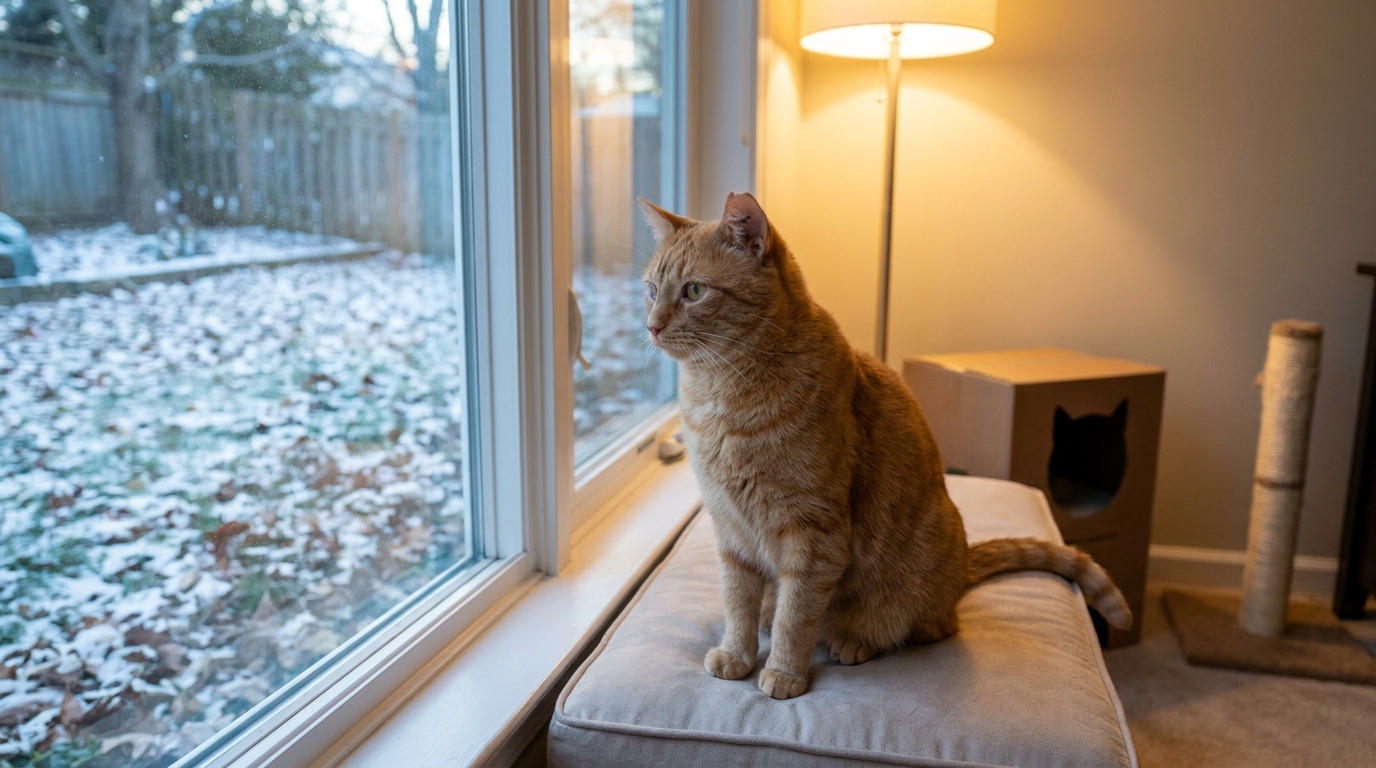
Bringing an outdoor cat inside for winter? Start with one quiet room and a vet check before other pets meet it, and watch the litter box every day.
If your cat strains in the litter box and passes little or no urine, cries out, or seems in pain, especially a male cat, go to an emergency vet now; a urinary blockage is life-threatening.
Bringing an Outdoor Cat Inside for Winter: Why the First Cold Nights Are a Good Time
The first frosty nights are often when a cat you feed on the porch, or your own indoor-outdoor cat, starts to need a warmer plan. The University of Wisconsin School of Veterinary Medicine warns that "during winter's chill, outdoor cats may look for heat in dangerous places, such as near your car's engine," and notes that "the AVMA recommends that no pet be outside for long periods of time in below-freezing weather."
Cold is only part of the picture. The Ohio State University's Indoor Pet Initiative says "there are many potential health benefits to keeping your cat indoor-only including reduced risk for traumatic injury, infectious disease, and parasites."
Having your cat indoors also lets you watch the litter box and appetite every day. The steps below go in order: know the emergency signs, decide whether the cat is ready to come in, set up one room, see your veterinarian in person, and only then make introductions.
Emergency First: Watch the Bladder
Learn the signs that cannot wait. If your cat is straining in the litter box and passing little or no urine, crying out, or seems to be in pain, go to an emergency vet now, day or night, especially with a male cat. Do not wait to see if it passes.
A male cat needs the emergency vet now for smaller signs too: frequent trips to the box that leave only small clumps, or pink-tinged urine. In a female cat, those same signs need a prompt vet check.
The Cornell Feline Health Center is blunt: "A urethral obstruction is an absolute emergency, requiring immediate veterinary treatment." Cornell also explains that "male and neutered male cats are at greater risk for obstruction than females because their urethra is longer and narrower," and that "as time passes, an obstructed cat typically becomes much more distressed, often crying out in pain." For more detail, read when a male cat straining to pee is an emergency.
Why the Move Indoors Can Upset the Bladder
Coming in from the cold can bring bladder trouble of its own. According to Cornell's page on feline lower urinary tract disease, urinary signs are "most frequently seen in middle-aged, over-weight cats that get little exercise, use an indoor litter box, have restricted access outdoor environments, and drink less water." That reads a lot like a newly indoor cat.
A change of home can be stressful, and Cornell notes that "changes in routine, such as a move to a new home, may also increase the risk that a cat will develop LUTS," meaning lower urinary tract signs. One cause is feline idiopathic cystitis, or FIC. Cornell says "stress seems to be an important factor in the development of FIC," and that "cats suffering from FIC make frequent attempts to urinate, probably as a result of bladder discomfort, and often are found to have blood in their urine."
So check the box every day while your cat settles in. Look for:
- Frequent trips to the box
- Small clumps instead of normal-sized ones, or pink or red-tinged urine (emergency vet now if male)
- Peeing outside the box, which Cornell lists among urinary signs
- Straining with little or nothing coming out, which is the emergency above
If you find pee outside the box, please don't punish your cat. It can be a sign of bladder discomfort, not only a problem with the box, so have a veterinarian check her soon.
Stray or Feral? Not Every Outdoor Cat Wants to Come In
Think about which kind of outdoor cat you are dealing with. The Indoor Pet Initiative draws a clear line: "Strays have known human companionship and can usually be re-socialized and adopted successfully." Your own indoor-outdoor cat, or a friendly stray you can already handle safely, is the cat this guide is written for.
Feral cats are different. The same guide says "adult feral cats avoid humans and cannot be re-socialized," and warns that "attempting to trap a cat that is feral presents a serious injury risk for inexperienced handlers." Please don't try to grab, corner or trap a cat that avoids you. A local community-cat or rescue group may be able to advise on winter care for cats who live outdoors.
If any cat bites or scratches you deeply, call your doctor.
Set Up a Refuge Room Before the Cat Comes In
Pick one quiet room, such as a spare bedroom or a bathroom, and have it ready first. Ohio State's guide to bringing cats indoors says to "set up a refuge with all of the resources the cat needs, food and water bowls, a perch (preferably near a window so that she can look outside), a place to sleep, hiding places (brown paper bags or cardboard boxes), a scratching post and toys."
Litter boxes deserve extra thought for a cat that has always gone outside. The program's basic advice is "at least one litter box per cat and clean them daily," and Cornell advises "an adequate number of litter boxes (usually one more than the number of cats in the household)." Put one in the refuge room so it is easy to find.
Then think about the doors. The same bringing-cats-indoors guide says: "Keep all doors to the outside closed." It explains why: "The cat has been accustomed to being outdoors and may try to get back out." Keep the refuge room door shut too, and tell everyone at home that a new cat is in there.
The Vet Visit Comes Before Your Other Pets Meet the Cat
This step protects the pets you already have. The Indoor Pet Initiative is clear on the order: "Visit your vet before you bring the cat into contact with your family and pets." And: "The cat should have a physical exam, be tested for feline leukemia and FIV, be vaccinated for feline distemper and rabies and be de-wormed."
All of that happens at an in-person visit, because tests, vaccines and a hands-on exam need the cat at the clinic. Bring any records you have, and if the cat is a stray with no known history, say so when you book.
Outdoor cats can also bring fleas in with them. Ask your veterinarian at that visit which parasite protection fits your cat, and read why indoor cats still need flea protection.
Introducing the Newcomer to Your Resident Cat or Dog
The Indoor Pet Initiative's guidance on new pets is firm that "animals should never be thrown together and left alone to 'work things out.'" It also says "the newcomer should be kept in her room for at least one week."
Go in small steps, and move on only when both animals are calm:
- Swap scents first. Rub a soft towel on each animal and leave it with the other.
- Feed them on opposite sides of the closed refuge-room door.
- Open the door a crack so they can see each other, and close it again if either one hisses, growls or hides.
- Short, supervised time together comes last.
The same slow steps apply to a resident dog, and the first look can happen through a baby gate with the dog on a leash.
If your resident cat stops eating during the change, read what to do first when an older cat stops eating after a newcomer arrives, and have a veterinarian see them if they still are not eating.
Keeping a Former Outdoor Cat Busy, and Away From the Door
A cat used to stalking and roaming needs other outlets inside, and you may see pacing or crying at windows and doors while she adjusts.
The ideas in the bringing-cats-indoors guide are simple. "Set aside a play time each day," using a wand or feather toy that moves like prey. "Hide tasty treats around the house so the cat can hunt for them." A perch by a window lets her watch the outdoors.
For the door, use rewards, not scares. Reward calm behavior near doors with a treat or a game, and toss a toy into another room as you head out. Skip punishment and startle tactics entirely.
For fresh air, the guide says "you can train her to wear a harness and take her for leash walks or let her out onto a sun porch or screened enclosure."
What a RexVet Online Vet Can and Cannot Do for a Cat Moving Indoors
A video visit suits the planning and everyday questions that come up while a cat settles in. A RexVet veterinarian can help you:
- Plan the refuge room and the order of introductions
- Look at videos of litter-box trips and photos of urine clumps (a cat straining with little or no urine, or a male cat making frequent small-clump trips or passing pink urine, goes to an emergency vet, not a video visit)
- Talk through peeing outside the box, hiding or not eating, and whether it needs an in-person visit
- Go over the vaccine and parasite records you have
- Decide what the in-person visit needs to cover
A video vet cannot test for feline leukemia or FIV, vaccinate, feel the bladder, or unblock a cat.
If the veterinarian decides medication is appropriate, they can prescribe where state rules allow. In Florida, a veterinarian who has seen your pet only by video may prescribe only FDA-approved animal drugs used as labeled, for up to 14 days (1 month for flea-and-tick-only products), and cannot renew without an in-person exam.
RexVet's veterinarians are licensed in Florida, New York and Virginia and are available 24/7, including nights, weekends and holidays. A video visit is $64.99. If you are in one of those states, you can book a RexVet video visit to plan the refuge room, the introductions and the in-person exam.
When to Be Seen in Person in Florida, New York or Virginia
Go to an emergency vet now for:
- Straining with little or no urine, crying out or pain, especially in a male cat
- In a male cat, frequent trips that leave only small clumps, or pink-tinged urine
- Any trouble breathing
See your veterinarian in person soon for:
- Blood or pink-tinged urine in a female cat (in a male cat, go to the emergency vet now)
- Not eating
- Repeated vomiting
- A wound or swelling from an outdoor fight
- The first exam, with the feline leukemia and FIV tests, vaccines and deworming, before the cat meets your other pets
If a male cat is not eating or keeps vomiting and also has any litter-box change above, go to the emergency vet now.
In Florida, the law requires a telehealth vet to give you "the contact information for at least one physical veterinary clinic in the vicinity of the patient's location."
If your cat is settling in and you want a vet to look over the litter box, the introductions or the records before the in-person exam, you can book a video visit now. RexVet's veterinarians are licensed in Florida, New York and Virginia and are available 24/7, and a video visit is $64.99. If your cat is straining, or is a male cat passing small clumps or pink urine, go to an emergency vet instead.
Frequently Asked Questions
How long does it take an outdoor cat to adjust to living inside?
There is no set timeline. The Indoor Pet Initiative says "each cat adjusts to new surroundings at a different pace and it may take time for your cat to get used to her new home." Keep the routine steady and the refuge room open to her as a safe retreat.
Will an outdoor cat use a litter box?
Set her up for success: start her in the refuge room with the box close by, provide enough boxes (Cornell's rule is usually one more than the number of cats in the household), and clean them daily. If she still goes elsewhere, have a veterinarian check her, since peeing outside the box can be a bladder sign.
Does my cat need tests and vaccines before meeting my other cat?
Yes. The Indoor Pet Initiative advises seeing your vet before the newcomer meets your family and pets, for a physical exam, feline leukemia and FIV tests, feline distemper and rabies vaccines, and deworming. These are done in person, not by video. Until then, keep the newcomer in her refuge room.
Why is my cat peeing outside the box since coming in?
Cornell notes that a move to a new home may raise the risk of urinary signs, and that stress seems to be an important factor in FIC. Peeing outside the box can be one of those signs, so have a veterinarian check your cat. Straining with little or nothing coming out is different, and so are small clumps or pink urine in a male cat: go to an emergency vet now.
Is it unfair to keep a former outdoor cat inside?
The Indoor Pet Initiative counts reduced risk of traumatic injury, infectious disease and parasites among the benefits of keeping a cat indoor-only. What makes indoor life fair is what you build into it: daily play, treats to hunt for, window perches, and, if you like, harness walks or a screened porch.
FAQs
How long does it take an outdoor cat to adjust to living inside?
There is no set timeline. The Indoor Pet Initiative says "each cat adjusts to new surroundings at a different pace and it may take time for your cat to get used to her new home." Keep the routine steady and the refuge room open to her as a safe retreat.
Will an outdoor cat use a litter box?
Set her up for success: start her in the refuge room with the box close by, provide enough boxes (Cornell's rule is usually one more than the number of cats in the household), and clean them daily. If she still goes elsewhere, have a veterinarian check her, since peeing outside the box can be a bladder sign.
Does my cat need tests and vaccines before meeting my other cat?
Yes. The Indoor Pet Initiative advises seeing your vet before the newcomer meets your family and pets, for a physical exam, feline leukemia and FIV tests, feline distemper and rabies vaccines, and deworming. These are done in person, not by video. Until then, keep the newcomer in her refuge room.
Why is my cat peeing outside the box since coming in?
Cornell notes that a move to a new home may raise the risk of urinary signs, and that stress seems to be an important factor in FIC. Peeing outside the box can be one of those signs, so have a veterinarian check your cat. Straining with little or nothing coming out is different, and so are small clumps or pink urine in a male cat: go to an emergency vet now.
Is it unfair to keep a former outdoor cat inside?
The Indoor Pet Initiative counts reduced risk of traumatic injury, infectious disease and parasites among the benefits of keeping a cat indoor-only. What makes indoor life fair is what you build into it: daily play, treats to hunt for, window perches, and, if you like, harness walks or a screened porch.
Medically Reviewed
Reviewed by Dr. Tiffany Delacruz, DVM — licensed veterinarian and CEO of RexVet. Last reviewed September 29, 2026.
Content is for informational purposes and does not replace professional veterinary advice.
Chief Executive Officer · Licensed Veterinarian
Dr. Delacruz is a licensed Doctor of Veterinary Medicine specializing in preventive care and veterinary telehealth. She reviews all health content on RexVet to ensure accuracy and clinical relevance.
Sources & References
- · American Veterinary Medical Association — Telehealth Guidelines
- · AVMA — Pet Care Resources
- · U.S. FDA — Animal & Veterinary
Need an Expert Opinion on This Topic?
Connect with a certified vet via video call in minutes
Talk to Vet Now