
Older Cat Not Eating After New Kitten? What to Do First
By RexVet Team | Reviewed by Dr. Tiffany Delacruz, DVM
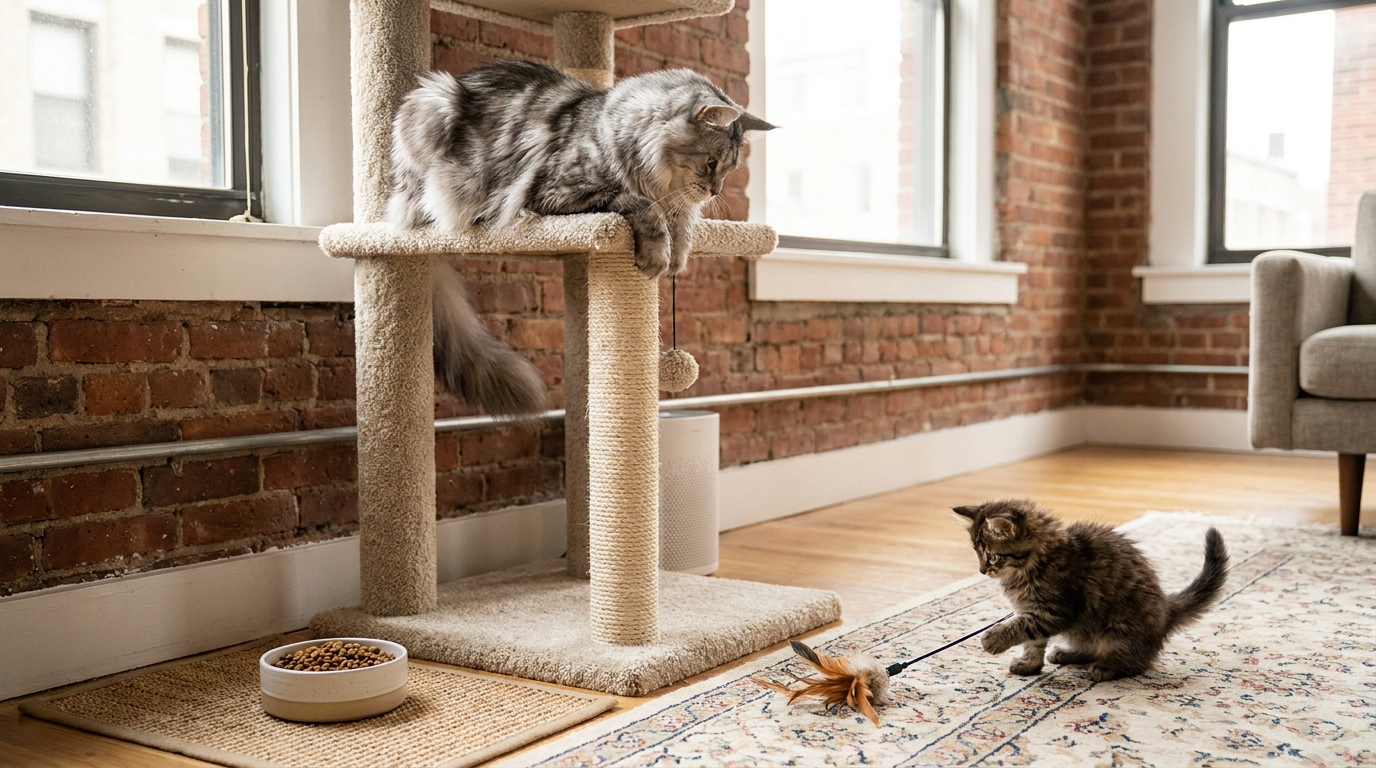
Older cat not eating after a new kitten? Stress is a common trigger, but a cat that stops eating can get sick fast, so reset the setup and call a vet.
See a vet in person today if your older cat has eaten nothing for about a day, is vomiting, has yellow-tinged gums, skin or whites of the eyes, seems weak, or will not come out of hiding; go to an emergency vet now if your cat collapses, struggles to breathe, or strains in the litter box with little or no urine.
If your older cat is not eating after a new kitten arrived, you are not imagining the connection. The Cornell Feline Health Center notes that a cat may be "upset if another animal moves into its home," and PetMD lists decreased eating or drinking among the problems a stressed cat can develop.
The stress is real, but so is the risk. With an older cat not eating after new kitten introductions, the order matters: first check whether not eating needs a vet today, then reset the introduction so your older cat feels safe enough to eat.
Older Cat Not Eating After New Kitten: Why It Happens
PetMD puts it plainly: "Changes in environment and routine can have a profound impact on a cat’s physical and mental well-being." A resident cat stressed by a new kitten may hide, hiss or leave the food bowl untouched.
Eating is also a useful yardstick for how the introduction is going. PetMD says, "Both cats should eat, drink, and use the litter box consistently during the introduction process." If your older cat is not doing all three, take it as a signal to check on their health first and then slow the introduction down.
When Not Eating Needs a Vet Today
See a vet in person today if your older cat has eaten nothing for about a day, is vomiting, has yellow-tinged gums, skin or eyes, seems weak, or will not come out of hiding. Go to an emergency vet now if your cat collapses, struggles to breathe, or strains in the litter box with little or no urine.
Here is why the clock matters. Cornell warns that anorexia "can have a severe impact on a mature cat’s health if it persists for as little as 24 hours." For an older cat, a missed day of meals is not something to wait out.
The biggest worry is fatty liver disease, also called hepatic lipidosis. VCA Animal Hospitals explains that a cat with this condition "has recently gone through a period of anorexia (little or no eating) for three to four consecutive days." VCA adds that "the chances of hepatic lipidosis occurring are greater if the cat was overweight or obese before the anorexia began," and that an affected cat "usually becomes icteric or jaundiced," which VCA describes as a yellow color in the whites of the eyes or in the skin. That is why any yellow tinge is on the see-a-vet-today list.
Do not wait for day three. Act on the day-one signs.
Stress and illness can also overlap. In cats that develop fatty liver, VCA notes that "in greater than 90% of cats, an underlying disease has caused the inappetence." The causes VCA lists include anxiety, but also inflammatory bowel disease, other liver disease, pancreatitis, diabetes and cancer. So the kitten may be the trigger, not the whole story, and a vet is the one who can tell the difference.
For a broader look at appetite loss in cats, see our guide to a cat not eating and when to see a vet.
Stress or Sick? What to Check Tonight
If your older cat is still eating a little, a few quiet checks tonight can help you judge how worried to be. Go through each one on its own, because one normal answer does not cancel out a worrying one.
- Drinking: Is your cat drinking water as usual?
- Peeing: Are there normal clumps in the litter box? Straining with little or no urine means an emergency vet now.
- Pooping: Is your cat passing stool as usual, without diarrhea?
- Vomiting: Has your cat vomited at all? Any vomiting means seeing a vet today.
- Gums and eyes: Lift the lip gently and look, then check the whites of the eyes. Any yellow tinge means seeing a vet today.
- Hiding: Does your cat come out once the kitten is shut away, or hide all day no matter what? Hiding all day, or seeming weak, means seeing a vet today.
- Weight: Has your cat looked thinner or felt bonier over the past weeks? Weight loss is on the see-a-vet list below, whatever you think the cause is.
- Mouth: Cornell notes that "pain that accompanies dental disease is often responsible for a cat’s refusal to eat," so watch for trouble chewing, dropping food or pawing at the mouth.
A cat who hides only when the kitten is loose, then comes out, drinks and nibbles once the kitten is behind a closed door, may be reacting mostly to the kitten. A cat who hides all day, even with the kitten away, is telling you something else may be wrong. Read more about why a cat hides.
Reset the Introduction
This reset is for a cat that is still eating something. If your cat has stopped eating entirely, go back to the vet section above first.
Start by giving the kitten a room of its own. PetMD recommends that the kitten have its own space with its own food, water, litter box and bed. Close the door. A closed door gives your older cat back a part of the home that is theirs alone, and separating them gives your older cat room to settle.
You do not need a big home to do this. If you live in a New York apartment or any small space, one bathroom or bedroom is enough as the kitten room.
Next, slow the introduction down. PetMD advises that if your cats seem stressed, you "go back to the most recent successful step." If your cats were already meeting face to face, go back to separate rooms.
Once the kitten has been checked by your veterinarian and both cats appear relaxed in their separate spaces, begin scent swapping. PetMD describes this as "taking something with the new kitten’s scent (such as a toy or blanket) into the resident cat’s area and vice versa." The goal, it adds, is for both cats to be around each other’s scent "without showing any signs of stress," such as hissing and growling. If you see those signs, go back a step and give them more time.
Your older cat also needs you. VCA says, "It’s important to spend quality time with both the new and the resident cat," and adds that "during the transition period it is a good idea to spend extra time with the older cat." That can be calm brushing or lap time in the older cat’s own space, whatever your cat already enjoys.
Be patient with the process, but not with a cat who has stopped eating. VCA says "the introduction period will usually last one to two weeks." Some cats take longer.
Feeding the Older Cat During the Reset
These tips are also for a cat that is still eating something; a cat that has stopped eating needs the vet section above, not feeding tricks.
Feed your older cat in a quiet room with the door closed and the kitten shut away in its own room.
- Keep the food familiar. This is not the week to switch brands or flavors. Offer a little of a favorite, familiar food in their quiet spot.
- Keep water fresh. Put clean water where your older cat rests, away from the kitten.
- Guard the bowl. VCA advises that you "monitor the older cat’s bowl to ensure that the new kitty doesn’t eat from it."
Do not force-feed. Cornell calls it "a messy, frustrating, and ineffectual way of getting nourishment into a cat’s system." If your cat keeps refusing food, the next step is a vet, not more tricks at home.
Could the Kitten Have Brought Something Home?
Cornell advises that you "keep the new cat separated from your other cats until your veterinarian has had a chance to examine him or her." A kitten with an unknown history should also be tested for FeLV and FIV. That is another good reason for the separate kitten room, and for waiting on scent swapping until the kitten has been checked.
Sneezing, eye discharge or diarrhea in either cat means a visit to the vet. An older cat who has picked up an infection may feel too unwell to eat, which can look like stress. Our kitten care guide covers what to watch for in a new kitten.
What a RexVet Online Vet Can and Cannot Do
If your older cat is eating less but still drinking and alert, a RexVet online vet can:
- See both cats at home, in their own space, without a carrier trip.
- Look at gum color, hydration signs and body condition on camera.
- Take a careful history of eating, drinking, litter box habits and behavior since the kitten arrived.
- Decide whether the appetite drop needs an in-person exam and bloodwork today.
- Build a step-by-step introduction plan for your home.
A video vet cannot run bloodwork, test for jaundice, place a feeding tube or give fluids. If your cat needs any of those, the vet will point you to an in-person clinic.
RexVet is a 501(c)(3) non-profit, and RexVet's veterinarians are licensed in Florida, New York and Virginia. If the veterinarian decides medication is appropriate, they can prescribe where state rules allow. In Florida, a veterinarian who has seen your pet only by video may prescribe only FDA-approved animal drugs used as labeled, for up to 14 days (1 month for flea-and-tick-only products), and cannot renew without an in-person exam.
If your older cat is off their food and you want a vet to look at the whole picture, book a RexVet video visit. A visit is $64.99, vets are available 24/7, and RexVet serves pet parents in Florida, New York and Virginia only.
When to Go In Person in Florida, New York or Virginia
See a vet in person today if:
- Your older cat has eaten nothing for about a day.
- Your cat is vomiting.
- Your cat has yellow gums, skin or whites of the eyes.
- Your cat seems weak or is hiding all day.
- Your cat has lost weight. Our guide to senior cat weight loss explains when it is a warning sign.
- The kitten, or your older cat, has sneezing, eye discharge or diarrhea.
Go to an emergency vet now if:
- Your cat collapses.
- Your cat has trouble breathing.
- Your cat is straining with little or no urine.
In Florida, a telehealth vet must give you the contact information for at least one physical veterinary clinic near you. After or alongside in-person care, you can learn how video visits work in your state on our pages for Florida, New York and Virginia.
Frequently Asked Questions
How long can an older cat go without eating?
Not long. Cornell says anorexia "can have a severe impact on a mature cat’s health if it persists for as little as 24 hours." VCA explains that fatty liver disease usually follows three to four consecutive days of little or no eating. If your older cat has eaten nothing for about a day, see a vet in person today.
Is it normal for a cat to stop eating when a new kitten comes home?
It is a known reaction. Cornell notes that a cat may be "upset if another animal moves into its home," and appetite can drop as a result. Known does not mean safe, though: a cat who stops eating needs a vet, and the stress may be hiding an illness underneath.
How long does it take an older cat to accept a kitten?
VCA says the introduction period will usually last one to two weeks, and some cats take longer. Go at your older cat’s pace and step back when they seem stressed. The timeline never applies to a cat who has stopped eating; that cat needs a vet first.
Should I keep the kitten and my older cat apart?
Yes, at first. Cornell advises keeping a new cat separated from your other cats until your veterinarian has examined it. A separate kitten room with its own food, water, litter box and bed also gives your older cat a calm place to eat and rest.
Can a new kitten make my older cat sick?
It can. A kitten with an unknown history may carry infections, which is why it should be checked by a vet and tested for FeLV and FIV before the cats share space. Sneezing, eye discharge or diarrhea in either cat means a vet visit.
If your senior cat is stressed, eating less and you want help with a calm, step-by-step plan, book a video visit now. A visit is $64.99, vets are available 24/7, and RexVet serves pet parents in Florida, New York and Virginia only. If the vet sees signs that need a clinic, they will tell you to go in person.
FAQs
How long can an older cat go without eating?
Not long. Cornell says anorexia "can have a severe impact on a mature cat’s health if it persists for as little as 24 hours." VCA explains that fatty liver disease usually follows three to four consecutive days of little or no eating. If your older cat has eaten nothing for about a day, see a vet in person today.
Is it normal for a cat to stop eating when a new kitten comes home?
It is a known reaction. Cornell notes that a cat may be "upset if another animal moves into its home," and appetite can drop as a result. Known does not mean safe, though: a cat who stops eating needs a vet, and the stress may be hiding an illness underneath.
How long does it take an older cat to accept a kitten?
VCA says the introduction period will usually last one to two weeks, and some cats take longer. Go at your older cat’s pace and step back when they seem stressed. The timeline never applies to a cat who has stopped eating; that cat needs a vet first.
Should I keep the kitten and my older cat apart?
Yes, at first. Cornell advises keeping a new cat separated from your other cats until your veterinarian has examined it. A separate kitten room with its own food, water, litter box and bed also gives your older cat a calm place to eat and rest.
Can a new kitten make my older cat sick?
It can. A kitten with an unknown history may carry infections, which is why it should be checked by a vet and tested for FeLV and FIV before the cats share space. Sneezing, eye discharge or diarrhea in either cat means a vet visit.
If your senior cat is stressed, eating less and you want help with a calm, step-by-step plan, book a video visit now. A visit is $64.99, vets are available 24/7, and RexVet serves pet parents in Florida, New York and Virginia only. If the vet sees signs that need a clinic, they will tell you to go in person.
Medically Reviewed
Reviewed by Dr. Tiffany Delacruz, DVM — licensed veterinarian and CEO of RexVet. Last reviewed September 23, 2026.
Content is for informational purposes and does not replace professional veterinary advice.
Chief Executive Officer · Licensed Veterinarian
Dr. Delacruz is a licensed Doctor of Veterinary Medicine specializing in preventive care and veterinary telehealth. She reviews all health content on RexVet to ensure accuracy and clinical relevance.
Sources & References
- · American Veterinary Medical Association — Telehealth Guidelines
- · AVMA — Pet Care Resources
- · U.S. FDA — Animal & Veterinary
Need an Expert Opinion on This Topic?
Connect with a certified vet via video call in minutes
Talk to Vet Now