
Storm Anxiety in Dogs: How to Help Your Pet During Thunderstorms and Hurricanes
By RexVet Team | Reviewed by Dr. Tiffany Delacruz, DVM
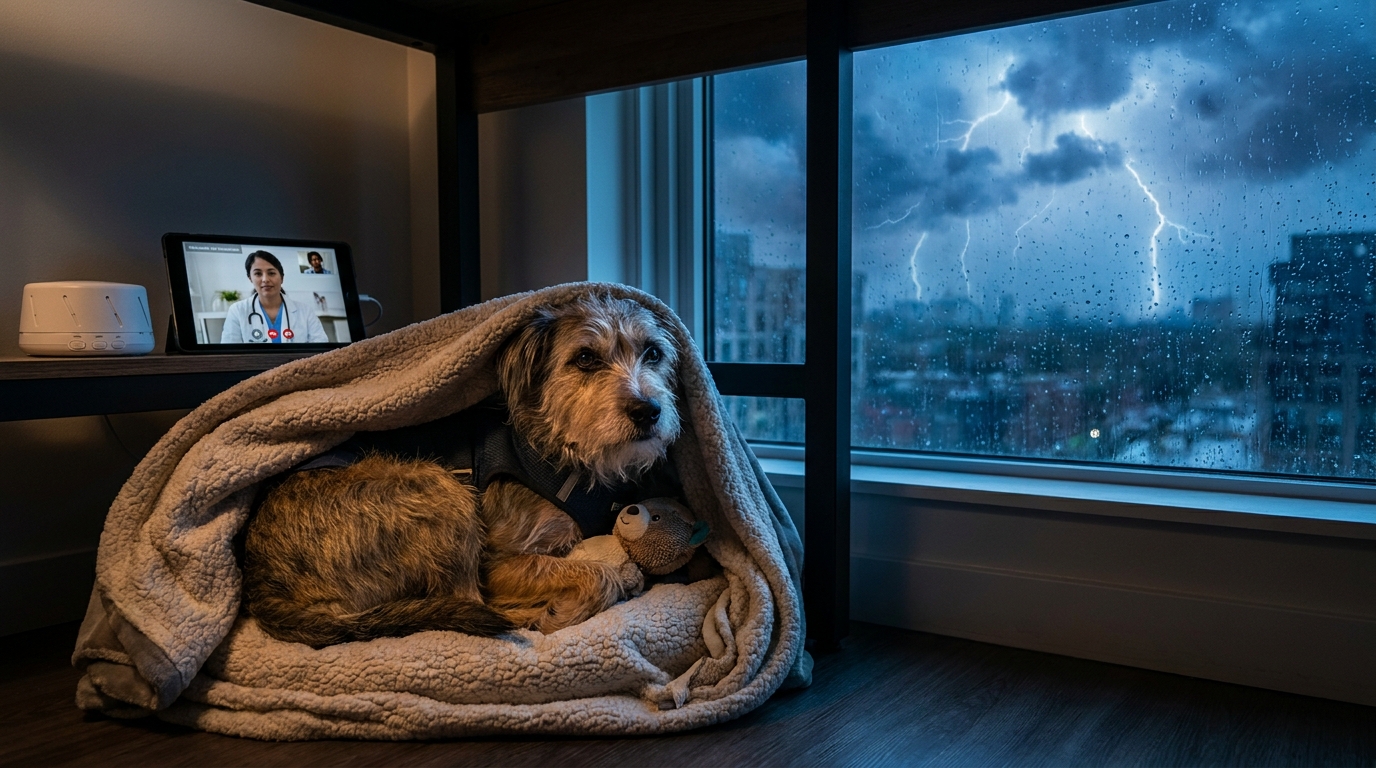
For many pet owners in Florida and New York, the arrival of severe weather brings a unique set of challenges. Storm Anxiety in Dogs is a vital topic for those whose companions suffer from intense fear during lightning, booming thunder, or the high winds of hurricane season. When your dog experiences thunderstorm phobia, their world can feel overwhelming, leading to signs like trembling, destructive pacing, or desperate attempts to escape. Understanding these dog anxiety symptoms is the first step toward providing comfort.
Managing this condition effectively often requires a blend of behavior modification and, in some cases, veterinary guidance for anti-anxiety medication. Creating a safe space where your pet feels secure is essential, yet many owners struggle to know when to seek professional help. At RexVet, we believe that addressing these needs from the comfort of home is the most compassionate approach. If you are struggling to manage your pet's distress, you can book an appointment for a virtual veterinary consultation to discuss a personalized plan. By focusing on Storm Anxiety in Dogs, we help you keep your pet calm and safe without the added stress of a clinic visit. Learn more about our care options at RexVet .
Recognizing the Signs of Storm Phobia
When observing your pet, it is vital to recognize that Storm Anxiety in Dogs manifests through distinct physiological and behavioral cues. Because dogs are highly sensitive to changes in barometric pressure and static electricity, they often detect incoming weather long before humans do. These early warning signs are your cue to initiate a behavior modification plan or reach out for a veterinary consultation .
- Physical Indicators: Rapid panting, excessive drooling, dilated pupils, and trembling or shaking.
- Behavioral Changes: Persistent pacing, whining, clingy behavior, or frantic attempts to hide in small, dark spaces like closets.
- Destructive Actions: Scratching at doors, chewing furniture, or digging at carpets as a desperate escape response.
Recognizing these patterns is essential for Storm Anxiety in Dogs. If your dog displays signs of severe panic, such as self-injury or extreme lethargy, you should not wait for the next storm to pass. Our team at RexVet provides a convenient way to discuss anti-anxiety medication and customized care strategies through RexVet , ensuring your pet remains in their familiar environment while receiving expert guidance.
Why Florida and New York Weather Triggers Dogs
Beyond the loud booms of thunder, dogs possess a heightened sensitivity to the atmospheric shifts that precede severe weather. As barometric pressure drops rapidly—a common occurrence during Florida hurricane season or intense New York summer storms—many pets experience significant distress. This physical drop in pressure can cause ear pain or discomfort, while the buildup of static electricity in the air often leaves dogs feeling agitated and vulnerable. Understanding these environmental triggers is a critical component of Storm Anxiety in Dogs.
Because these reactions are rooted in biology, simply waiting for the weather to clear is rarely enough. Owners should monitor their pets closely when the barometer shifts, as early intervention can prevent a full-blown panic response. If your dog struggles with these environmental changes, you do not have to navigate the process alone. At RexVet, we specialize in helping pet parents manage Storm Anxiety in Dogs through accessible, remote veterinary support. You can easily book an appointment to discuss a tailored plan or visit RexVet for quick, professional guidance that keeps your pet safe and calm at home.
Creating a Calm Safe Haven at Home
Creating a dedicated sanctuary is a powerful way to manage Storm Anxiety in Dogs. By setting up a quiet, windowless room or a cozy crate covered with a heavy blanket, you provide a physical barrier against flashing lights and muffled sound. This safe space should contain your dog's favorite bedding and familiar toys to promote relaxation. Research shows that roughly 30% of dogs suffer from noise phobias, making this environmental control a vital first step.
To further minimize stress, consider using white noise machines or calm music to mask sudden cracks of thunder. When addressing Storm Anxiety in Dogs, consistency is key. Keep your dog's routine predictable to help them feel in control. If your pet's distress remains high despite these changes, a veterinary consultation via RexVet can provide a tailored plan. Our experts can discuss safe anti-anxiety medication options, ensuring your pet stays comfortable without the trauma of a car ride to a clinic. Remember, proactive management is the best way to support your companion through any weather event.
Practical Tools for Managing Storm Panic
Beyond environmental modifications, using specific sensory tools can significantly reduce Storm Anxiety in Dogs. Many pet owners find success with white noise machines, which provide a consistent, soothing soundscape to mask the jagged, unpredictable cracks of thunder. By maintaining a steady ambient volume, you can prevent the startle reflex that triggers a panic response.
Another effective, non-invasive tool is the use of pressure wraps or anxiety vests. These garments apply gentle, constant pressure to your dog’s torso, which mimics the calming sensation of a swaddle. This deep pressure stimulation can help lower the heart rate and reduce trembling in many pets. When managing Storm Anxiety in Dogs, these tools work best when introduced during calm periods, allowing your dog to associate the wrap with positive experiences rather than fear.
If these methods do not provide enough relief, our team at RexVet can help you evaluate if your pet requires additional support. You can access professional triage to discuss whether an anti-anxiety medication plan is appropriate for your companion’s specific needs.
When to Seek Professional Veterinary Guidance
When your pet experiences Storm Anxiety in Dogs, it is tempting to try over-the-counter calming supplements or herbal remedies found online. However, not all products are safe for every dog, and some may interact poorly with existing health conditions. Seeking professional veterinary guidance ensures that any intervention is medically sound and tailored to your pet's specific health history.
A licensed veterinarian can help distinguish between mild nervousness and a severe phobia that requires medical management. When managing Storm Anxiety in Dogs, our team at RexVet focuses on safe, evidence-based protocols. We prioritize your pet's safety by reviewing their medical records before suggesting any anti-anxiety medication, which is often more effective than generic store-bought options. If you are unsure where to start, you can easily access our RexVet service for quick, remote triage. Professional oversight is the safest path to helping your dog feel secure during the next big weather event without the added stress of a clinic visit.
Why Telehealth is Better for Anxious Pets
Taking your pet to a physical clinic during a weather event often compounds their distress, as the car ride and unfamiliar smells heighten their fear. When managing Storm Anxiety in Dogs, telehealth offers a superior, stress-free alternative. By utilizing a virtual vet visit, your dog remains in their safe space, surrounded by familiar scents and sounds, which significantly lowers their cortisol levels during a crisis.
Virtual care is highly effective for behavioral triage. Through a secure video call, our licensed veterinarians can observe your pet's specific dog anxiety symptoms in their natural environment. This allows for a more accurate assessment than a high-stress clinic visit ever could. Whether you need a veterinary consultation to discuss behavior modification or require guidance on anti-anxiety medication, RexVet provides expert support from your living room. For those navigating Storm Anxiety in Dogs, our platform ensures your pet receives professional medical advice without the trauma of travel. Start your journey toward a calmer pet by visiting our booking page or exploring RexVet for immediate triage.
Red Flags Requiring Immediate Veterinary Attention
While some fear is common, certain behaviors signal a medical crisis. When managing Storm Anxiety in Dogs, you must watch for signs of overheating, such as heavy, non-stop panting and bright red gums. These physical symptoms indicate your dog is struggling to regulate their body temperature due to extreme stress. Additionally, watch for dangerous destructive behaviors like chewing through drywall or attempting to jump through windows, which can lead to severe lacerations or broken teeth. These actions go beyond simple nervousness and suggest a state of true panic that requires immediate attention.
If your pet exhibits these red flags, do not wait for the storm to subside. Quick action is vital to prevent lasting physical harm. You can book an appointment with a licensed professional to discuss immediate triage. When navigating Storm Anxiety in Dogs, our team at RexVet provides the expert guidance needed to keep your companion safe. Visit RexVet to connect with a vet who can assess these high-risk symptoms and provide a safe, personalized care plan from the comfort of your home.
How to stop a dog from freaking out during thunderstorms?
When addressing Storm Anxiety in Dogs, it is helpful to understand the role of desensitization. This process involves gradually exposing your dog to low-volume recordings of thunder or rain sounds during calm moments, paired with high-value treats to build positive associations. Research suggests that consistent, gradual exposure can significantly lower a dog's reactive threshold over time.
Beyond behavior modification, Storm Anxiety in Dogs requires a proactive medical strategy. If your dog suffers from severe phobias, you might consider discussing anti-anxiety medication with a professional. At RexVet, we make this easy by offering a veterinary consultation from your home, ensuring your pet remains in their comfort zone. Our licensed vets can help you develop a personalized plan that combines environmental changes with safe pharmacological support. By avoiding the trauma of a physical clinic visit, you prioritize your dog's mental well-being while managing their symptoms effectively. Visit RexVet to start your journey toward a calmer, happier pet today.
What is the 3-3-3 rule for dog anxiety?
When exploring Storm Anxiety in Dogs, the 3-3-3 rule provides a helpful framework for understanding your dog's adjustment period. While originally applied to rescue dogs, this rule highlights the importance of patience during high-stress weather events. The first 3 days involve decompression, the first 3 weeks focus on routine, and the first 3 months show true comfort levels. Applying this to storm phobia means recognizing that your pet needs consistent, predictable support to feel safe.
Understanding Storm Anxiety in Dogs requires recognizing that recovery is not instant. During the initial phase, your goal is to minimize sensory input. As you move into the routine phase, you can implement desensitization techniques. By the three-month mark, you should see if your current management strategy is working or if you need to adjust your approach. If your dog still struggles, our team at RexVet offers expert guidance. You can book an appointment to discuss a personalized plan or visit RexVet for immediate, professional support from the comfort of your home.
What do vets give dogs for thunderstorm anxiety?
When discussing Storm Anxiety in Dogs, many owners wonder what specific medications veterinarians might recommend. While over-the-counter supplements exist, they often lack the clinical strength needed for severe phobias. Licensed veterinarians typically evaluate a dog's health history to determine if prescription options like gabapentin, trazodone, or other anxiolytics are appropriate. These medications can help lower the threshold of fear, allowing your pet to remain calm during intense weather.
Understanding Storm Anxiety in Dogs involves recognizing that medication is rarely a standalone solution. It is most effective when paired with behavioral adjustments. Because every dog reacts differently, RexVet offers a convenient way to consult with a licensed professional who can review your pet's specific symptoms and medical records. This ensures you receive a safe, tailored plan without the stress of a clinic visit. You can easily book an appointment or visit RexVet to start a triage conversation today. Proactive veterinary guidance is the most reliable way to improve your companion's quality of life during unpredictable weather events.
Frequently Asked Questions
What are the common signs of storm anxiety in dogs?
When dealing with storm anxiety in dogs, it is important to recognize early warning signs. Common symptoms include pacing, panting, trembling, hiding, and excessive barking. Some dogs may also drool, become destructive, or attempt to escape. If you notice these behaviors, your pet is likely experiencing significant stress and may benefit from professional guidance.
Does comforting my dog during a storm make their fear worse?
A common myth is that comforting a scared dog reinforces their fear. In reality, you cannot reward fear. When managing storm anxiety in dogs, providing a calm, supportive presence is helpful. You can offer gentle petting or sit quietly with them in their safe space to help them feel more secure while the storm passes.
How can I create a safe space for my dog during loud weather?
Creating a safe space is a key step in managing storm anxiety in dogs. Choose a quiet, interior room without windows, such as a closet or bathroom. Add comfortable bedding, familiar toys, and use a white noise machine or soft music to mask the sound of thunder or fireworks. This helps reduce external triggers that cause panic.
When should I seek professional veterinary help for my dog's storm phobia?
If your dog's anxiety leads to overheating, self-injury, or extreme panic that does not resolve, you should seek professional help immediately. RexVet offers a convenient way to discuss storm anxiety in dogs with a licensed vet. A virtual consultation allows you to get a personalized behavior modification plan or discuss anti-anxiety medication without the added stress of a clinic visit.
Can RexVet help with hurricane preparedness for my anxious dog?
Yes, RexVet is designed to assist with storm anxiety in dogs, especially for residents in storm-prone areas like Florida. Our 24/7 virtual platform allows you to consult with a vet about creating a preparedness plan, including managing medications or anxiety symptoms, all from the comfort of your home. You can book an appointment at https://www.rexvet.org/book-appointment to get started.
What is the difference between mild anxiety and a severe thunderstorm phobia?
Mild anxiety might involve minor restlessness, whereas a severe phobia often includes destructive behavior or attempts to escape. When assessing storm anxiety in dogs, look for the intensity of the reaction. If your dog is a danger to themselves or unresponsive to your efforts to calm them, it is time to consult a professional for a veterinary consultation to explore long-term solutions.
Related reading: When fear tips into panic: dog panic attacks: signs, first 10 minutes, and red flags.
FAQs
What are the common signs of storm anxiety in dogs?
When dealing with storm anxiety in dogs: how to help your pet during thunderstorms and hurricanes, it is important to recognize early warning signs. Common symptoms include pacing, panting, trembling, hiding, and excessive barking. Some dogs may also drool, become destructive, or attempt to escape. If you notice these behaviors, your pet is likely experiencing significant stress and may benefit from professional guidance.
Does comforting my dog during a storm make their fear worse?
A common myth is that comforting a scared dog reinforces their fear. In reality, you cannot reward fear. When managing storm anxiety in dogs: how to help your pet during thunderstorms and hurricanes, providing a calm, supportive presence is helpful. You can offer gentle petting or sit quietly with them in their safe space to help them feel more secure while the storm passes.
How can I create a safe space for my dog during loud weather?
Creating a safe space is a key step in managing storm anxiety in dogs: how to help your pet during thunderstorms and hurricanes. Choose a quiet, interior room without windows, such as a closet or bathroom. Add comfortable bedding, familiar toys, and use a white noise machine or soft music to mask the sound of thunder or fireworks. This helps reduce external triggers that cause panic.
When should I seek professional veterinary help for my dog's storm phobia?
If your dog's anxiety leads to overheating, self-injury, or extreme panic that does not resolve, you should seek professional help immediately. RexVet offers a convenient way to discuss storm anxiety in dogs: how to help your pet during thunderstorms and hurricanes with a licensed vet. A virtual consultation allows you to get a personalized behavior modification plan or discuss anti-anxiety medication without the added stress of a clinic visit.
Can RexVet help with hurricane preparedness for my anxious dog?
Yes, RexVet is designed to assist with storm anxiety in dogs: how to help your pet during thunderstorms and hurricanes, especially for residents in storm-prone areas like Florida. Our 24/7 virtual platform allows you to consult with a vet about creating a preparedness plan, including managing medications or anxiety symptoms, all from the comfort of your home. You can book an appointment at https://www.rexvet.org/book-appointment to get started.
What is the difference between mild anxiety and a severe thunderstorm phobia?
Mild anxiety might involve minor restlessness, whereas a severe phobia often includes destructive behavior or attempts to escape. When assessing storm anxiety in dogs: how to help your pet during thunderstorms and hurricanes, look for the intensity of the reaction. If your dog is a danger to themselves or unresponsive to your efforts to calm them, it is time to consult a professional for a veterinary consultation to explore long-term solutions.
Medically Reviewed
Reviewed by Dr. Tiffany Delacruz, DVM — licensed veterinarian and CEO of RexVet. Last reviewed May 22, 2026.
Content is for informational purposes and does not replace professional veterinary advice.
Chief Executive Officer · Licensed Veterinarian
Dr. Delacruz is a licensed Doctor of Veterinary Medicine specializing in preventive care and veterinary telehealth. She reviews all health content on RexVet to ensure accuracy and clinical relevance.
Sources & References
- · American Veterinary Medical Association — Telehealth Guidelines
- · AVMA — Pet Care Resources
- · U.S. FDA — Animal & Veterinary
Need an Expert Opinion on This Topic?
Connect with a certified vet via video call in minutes
Talk to Vet Now