
Why Does My Dog Keep Getting Ear Infections? What Helps
By RexVet Team | Reviewed by Dr. Tiffany Delacruz, DVM
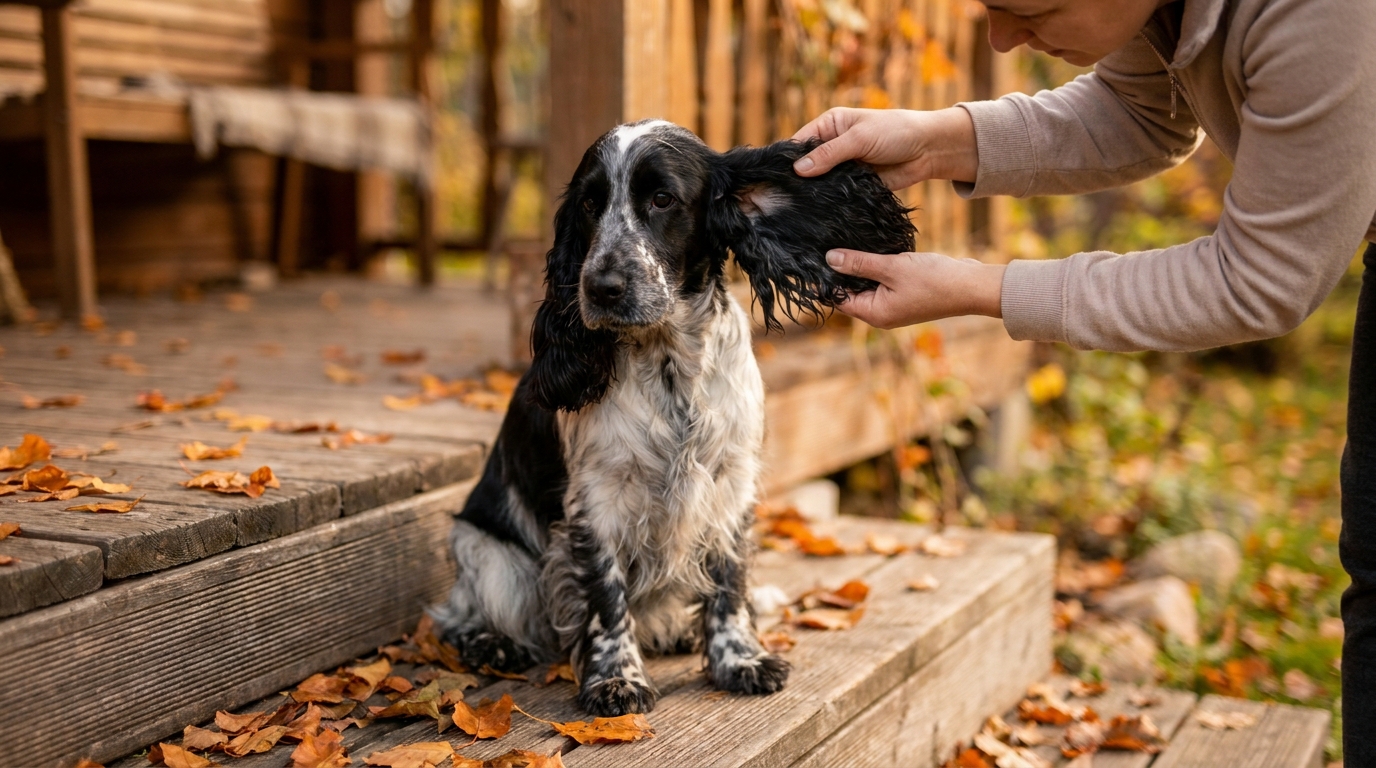
Repeat ear infections in dogs almost always have a trigger. Here are the common causes, the habits that restart them and what a vet checks.
Quick answer: Most dogs that keep getting ear infections have an underlying cause, most often an allergy to food or something in the environment, plus ear shape, hair or moisture that lets yeast and bacteria grow. Get that trigger treated, finish the drops and keep the recheck; stopping early brings infections back. Go to an emergency vet now for a sudden head tilt, loss of balance, circling or severe ear pain.
This article is general information, not a diagnosis. If you think your pet is in danger, go to the nearest emergency animal hospital.
Ear signs that need an emergency vet or a same-day visit
A dog with a sudden head tilt, loss of balance, circling, flicking eyes, sudden hearing loss, a drooping face or severe ear pain needs an emergency vet now, and a balloon-like ear flap in a dog that is eating and acting normally needs a clinic within 24 to 48 hours, or the same day if the ear is hot, splitting or leaking pus or the dog is off food or lethargic.
The Merck Veterinary Manual explains that an inner-ear infection typically causes a head tilt, loss of balance and uncontrollable eye movements.
Go to the nearest emergency vet now for:
- A sudden head tilt, loss of balance, circling or falling to one side
- Flicking or darting eyes, especially with nausea or vomiting
- Sudden hearing loss, a drooping face or an eye that cannot blink
- Severe ear pain, fever with ear pain, or bleeding from the ear canal
See a vet the same day (or an emergency clinic if no clinic can see your dog today) for:
- Pus draining from the ear canal
- Pain when opening the mouth or chewing, refusing food or extreme lethargy along with ear pain
- Sudden, violent head shaking or pawing at one ear after time in grass or brush, which can mean a stuck grass seed
- A balloon-like ear flap that is hot, splitting or leaking pus
If a dog gets a head tilt, loses balance or seems suddenly deaf after ear drops or a cleaning, stop putting anything in the ear and go to an emergency vet now.
Why ear infections keep coming back
A dog's ear infection that keeps coming back is usually a symptom, not the disease: an allergy, ear shape, moisture, hair, mites, something stuck in the canal, a hormone problem or a hidden middle-ear infection keeps restarting it until a vet finds and treats that trigger.
The Merck Veterinary Manual sorts the causes into layers: a primary cause such as an allergy, a grass seed, ear mites or a hormone disease inflames the canal, then bacteria and Malassezia yeast move in, helped by floppy ears, hair and moisture. Drops clear the germs but not the trigger. As Merck puts it, "Unless every cause is treated, the condition often returns."
| Underlying cause | Clue | Often seen in |
|---|---|---|
| Pollen, dust-mite allergy | Itchy paws, belly | Retrievers |
| Food allergy | Year-round itch | Any breed |
| Floppy, hairy ears | Warm, damp canal | Doodles, spaniels |
| Water in the ear | After swims, baths | Swimmers |
| Low thyroid | Weight gain, skin | Dogs 4-10 years |
| Grass seed, growth | One ear only | Any dog |
| Middle-ear infection | Never fully clears | Any dog |
Merck says a middle-ear infection is found in over half of dogs with recurring outer-ear inflammation, usually behind an intact eardrum, and it is found in person with imaging such as x-rays, CT or MRI. A 2025 review in Today's Veterinary Practice uses a definition that calls an infection recurrent when it returns within 3 months after the last one fully cleared. For a first infection, start with the guide to dog ear infection signs, causes and treatment.
Allergies are the most common driver
Allergies are the most common underlying cause of repeat ear infections in dogs, so a dog whose ears, paws and belly itch together needs an allergy plan from a vet as well as ear treatment.
The 2025 Today's Veterinary Practice review, co-written by a board-certified veterinary dermatologist, names allergic skin disease (atopic dermatitis) as the primary cause in 31% to 50% of dogs with chronic or recurrent ear infections. The Merck Veterinary Manual says allergies to things in the environment or to food redden and itch the ear canals, set them up for infection, and often also affect the face, armpits, groin and feet.
Food allergy, Merck says, typically causes year-round itching of the ears, feet and belly, and blood, skin and hair tests do not reliably diagnose it; a strict elimination diet does. See how a food allergy elimination diet works and why a dog itches when there are no fleas. Every allergy flare can restart the ear infection, so the allergy plan and the ear plan go together.
Doodles, spaniels and other ear-prone dogs
Dogs with heavy, hairy or floppy ears, such as Basset Hounds, doodles and spaniels, get ear infections more often and need a drying and recheck routine set by a vet. In visit data from RexVet, a nonprofit online vet service: Ear problems drove nearly half (48%) of RexVet visits for Goldendoodles, about three times the rate for all dogs.
A 2021 Royal Veterinary College VetCompass study of UK dogs found that, compared with crossbreds, Basset Hounds had the highest odds of otitis externa, or outer-ear inflammation (an odds ratio of 5.87), followed by Chinese Shar Pei (3.44), Labradoodles (2.95), Beagles (2.54) and Golden Retrievers (2.23). VCA also lists cocker spaniels, miniature poodles and Old English sheepdogs as prone.
Heavy flaps keep the canal warm and damp, and hair in the canal traps wax. The Merck Veterinary Manual calls plucking ear hair controversial: sometimes needed to clear an infection, but not something to do routinely. Ask the vet before pulling any hair, and skip ear powders, which Merck says can form irritating clumps.
Treatment mistakes that bring infections back
Stopping ear drops when the ear looks better, skipping the recheck, reusing leftover drops and putting home remedies into an inflamed ear are common treatment mistakes that bring a dog's ear infection back.
The Merck Veterinary Manual notes that many owners stop treatment once the ear looks better but before the infection is gone, and the AKC says stopping early can lead to resistant infections.
| Mistake | Why it backfires | Do instead |
|---|---|---|
| Stopping early | Infection regrows | Follow vet plan |
| Skipping recheck | Germs still there | Book recheck |
| Leftover drops | Wrong drug, eardrum risk | Ask vet first |
| Vinegar, peroxide | Irritates sore ear | Vet cleaner only |
| Cotton swabs | Pushes debris deeper | Wipe outer ear |
| Cleaning gel out | Removes medicine | Wait for vet OK |
Vets clean the ear before medicine because wax and discharge can stop drops from working, so put drops in only after the cleaner has drained, in the order the vet sets. If the vet placed a long-acting medicine in the ear at the clinic, do not clean that ear until the vet says to. VCA notes that some ear medicines can cause hearing loss if the eardrum is ruptured, so never reuse old drops without asking the vet.
How to clean your dog's ears, and when not to
Clean a dog's ears only with a cleaner your vet recommends: fill the canal, massage the base, let the dog shake and wipe the outer ear, and never clean an ear that is red, swollen, painful or bleeding until a vet has looked.
- Check first. VCA warns that a red or painful ear may hide an infection or a ruptured eardrum. A new bad smell or discharge also needs a vet check.
- Fill the ear canal with the vet-recommended cleaner.
- Gently massage the base of the ear.
- Let your dog shake.
- Wipe the outer ear with cotton or gauze, no deeper than a finger reaches. The Merck Veterinary Manual says never to use cotton swabs.
How often to clean a dog's ears is the vet's call. The Merck Veterinary Manual says vets usually start with frequent cleaning during treatment and taper to once or twice a week for maintenance, and that overcleaning itself can inflame ears. VCA notes that some dogs with healthy ears never need cleaning. Water left in a dog's ears after swims and baths keeps the canal damp, so dry the outer ear afterward and, for dogs that swim often, ask the vet about a drying product, as Merck suggests.
Tests a vet uses when an ear infection won't go away
Ear cytology, done at an in-person visit, tells yeast from bacteria under a microscope, and a vet may send a culture when a dog's ear infections keep returning or stop responding, because resistant bacteria need a targeted drug.
- Cytology. The Today's Veterinary Practice review calls it foundational and says smell or a look at the ear should never replace it. Repeated at the end of treatment, it proves the infection has cleared.
- Culture. The Merck Veterinary Manual says methicillin-resistant Staphylococcus pseudintermedius (MRSP) and Pseudomonas aeruginosa have become hard-to-treat causes that resist most common antimicrobials.
- Otoscope exam. Merck says it is important to confirm the eardrum is intact before drops go in, because many ear medicines can damage hearing. A painful or blocked ear may need sedation.
- Flush and imaging. The Today's Veterinary Practice review says a deep ear flush needs anesthesia, and Merck advises CT or MRI for severe, chronic infections that do not respond to proper treatment.
- Thyroid blood test. Merck says low thyroid is most common in dogs 4 to 10 years old, often with weight gain and skin or coat changes.
A long-term plan to stop the cycle
To stop a dog's ear infections coming back, treat the trigger, follow the maintenance routine the vet sets, and book the in-person recheck before the drops run out.
The Merck Veterinary Manual says dogs with bacterial and yeast ear infections usually need repeated checkups until no infection shows, often 2 to 4 weeks. Keep a flare diary with the date, a photo of the ear, recent swims, baths and food changes, and which drops were used and for how long; patterns become easier to spot.
Ask about a specialist early, especially if a dog with long-term ear trouble is losing hearing or the canal is narrowing; the Today's Veterinary Practice review says dogs with hearing loss from chronic ear disease should be referred for advanced imaging. The review explains that long-term inflammation thickens, narrows and scars the canal and can eventually mineralize it; treatment started early may reverse thickening and scarring, but medicine cannot reverse mineralization. End-stage ears may need surgery to remove the canal, and outcomes are worse when referral comes more than 6 months after diagnosis.
When a video visit helps
A video visit helps between flares, when a dog's ear infections keep coming back, you have past test results and the names of drops used before, and the dog has no emergency or same-day signs. RexVet, a nonprofit online vet service, serves pets located in Florida, New York and Virginia by video visit, and your dog must be in one of those states during the visit. You can book a $64.99 live video visit with a licensed RexVet vet; live slots run about 8 AM to 11 PM ET, including evenings and weekends, and there are no overnight visits.
The veterinarian looks at the outer ear and flap on camera and in photos, reviews past cytology or culture results and the drops used before, watches your cleaning routine, searches for the trigger and builds a long-term plan, including when an in-person recheck should confirm the infection has cleared. The one-time $120 Family Plan covers 4 visits over 12 months for every pet in the home and never auto-renews, which suits a problem that needs regular check-ins: reviewing the plan, coaching the cleaning routine and deciding when the ear needs a clinic.
A camera cannot show the eardrum, and many FDA-approved dog ear medicines are labeled for use only after a vet confirms it is intact. So a first infection, a new flare, a sore ear, or an ear that needs cytology, a culture, a thyroid test or a flush needs a clinic visit. No prescription is promised; any medicine is the veterinarian's decision after the visit. Florida s.474.2021 limits telehealth-only prescribing to FDA-approved animal drugs used on-label, for up to 14 days (1 month for products labeled only for fleas and ticks), with no renewal without an in-person exam and no human-labeled, controlled or compounded anti-infective drugs. Virginia allows the exam to be electronic; New York's telehealth prescribing rules are not settled. A pharmacy transfer fee applies if a prescription is sent to an outside pharmacy.
Not a fit for video: a sudden head tilt, loss of balance, circling, flicking eyes (especially with vomiting), sudden hearing loss, a drooping face, severe ear pain, fever with ear pain or bleeding from the ear. Go to the nearest emergency vet. A balloon-like ear flap in a dog that is eating and acting normally needs a clinic within 24 to 48 hours, or the same day if the ear is hot, splitting or leaking pus or the dog is off food or lethargic.
Need an Expert Opinion on This Topic?
Book a video visit with a licensed vet, evenings and weekends included
See open timesFrequently Asked Questions
Why does my dog get ear infections in both ears?
Infections in both ears most often point to a whole-body trigger such as an allergy. The Merck Veterinary Manual notes that environmental and food allergies itch the ear canals and often the face, armpits, groin and feet too. When only one ear keeps flaring, the 2025 Today's Veterinary Practice review says vets look for a grass seed, a middle-ear infection or a growth, so an ear that keeps flaring on one side needs an in-person otoscope exam.
Can food cause ear infections in dogs?
Yes. The Merck Veterinary Manual lists outer-ear infection as a common sign of food allergy in dogs, typically with year-round itching of the ears, paws and belly. Blood, skin and hair tests are not reliable for food allergy; the dependable test is a strict elimination diet trial that a vet designs. Do not switch foods on your own while an ear is infected, and keep treating the ear as the vet directs.
Do Goldendoodles get more ear infections?
Doodles appear to be ear-prone. A 2021 Royal Veterinary College VetCompass study of UK dogs did not report Goldendoodles separately, but it found that Labradoodles had 2.95 times the odds of outer-ear inflammation (otitis externa) that crossbreds had. The same study found poodle-type dogs had 1.91 times the odds of non-poodle types, and dogs with hanging ears had 1.76 times the odds of dogs with upright ears. Drying the ears after swims and baths helps.
Can I put vinegar or hydrogen peroxide in my dog's ears?
No. Do not put vinegar, hydrogen peroxide, rubbing alcohol or any homemade mix in a dog's sore ear. The Merck Veterinary Manual says vinegar mixtures can worsen swelling and that even products safe in healthy ears can irritate inflamed ones, and VCA notes that cleaners with hydrogen peroxide or alcohol can irritate the ear canal. Use only a dog ear cleaner your vet recommends.
How long does a dog ear infection take to clear?
Most uncomplicated ear infections resolve within 1 to 2 weeks of treatment, the AKC says, but repeat infections can take months. The Merck Veterinary Manual says rechecks continue until no infection shows, often over 2 to 4 weeks, and that some dogs need lifelong care. Keep following the vet's plan until a recheck confirms the infection is gone.
How often should I clean my dog's ears if they keep getting infections?
As often as your vet recommends; there is no single schedule, and cleaning too often can irritate the ear. The 2025 Today's Veterinary Practice review describes maintenance cleaning 1 to 2 times a week for dogs with repeat infections. Never clean an ear that is red, swollen, painful or bleeding until a vet has looked.
Can an online vet treat my dog's ear infection in Florida, New York or Virginia?
Partly: a licensed RexVet vet can review a repeat pattern by video, but a first infection, new flare or sore ear needs an in-person exam. For a dog located in Florida, New York or Virginia during the visit, the veterinarian can review past flares, results and drops, look at the outer ear on camera and build a long-term plan. A camera cannot show the eardrum, so the otoscope check, cytology and culture happen at a clinic. Any medicine is the veterinarian's decision and is never guaranteed. Florida limits telehealth-only prescriptions to FDA-approved animal drugs used as labeled, for up to 14 days, with no renewal without an in-person exam, and federal rules (21 CFR 530.3) require an in-person vet relationship for off-label drug use. Virginia allows the exam to be electronic, and New York's rules are not settled. A sudden head tilt, loss of balance or severe ear pain means an emergency vet, not a video visit.
FAQs
Why does my dog get ear infections in both ears?
Infections in both ears most often point to a whole-body trigger such as an allergy. The Merck Veterinary Manual notes that environmental and food allergies itch the ear canals and often the face, armpits, groin and feet too. When only one ear keeps flaring, the 2025 Today's Veterinary Practice review says vets look for a grass seed, a middle-ear infection or a growth, so an ear that keeps flaring on one side needs an in-person otoscope exam.
Can food cause ear infections in dogs?
Yes. The Merck Veterinary Manual lists outer-ear infection as a common sign of food allergy in dogs, typically with year-round itching of the ears, paws and belly. Blood, skin and hair tests are not reliable for food allergy; the dependable test is a strict elimination diet trial that a vet designs. Do not switch foods on your own while an ear is infected, and keep treating the ear as the vet directs.
Do Goldendoodles get more ear infections?
Doodles appear to be ear-prone. A 2021 Royal Veterinary College VetCompass study of UK dogs did not report Goldendoodles separately, but it found that Labradoodles had 2.95 times the odds of outer-ear inflammation (otitis externa) that crossbreds had. The same study found poodle-type dogs had 1.91 times the odds of non-poodle types, and dogs with hanging ears had 1.76 times the odds of dogs with upright ears. Drying the ears after swims and baths helps.
Can I put vinegar or hydrogen peroxide in my dog's ears?
No. Do not put vinegar, hydrogen peroxide, rubbing alcohol or any homemade mix in a dog's sore ear. The Merck Veterinary Manual says vinegar mixtures can worsen swelling and that even products safe in healthy ears can irritate inflamed ones, and VCA notes that cleaners with hydrogen peroxide or alcohol can irritate the ear canal. Use only a dog ear cleaner your vet recommends.
How long does a dog ear infection take to clear?
Most uncomplicated ear infections resolve within 1 to 2 weeks of treatment, the AKC says, but repeat infections can take months. The Merck Veterinary Manual says rechecks continue until no infection shows, often over 2 to 4 weeks, and that some dogs need lifelong care. Keep following the vet's plan until a recheck confirms the infection is gone.
How often should I clean my dog's ears if they keep getting infections?
As often as your vet recommends; there is no single schedule, and cleaning too often can irritate the ear. The 2025 Today's Veterinary Practice review describes maintenance cleaning 1 to 2 times a week for dogs with repeat infections. Never clean an ear that is red, swollen, painful or bleeding until a vet has looked.
Can an online vet treat my dog's ear infection in Florida, New York or Virginia?
Partly: a licensed RexVet vet can review a repeat pattern by video, but a first infection, new flare or sore ear needs an in-person exam. For a dog located in Florida, New York or Virginia during the visit, the veterinarian can review past flares, results and drops, look at the outer ear on camera and build a long-term plan. A camera cannot show the eardrum, so the otoscope check, cytology and culture happen at a clinic. Any medicine is the veterinarian's decision and is never guaranteed. Florida limits telehealth-only prescriptions to FDA-approved animal drugs used as labeled, for up to 14 days, with no renewal without an in-person exam, and federal rules (21 CFR 530.3) require an in-person vet relationship for off-label drug use. Virginia allows the exam to be electronic, and New York's rules are not settled. A sudden head tilt, loss of balance or severe ear pain means an emergency vet, not a video visit.
Medically Reviewed
Reviewed by Dr. Tiffany Delacruz, DVM — licensed veterinarian and CEO of RexVet. Last reviewed November 4, 2026.
Content is for informational purposes and does not replace professional veterinary advice.
Chief Executive Officer · Licensed Veterinarian
Dr. Delacruz is a licensed Doctor of Veterinary Medicine specializing in preventive care and veterinary telehealth. She reviews all health content on RexVet to ensure accuracy and clinical relevance.
Sources & References
- · American Veterinary Medical Association — Telehealth Guidelines
- · AVMA — Pet Care Resources
- · U.S. FDA — Animal & Veterinary