
Why Do Goldendoodles Get So Many Ear Infections?
By RexVet Team | Reviewed by Dr. Tiffany Delacruz, DVM
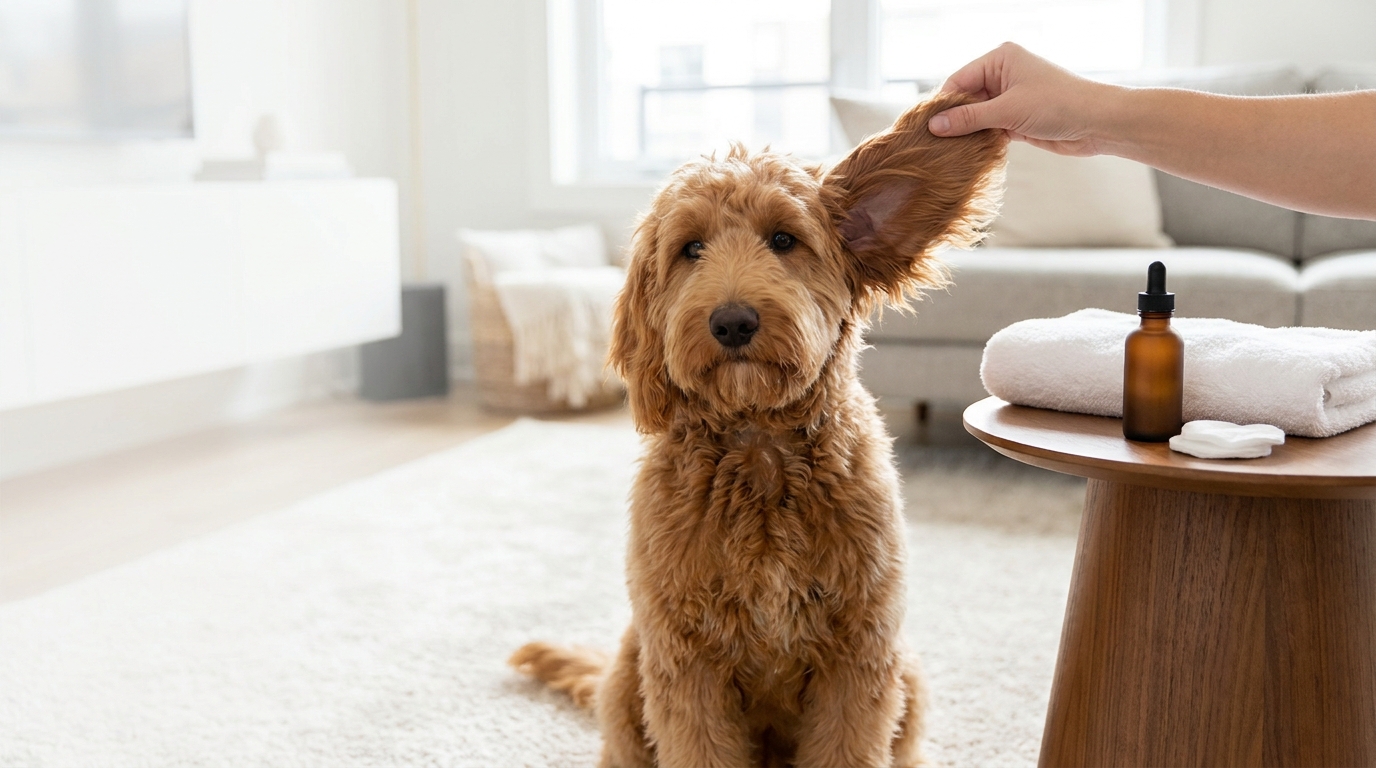
Hanging flaps and curly canal hair trap moisture, and allergies inflame the canal. What to tell the groomer, how to dry ears and when to see a vet.
Quick answer: Goldendoodles get ear infections often because hanging flaps and canal hair trap moisture and allergies inflame the ear. Ear problems drove nearly half (48%) of RexVet visits for Goldendoodles, about three times the rate for all dogs. Dry ears after swims and baths, skip routine plucking, see a vet for smelly or sore ears or recurrence within 3 months of clearing, and get emergency care for a sudden head tilt.
This article is general information, not a diagnosis. If you think your pet is in danger, go to the nearest emergency animal hospital.
What makes Goldendoodle ears so prone to infection?
Goldendoodles stack several ear risks at once: heavy hanging flaps, poodle-type hair that grows inside the ear canal, allergy-prone parent breeds and, for many, frequent swims, baths and grooming.
A 2021 Royal Veterinary College VetCompass study of 22,333 UK dogs found that, compared with crossbreds, Labradoodles had 2.95 times the odds of otitis externa (outer-ear inflammation) and Golden Retrievers had 2.23 times the odds. Poodle-type dogs had 1.91 times the odds of non-poodle types, and breeds with hanging ears had 1.76 times the odds of breeds with upright ears. The Royal Veterinary College's 2024 "doodle dilemma" owner survey in PLOS ONE found that all three doodle crosses it covered had higher odds of outer-ear inflammation than their non-poodle parent breed, though not higher than Poodles. Goldendoodles were not reported separately in either study.
The VetCompass authors link poodle ear trouble to hanging ears, curly canal hair and allergic skin disease, and cite good evidence that moisture adds risk in dogs that swim and in continuously growing coats that are bathed and groomed often, as many doodle coats are. The 2024 study adds that dense ear hair may hold moisture and heat in the canal.
| Risk | Why | What helps |
|---|---|---|
| Hanging flaps | Trap warmth | Lift and dry |
| Canal hair | Holds wax, water | Ask the vet |
| Allergies | Inflame canal | Allergy plan |
| Swimming | Damp canal | Dry after |
| Frequent baths | Water in canal | Keep it out |
| Too much cleaning | Irritates canal | Vet schedule |
What RexVet visit data shows about Goldendoodle ears
In visit data from RexVet, a nonprofit online vet service: Ear problems drove nearly half (48%) of RexVet visits for Goldendoodles, about three times the rate for all dogs.
These are concerns owners picked when booking, not diagnoses: owners tick one or more from a checklist, and breeds are reported only when they have enough visits.
Ear signs that need an emergency vet or a same-day visit
A Goldendoodle with a sudden head tilt, loss of balance, circling, flicking eyes, sudden hearing loss, a drooping face or severe ear pain needs an emergency vet now, and a balloon-like ear flap in a dog that is eating and acting normally needs a clinic within 24 to 48 hours, or the same day if the ear is hot, splitting or leaking pus or the dog is off food or lethargic.
Go to the nearest emergency vet now for:
- A sudden head tilt, loss of balance, circling or falling to one side
- Flicking or darting eyes, especially with nausea or vomiting
- Sudden hearing loss, a drooping face or an eye that cannot blink
- Severe ear pain, fever with ear pain, or bleeding from the ear canal
- A seizure, sudden confusion or any other sudden change in how your dog moves or behaves along with an ear problem
See a vet the same day (or an emergency clinic if no clinic can see your dog today) for:
- Pus draining from the ear canal
- Pain when opening the mouth or chewing, or refusing food or extreme lethargy along with ear pain
- Sudden, violent head shaking or pawing at one ear after time in grass or brush, which can mean a stuck grass seed
- A balloon-like ear flap that is hot, splitting or leaking pus
If a dog gets a head tilt, loses balance or seems suddenly deaf after ear drops or a cleaning, stop putting anything in the ear and go to an emergency vet now. If your dog swallowed or chewed an ear cleaner or ear medicine, call ASPCA Animal Poison Control at (888) 426-4435 (a consultation fee may apply) or the Pet Poison Helpline at (855) 764-7661 (a per-incident fee applies), or go to the nearest emergency vet.
Signs of an ear infection in a Goldendoodle
Head shaking, scratching, a bad smell, dark or yellowish discharge, redness or swelling, or a sore ear the dog pulls away from are the usual signs of an ear infection in a Goldendoodle, and any of them needs an in-person vet exam soon; lift a hairy flap to look.
The Merck Veterinary Manual lists most of these signs and notes that a dark discharge often points to yeast or parasites but can come with bacterial or mixed infections, so only a microscope check (cytology) at a clinic tells which germs are there.
| Sign | Do this |
|---|---|
| Sudden head tilt, falling | Emergency vet now |
| Pus, pain chewing | Vet same day |
| Shaking after grass | Same day (seed) |
| Hot, split flap | Vet same day |
| Balloon flap, acting fine | Clinic, 24-48h |
| Smell, discharge | Clinic exam soon |
| Brief shake after groom | Watch closely |
Should you pluck the hair inside a doodle's ears?
Do not routinely pluck hair from a healthy, comfortable doodle ear: pulling hair can irritate the canal, and the Merck Veterinary Manual tells owners to ask the vet before removing ear hair.
The Merck owner edition says trimming or plucking near the canal can improve airflow in some cases. The veterinary edition calls plucking controversial: sometimes needed to clear an infection, but hair that is not causing a problem should not routinely be pulled, because that can set off acute inflammation.
A 2025 Today's Veterinary Practice review, co-written by board-certified veterinary dermatologist Annette Lundberg, DVM, lists plucking and vigorous cleaning as trauma that can cause ear inflammation, an often overlooked factor, though plucking may be needed for select dogs, such as those with matted canal hair. When it is, a vet does it with pain control. Skip ear powder unless your vet recommends one: Merck says powders used after plucking can form irritating masses.
| Choice | When | Note |
|---|---|---|
| Leave it | Healthy ear | Regular checks |
| Trim outside | Hair blocks opening | Groomer can |
| Pluck inside | Vet advises | Not routine |
| Clinic removal | Packed canal | Anesthesia |
What to tell the groomer about doodle ears
Ask the groomer to trim the hair around the ear opening and under the flap, skip plucking and ear powder unless your vet has advised them, and keep water and shampoo out of the canal.
The Merck Veterinary Manual's veterinary edition says clipping hair inside the flap and around the canal opening improves airflow, and advises keeping water out of the canals during baths. After a groom:
- A brief shake right after grooming that stops, with no smell, discharge, pain or head tilt: watch closely.
- Shaking that keeps going, a smell or discharge, or crying when the ear is touched: the dog needs a vet look.
- A sudden head tilt, or a head tilt with wobbly walking, falling or vomiting: go to an emergency vet now.
Hard shaking can break a blood vessel in the flap, and Merck says the swollen flap of an ear hematoma may feel soft and fluid-filled, like a water balloon. That flap needs a clinic within 24 to 48 hours if the dog is eating and acting normally, or the same day if it is hot, splitting or leaking pus or the dog is off food or lethargic. Tell the vet whether the groomer plucked, powdered or cleaned the ears.
How to clean and dry Goldendoodle ears
Clean doodle ears only with a cleaner your vet recommends, only as often as the vet sets, then dry the flap and outer ear; never use cotton swabs, or vinegar, hydrogen peroxide, rubbing alcohol or any homemade mix.
Never clean a red, swollen, painful or bleeding ear, or one with a new bad smell or discharge, until a vet has looked; VCA warns that a red, inflamed or painful ear may have an infection or a ruptured eardrum. If a vet placed a long-acting medicine in the ear at the clinic, do not clean that ear until the vet says to.
- Fill the ear canal with the vet-recommended cleaner.
- Gently massage the base of the ear.
- Let your dog shake.
- Wipe the outer ear with a cotton ball or gauze, no deeper than a finger reaches.
- Dry the underside of the flap and the outer ear.
VCA warns that cotton-tipped swabs can puncture the eardrum or push debris deeper. The Merck Veterinary Manual says vinegar mixtures and other home remedies can worsen swelling and raise infection risk.
VCA notes that some healthy ears never need cleaning and that over-cleaning can irritate the canal. For dogs that often get ear infections, Merck describes a vet-directed routine that may start with daily cleaning and taper to once or twice a week for maintenance, a schedule vets often set rather than a rule for every doodle. Never restart old, leftover or another dog's drops on your own; VCA notes that some ear medicines can cause hearing loss if the eardrum is ruptured.
Swimming, baths and damp weather
To dry a doodle's ears after a swim or bath, lift each flap and pat the underside and outer ear dry with a soft towel, cotton ball or gauze, no deeper than a finger reaches, and never use cotton swabs.
The Merck Veterinary Manual's owner guide says to keep ear canals dry and well ventilated, keep water out of the ears during baths and, for dogs that swim often, use a drying agent only as the veterinarian recommends.
In Florida, pools and humid air can keep ears damp much of the year, and the 2025 Today's Veterinary Practice review lists swimming and hot, humid environments as risk factors. In New York and Virginia, winter brings more indoor baths, so dry after each one.
Allergies behind repeat doodle ear flares
When a doodle has itchy ears along with itchy paws, belly or face, an allergy is the likely trigger, and ear drops alone will not stop the cycle.
A 2025 Today's Veterinary Practice review names allergic skin disease (atopic dermatitis) as the primary cause in 31% to 50% of dogs with chronic or recurrent outer-ear infections, and explains that infections keep returning while the underlying disease is not controlled.
The Merck Veterinary Manual lists Golden Retrievers among the breeds predisposed to airborne allergies, though any dog, including a mixed breed, can be allergic. Merck says repeat ear infections may be the only sign in a small number of dogs.
If the vet suspects food, read how a food allergy elimination diet works. See the tests a vet uses when ear infections keep coming back.
When a video visit helps
A video visit helps between flares, when a Goldendoodle's ear infections keep coming back, you have past test results and the names of drops used before, and the dog has no emergency or same-day signs.
RexVet, a nonprofit online vet service, serves pets located in Florida, New York and Virginia by video visit, and your dog must be in one of those states during the visit. You can book a $64.99 live video visit with a licensed RexVet vet; live slots run about 8 AM to 11 PM ET, including evenings and weekends, and there are no overnight visits.
The veterinarian looks at the flap and outer ear on camera, reviews past results and drops, watches your cleaning and drying routine, goes over what to ask the groomer about plucking and powder, looks for an allergy trigger and sets a long-term plan, including when an in-person recheck should confirm the infection has cleared. The one-time $120 Family Plan covers 4 visits over 12 months for every pet in the home and never auto-renews.
A camera cannot show the eardrum, and many FDA-approved dog ear medicines are labeled for use only after a vet confirms it is intact, so a first infection, a new flare, a sore ear, or an ear that needs cytology, a culture or a flush needs a clinic. No prescription is promised; any medicine is the veterinarian's decision after the visit. Florida s.474.2021 limits telehealth-only prescribing to FDA-approved animal drugs used on-label, for up to 14 days (1 month for products labeled only for fleas and ticks), with no renewal without an in-person exam and no human-labeled, controlled or compounded anti-infective drugs. Federal rules (21 CFR 530.3) require an in-person vet relationship for off-label or human-drug use. Virginia allows the exam to be electronic; New York's telehealth prescribing rules are not settled. RexVet is not a pharmacy; a pharmacy transfer fee applies if a prescription is sent to an outside pharmacy.
Not a fit for video: a sudden head tilt, loss of balance, circling, flicking eyes, sudden hearing loss, a drooping face, severe ear pain, fever with ear pain or bleeding from the ear means the nearest emergency vet, and the same-day signs need a vet or an emergency clinic today. If your dog swallowed or chewed an ear cleaner or medicine, call a pet poison line or an emergency vet first.
Need an Expert Opinion on This Topic?
Book a video visit with a licensed vet, evenings and weekends included
See open timesFrequently Asked Questions
Do Labradoodles and Bernedoodles get as many ear infections as Goldendoodles?
No one can say yet: two UK studies found Labradoodles ear-prone, but neither reported Goldendoodles or Bernedoodles separately. The 2021 VetCompass study found Labradoodles had 2.95 times the odds of outer-ear inflammation that crossbreds had, and a 2024 Royal Veterinary College survey found they had 1.80 times the odds of Labrador Retrievers, though not higher than Poodles. Bernedoodles can have the same hanging, hairy ears, so the same habits apply.
Should I pluck the hair inside my Goldendoodle's ears?
Not as routine: ask a vet before anyone pulls hair from a healthy, comfortable Goldendoodle ear. The Merck Veterinary Manual's veterinary edition warns that pulling hair that is not causing a problem can inflame the canal. When plucking is needed, a vet does it with pain control.
Is it safe to put ear powder in my Goldendoodle's ears?
Not routinely: skip ear powder, especially after plucking, unless your vet recommends one. The Merck Veterinary Manual says powders used after plucking hair can form irritating masses. If your Goldendoodle swims or often gets wet ears, ask the vet whether a drying product suits your dog.
Why does my Goldendoodle keep shaking its head after grooming?
Head shaking that keeps going after a groom needs a vet look: plucking, ear powder, vigorous cleaning or water left in the canal can irritate a doodle's ear. A brief shake that stops, with no smell, discharge, pain or head tilt, can be watched closely. A smell or discharge, or crying when the ear is touched, also needs a vet look; a sudden head tilt, or a head tilt with wobbly walking, falling or vomiting, means an emergency vet now. Tell the vet whether the groomer plucked, powdered or cleaned the ears.
How often should I clean my Goldendoodle's ears?
As often as your vet sets; some healthy doodle ears never need cleaning. The 2025 Today's Veterinary Practice review describes maintenance cleaning 1 to 2 times a week for dogs with repeat infections, and VCA warns that over-cleaning can irritate the canal. Never clean an ear that is red, swollen, painful or bleeding until a vet has looked.
Will my Goldendoodle's ear infection go away on its own?
No, do not wait for it to clear; a new ear infection needs an in-person vet exam. The 2025 Today's Veterinary Practice review warns that without early and effective treatment, an outer-ear infection can become chronic and keep coming back. The Merck Veterinary Manual says treatment continues until the infection is fully cleared, with rechecks often over 2 to 4 weeks.
Can an online vet treat my Goldendoodle's ear infection in Florida, New York or Virginia?
Partly: a licensed RexVet vet can review a repeat pattern by video, but a first infection, new flare or sore ear needs an in-person exam. For a Goldendoodle located in Florida, New York or Virginia during the visit, the veterinarian can review past flares and drops, look at the outer ear on camera, coach cleaning, drying and grooming choices and build a long-term plan; a camera cannot show the eardrum, so the otoscope check, cytology, culture and any flush happen at a clinic. Any medicine is the veterinarian's decision and is never guaranteed. Florida limits telehealth-only prescriptions to FDA-approved animal drugs used as labeled, for up to 14 days (1 month for products labeled only for fleas and ticks) with no renewal without an in-person exam, and bars human-labeled drugs, controlled drugs and compounded anti-infective medicines, including compounded antibacterial and antifungal ones, without one. Federal rules (21 CFR 530.3) require an in-person vet relationship for off-label or human-drug use. Virginia allows the exam to be electronic, and New York's rules are not settled. A sudden head tilt, loss of balance or severe ear pain means an emergency vet, not a video visit.
FAQs
Do Labradoodles and Bernedoodles get as many ear infections as Goldendoodles?
No one can say yet: two UK studies found Labradoodles ear-prone, but neither reported Goldendoodles or Bernedoodles separately. The 2021 VetCompass study found Labradoodles had 2.95 times the odds of outer-ear inflammation that crossbreds had, and a 2024 Royal Veterinary College survey found they had 1.80 times the odds of Labrador Retrievers, though not higher than Poodles. Bernedoodles can have the same hanging, hairy ears, so the same habits apply.
Should I pluck the hair inside my Goldendoodle's ears?
Not as routine: ask a vet before anyone pulls hair from a healthy, comfortable Goldendoodle ear. The Merck Veterinary Manual's veterinary edition warns that pulling hair that is not causing a problem can inflame the canal. When plucking is needed, a vet does it with pain control.
Is it safe to put ear powder in my Goldendoodle's ears?
Not routinely: skip ear powder, especially after plucking, unless your vet recommends one. The Merck Veterinary Manual says powders used after plucking hair can form irritating masses. If your Goldendoodle swims or often gets wet ears, ask the vet whether a drying product suits your dog.
Why does my Goldendoodle keep shaking its head after grooming?
Head shaking that keeps going after a groom needs a vet look: plucking, ear powder, vigorous cleaning or water left in the canal can irritate a doodle's ear. A brief shake that stops, with no smell, discharge, pain or head tilt, can be watched closely. A smell or discharge, or crying when the ear is touched, also needs a vet look; a sudden head tilt, or a head tilt with wobbly walking, falling or vomiting, means an emergency vet now. Tell the vet whether the groomer plucked, powdered or cleaned the ears.
How often should I clean my Goldendoodle's ears?
As often as your vet sets; some healthy doodle ears never need cleaning. The 2025 Today's Veterinary Practice review describes maintenance cleaning 1 to 2 times a week for dogs with repeat infections, and VCA warns that over-cleaning can irritate the canal. Never clean an ear that is red, swollen, painful or bleeding until a vet has looked.
Will my Goldendoodle's ear infection go away on its own?
No, do not wait for it to clear; a new ear infection needs an in-person vet exam. The 2025 Today's Veterinary Practice review warns that without early and effective treatment, an outer-ear infection can become chronic and keep coming back. The Merck Veterinary Manual says treatment continues until the infection is fully cleared, with rechecks often over 2 to 4 weeks.
Can an online vet treat my Goldendoodle's ear infection in Florida, New York or Virginia?
Partly: a licensed RexVet vet can review a repeat pattern by video, but a first infection, new flare or sore ear needs an in-person exam. For a Goldendoodle located in Florida, New York or Virginia during the visit, the veterinarian can review past flares and drops, look at the outer ear on camera, coach cleaning, drying and grooming choices and build a long-term plan; a camera cannot show the eardrum, so the otoscope check, cytology, culture and any flush happen at a clinic. Any medicine is the veterinarian's decision and is never guaranteed. Florida limits telehealth-only prescriptions to FDA-approved animal drugs used as labeled, for up to 14 days (1 month for products labeled only for fleas and ticks) with no renewal without an in-person exam, and bars human-labeled drugs, controlled drugs and compounded anti-infective medicines, including compounded antibacterial and antifungal ones, without one. Federal rules (21 CFR 530.3) require an in-person vet relationship for off-label or human-drug use. Virginia allows the exam to be electronic, and New York's rules are not settled. A sudden head tilt, loss of balance or severe ear pain means an emergency vet, not a video visit.
Medically Reviewed
Reviewed by Dr. Tiffany Delacruz, DVM — licensed veterinarian and CEO of RexVet. Last reviewed November 5, 2026.
Content is for informational purposes and does not replace professional veterinary advice.
Chief Executive Officer · Licensed Veterinarian
Dr. Delacruz is a licensed Doctor of Veterinary Medicine specializing in preventive care and veterinary telehealth. She reviews all health content on RexVet to ensure accuracy and clinical relevance.
Sources & References
- · American Veterinary Medical Association — Telehealth Guidelines
- · AVMA — Pet Care Resources
- · U.S. FDA — Animal & Veterinary