
Common Household Items Toxic to Cats: A Safety Guide
By RexVet Team | Reviewed by Dr. Tiffany Delacruz, DVM
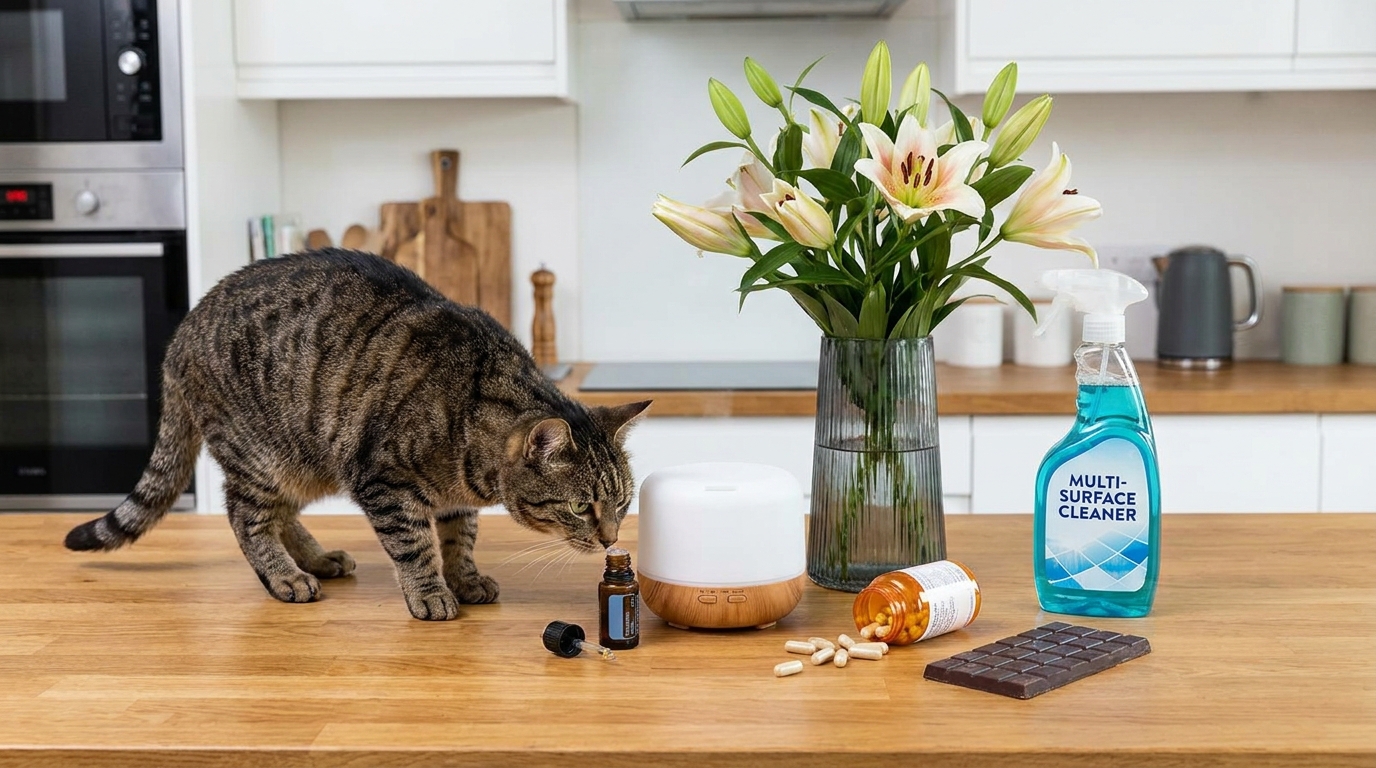
As a cat owner, your home is your pet's entire world, but it can also hide dangerous threats. Learning about Common Household Items Toxic to Cats is a vital step in keeping your feline friend safe and healthy. Many everyday objects, from common houseplants to human medications, can lead to severe health issues if ingested or touched. Because cats have unique metabolic systems, they are often more sensitive to toxins than other pets, making awareness of these household hazards essential for every caregiver.
Understanding which items pose a risk is the first line of defense in preventing accidental poisoning. Whether it is a bouquet of lilies, essential oils, or cleaning supplies, knowing the signs of exposure can save your cat's life. This guide on Common Household Items Toxic to Cats will help you identify hidden dangers in your living space. If you ever suspect your pet has encountered something harmful, remember that quick action is key. Call ASPCA Animal Poison Control (888-426-4435) or go to an emergency veterinarian right away if your cat may have eaten, licked, or touched something toxic. For non-urgent questions, you can talk with a licensed veterinarian by video, and our checklist explains which signs need emergency care.
Why Cats Are Sensitive to Many Household Products
Understanding why your feline companion is uniquely vulnerable to Common Household Items Toxic to Cats starts with their specialized liver metabolism. Unlike humans or dogs, cats lack a specific liver enzyme called glucuronyl transferase, which is essential for breaking down and eliminating many chemical compounds found in everyday products. This metabolic gap means that substances which are harmless to us can quickly reach dangerous concentrations in a cat's bloodstream.
Because of this physiological limitation, cats are highly susceptible to even trace amounts of toxins. Their fastidious grooming habits further increase their risk, as they frequently ingest residues left on their fur or paws from household surfaces. When researching Common Household Items Toxic to Cats, it is helpful to remember that their small body size means even tiny exposures can lead to rapid toxicity. If you notice unusual behavior or physical distress after a possible exposure, call ASPCA Animal Poison Control (888-426-4435) or an emergency veterinarian right away. By recognizing these biological sensitivities, you can better protect your home environment and ensure your cat stays safe from hidden, everyday dangers .
Foods That Can Be Dangerous for Cats
When exploring Common Household Items Toxic to Cats, it is vital to recognize that many pantry staples are dangerous. While you might enjoy these snacks, they can be life-threatening for your feline. Onions, garlic, chives, and leeks contain compounds that damage red blood cells, potentially causing severe anemia. Even small amounts of concentrated onion powder in seasonings can trigger this reaction.
Grapes and raisins are another major concern, as they are linked to acute kidney failure in pets. Furthermore, chocolate contains theobromine and caffeine, both of which are highly toxic to cats and can lead to tremors or heart arrhythmias. Alcohol and yeast dough are equally hazardous, as they can cause dangerous drops in blood sugar and severe bloating. Because these Common Household Items Toxic to Cats are frequently found in kitchens, keeping them securely stored is essential. If you suspect your cat has ingested any of these foods, do not wait for symptoms to appear. Call ASPCA Animal Poison Control (888-426-4435) or an emergency veterinarian right away. For non-urgent questions about which foods are safe to share, you can book a video visit with a licensed veterinarian.
Plants That Are Toxic to Cats
Many popular indoor and outdoor plants are surprisingly dangerous for felines. While greenery brings life to your home, understanding Common Household Items Toxic to Cats is vital for prevention. The most notorious offenders include true lilies, such as Easter, Tiger, and Daylilies, which cause rapid kidney failure even if your cat only brushes against the pollen. Other common hazards include Sago Palms, which are extremely lethal, and Pothos or Philodendrons, which contain calcium oxalate crystals that cause intense mouth irritation and drooling. When managing Common Household Items Toxic to Cats, it is safer to stick to non-toxic alternatives like spider plants or cat grass. If you suspect your cat has nibbled on a plant, do not wait for symptoms like vomiting or lethargy to appear. Call ASPCA Animal Poison Control (888-426-4435) or an emergency veterinarian right away, especially if the plant could be a lily. For non-urgent questions about which plants are safe to keep, you can book a video visit with a licensed veterinarian. Keeping your living space green while ensuring safety is possible with the right knowledge and professional guidance.
Human Medications and Supplements
Your medicine cabinet is often filled with items that are Common Household Items Toxic to Cats. Many owners mistakenly assume that over-the-counter medications safe for humans are equally harmless for pets, but this is a dangerous misconception. Acetaminophen, commonly found in pain relievers, is highly toxic to felines because it causes severe damage to their red blood cells and liver. Even small doses of ibuprofen or aspirin can trigger life-threatening ulcers and kidney failure.
Beyond pain relief, antidepressants, cold medicines, and vitamin D supplements pose significant risks. A single pill dropped on the floor can be fatal if ingested by a curious cat. When considering Common Household Items Toxic to Cats, always keep your prescriptions locked away in child-proof containers. If you suspect your cat has accessed your medication, do not wait for symptoms like lethargy or vomiting to manifest. Call ASPCA Animal Poison Control (888-426-4435) or an emergency veterinarian right away, and keep the packaging nearby so you can tell them what was taken.
Essential Oils and Fragrances
When discussing Common Household Items Toxic to Cats, essential oils and concentrated fragrances often fly under the radar. While many owners enjoy using diffusers for aromatherapy, these devices can disperse microscopic oil droplets that settle on your cat's fur. Because cats groom themselves constantly, they end up ingesting these potent substances. Oils like tea tree, peppermint, eucalyptus, and citrus are particularly hazardous, as they can cause liver failure, tremors, or respiratory distress.
Synthetic fragrances found in plug-in air fresheners and scented candles also pose risks. These products may contain phthalates or other volatile organic compounds that irritate a cat's sensitive respiratory tract. If you notice your pet sneezing, drooling, or acting lethargic after you turn on a diffuser, these could be early cat poison symptoms.
Common Fragrance Risk | Potential Health Impact |
|---|---|
Tea Tree Oil | Neurological issues and tremors |
Citrus Extracts | Skin irritation and liver damage |
Peppermint Oil | Respiratory distress and vomiting |
Prioritizing air quality is a key part of managing Common Household Items Toxic to Cats. If your cat is drooling, trembling, vomiting, or having trouble breathing after exposure to a diffuser or concentrated scent, or has licked oil from its fur, call ASPCA Animal Poison Control (888-426-4435) or an emergency veterinarian right away. For non-urgent questions about which scents are safe to use at home, you can book a video visit with a licensed veterinarian.
Cleaning Products and Chemicals
When considering Common Household Items Toxic to Cats, it is crucial to look beyond the pantry and medicine cabinet to the utility room. Many standard cleaning agents contain phenols, bleach, or ammonia, which are highly corrosive to a cat's delicate paw pads and respiratory system. Even residue left on freshly mopped floors can be ingested when your cat grooms itself, leading to chemical burns in the mouth or severe gastrointestinal distress. It is a common misconception that if a product is safe for human skin, it is safe for pets; however, cats are significantly more sensitive to these harsh chemicals.
Beyond standard cleaners, automotive fluids like antifreeze represent a lethal danger. Because it has a sweet taste, cats may be tempted to lick up even small spills in the garage or driveway. Ingestion leads to rapid, irreversible kidney damage. When managing Common Household Items Toxic to Cats, always store chemicals in sealed, elevated cabinets and ensure no puddles remain after cleaning. If you suspect your cat has walked through a chemical spill or ingested a cleaning agent, call ASPCA Animal Poison Control (888-426-4435) or go to an emergency veterinarian right away.
Flea Products Made for Dogs
Many pet owners mistakenly assume that flea products made for dogs are interchangeable with feline treatments. This is a dangerous misconception that frequently appears in our research on Common Household Items Toxic to Cats. Many canine flea preventatives contain permethrin or other pyrethroids, which are highly effective for dogs but act as potent neurotoxins to cats. Because felines lack the specific enzymes required to metabolize these chemicals, even a small amount of residue from a dog's collar or topical application can trigger severe tremors, seizures, and even death.
When reviewing Common Household Items Toxic to Cats, it is vital to understand that cats are not just small dogs; they have unique physiological needs. If you accidentally apply a canine product to your cat, you must act immediately. Do not wait for symptoms to develop, as the progression can be rapid. Call ASPCA Animal Poison Control (888-426-4435) or an emergency veterinarian right away for guidance on decontamination and treatment. Protecting your cat requires using only products explicitly labeled as safe for felines.
What to Do If Your Cat Ate Something Toxic
If you suspect your cat has ingested Common Household Items Toxic to Cats, your first priority is to remain calm. Rapid action can significantly improve your pet's outcome. Begin by safely removing any remaining substance from your cat's mouth, but do not induce vomiting unless specifically instructed by a professional, as this can cause further harm. Collect the packaging or identify the plant species to help your veterinarian understand exactly what was consumed.
Next, observe your cat for symptoms of poisoning , such as lethargy, seizures, or difficulty breathing. Even if your cat appears normal, do not wait for signs to escalate. Call ASPCA Animal Poison Control (888-426-4435) or an emergency veterinarian right away; they can judge the severity of the ingestion and tell you what to do next.
Always keep the contact information for your local emergency vet and a pet poison control center handy.
By using our virtual consultation service for Common Household Items Toxic to Cats, you can get cost-effective professional guidance on non-urgent safety questions, such as which products and plants are safe to keep at home.
Ask RexVet for $64.99
When you suspect your pet has encountered Common Household Items Toxic to Cats, time is of the essence. If your cat has already eaten, licked, or touched something toxic, do not wait for symptoms to escalate: call ASPCA Animal Poison Control (888-426-4435) or go to an emergency veterinarian now. For non-urgent questions, such as whether something in your home is dangerous to your cat, you can book a live video visit with a licensed veterinarian for $64.99. Our non-profit mission is to remove the barriers to professional advice, ensuring you never have to guess about your cat's health.
A virtual consultation is a good fit for non-urgent questions about Common Household Items Toxic to Cats, such as which products, plants, and foods are safe to keep at home. For a suspected ingestion or topical exposure, call ASPCA Animal Poison Control (888-426-4435) or an emergency veterinarian first. If your cat shows signs of severe distress, such as difficulty breathing or seizures, please seek emergency care immediately, but for all other non-emergency concerns, our 24/7 platform is here to support you and your feline companion with professional, accessible care.
Frequently Asked Questions
What common household items are toxic to cats?
Many items in your home can be dangerous. Common household items toxic to cats include certain houseplants like lilies, human medications such as NSAIDs or antidepressants, essential oils like tea tree or peppermint, and household cleaners. Even some human foods like onions, garlic, and chocolate can cause serious health issues. Because cats have unique metabolic pathways, they cannot process these substances effectively, making it vital to keep them out of reach.
Are essential oils safe for cats?
No, many essential oils are not safe for your feline friend. Cats lack a specific liver enzyme required to break down certain compounds found in concentrated oils. Essential oils toxic to cats include tea tree, peppermint, citrus, and eucalyptus. If you use diffusers, ensure the room is well-ventilated and your cat has an easy way to leave the area. If you suspect your cat has been exposed, call ASPCA Animal Poison Control (888-426-4435) or an emergency veterinarian.
What plants are toxic to cats?
Many popular indoor and outdoor plants can be harmful. The most dangerous are lilies, which can cause acute kidney failure even in very small amounts. Other common toxic plants for cats include sago palms, tulips, azaleas, and snake plants. Always check a reliable database before bringing new greenery into your home. If your cat has chewed on a plant, especially a lily, call ASPCA Animal Poison Control (888-426-4435) or an emergency veterinarian right away rather than waiting for vomiting or lethargy.
What should I do if my cat ate something dangerous?
If you suspect your cat has ingested a toxin, stay calm and act quickly. First, remove any remaining substance from their reach. Do not wait for symptoms to appear, as early intervention is key. Call ASPCA Animal Poison Control (888-426-4435) or an emergency veterinarian right away to assess the risk. Our virtual veterinary consultation service ($64.99) is for non-urgent questions, not for a cat that may have swallowed a toxin.
What are the common symptoms of poisoning in cats?
Cat poison symptoms can vary depending on the substance, but watch for sudden changes in behavior. Common signs include excessive drooling, vomiting, diarrhea, difficulty breathing, seizures, or extreme lethargy. Some toxins may cause tremors or a lack of coordination. If you notice any of these symptoms, call ASPCA Animal Poison Control (888-426-4435) or go to an emergency veterinarian right away. A RexVet video call is for non-urgent questions, not for a cat showing signs of poisoning.
FAQs
What common household items are toxic to cats?
Many items in your home can be dangerous. Common household items toxic to cats include certain houseplants like lilies, human medications such as NSAIDs or antidepressants, essential oils like tea tree or peppermint, and household cleaners. Even some human foods like onions, garlic, and chocolate can cause serious health issues. Because cats have unique metabolic pathways, they cannot process these substances effectively, making it vital to keep them out of reach.
Are essential oils safe for cats?
No, many essential oils are not safe for your feline friend. Cats lack a specific liver enzyme required to break down certain compounds found in concentrated oils. Essential oils toxic to cats include tea tree, peppermint, citrus, and eucalyptus. If you use diffusers, ensure the room is well-ventilated and your cat has an easy way to leave the area. If you suspect your cat has been exposed, call ASPCA Animal Poison Control (888-426-4435) or an emergency veterinarian.
What plants are toxic to cats?
Many popular indoor and outdoor plants can be harmful. The most dangerous are lilies, which can cause acute kidney failure even in very small amounts. Other common toxic plants for cats include sago palms, tulips, azaleas, and snake plants. Always check a reliable database before bringing new greenery into your home. If your cat has chewed on a plant, especially a lily, call ASPCA Animal Poison Control (888-426-4435) or an emergency veterinarian right away rather than waiting for vomiting or lethargy.
What should I do if my cat ate something dangerous?
If you suspect your cat has ingested a toxin, stay calm and act quickly. First, remove any remaining substance from their reach. Do not wait for symptoms to appear, as early intervention is key. Call ASPCA Animal Poison Control (888-426-4435) or an emergency veterinarian right away to assess the risk. Our virtual veterinary consultation service ($64.99) is for non-urgent questions, not for a cat that may have swallowed a toxin.
What are the common symptoms of poisoning in cats?
Cat poison symptoms can vary depending on the substance, but watch for sudden changes in behavior. Common signs include excessive drooling, vomiting, diarrhea, difficulty breathing, seizures, or extreme lethargy. Some toxins may cause tremors or a lack of coordination. If you notice any of these symptoms, call ASPCA Animal Poison Control (888-426-4435) or go to an emergency veterinarian right away. A RexVet video call is for non-urgent questions, not for a cat showing signs of poisoning.
Medically Reviewed
Reviewed by Dr. Tiffany Delacruz, DVM — licensed veterinarian and CEO of RexVet. Last reviewed July 20, 2026.
Content is for informational purposes and does not replace professional veterinary advice.
Chief Executive Officer · Licensed Veterinarian
Dr. Delacruz is a licensed Doctor of Veterinary Medicine specializing in preventive care and veterinary telehealth. She reviews all health content on RexVet to ensure accuracy and clinical relevance.
Sources & References
- · American Veterinary Medical Association — Telehealth Guidelines
- · AVMA — Pet Care Resources
- · U.S. FDA — Animal & Veterinary
Need an Expert Opinion on This Topic?
Connect with a certified vet via video call in minutes
Talk to Vet Now