
Kitten Too Young for Flea Treatment? What to Do Tonight
By RexVet Team | Reviewed by Dr. Tiffany Delacruz, DVM
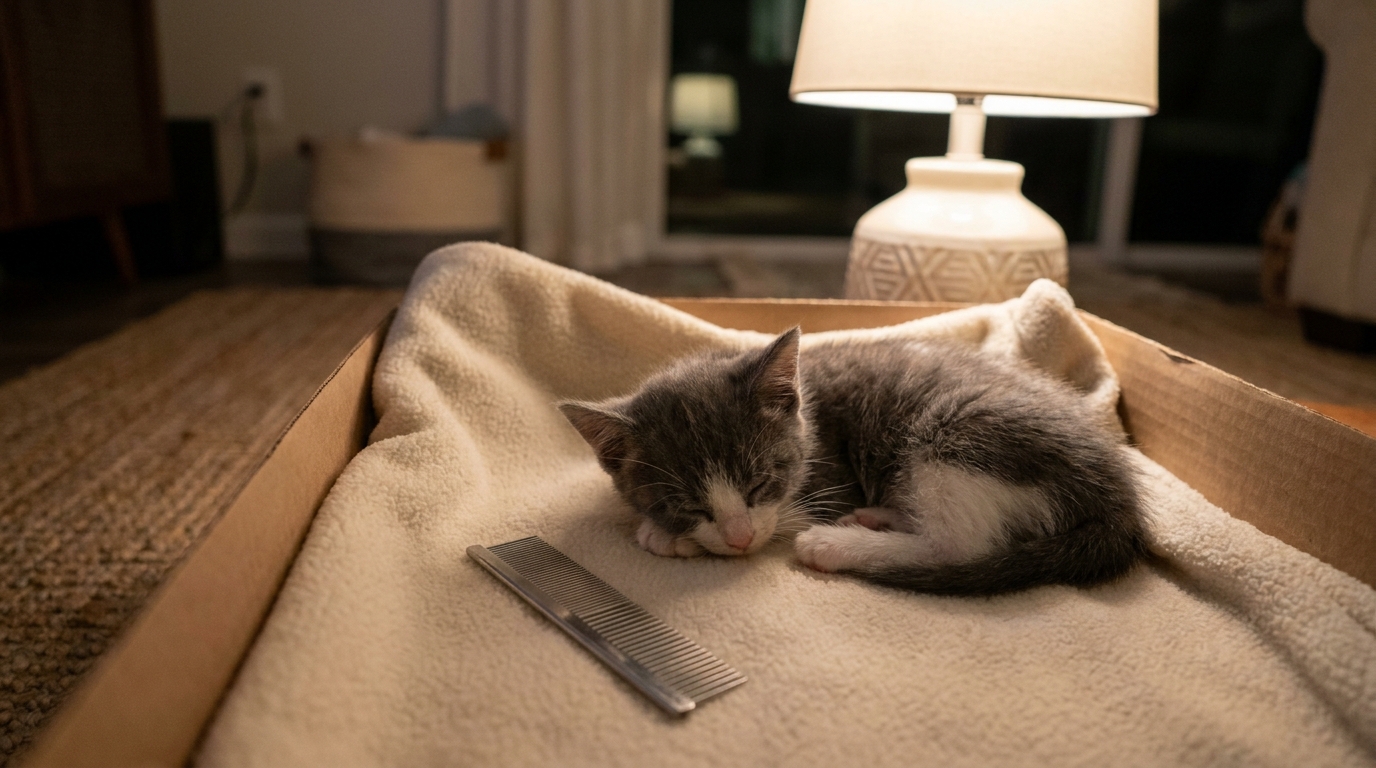
Kitten too young for flea treatment? Comb the fleas off by hand and keep the kitten warm. Pale gums or a cold, weak kitten mean an ER now.
Go to an emergency vet now if your kitten has pale or white gums, is weak, limp or cold to the touch, won't nurse or eat, is breathing hard, or had a dog flea product or any adult flea product put on it.
Kitten too young for flea treatment: why fleas hit tiny kittens so hard
If you found a tiny kitten crawling with fleas and the box says it is too young for the product, take that label seriously. The US Environmental Protection Agency is direct: "Do not apply to kittens or puppies unless the product label specifically allows this treatment." It adds, "The label will tell you the minimum age or size of the pet for use." If the label does not specifically allow use on a kitten as young and as small as yours, put the product away.
At this age, fleas are more than an itch. Veterinary Partner puts it simply: "Young kittens are small and do not have blood to spare." It also notes that "they are too young to groom themselves effectively and remove their own fleas."
VCA Animal Hospitals explains: "If a debilitated or older cat, or a kitten, has a lot of fleas, the blood loss can be severe, resulting in anemia." That is flea anemia.
Veterinary Partner names the kittens most at risk: "Very young kittens being raised outdoors or by a mother cat who goes outdoors." In Florida, fleas are active year-round, and fall is still kitten season there.
Emergency signs: go to an ER now, not a video call
Go to an emergency vet now, not a video call, if any of these is true:
- Pale or white gums
- Weak, limp or floppy
- Cold to the touch
- Not nursing or not eating
- Breathing hard
- Any dog flea product, or any flea product made for adult cats, has already been put on the kitten
If you are not sure whether one of these fits, treat it as a yes and go.
Here is what flea anemia looks like, in Veterinary Partner's words: "The affected animal will have pale gums (normal gums are shell-pink; anemic gums can be completely white). In advanced diseases, the patient will be listless and even cold."
Can this wait until morning? Not if any sign on the list fits. Veterinary Partner is blunt about where flea anemia leads: "Eventually, the weakness catches up with these animals, and they will die unless they receive a blood transfusion." It adds, "The good news is that these patients can still be treated even fairly late in the course of the disease." That treatment happens at a clinic, not at home, so if a sign fits, go to an emergency vet now.
If the kitten feels cold, wrap it in a dry towel and hold it against your body on the drive. Do not use a hair dryer or a hot water bottle. The Merck Veterinary Manual advises that "Chilled neonates must be rewarmed slowly".
If a flea product was already put on the kitten, go to an emergency vet now or call ASPCA Animal Poison Control at (888) 426-4435 or Pet Poison Helpline at (855) 764-7661. Both are open 24/7, and a fee may apply. Bring the box or tube with you.
How to check gums and spot flea dirt at home
These checks help you spot trouble early; they never replace the ER.
Start with the gums. Veterinary Partner advises: "Be familiar with the normal color of your pet's gums so that you can recognize a problem." Describing a healthy newborn, the Merck Veterinary Manual says, "The mucous membranes should be pink and moist". Gently lift the kitten's upper lip in daylight or under a bright lamp and compare what you see with Veterinary Partner's description above: "normal gums are shell-pink". If the gums look pale or white, or you cannot tell, treat them as pale and go to an emergency vet now.
For flea dirt, Merck's owner guide to fleas in cats says, "Slowly parting the hair often reveals flea excrement or rapidly moving fleas." To tell it from ordinary dirt: "Placed in water or on a damp paper towel, the excrement dissolves, producing a reddish brown color."
No live fleas in sight? Veterinary Partner is clear: "Even if live fleas are not seen, flea dirt means that live fleas are there."
One more clue: Veterinary Partner notes that "Pets sometimes eat small pebbles, dirt, or cat litter when they are anemic in an effort to obtain more iron." If you have seen this, check the gums right now; if they are pale, white or you cannot tell, or the kitten is weak, cold, not nursing or breathing hard, go to an emergency vet now. Later, read more about why a kitten might eat cat litter.
What you can do tonight without flea products
Comb first. Set out a small cup of warm water with a few drops of plain liquid dish soap. Go over the whole kitten with a fine-toothed flea comb, head and neck to tail, in short, gentle strokes. After each pass, dunk the comb in the cup to drop the fleas and flea dirt into the water.
Veterinary Partner notes that "Regular flea combing can help nip a big problem in the bud." Keep sessions short so the kitten does not get tired or chilled.
Be careful with baths. The Merck Veterinary Manual explains that "Puppies and kittens lack thermoregulatory mechanisms until 4 weeks of age" and that "Body temperature drops rapidly when a neonate is damp." Veterinary Partner notes that a critically ill patient is often "too sick to tolerate the stress of a bath".
So a quick warm-water spot wash is only for a kitten with pink gums that is bright, warm and nursing well, dried right away with a towel in a warm room. Never bathe a weak or cold kitten; take it to an emergency vet now.
Keep the kitten warm with a covered heat source on a low setting under only part of the bed, so it can crawl away if it gets too warm. The Merck Veterinary Manual warns that "Heating pads run the risk of burning neonates incapable of moving away from excessively hot surfaces."
Keep the kitten fed. Merck notes that "Even minimal fasting can result in hypoglycemia," which means low blood sugar, and that "Healthy, well-nourished neonates are quiet and sleep when not nursing." If it won't nurse or eat, or seems weak, limp or cold rather than just sleepy, go to an emergency vet now.
Do not use any of these, even if they seem harmless:
- Any dog flea product
- A "little bit" or a split dose of an adult cat product
- Flea powders, sprays, collars or shampoos
- Essential oils or other home remedies
The EPA's rule is plain: "Use flea and tick control products only on the animal species and size/weight specified by the product label." If one of these is already on the kitten, go to an emergency vet now or call one of the poison lines listed above.
The mother cat, the other pets and your home
The fleas on your kitten came from somewhere. VCA explains: "Fleas can spread directly from a flea-infested animal to your cat, but usually cats get fleas from their environment."
The mother cat needs a plan too, but a nursing mother needs a vet's plan, not a guess. The EPA tells owners to "Follow any label prohibitions against use on weak, aged, medicated, sick, pregnant or nursing pets". Every other dog and cat in the home should be covered as well.
Then the house. Merck's owner guide advises: "Thoroughly vacuum any area where your pets sleep or rest, giving special attention to crevices in sofas and chairs and to areas beneath sofas or beds." VCA says to "wash your pet's bedding in hot water or replace it."
Be patient. According to Merck, "Typically, control of an infestation can take 2 to 3 months." If fleas keep turning up after the other pets are treated, read about why fleas keep coming back even on prevention.
What a RexVet online vet can and cannot do for a kitten too young for flea treatment
If your kitten shows any sign on the emergency list, go to an ER first, not a video call. If your kitten has pink gums, is breathing normally, is bright, warm and nursing, and has had no dog or adult flea product put on it, a video visit can help you plan the next few days. If you cannot tell whether the gums are pink, treat them as pale and go to an emergency vet now.
RexVet's veterinarians are licensed in Florida, New York and Virginia. On camera, in good light, a vet can look at the gums, belly, coat and flea dirt, and watch the kitten move, breathe and nurse or eat. The vet can go over age, weight and history, coach safe combing, a warm spot wash and warming, plan for the mother cat, the other pets and the house, and help you sort an ER visit now from an exam soon or care at home.
If the veterinarian decides medication is appropriate, they can prescribe where state rules allow. But by video, a vet cannot run a blood count, give a transfusion or fluids, provide hands-on heat support, or weigh the kitten. Veterinary Partner notes that when a kitten is too small and too sick for the usual options, "veterinarians have to use their judgment on the safest route to remove the fleas."
RexVet's veterinarians are available 24/7 for pet parents in Florida, New York and Virginia. A video visit is $64.99, and you can book a RexVet video visit tonight.
Keeping fleas off as your kitten grows
Keep up the daily combing, and keep checking gum color and whether the kitten is gaining weight.
Your kitten will eventually reach the minimum age and size on a product label. The EPA's advice: "Consult your veterinarian about the best way to protect your pets from fleas and ticks and whether and when certain types of pet product applications are needed."
Do not assume an indoor kitten is safe. VCA notes that "Fleas live, feed, and mate on many animals, including cats, dogs, rabbits, ferrets, opossums, rodents, and raccoons." Here is more on why indoor cats still need flea protection.
When to be seen in person in Florida, New York or Virginia
If your kitten has pale or white gums, is weak, limp or cold, won't nurse or eat, is breathing hard, or has had a dog flea product or any adult flea product put on it, go to an emergency vet now, even if it also has one of the problems below. If you are not sure, go. Otherwise, these need a hands-on exam soon:
- The kitten is not gaining weight
- It has diarrhea or a pot belly
- Fleas keep coming back after days of combing
- The mother cat seems unwell (if she is weak, breathing hard, collapsing, having a seizure, trembling or not eating, take her to an emergency vet now)
An in-person visit lets the veterinarian examine and weigh the kitten and choose the safest next step. In Florida, a vet who sees your pet by telehealth must give you "the contact information for at least one physical veterinary clinic in the vicinity of the patient's location".
Is your kitten bright, warm and nursing, with pink gums, normal breathing and no dog or adult flea product put on it, but you are not sure which path fits? A video visit can help you decide. RexVet's veterinarians are licensed in Florida, New York and Virginia and are available 24/7. A video visit is $64.99, and you can book a video visit now.
Frequently Asked Questions
How do I get fleas off a newborn kitten?
If the kitten has pale or white gums, is weak, limp or cold, won't nurse or eat, is breathing hard, or had a dog or adult flea product put on it, go to an emergency vet now instead of treating it at home. Otherwise, use a fine-toothed flea comb from head to tail, and dunk each load of fleas and dirt into a small cup of warm water with a few drops of plain liquid dish soap. Keep the kitten warm and dry; the Merck Veterinary Manual notes that "Body temperature drops rapidly when a neonate is damp." A quick warm spot wash is only for a kitten with pink gums that is strong, warm and nursing well, dried at once.
Can fleas kill a kitten?
Yes, through blood loss. Veterinary Partner explains that "Young kittens are small and do not have blood to spare," and that anemic gums "can be completely white." If your kitten has pale or white gums, is weak, limp or cold, won't nurse or eat, or is breathing hard, go to an emergency vet now.
Is it safe to give a young kitten a bath for fleas?
Not a full bath. The Merck Veterinary Manual says that "Puppies and kittens lack thermoregulatory mechanisms until 4 weeks of age" and that "Body temperature drops rapidly when a neonate is damp." At most, give a quick warm-water spot wash to a kitten with pink gums that is bright, warm and nursing, and dry it right away in a warm room. Never bathe a kitten that has pale or white gums, is weak, limp or cold, won't nurse or eat, is breathing hard, or had a dog or adult flea product put on it; go to an emergency vet now.
Can I use a little of my dog's or older cat's flea treatment on my kitten?
No. The EPA says to use flea products "only on the animal species and size/weight specified by the product label." If a product is already on the kitten, go to an emergency vet now or call ASPCA Animal Poison Control at (888) 426-4435 or Pet Poison Helpline at (855) 764-7661, both open 24/7 (a fee may apply).
Should I treat the mother cat if her kittens have fleas?
Yes, the mother cat and every other pet in the home need a flea plan. Because she is nursing, let a veterinarian choose what to use rather than guessing. The EPA tells owners to "Follow any label prohibitions against use on weak, aged, medicated, sick, pregnant or nursing pets".
FAQs
How do I get fleas off a newborn kitten?
If the kitten has pale or white gums, is weak, limp or cold, won't nurse or eat, is breathing hard, or had a dog or adult flea product put on it, go to an emergency vet now instead of treating it at home. Otherwise, use a fine-toothed flea comb from head to tail, and dunk each load of fleas and dirt into a small cup of warm water with a few drops of plain liquid dish soap. Keep the kitten warm and dry; the Merck Veterinary Manual notes that "Body temperature drops rapidly when a neonate is damp." A quick warm spot wash is only for a kitten with pink gums that is strong, warm and nursing well, dried at once.
Can fleas kill a kitten?
Yes, through blood loss. Veterinary Partner explains that "Young kittens are small and do not have blood to spare," and that anemic gums "can be completely white." If your kitten has pale or white gums, is weak, limp or cold, won't nurse or eat, or is breathing hard, go to an emergency vet now.
Is it safe to give a young kitten a bath for fleas?
Not a full bath. The Merck Veterinary Manual says that "Puppies and kittens lack thermoregulatory mechanisms until 4 weeks of age" and that "Body temperature drops rapidly when a neonate is damp." At most, give a quick warm-water spot wash to a kitten with pink gums that is bright, warm and nursing, and dry it right away in a warm room. Never bathe a kitten that has pale or white gums, is weak, limp or cold, won't nurse or eat, is breathing hard, or had a dog or adult flea product put on it; go to an emergency vet now.
Can I use a little of my dog's or older cat's flea treatment on my kitten?
No. The EPA says to use flea products "only on the animal species and size/weight specified by the product label." If a product is already on the kitten, go to an emergency vet now or call ASPCA Animal Poison Control at (888) 426-4435 or Pet Poison Helpline at (855) 764-7661, both open 24/7 (a fee may apply).
Should I treat the mother cat if her kittens have fleas?
Yes, the mother cat and every other pet in the home need a flea plan. Because she is nursing, let a veterinarian choose what to use rather than guessing. The EPA tells owners to "Follow any label prohibitions against use on weak, aged, medicated, sick, pregnant or nursing pets".
Medically Reviewed
Reviewed by Dr. Tiffany Delacruz, DVM — licensed veterinarian and CEO of RexVet. Last reviewed September 30, 2026.
Content is for informational purposes and does not replace professional veterinary advice.
Chief Executive Officer · Licensed Veterinarian
Dr. Delacruz is a licensed Doctor of Veterinary Medicine specializing in preventive care and veterinary telehealth. She reviews all health content on RexVet to ensure accuracy and clinical relevance.
Sources & References
- · American Veterinary Medical Association — Telehealth Guidelines
- · AVMA — Pet Care Resources
- · U.S. FDA — Animal & Veterinary
Need an Expert Opinion on This Topic?
Connect with a certified vet via video call in minutes
Talk to Vet Now