
Insulin Left Out of the Fridge: Is Your Pet's Still Good?
By RexVet Team | Reviewed by Dr. Tiffany Delacruz, DVM
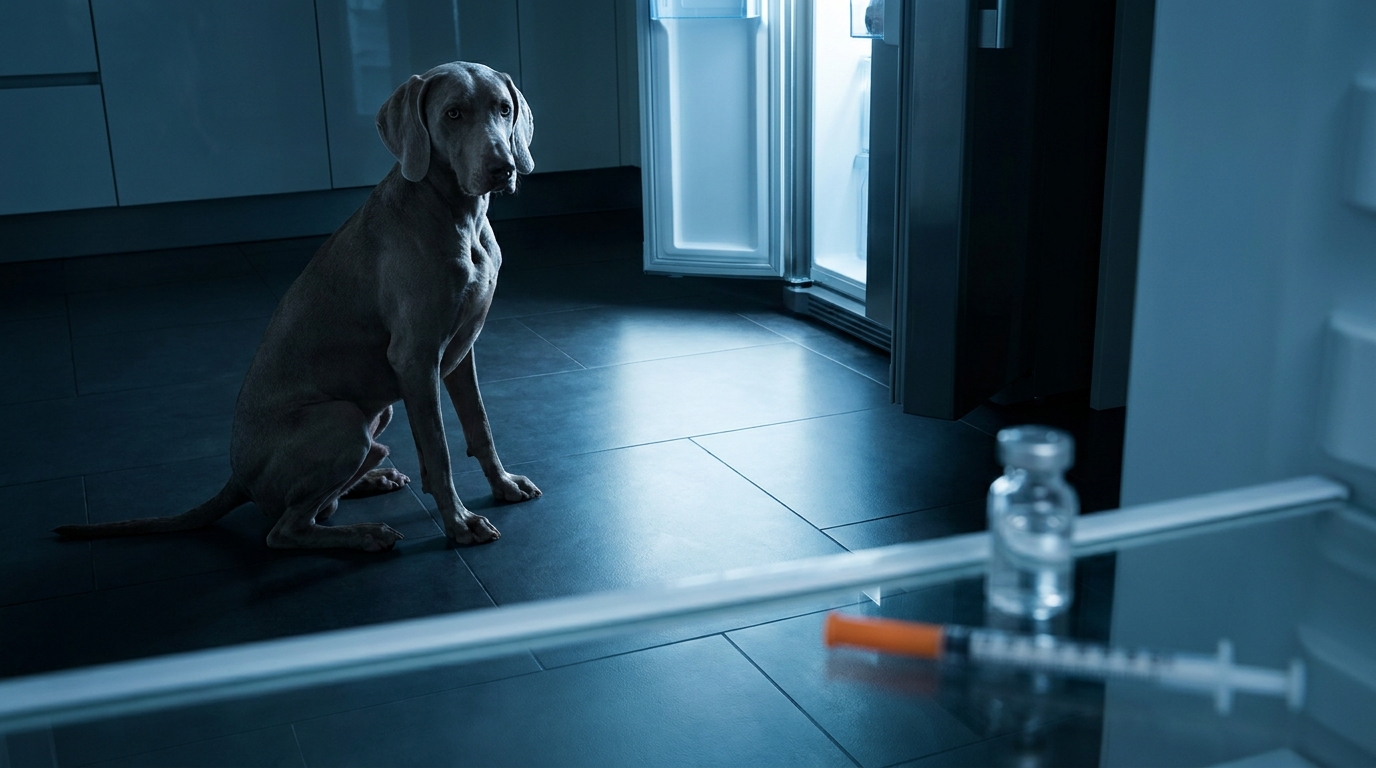
Insulin labels give a fridge range and an after-puncture limit, not a safe-hours-warm number, so inspect the vial and call a vet before the next dose.
If your diabetic dog or cat is weak, wobbly, shaking or twitching, having a seizure, collapsed, or is vomiting, breathing hard and refusing food, this is an emergency: offer food or rub honey or corn syrup on the gums only if the pet is awake and not seizing, then go to an in-person emergency vet now.
Finding insulin left out of the fridge after a Florida power outage, a night on the counter or a ride in a hot car is a common scare. Do not change the dose, inspect the vial as its label directs, write down what happened, and let a veterinarian decide whether to keep using it while you arrange a replacement.
Is insulin left out of the fridge still good? The honest answer
The Vetsulin and ProZinc labels on DailyMed give the same storage rules: keep the vial upright in the refrigerator at 36°F to 46°F (2°C to 8°C), do not freeze, protect from light, and discard a set number of days after first puncture: 42 days for Vetsulin, 60 days for the 10 mL ProZinc vial and 80 days for the 20 mL vial. VCA Animal Hospitals adds: protect it from freezing below 36°F, heat above 86°F and direct sunlight.
What no label gives is a number of hours the product stays good at room temperature, so nobody can certify a warmed vial by phone or video. What a veterinarian can do is weigh three things: the exposure story, what the vial looks like after mixing, and the days since first puncture.
First, do not skip or double the next dose in a panic
The Vetsulin label answers this directly: a missed or inadequate dose may cause a temporary return of signs such as excess thirst and urination, but it is not life-threatening. It says to contact your veterinarian as soon as possible about the next dose, and that if you cannot reach your veterinarian and your pet is eating and acting normally, you give the usual dose at the next regularly scheduled time.
The dangerous mistake runs the other way. VCA says never give your pet two doses at once or give extra doses, and the Merck Veterinary Manual warns that overdosing insulin can result in life-threatening low blood sugar (hypoglycemia). A weak vial means too little insulin, which the Vetsulin label describes as a temporary return of signs; a doubled dose is the one that can cause a life-threatening emergency. If your cat's injection was skipped in the confusion, see a missed insulin dose in cats.
How to inspect the vial or pen tonight
Mix the vial or pen cartridge exactly as its label directs; the two common veterinary insulins are handled differently:
- Vetsulin is shaken thoroughly until uniformly milky (its label's words) and is not used if visible clumps or white particles persist after shaking.
- ProZinc is never shaken; it is mixed by gently rolling the vial, and is not used if clumps or visible white particles persist after rolling.
Both look milky once mixed, so cloudiness itself is not the warning sign. VCA adds that if the solution has clumps or looks different from usual, it may be contaminated and should not be given. Frost, ice crystals or a vial frozen solid against an ice pack means it is not used; the labels say do not freeze. Note the expiration and first-puncture dates, and take clear, well-lit photos before and after mixing for the veterinarian.
Write down the exposure history before you call
The more exact your story, the more useful the answer. Jot down:
- How many hours the insulin was out of the fridge.
- How warm the room was: a Florida kitchen with no air conditioning after a storm versus a cool apartment.
- Whether it sat in direct sunlight, in a car, or near a stove or window.
- Whether it was packed in a cooler and may have touched ice and frozen.
- Days since first puncture, and the expiration date.
- Whether your pet is eating, drinking and acting like itself.
Use, watch, or replace: how the veterinarian decides
On a video visit, the veterinarian looks at the vial on camera, applies the label storage and discard rules to your exposure story, and gives one of three answers: use it and monitor; use it only until a replacement is in hand, while watching closely; or do not use it. A vial that froze, sat in heat or sun, has clumps or white particles that persist after mixing, or is past its puncture limit or expiration date is replaced. The vet will never tell you to raise the dose to make up for suspected weak insulin, because the Merck Veterinary Manual warns that overdosing insulin can cause life-threatening hypoglycemia.
If your pet is awake, eating and acting normally, you can book a RexVet video visit now for $64.99. RexVet's veterinarians are licensed in Florida, New York and Virginia only and are available 24/7. Insulin cannot be shipped through telehealth; the visit is for the vial, the exposure story and a monitoring plan. A pet that is weak, wobbly, seizing or collapsed needs an in-person emergency vet, not a video call; see the emergency online vet page, and the post on telehealth for chronic disease for long-term diabetes care by video.
Your home-monitoring plan while you watch
If the answer was use it and monitor, watch and write things down: water intake, trips outside or litter clumps, appetite, energy and weight, each with a time. If you already own urine ketone strips, test as your veterinarian directs and let the vet read the result.
Signs the insulin is not doing its job are the signs of untreated diabetes: the Merck Veterinary Manual lists increased thirst and urination, increased appetite and weight loss in dogs, and the Cornell Feline Health Center says the two most common signs in cats are weight loss despite a good appetite and increased thirst and urination. These build over days and belong in the log and a call to the vet; see the dog drinking too much water guide.
Diabetic ketoacidosis is different. Cornell explains that cells starved for glucose break down fat for energy, producing ketones that make the blood more acidic; it is a medical emergency, and affected cats require hospitalization. Merck lists the signs as increased thirst and urination, lethargy, weakness, decreased appetite and trouble breathing. If you see those, stop logging and go to an in-person veterinarian now.
Low blood sugar red flags and what to do right now
Low blood sugar comes from too much insulin for what the pet ate, not from a weak vial. VCA lists the signs as weakness, lack of energy, shaking, twitching, head tilting, sleepiness, incoordination, stumbling, seizures, blindness, abnormal behavior, restlessness and coma. Cornell adds lethargy and vomiting in cats, Merck adds collapse, and the ProZinc label adds depression, behavioral changes, muscle twitching and anxiety. If you see any of these:
- Offer your pet its regular food immediately, as Cornell advises.
- If the pet will not eat but is awake and not seizing, rub honey, corn syrup or a dextrose gel on the gums; VCA says never use a sugar substitute.
- Never force fingers, food or fluids into the mouth of a convulsing or unconscious pet (Cornell).
- Then call or go to an in-person veterinarian immediately; both Merck and Cornell say not to wait.
A video visit cannot treat a pet that is wobbly, seizing or collapsed.
Getting replacement insulin in Florida, New York or Virginia, and preventing the next scare
RexVet's hurricane refill playbook states that injectable medications like insulin cannot be shipped or provided through telehealth. Replacement insulin comes from your regular veterinarian or your pharmacy on the existing prescription; Florida owners can find local resources on the diabetes in Florida page. Keep the carton and label handy, and store the new vial upright, away from light and from the freezer compartment or back wall where it could freeze.
For hurricane season in Florida and coastal Virginia, or a heat wave in a New York apartment without air conditioning, plan ahead:
- A cooler with ice packs and a towel or small box as a barrier, so the vial never touches the ice.
- A backup vial picked up before hurricane season.
- A written insulin log with dates, times and what your pet ate.
- A 30 to 90 day script plan for your pet's other medications; see the hurricane preparedness guide.
If your pet is still eating and acting normally, you do not have to decide about insulin left out of the fridge alone at midnight. You can book a video visit with a RexVet veterinarian for $64.99, 24/7; RexVet's veterinarians are licensed in Florida, New York and Virginia only. The visit helps you decide about the vial while you arrange a replacement; it cannot replace or ship insulin.
Frequently asked questions
How long can pet insulin stay out of the fridge before it goes bad?
There is no official safe-hours figure. The Vetsulin and ProZinc labels give a refrigeration range, a do-not-freeze rule and an after-puncture limit, nothing about hours at room temperature, so a veterinarian decides from the exposure story, appearance and puncture date.
Can I still use my dog's or cat's insulin after a power outage?
Only a veterinarian can say. The vet weighs how long and how warm the vial was, whether it may have frozen, what it looks like after mixing and the puncture date, then says use it and monitor, use it until a replacement is in hand, or do not use it.
What does spoiled insulin look like?
Clumps or white particles that persist after mixing as the label directs, a vial that looks different from usual, or frost, ice crystals or a vial frozen solid. Both labels say not to use it with persistent clumps or particles, and VCA says insulin that looks different may be contaminated.
Should I give a bigger dose if I think the insulin got weak?
No. The Vetsulin label says a missed or inadequate dose is not life-threatening, while the Merck Veterinary Manual warns that overdosing insulin can cause life-threatening hypoglycemia. Keep the prescribed dose and schedule, and let your veterinarian decide about the vial.
Can an online vet replace my pet's insulin?
No. Injectable medications like insulin are not shipped or provided through telehealth; replacement comes from your regular veterinarian or pharmacy on the existing prescription. A RexVet veterinarian can look at the vial on camera, review the exposure story and help you decide whether to keep using it meanwhile.
Sources
FAQs
How long can pet insulin stay out of the fridge before it goes bad?
There is no official safe-hours figure. The Vetsulin and ProZinc labels give a refrigeration range, a do-not-freeze rule and an after-puncture limit, nothing about hours at room temperature, so a veterinarian decides from the exposure story, appearance and puncture date.
Can I still use my dog's or cat's insulin after a power outage?
Only a veterinarian can say. The vet weighs how long and how warm the vial was, whether it may have frozen, what it looks like after mixing and the puncture date, then says use it and monitor, use it until a replacement is in hand, or do not use it.
What does spoiled insulin look like?
Clumps or white particles that persist after mixing as the label directs, a vial that looks different from usual, or frost, ice crystals or a vial frozen solid. Both labels say not to use it with persistent clumps or particles, and VCA says insulin that looks different may be contaminated.
Should I give a bigger dose if I think the insulin got weak?
No. The Vetsulin label says a missed or inadequate dose is not life-threatening, while the Merck Veterinary Manual warns that overdosing insulin can cause life-threatening hypoglycemia. Keep the prescribed dose and schedule, and let your veterinarian decide about the vial.
Can an online vet replace my pet's insulin?
No. Injectable medications like insulin are not shipped or provided through telehealth; replacement comes from your regular veterinarian or pharmacy on the existing prescription. A RexVet veterinarian can look at the vial on camera, review the exposure story and help you decide whether to keep using it meanwhile.
Sources
Medically Reviewed
Reviewed by Dr. Tiffany Delacruz, DVM — licensed veterinarian and CEO of RexVet. Last reviewed September 16, 2026.
Content is for informational purposes and does not replace professional veterinary advice.
Chief Executive Officer · Licensed Veterinarian
Dr. Delacruz is a licensed Doctor of Veterinary Medicine specializing in preventive care and veterinary telehealth. She reviews all health content on RexVet to ensure accuracy and clinical relevance.
Sources & References
- · American Veterinary Medical Association — Telehealth Guidelines
- · AVMA — Pet Care Resources
- · U.S. FDA — Animal & Veterinary
Need an Expert Opinion on This Topic?
Connect with a certified vet via video call in minutes
Talk to Vet Now