
Ingrown Claws in Cats: When the Nail Grows Into the Pad
By RexVet Team | Reviewed by Dr. Tiffany Delacruz, DVM
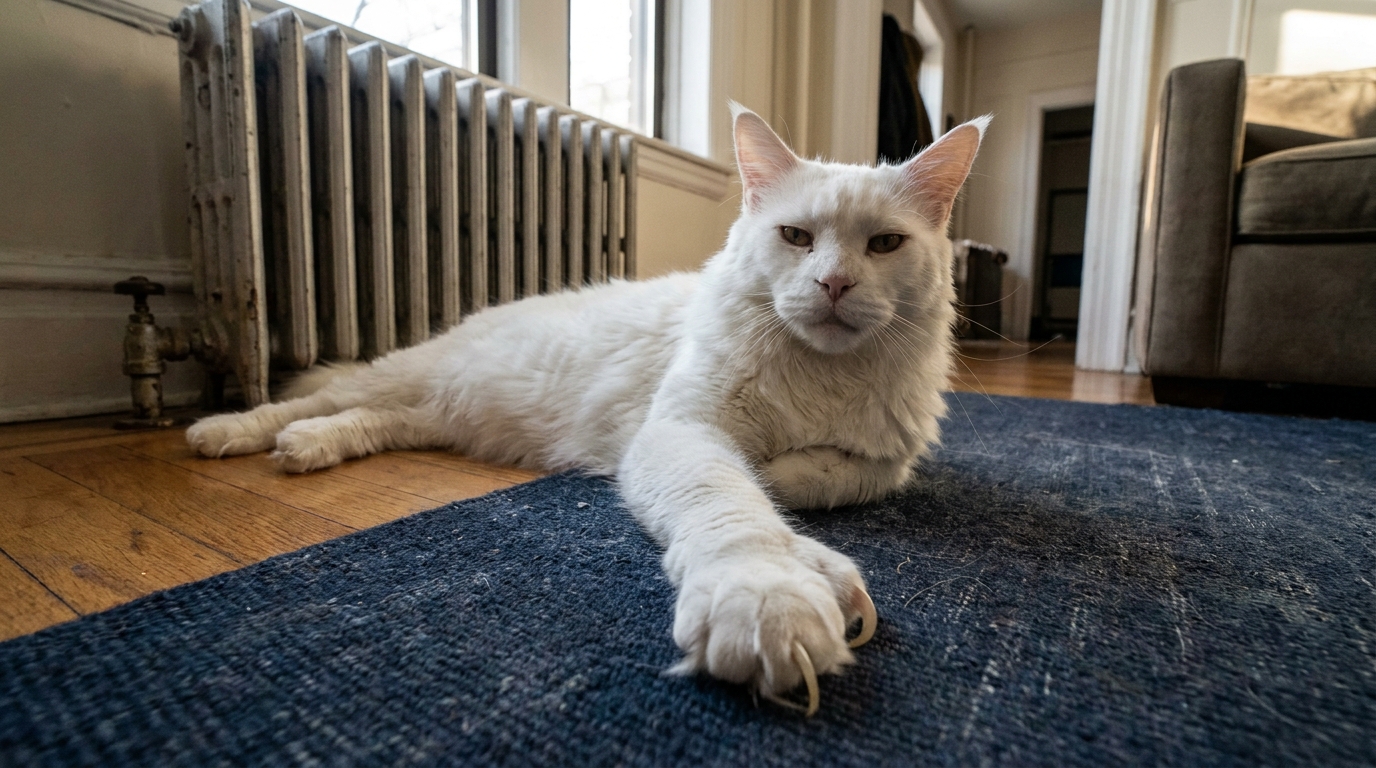
Ingrown claws in cats curl into the paw pad, often in seniors. See when a gentle trim at home is enough and when your cat needs a vet.
Go to an emergency vet now if your cat's paw is bleeding and won't stop with gentle pressure, the paw is hot and badly swollen and your cat is lethargic, hiding or not eating, your cat won't put any weight on the leg, a back leg is suddenly cold or dragging, or your cat is breathing with effort or collapses.
Ingrown claws in cats: what is happening in the paw
CatWatch, a newsletter produced in collaboration with the Cornell Feline Health Center, explains that most active cats keep their nails worn down by walking and scratching. "Trouble arises when a cat isn’t wearing her nails down naturally."
CatWatch adds: "Senior cats are at higher risk for developing ingrown claws, but any cat that is not getting much exercise could develop this issue." It singles out the claws on "dewclaws and extra toes that may not make contact with the ground or surfaces being scratched" as ones that need trimming.
In a CatWatch article on paw pad problems, Leni K. Kaplan, a senior lecturer at Cornell University’s College of Veterinary Medicine, says: "Ingrown claws are probably the one I see the most," and "This condition is very common in older/senior cats who are not as successful at maintaining claw health on their own."
International Cat Care warns: "Claws can also overgrow, curl around and embed into pads, which is not only painful but can also lead to infection if not treated."
If your cat is limping but you cannot find a claw problem, our guide to a cat limping with no visible injury can help. A cat that won't put any weight on the leg, or has a back leg that is suddenly cold or dragging, needs an emergency vet now.
Emergency signs: go to an ER now, not a video call
Go to an emergency vet now, not a video call, if you see any of these:
- bleeding from the paw that won't stop with gentle pressure
- a hot, badly swollen paw in a cat that is lethargic, hiding or not eating
- a cat that won't put any weight on the leg
- a back leg that is suddenly cold or dragging
- breathing with effort, or collapse
Any of these signs means an emergency vet now, even if you have already found an ingrown claw. A back leg that is suddenly cold or dragging is not a claw problem and must not wait for a trim. If you are unsure whether a sign is on this list, go now.
Signs of an ingrown claw, stage by stage
CatWatch lists these signs that a cat might have an ingrown claw:
- Limping
- Licking a paw a lot
- Nail visibly grown around and embedded in the pad
- Bleeding or oozing from the paw
The ASPCA agrees: "If you notice your cat obsessively cleaning her paws, limping or favoring one leg, please investigate". A cat that won't put any weight on the leg belongs on the emergency list above.
Where the nail first touches the pad, CatWatch says: "This will look like a little callus, usually whitish in color." Then: "As the nail continues to grow, it will puncture the pad." A broken pad with none of the emergency signs needs an in-person exam soon.
On infection, CatWatch says: "An infected ingrown nail will usually be painful, swollen, and will likely ooze pus." A hot, badly swollen paw in a cat that is lethargic, hiding or not eating means go to an emergency vet now.
Check all four paws, every toe, the dewclaws and any extra toes. CatWatch warns: "Touching a painful paw may cause even the sweetest cat to bite." Go slowly, use a towel wrap if needed, and stop if your cat fights.
A torn claw is a different injury, so see our guide if the claw is torn or split rather than ingrown. Bleeding that won't stop with gentle pressure is on the emergency list above: go to an emergency vet now.
Can you fix it at home? When a careful trim is enough
A home trim is only for a claw that is just touching the pad, with no bleeding, oozing, swelling or warmth and none of the emergency signs above. CatWatch says: "If the ingrown claw has just started to contact with the paw, you can usually resolve the issue at home by trimming the nail."
First, take clear close-up photos of each paw in good light; here is how to upload pet photos and videos for an online vet review.
Where to cut, from the ASPCA:
- "The pink part of a cat’s nail, called the quick, is where the nerves and blood vessels are."
- "Snip only the white part of the claw."
- "It’s better to be cautious and cut less of the nail rather than risk cutting this area."
Never pull or dig the tip out of the pad. Afterward, CatWatch advises: "Gently wipe the area with a clean cloth." Do not put human creams, ointments or anything else on the pad.
If the tip is buried in the pad, or your cat won't let you near the paw, stop and read the next section.
When the claw has pierced the pad: book an in-person exam soon
This is for a broken pad with none of the emergency signs. CatWatch says to seek a veterinary exam if:
- "The ingrown nail is bleeding"
- "The paw shows signs of infection, such as oozing, swelling, or feeling warm to the touch"
- "You are unable to trim her nails"
- "She is showing other signs of illness in addition to her nail woes"
If any of these is also on the emergency list, go to an emergency vet now. A little bleeding that stops means an in-person exam soon; bleeding that won't stop with gentle pressure means go to an emergency vet now. A swollen or warm paw alone means an exam soon; a hot, badly swollen paw in a cat that is lethargic, hiding or not eating means go to an emergency vet now.
CatWatch notes: "These wounds are also prone to infections and can become clogged with litter and other debris."
At the clinic, in CatWatch's words: "If your cat has one or more ingrown nails, the nail(s) will need to be trimmed and removed." "Getting those claws trimmed back will likely hurt, and your cat may need sedation." And: "Your veterinarian will gently clean the wound with an antiseptic".
Why older cats get thick, overgrown claws
The Cornell Feline Health Center says: "The claws of aging felines are often overgrown, thick, and brittle."
CatWatch describes them: "Whereas normal cat nails taper to a sharp point, these nails stay thick from base to point and often shatter when they are trimmed." It also notes: "Cats with diabetes, hyperthyroidism, and arthritis (common in geriatric cats) are all more likely to develop these thick, overgrown nails."
International Cat Care advises: "Speak to your vet first because sometimes overgrown claws can indicate a medical problem such as arthritis or hyperthyroidism".
So a senior cat whose claws keep thickening needs an in-person exam soon, to look for the reason behind them, not only a trim.
What a RexVet online vet can and cannot do for an ingrown claw
With none of the emergency signs above, a video visit can be a calm first step for an ingrown cat nail. A veterinarian can:
- look closely at each paw on camera
- judge whether a claw is only touching the pad or has pierced it
- coach you through a safe trim of a claw that is only touching the pad
- check the other paws, the dewclaws and any extra toes
- ask about thirst, weight, appetite and stiffness that may point to a problem needing a hands-on exam
- sort a home trim from an in-person exam soon, and send you to an emergency vet if they see an emergency sign
If the veterinarian decides medication is appropriate, they can prescribe where state rules allow. In Florida, a veterinarian who has seen your pet only by video may prescribe only FDA-approved animal drugs used as labeled, for up to 14 days (1 month for flea-and-tick-only products), and cannot renew without an in-person exam.
A video vet cannot remove a claw that is buried in the pad, sedate your cat, clean the wound by hand, or run blood tests.
If your cat has none of the emergency signs and you want a veterinarian to look at a claw that is only touching the pad, RexVet's veterinarians are licensed in Florida, New York and Virginia and are available 24/7. A video visit is $64.99; book a RexVet video visit.
Keeping it from coming back
The Cornell Feline Health Center notes: "Older cats may not use scratching posts as frequently as they did when they were younger; therefore, nails should be checked weekly and trimmed if necessary."
CatWatch adds: "Trimming every other week or so is usually sufficient to keep rogue nails trimmed back and your kitty’s pads safe." And: "Simply trim her nails, especially the extra toes on polydactyl cats, on a regular basis to keep them short."
The ASPCA advises, "don’t trim more than two claws in one sitting until your cat is comfortable." And: "If your cat refuses to let you clip her claws, ask your vet or a groomer for help."
International Cat Care says: "Using a scratching post is still important for those who enjoy scratching, it provides good exercise for muscles in the front legs and can prevent nails from thickening and over growing."
Trim after a meal or while your cat is resting, and offer a low, sturdy scratcher a stiff senior cat can reach.
When to be seen in person in Florida, New York or Virginia
Go to an emergency vet now if your cat's paw is bleeding and won't stop with gentle pressure, the paw is hot and badly swollen and your cat is lethargic, hiding or not eating, your cat won't put any weight on the leg, a back leg is suddenly cold or dragging, or your cat is breathing with effort or collapses.
With none of those signs, book an in-person exam soon for:
- a claw that has pierced the pad
- a little bleeding that has stopped
- oozing, swelling or warmth
- a claw you cannot trim
- a senior cat whose claws keep thickening
A claw just touching the pad, with none of those signs, can be trimmed carefully at home or shown to a video vet first.
Florida law (Fla. Stat. 474.2021) requires a vet whose first evaluation is by telehealth to give you "the contact information for at least one physical veterinary clinic in the vicinity of the patient’s location".
If you are unsure whether a sign is on the emergency list, go to an emergency vet now.
If none of those emergency signs are present and you want a veterinarian to look at a claw that is only touching the pad, RexVet's veterinarians are licensed in Florida, New York and Virginia and are available 24/7, including nights and weekends. A video visit is $64.99, and you can book a RexVet video visit from home.
Frequently Asked Questions
How do I know if my cat's claw is growing into her paw pad?
CatWatch lists limping, licking a paw a lot, and a nail visibly grown around and embedded in the pad; early on, the contact point looks like a little whitish callus. Go to an emergency vet now if your cat's paw is bleeding and won't stop with gentle pressure, the paw is hot and badly swollen and your cat is lethargic, hiding or not eating, your cat won't put any weight on the leg, a back leg is suddenly cold or dragging, or your cat is breathing with effort or collapses. Without those signs, a pierced pad, a little bleeding that has stopped, oozing, swelling or warmth needs an in-person exam soon.
Can I cut my cat's ingrown claw myself?
Only if the claw has just started to touch the pad, with no bleeding, oozing, swelling or warmth; CatWatch says you can usually resolve that at home by trimming the nail, and the ASPCA says to snip only the white part of the claw, avoiding the pink quick. Go to an emergency vet now if your cat's paw is bleeding and won't stop with gentle pressure, the paw is hot and badly swollen and your cat is lethargic, hiding or not eating, your cat won't put any weight on the leg, a back leg is suddenly cold or dragging, or your cat is breathing with effort or collapses. Without those signs, if the tip is in the pad, or there is a little bleeding that has stopped, oozing, swelling or warmth, have it trimmed in person soon.
Is an ingrown claw an emergency?
Go to an emergency vet now if your cat's paw is bleeding and won't stop with gentle pressure, the paw is hot and badly swollen and your cat is lethargic, hiding or not eating, your cat won't put any weight on the leg, a back leg is suddenly cold or dragging, or your cat is breathing with effort or collapses; if you are unsure, go now. Without those signs, a pierced pad, a little bleeding that has stopped, oozing, swelling or warmth needs an in-person exam soon. CatWatch says a claw that has only just started to touch the pad can usually be resolved at home by trimming the nail; you can also show it to a video vet first.
Why are my older cat's claws so thick?
The Cornell Feline Health Center says the claws of aging felines are often overgrown, thick, and brittle. CatWatch adds that cats with diabetes, hyperthyroidism and arthritis are more likely to develop these thick, overgrown nails, so if they keep thickening, book an in-person exam soon so a veterinarian can look for the cause rather than only trimming them.
How often should I trim my senior cat's claws?
The Cornell Feline Health Center says older cats' nails should be checked weekly and trimmed if necessary, and CatWatch says trimming every other week or so is usually sufficient. If your cat refuses to let you clip her claws, the ASPCA suggests asking your vet or a groomer for help.
FAQs
How do I know if my cat's claw is growing into her paw pad?
CatWatch lists limping, licking a paw a lot, and a nail visibly grown around and embedded in the pad; early on, the contact point looks like a little whitish callus. Go to an emergency vet now if your cat's paw is bleeding and won't stop with gentle pressure, the paw is hot and badly swollen and your cat is lethargic, hiding or not eating, your cat won't put any weight on the leg, a back leg is suddenly cold or dragging, or your cat is breathing with effort or collapses. Without those signs, a pierced pad, a little bleeding that has stopped, oozing, swelling or warmth needs an in-person exam soon.
Can I cut my cat's ingrown claw myself?
Only if the claw has just started to touch the pad, with no bleeding, oozing, swelling or warmth; CatWatch says you can usually resolve that at home by trimming the nail, and the ASPCA says to snip only the white part of the claw, avoiding the pink quick. Go to an emergency vet now if your cat's paw is bleeding and won't stop with gentle pressure, the paw is hot and badly swollen and your cat is lethargic, hiding or not eating, your cat won't put any weight on the leg, a back leg is suddenly cold or dragging, or your cat is breathing with effort or collapses. Without those signs, if the tip is in the pad, or there is a little bleeding that has stopped, oozing, swelling or warmth, have it trimmed in person soon.
Is an ingrown claw an emergency?
Go to an emergency vet now if your cat's paw is bleeding and won't stop with gentle pressure, the paw is hot and badly swollen and your cat is lethargic, hiding or not eating, your cat won't put any weight on the leg, a back leg is suddenly cold or dragging, or your cat is breathing with effort or collapses; if you are unsure, go now. Without those signs, a pierced pad, a little bleeding that has stopped, oozing, swelling or warmth needs an in-person exam soon. CatWatch says a claw that has only just started to touch the pad can usually be resolved at home by trimming the nail; you can also show it to a video vet first.
Why are my older cat's claws so thick?
The Cornell Feline Health Center says the claws of aging felines are often overgrown, thick, and brittle. CatWatch adds that cats with diabetes, hyperthyroidism and arthritis are more likely to develop these thick, overgrown nails, so if they keep thickening, book an in-person exam soon so a veterinarian can look for the cause rather than only trimming them.
How often should I trim my senior cat's claws?
The Cornell Feline Health Center says older cats' nails should be checked weekly and trimmed if necessary, and CatWatch says trimming every other week or so is usually sufficient. If your cat refuses to let you clip her claws, the ASPCA suggests asking your vet or a groomer for help.
Medically Reviewed
Reviewed by Dr. Tiffany Delacruz, DVM — licensed veterinarian and CEO of RexVet. Last reviewed October 2, 2026.
Content is for informational purposes and does not replace professional veterinary advice.
Chief Executive Officer · Licensed Veterinarian
Dr. Delacruz is a licensed Doctor of Veterinary Medicine specializing in preventive care and veterinary telehealth. She reviews all health content on RexVet to ensure accuracy and clinical relevance.
Sources & References
- · American Veterinary Medical Association — Telehealth Guidelines
- · AVMA — Pet Care Resources
- · U.S. FDA — Animal & Veterinary
Need an Expert Opinion on This Topic?
Connect with a certified vet via video call in minutes
Talk to Vet Now