
Cat Tore a Claw and It's Bleeding? What to Do Tonight
By RexVet Team | Reviewed by Dr. Tiffany Delacruz, DVM
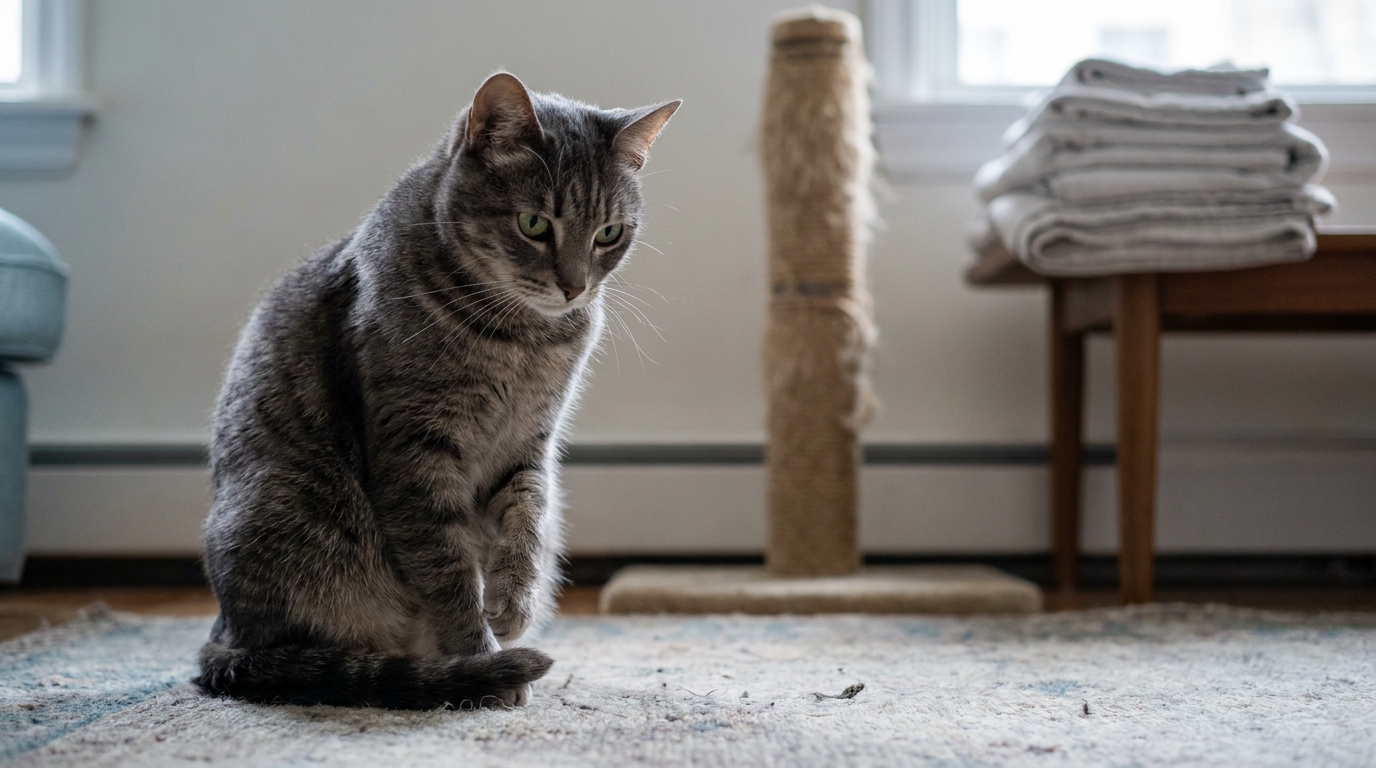
Cat tore a claw and it's bleeding? Wrap the paw in a towel, press gently on the toe, and give it a few minutes before you check again.
Go to an emergency vet now if the bleeding soaks through a towel and won't slow with steady pressure, the toe looks crushed or bent, your cat won't put any weight on the leg, or your cat is breathing hard or collapses.
A yelp, a limp and a few drops of blood on the rug or the scratching post can make any evening feel urgent. This guide walks you through the next few minutes: how to hold your cat safely, how to slow the bleeding, what to do about a claw that's left hanging, and how to decide whether this is an emergency tonight or a clinic visit soon.
One thing to know up front: most broken claws need a veterinarian to trim the damaged part away, and that is done in the clinic. Your job tonight is to keep your cat safe and the bleeding under control, and to decide how soon that visit needs to happen.
Cat Tore a Claw: Why It Bleeds and Hurts
According to VCA Animal Hospitals, "Cats love to scratch things and can break their nails when they snag them on carpet, upholstery fibers, or scratching post materials." It can happen fast: a claw catches in a loop of carpet, a couch cushion or the rope on a post, your cat pulls away, and part of the claw tears.
VCA explains that the nails of cats have a central collection of blood vessels and nerves called the quick, or nail bed. The outer claw is not living tissue, which is why a normal trim doesn't hurt. The quick is different. Because it holds blood vessels and nerves, a break that reaches it bleeds and hurts.
VCA notes that cats with broken nails will hold up the foot, limp around, and whine in discomfort. VCA also says exposing the quick is uncomfortable, so move slowly when you handle the toe.
The injured claw can be hard to spot at first. You may only notice blood on the floor, a paw held up, or one claw sticking out at an odd angle.
Emergency Signs: Go to an ER Now, Not a Video Call
Before you do anything else, check for the signs below. Any one of them means your cat needs an in-person emergency vet now:
- Bleeding that soaks through the towel and won't slow with steady pressure
- A toe that looks crushed, bent or out of line with the others
- Your cat won't put any weight on the leg at all
- Your cat is breathing hard, or collapses
If you see any of these, keep your cat wrapped in a towel, keep gentle pressure on the toe if you can do it safely, and head to the nearest emergency clinic. A camera cannot stop bleeding or straighten a crushed toe, and these problems need hands-on care.
If you're not sure whether what you're seeing counts, the practical pet emergency checklist for dog and cat owners walks through the signs one by one. When in doubt, go now.
Stop the Bleeding Now
A cat with a torn claw is a sore, frightened cat. VCA puts it plainly: "Remember that even the nicest pet may bite when in pain, so try wrapping your cat in a towel." A snug wrap protects both of you.
If anyone else is home, ask a helper to hold the wrapped cat while you hold the paw. Then work through these steps:
- Wrap your cat. Lay a large towel down, set your cat on it, and fold it around the body so only the injured paw is out. Your helper holds the bundle close against their chest.
- Press on the toe. VCA advises you to "control bleeding by wrapping the foot in gauze or a towel and applying pressure to the injured toe." Use gentle, steady pressure with a clean cloth or gauze pad.
- Give it time. Hold the pressure for a few minutes before you lift the cloth to check.
- Use a styptic product if you have one. VCA advises that if the bleeding does not stop in 5–10 minutes of pressure, you apply a styptic pencil, silver nitrate stick, or cauterizing powder to the nail.
- No styptic? Try the pantry. If you don't have these at home, VCA suggests covering the nail with baking powder or flour. After that, keep gentle pressure on the toe.
If the bleeding won't slow, stop here and head to an emergency vet with the paw still wrapped.
Once the bleeding slows, keep your cat in a quiet room and try to stop them from licking or chewing at the toe. Don't give your cat any human pain reliever; ask a veterinarian instead.
The Piece of Claw Left Hanging
It's natural to want to grab a claw that's hanging off and pull it free. Please don't pull or twist it, even if it looks barely attached. Your cat is already sore.
VCA notes that a loosely attached sliver of nail can sometimes be clipped at home, but "most of the time this job is best left to your veterinarian." In the clinic, VCA explains, the nail is trimmed above the break to remove the damaged portion and give the nail a good foundation to regrow. Depending on how painful it is and where the break sits, the veterinarian may need to use sedation or numb the area first, which can't be done at home.
Until your cat can be seen, keep the paw wrapped and try to stop your cat from licking at the loose piece.
Watching for Infection Over the Next Days
VCA's reason for taking a broken claw seriously is simple: "Since the nail bed, or quick, is attached to bone, prevention of infection is crucial." Even after the bleeding stops and the damaged piece is trimmed, keep an eye on the toe in the days that follow.
Check the paw regularly in good light. Watch for:
- A toe that looks swollen or feels hot compared with the others
- Pus or oozing around the claw
- A bad smell from the paw
- Constant licking or chewing at the toe
- Limping that comes back after it seemed to be getting better
Any of these means your cat should be seen by a veterinarian in person. VCA warns that bone infections are serious problems, so this is not something to wait out at home.
Don't put human creams, ointments or other wound products on the toe. Ask a veterinarian what, if anything, the toe needs. For more on small injuries in general, see minor pet wounds: when an online vet can help and when to go in.
Cat Claw vs Dog Nail
This guide is written for cats, and holding a hurt cat is its own job. Cats in pain may bite, so VCA advises wrapping your cat in a towel to hold them safely. If it's your dog whose nail was trimmed too short, read cut my dog's nail too short and it won't stop bleeding instead.
What a RexVet Online Vet Can and Cannot Do
VCA's guidance is that the damaged piece of a broken claw is usually best removed by a veterinarian in person. A video visit is for triage and follow-up, not the fix.
RexVet's veterinarians are licensed in Florida, New York and Virginia and are available 24/7, including nights, weekends and holidays. On a video visit for a torn claw, a veterinarian can:
- Coach you through the towel hold and the pressure step live, while you're doing it
- Look at the toe on camera and talk through what they see
- Help you decide between a clinic visit today, the emergency vet tonight, or careful home care for now
- Recheck the toe by video over the next days as it heals
A video vet cannot trim the claw under sedation, bandage the foot, or treat a bone infection. Those need a clinic.
Clear photos and a short video of the paw make a video visit more useful. See how to upload pet photos and videos for an online vet review for tips on getting a good shot of a sore toe.
If the veterinarian decides medication is appropriate, they can prescribe where state rules allow. In Florida, a veterinarian who has seen your pet only by video may prescribe only FDA-approved animal drugs used as labeled, for up to 14 days (1 month for flea-and-tick-only products), and cannot renew without an in-person exam.
If the bleeding is under control and you want a veterinarian to look at the toe and help you plan the next step, book a RexVet video visit. A visit is $64.99, vets are available 24/7, and visits are for pet parents in Florida, New York and Virginia only.
Preventing the Next Torn Claw
The best prevention is also the simplest. VCA says, "To avoid a broken nail, keep your cat's nails trimmed," and adds that "Longer nails tend to get 'caught' more than short nails." VCA also notes that short nails are less likely to break than long ones.
If trimming at home is a struggle, VCA suggests scheduling regular nail trims at your veterinary hospital instead.
A good scratching spot matters too, since VCA lists scratching post materials among the things claws snag on. For help choosing and placing posts your cat will actually use, see how to stop a cat from scratching furniture.
If torn claws keep happening, have a veterinarian look at your cat's claws and paws.
When to Be Seen in Person in Florida, New York or Virginia
Book an in-person visit soon if you notice:
- Bleeding that stops and then starts again
- A claw hanging by a thread
- A swollen or oozing toe
- Limping that lasts or comes back
Some signs can't wait for a regular appointment. If anything on the emergency list above appears, go to an emergency vet first.
If your cat is limping but you can't find a torn claw or any other injury, read cat limping but no visible injury: wait or see a vet now.
Under Florida law, a telehealth vet must give you the contact information for at least one physical veterinary clinic near you. For how video visits work in your state, see our pages for Florida, New York and Virginia.
Frequently Asked Questions
Will my cat's torn claw grow back?
It should. VCA explains that the veterinarian trims the nail above the break to remove the damaged portion and "to provide a good foundation for the nail to re-grow." While it heals, watch the toe for swelling, oozing or limping that comes back, and have it rechecked if you see any of them.
Can I use flour to stop a cat's claw bleeding?
Yes, as a backup. VCA suggests that if you don't have a styptic pencil, silver nitrate stick or cauterizing powder at home, you try covering the nail with baking powder or flour. Keep gentle, steady pressure on the toe afterward, and if it still won't slow, go to an emergency vet.
Should I pull off the piece of claw that's hanging?
No. Don't pull or twist it. VCA notes a loosely attached sliver can sometimes be clipped at home, but most of the time the job is best left to your veterinarian. Keep your cat from licking at it and plan a clinic visit.
How do I know if my cat's toe is infected?
Look for a toe that's swollen or hot, pus, a bad smell, constant licking, or limping that returns after it seemed better. VCA stresses that because the quick is attached to bone, preventing infection is crucial. If you see any of these signs, have your cat seen in person.
Can I put a human antibiotic cream on my cat's claw?
No. Don't put human creams, ointments or other human products on the toe, and don't give your cat any human pain reliever. Ask a veterinarian what, if anything, the toe needs.
A torn claw is painful and messy, but a calm towel wrap and steady pressure are the right start. If any emergency sign above appears, go to an ER first. If you'd like help deciding what comes next, book a video visit now: it's $64.99, vets are available 24/7, and visits are for pet parents in Florida, New York and Virginia only.
FAQs
Will my cat's torn claw grow back?
It should. VCA explains that the veterinarian trims the nail above the break to remove the damaged portion and "to provide a good foundation for the nail to re-grow." While it heals, watch the toe for swelling, oozing or limping that comes back, and have it rechecked if you see any of them.
Can I use flour to stop a cat's claw bleeding?
Yes, as a backup. VCA suggests that if you don't have a styptic pencil, silver nitrate stick or cauterizing powder at home, you try covering the nail with baking powder or flour. Keep gentle, steady pressure on the toe afterward, and if it still won't slow, go to an emergency vet.
Should I pull off the piece of claw that's hanging?
No. Don't pull or twist it. VCA notes a loosely attached sliver can sometimes be clipped at home, but most of the time the job is best left to your veterinarian. Keep your cat from licking at it and plan a clinic visit.
How do I know if my cat's toe is infected?
Look for a toe that's swollen or hot, pus, a bad smell, constant licking, or limping that returns after it seemed better. VCA stresses that because the quick is attached to bone, preventing infection is crucial. If you see any of these signs, have your cat seen in person.
Can I put a human antibiotic cream on my cat's claw?
No. Don't put human creams, ointments or other human products on the toe, and don't give your cat any human pain reliever. Ask a veterinarian what, if anything, the toe needs.
A torn claw is painful and messy, but a calm towel wrap and steady pressure are the right start. If any emergency sign above appears, go to an ER first. If you'd like help deciding what comes next, book a video visit now: it's $64.99, vets are available 24/7, and visits are for pet parents in Florida, New York and Virginia only.
Medically Reviewed
Reviewed by Dr. Tiffany Delacruz, DVM — licensed veterinarian and CEO of RexVet. Last reviewed September 26, 2026.
Content is for informational purposes and does not replace professional veterinary advice.
Chief Executive Officer · Licensed Veterinarian
Dr. Delacruz is a licensed Doctor of Veterinary Medicine specializing in preventive care and veterinary telehealth. She reviews all health content on RexVet to ensure accuracy and clinical relevance.
Sources & References
- · American Veterinary Medical Association — Telehealth Guidelines
- · AVMA — Pet Care Resources
- · U.S. FDA — Animal & Veterinary
Need an Expert Opinion on This Topic?
Connect with a certified vet via video call in minutes
Talk to Vet Now