
High Liver Enzymes in Dogs: What ALT and ALP Results Mean
By RexVet Team | Reviewed by Dr. Tiffany Delacruz, DVM
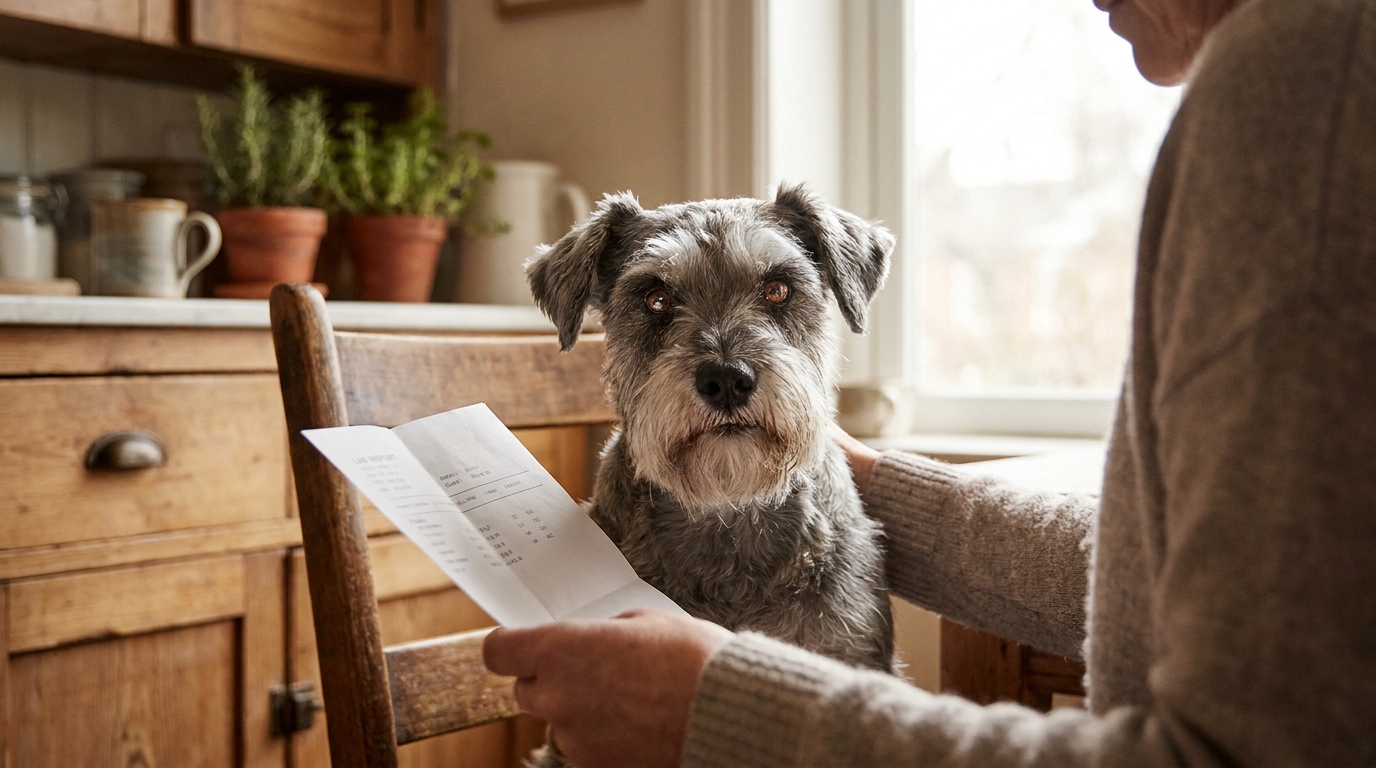
What a high ALT or ALP on a dog's bloodwork can mean, when it is an emergency, common causes, and which test usually comes next.
Quick answer: High ALT or ALP in a dog that is eating, active and not yellow is usually not an emergency; the vet repeats the panel on a set date and looks for a cause, from steroids to Cushing's disease. Refusing food means an in-person vet visit today. Yellow gums or eyes, repeated vomiting, confusion, bruising, bleeding, collapse or a possible xylitol or sago palm exposure means an emergency vet now.
This article is general information, not a diagnosis. If you think your pet is in danger, go to the nearest emergency animal hospital.
Are high liver enzymes in a dog an emergency?
High liver enzymes in a dog are not an emergency by themselves, but yellow gums or eyes, vomiting more than once, confusion or head pressing, a painful or fast-swelling belly, bruising, bleeding, pale gums or collapse mean an emergency vet now, and refusing food means an in-person vet today.
The dog's signs matter more than the number; the Merck Veterinary Manual says sudden liver failure needs immediate care. A young dog that is dull, wobbly, presses its head or has a seizure, especially after a meal, may have a shunt and needs an emergency vet now. Dark orange or brown urine, pale gray or clay-colored stool, or a belly that is slowly swelling without pain, alongside high liver values, means an in-person vet today; make it an emergency vet now if the gums or eyes look yellow, breathing is fast or hard, or a toxin is possible.
Eating any product listing xylitol, birch sugar or wood sugar, any part of a sago palm, a wild mushroom, moldy food or compost, water with blue-green algae scum, a suspect or recalled pet food or a human medicine means an emergency vet now, even if the dog seems fine. Call ASPCA Animal Poison Control Center at (888) 426-4435 (a consultation fee may apply) or Pet Poison Helpline at (855) 764-7661 (a per-incident fee applies) on the way. Merck notes xylitol can injure a dog's liver even without low blood sugar, and liver signs may not appear for 24 to 48 hours or more; see how xylitol hides in sugar-free treats. A normal first blood test does not rule out liver damage from a sago palm. Do not try to make the dog vomit at home.
| What you see | Next step | How soon |
|---|---|---|
| Mild rise, dog well | Repeat panel | Vet's date |
| High or rising on recheck | Full workup | Don't delay |
| Rise on an NSAID | Call prescriber | Before next dose |
| Refusing food, one vomit, brown urine | Vet in person | Today |
| Repeat or bloody vomit, black stool | Emergency vet | Now |
| Yellow gums or eyes | Emergency vet | Now |
| Painful, swollen belly | Emergency vet | Now |
| Confused, wobbly, seizure | Emergency vet | Now |
| Bruising, bleeding, collapse | Emergency vet | Now |
| Ate xylitol, sago palm or mushroom | ER, poison line | Now |
What does a high ALT or ALP mean in a dog?
In a dog, ALT leaks out of damaged liver cells, so a high ALT points to liver cell injury, while ALP also rises with slowed bile flow, bone growth in young dogs, steroids, Cushing's disease and phenobarbital, so a high ALP alone is much less specific.
The Merck Veterinary Manual notes that liver enzymes are not a measure of how well the liver works; they show liver cell damage, slowed bile flow or enzyme induction. Merck calls a high ALP the most common liver-related abnormality on routine dog bloodwork and the least specific. Other values help the vet read the pattern:
- AST and GGT: AST usually moves with ALT but also comes from muscle; GGT is another bile-flow enzyme (Merck).
- Bilirubin: can rise from red blood cell breakdown, the liver or a blocked bile duct; a yellow tint appears as it climbs.
- Albumin, cholesterol and BUN: low values can follow severe liver disease or a shunt.
- Bile acids: a true liver function test, measured before and 2 hours after a meal.
Why is my dog's ALP high but ALT normal?
In a dog, a high ALP with a normal ALT can come from steroids (prescribed or the body's own), phenobarbital, Cushing's disease, harmless age-related liver nodules or, under a year old, bone growth, but it still needs a cause found.
MSPCA-Angell says dogs under a year old usually have a high ALP from bone growth. In older dogs, a common source is nodular hyperplasia, harmless age-related nodules; an ultrasound can suggest it, but only a biopsy confirms it (Merck Veterinary Manual). Merck lists more thirst and urination, a bigger appetite, a pot belly and panting as common Cushing's signs; see why a dog drinks too much water, including Cushing's.
41% of RexVet video visits were for pets aged 7 or older. That figure covers all species and visit reasons.
Can a medicine raise my dog's liver enzymes?
Yes: the FDA-approved label for carprofen, an NSAID, lists liver reactions including raised liver enzymes and jaundice, steroids such as prednisone typically raise ALP in dogs, and phenobarbital can raise ALP and sometimes ALT, so tell the vet every medicine, supplement and chew.
The FDA says NSAID liver reactions can happen even at the correct dose, and most NSAID-linked liver damage shows up within the first three weeks of starting. A liver rise found while a dog is on carprofen or another NSAID means calling the prescribing vet right away, before the next dose is due; if the clinic is closed, call an emergency hospital or a poison line. A dog on an NSAID that is eating less, has vomited once, has diarrhea or seems off also means calling the prescribing vet right away, before the next dose is due, and an in-person vet today. Yellow gums, repeated vomiting or black stool means an emergency vet now. The FDA also warns against giving an NSAID with a steroid such as prednisone; for a dog getting both, call the prescribing vet before the next dose is due.
The Merck Veterinary Manual says steroid-induced ALP alone does not mean a clinically important liver problem; see when heavy drinking on prednisone is a worry. Phenobarbital can raise enzymes through induction or real liver injury, so the prescribing vet sorts this out with tests such as bile acids.
Never stop or change a medicine on your own because of a lab value; AAHA notes that steroids should not be stopped abruptly. If a supply will run out over a holiday weekend, call the prescribing clinic, or an emergency hospital if it is closed, before the next dose is due.
What else causes high liver enzymes in dogs?
In a dog, common causes of high liver enzymes outside the liver include Cushing's disease, diabetes, an underactive thyroid, pancreatitis, gallbladder sludge or mucocele and gut inflammation; causes inside the liver include chronic hepatitis, copper buildup (more common in some breeds, but possible in any dog), infections such as leptospirosis, toxins and tumors.
The ACVIM consensus statement on chronic hepatitis finds strong evidence of more chronic hepatitis in Bedlington Terriers, Doberman Pinschers, Labrador Retrievers, Dalmatians, American and English Cocker Spaniels, English Springer Spaniels and West Highland White Terriers, and calls copper excess the most common toxic cause. The Merck Veterinary Manual says a gallbladder mucocele typically raises ALP, GGT, ALT, AST and bilirubin, can form faster after steroids or a high-fat diet, and can rupture, so a painful belly is an emergency.
| Cause | Clue | Test |
|---|---|---|
| Steroids | ALP up most | Drug history |
| Cushing's | Thirst, pot belly | Hormone test |
| NSAID | ALT up | Vet review |
| Seizure drug | ALP, ALT up | Bile acids |
| Pancreas | Vomiting, pain | Blood, scan |
| Gallbladder | ALP, bilirubin | Ultrasound |
| Hepatitis | ALT stays high | Biopsy |
| Nodules | Older dog | Scan, biopsy |
| Young dog | Bone ALP | Age |
| Shunt | Often young | Bile acids |
How high is too high for liver enzymes?
There is no single cutoff for high liver enzymes in a dog: the lab range, the trend over repeat tests and which values are up together matter more than one number. A value well above the range, a rise on recheck or a high ALT with other abnormal results needs more testing on the vet's timeline.
The Merck Veterinary Manual says up to 2.5% of clinically normal animals have borderline abnormal values. The ACVIM consensus statement calls an ALT that stays high for more than 2 months without an explanation the best early screening sign of chronic hepatitis, so a high value that keeps coming back needs more than another recheck.
What tests come next?
After high liver enzymes, a dog usually needs a repeat panel, a bile acids test of liver function and an abdominal ultrasound; some dogs then need Cushing's testing, clotting tests and a needle sample or biopsy.
- Bile acids: Merck says this test sensitively picks up slowed bile flow and shunts, and an abnormal result can show that a biopsy is needed.
- Ultrasound: the preferred first imaging test (ACVIM consensus), though no ultrasound finding is diagnostic on its own.
- Needle sample or biopsy: a needle sample can look at cells, but only a biopsy confirms hepatitis, and clotting tests come first (ACVIM consensus).
Can high liver enzymes in dogs go back to normal?
Often yes: a dog's liver can regenerate and values often fall once the cause is found and treated, but long-running inflammation can scar the liver, which is why the trend matters.
The ACVIM consensus statement notes that the size of an ALT rise does not predict the outlook, and in late-stage scarring ALT can fall as liver tissue is lost, so the vet reads the trend together with bile acids, albumin and the dog's signs.
What should I feed a dog with high liver enzymes?
A dog with high liver enzymes should keep eating its usual balanced diet unless a vet changes it; skip fatty table scraps and holiday leftovers, and never start a liver diet, a copper-restricted food or a supplement on your own, because the right diet depends on the cause.
The ACVIM consensus statement says most dogs with chronic hepatitis do not need protein restriction. Read about pancreatitis signs after a dog eats grease or fat. The FDA says aflatoxin, a mold toxin, can be in food without visible mold, so give the vet a full diet history.
What should I ask my vet about the results?
When a vet calls about high liver enzymes in a dog, ask which values are high and by how much, whether they are rising or falling, whether any medicine could explain them, and which test comes next and when.
| Ask | Why it matters |
|---|---|
| Which values are high | Pattern |
| How far above range | Severity |
| Up or down since last time | Trend |
| Could a medicine explain it | Drug effect |
| Which test next, and when | Plan |
| Which signs mean ER | Safety |
When a video visit helps, and when it does not
A dog with high ALT or ALP results that is eating, active and not yellow can have the lab report reviewed on a live video visit before the recheck; a dog that is yellow, vomiting repeatedly, confused, bruising or bleeding needs an emergency vet instead.
For a dog in Florida, New York or Virginia with high ALT or ALP results that is eating, active and not yellow, RexVet, a nonprofit online vet service, offers a $64.99 live video visit with a veterinarian licensed in the dog's state, about 8 AM to 11 PM Eastern, to go through the lab report and medicine list and say which test to ask the clinic for next and how soon. RexVet serves pets located in Florida, New York and Virginia by video visit, and the dog needs to be in one of those states during the visit. A same-day slot is not guaranteed.
Have the lab report in hand, with the dates of any earlier panels, and a list of every medicine, supplement, chew and flea, tick or heartworm product. The veterinarian can explain which values are high and what pattern they form, compare them with earlier results, look at the gums, the whites of the eyes and the belly with you in good light, go over appetite and energy, look for a medicine, chew or toxin that could explain the change, and list the next tests to ask your clinic for and how soon. A yellow tint you notice at home means an emergency vet now, even if it is hard to see on camera.
About 1 in 8 RexVet video visits (12.5%) ended with a prescription; the rest ended with the veterinarian's advice and care plan. No prescription is promised, and any change to a liver, steroid, anti-seizure or pain medicine stays with the vet who prescribed it: call that vet before the next dose is due rather than changing anything on your own. RexVet is not a pharmacy, so if the veterinarian writes a prescription, a pharmacy transfer fee applies when RexVet sends it to an outside pharmacy.
Many medicines used for liver problems are human-labeled or used off-label, and federal rules (21 CFR 530.3) allow that only within an in-person vet relationship. In Florida (s.474.2021), a prescription based only on telehealth is limited to FDA-approved animal drugs used as labeled, for up to 14 days (1 month for products labeled only for flea and tick control), with no renewal without an in-person exam, and human-labeled drugs, compounded anti-infectives and controlled substances need an in-person exam. Virginia law allows the exam behind a prescription to be done electronically, but the federal in-person rule for off-label and human-labeled drugs still applies; New York's veterinary telehealth rules are not yet settled.
A video visit cannot draw blood, run bile acids or clotting tests, do an ultrasound or take a needle sample or biopsy, and it does not replace the clinic that ordered the tests. Go to an emergency vet now instead for yellow gums, skin or eyes, repeated, bloody or coffee-ground vomiting, black or tarry stool, pale gums, a painful or fast-swelling belly, bruising or bleeding, confusion, head pressing, wobbling, a seizure or collapse, or a possible xylitol, sago palm or wild mushroom exposure, calling a poison line on the way. A dog that is refusing food, has vomited once, has diarrhea or is newly tired needs an in-person vet today; many regular clinics are closed or short-staffed over the Thanksgiving weekend and other holidays, so an urgent care or emergency hospital is the fallback.
If your dog is eating, active and not yellow, book a video visit with a licensed RexVet vet.
Need an Expert Opinion on This Topic?
Book a video visit with a licensed vet, evenings and weekends included
See open timesFrequently Asked Questions
Is a high ALP in an older dog serious?
Not always: in an older dog, a high ALP can come from harmless age-related liver nodules, steroids or Cushing's disease; the vet finds which. An ALP that keeps climbing, or comes with other abnormal results or new signs, needs more tests.
Can stress raise my dog's liver enzymes?
Sometimes, but only long-lasting stress or illness: the body's own steroid hormones can trigger a dog's steroid-induced ALP, which takes days to appear. The Merck Veterinary Manual and Cornell's eClinPath describe this in chronically ill or stressed dogs; neither mentions a single car ride or vet visit as a cause.
Can a dog with high liver enzymes still have a dental cleaning?
Often yes, once the vet knows why the values are high; AAHA's 2020 anesthesia guidelines say abnormal lab values should be rechecked right before anesthesia. Severe dental disease can itself raise ALT (MSPCA-Angell). The clinic doing the procedure decides; see anesthesia risk in older dogs.
Do liver supplements help a dog with high liver enzymes?
Ask the treating vet first; the right choice depends on the cause. The ACVIM consensus statement on chronic hepatitis notes poorly documented reports of liver injury in dogs given herbal or nutritional supplements, so start nothing new on your own.
How soon should my dog's bloodwork be repeated after high liver values?
On the date the vet sets; there is no standard timeline, and a value that stays high or keeps rising needs more tests. Any new sign, such as yellow gums, vomiting or refusing food, means acting now rather than waiting for the recheck.
Can my dog have high liver enzymes and still act completely normal?
Yes: the ACVIM consensus statement says up to 20% of dogs with chronic hepatitis have high liver enzymes without signs of illness. A normal-acting dog still needs the follow-up the vet sets, and normal enzymes do not guarantee a healthy liver either.
Can an online vet review my dog's high liver enzyme results if we live in Florida, New York or Virginia?
Yes, if your dog is eating, active and not yellow: a veterinarian licensed in your dog's state can review the lab results by video. The dog must be in one of those states during the visit. The veterinarian can go through the values, trend and medicines and look at the gums, eyes and belly with you; blood draws, bile acids, ultrasound and biopsy need a clinic. No prescription is promised: federal rules (21 CFR 530.3) require an in-person relationship for off-label and human-labeled drugs, Florida limits telehealth-only prescriptions to FDA-approved animal drugs used as labeled for up to 14 days (1 month for products labeled only for flea and tick control), with no renewal without an in-person exam, Virginia allows an electronic exam, and New York's rules are not yet settled.
FAQs
Is a high ALP in an older dog serious?
Not always: in an older dog, a high ALP can come from harmless age-related liver nodules, steroids or Cushing's disease; the vet finds which. An ALP that keeps climbing, or comes with other abnormal results or new signs, needs more tests.
Can stress raise my dog's liver enzymes?
Sometimes, but only long-lasting stress or illness: the body's own steroid hormones can trigger a dog's steroid-induced ALP, which takes days to appear. The Merck Veterinary Manual and Cornell's eClinPath describe this in chronically ill or stressed dogs; neither mentions a single car ride or vet visit as a cause.
Can a dog with high liver enzymes still have a dental cleaning?
Often yes, once the vet knows why the values are high; AAHA's 2020 anesthesia guidelines say abnormal lab values should be rechecked right before anesthesia. Severe dental disease can itself raise ALT (MSPCA-Angell). The clinic doing the procedure decides; see anesthesia risk in older dogs.
Do liver supplements help a dog with high liver enzymes?
Ask the treating vet first; the right choice depends on the cause. The ACVIM consensus statement on chronic hepatitis notes poorly documented reports of liver injury in dogs given herbal or nutritional supplements, so start nothing new on your own.
How soon should my dog's bloodwork be repeated after high liver values?
On the date the vet sets; there is no standard timeline, and a value that stays high or keeps rising needs more tests. Any new sign, such as yellow gums, vomiting or refusing food, means acting now rather than waiting for the recheck.
Can my dog have high liver enzymes and still act completely normal?
Yes: the ACVIM consensus statement says up to 20% of dogs with chronic hepatitis have high liver enzymes without signs of illness. A normal-acting dog still needs the follow-up the vet sets, and normal enzymes do not guarantee a healthy liver either.
Can an online vet review my dog's high liver enzyme results if we live in Florida, New York or Virginia?
Yes, if your dog is eating, active and not yellow: a veterinarian licensed in your dog's state can review the lab results by video. The dog must be in one of those states during the visit. The veterinarian can go through the values, trend and medicines and look at the gums, eyes and belly with you; blood draws, bile acids, ultrasound and biopsy need a clinic. No prescription is promised: federal rules (21 CFR 530.3) require an in-person relationship for off-label and human-labeled drugs, Florida limits telehealth-only prescriptions to FDA-approved animal drugs used as labeled for up to 14 days (1 month for products labeled only for flea and tick control), with no renewal without an in-person exam, Virginia allows an electronic exam, and New York's rules are not yet settled.
Medically Reviewed
Reviewed by Dr. Tiffany Delacruz, DVM — licensed veterinarian and CEO of RexVet. Last reviewed November 27, 2026.
Content is for informational purposes and does not replace professional veterinary advice.
Chief Executive Officer · Licensed Veterinarian
Dr. Delacruz is a licensed Doctor of Veterinary Medicine specializing in preventive care and veterinary telehealth. She reviews all health content on RexVet to ensure accuracy and clinical relevance. RexVet video visits are for pets in Florida, New York and Virginia, with a veterinarian licensed in the pet's state.
Sources & References
- · American Veterinary Medical Association — Telehealth Guidelines
- · AVMA — Pet Care Resources
- · U.S. FDA — Animal & Veterinary