
Halloween With an Anxious Dog: A Plan for the Doorbell
By RexVet Team | Reviewed by Dr. Tiffany Delacruz, DVM
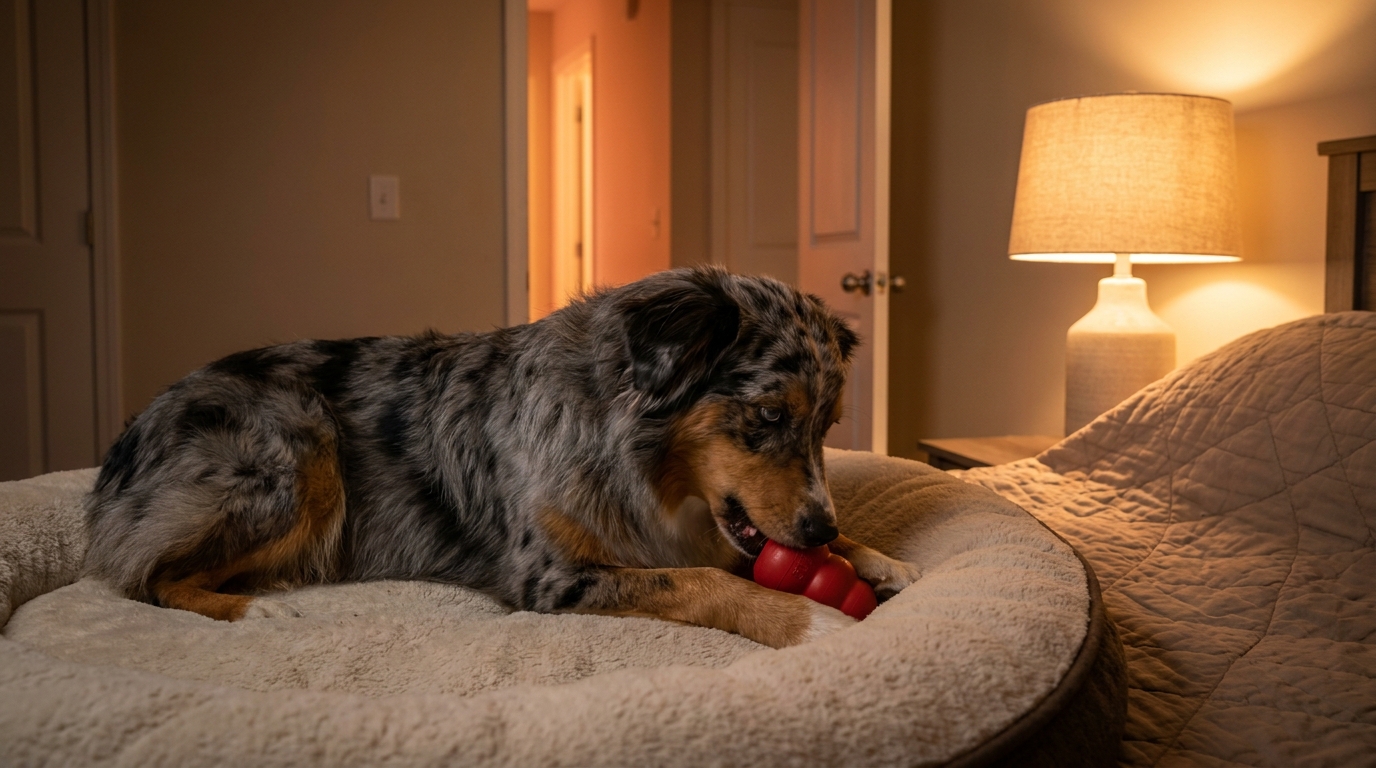
Halloween with an anxious dog? Plan the night now: a quiet room away from the door, ID on, no forced costumes, and a vet check if fear is growing.
Go to an emergency vet if your dog is hurt after bolting, collapses, is panting hard and cannot settle, or ate chocolate or sugar-free candy; call a poison line for any candy it swallowed.
Why Halloween With an Anxious Dog Is Difficult
On Halloween, the doorbell can ring again and again, and for a sensitive dog each ring can feel like an alarm. Voices on the porch, shrieks of excitement and rustling bags all arrive at the one spot your dog already watches most closely: the front door.
The ASPCA's Halloween safety guidance puts it plainly: "Halloween brings a flurry of activity with visitors arriving at the door, and lots of strangers (in creepy costumes, too) can often be scary and stressful for pets."
The street matters too. The ASPCA notes that "on Halloween, there are a lot more people on the streets and that, combined with strange costumes, can spook pets and cause them to bolt." Masks, capes and glowing props can look strange to a dog, and a dog scared of trick-or-treaters may try to get away from all of it at once.
That is why Halloween with an anxious dog goes best with a plan made before dark, not in the middle of the rush.
Emergencies on Halloween Night
Some problems on Halloween are not about fear at all. Go to an in-person emergency vet now if any of these happen:
- Your dog got out and came back hurt, limping or bleeding.
- Your dog collapses, or is weak or wobbly.
- Your dog keeps panting hard and still cannot settle once it is in a quiet, cool room.
- Your dog ate chocolate or sugar-free candy, even if it seems fine right now.
If your dog is vomiting, has trouble breathing, keeps shaking, has a seizure or collapses, go to an emergency vet now and bring any wrappers you find. Do not wait to see if it passes.
Candy deserves special care on this night. The ASPCA says "chocolate in all forms" can be "very dangerous for cats and dogs," and that "sugar-free candies containing the sugar substitute xylitol can cause serious problems in pets." If your dog ate chocolate or sugar-free candy, call a poison line or go to an emergency vet now, even before any signs appear.
Two poison lines answer around the clock: ASPCA Animal Poison Control at (888) 426-4435 and the Pet Poison Helpline at (855) 764-7661. A fee may apply. Have the wrapper or package in hand when you call, and do not give your dog anything at home unless the poison line or a vet tells you to.
If your dog swallowed wrappers or sticks, read what to do if your dog ate candy wrappers. For other foods that are risky for dogs, see our toxic foods for dogs guide.
Set Up a Safe Room Before Dark
The ASPCA advises that "all but the most social dogs and cats should be kept in a separate, comfortable room away from the front door during peak trick-or-treating hours." A back bedroom or a laundry room can work; the goal is distance from the door.
Set the room up with things your dog already knows. The ASPCA suggests settling pets in with "their favorite toys (such as a delicious chew or food puzzle toy for dogs, and interactive toys for cats)." Pick a chew or puzzle your dog has already used safely with you watching, since your dog may be alone with it behind a closed door.
A few practical ideas can help keep your dog calm on Halloween:
- Walk before dusk. Take your dog out for a potty break and a walk while it is still light and the streets are quiet.
- Settle in early. Put your dog in the room before the first knock, with water, bedding and the chew.
- Add background sound. A fan, soft music or the TV can help cover the doorbell and voices on the street.
- Practice the doorbell. In the days before, play doorbell and knocking sounds at a low volume while your dog eats or plays, and stop if your dog seems uneasy.
- Keep the bell quiet. If the doorbell sets your dog off, put a sign on the door asking visitors to knock softly, turn off the porch light, or sit outside with the candy bowl so the bell never rings.
If a dog barking at trick-or-treaters is still barking from the back room, try more distance and more sound cover rather than scolding.
Stop Door-Dashing and Keep ID On
Each time the door opens, a frightened dog can run. Put a barrier between your dog and the door: use a baby gate, or clip on a leash only while you are holding it at the door.
Make sure your dog can be identified if it does get out. The ASPCA says pet IDs "can be a lifesaver in finding a lost pet on Halloween," or any day of the year. Check that the tag on the collar is readable and shows your current phone number. If your dog has a microchip, check that the registration has your current phone number too.
If you do walk later in the evening, follow the ASPCA's advice: "If you take your pet out after dark, make sure he or she wears a reflective collar, is securely leashed and has proper identification attached." For an anxious dog, though, a walk before dusk avoids the busiest hours.
Costumes Are Optional
Your dog does not need a costume to take part in the night. The ASPCA puts it simply: "We recommend that you don't put your dog or cat in a costume unless you know he or she loves it."
If your dog truly enjoys dressing up, the ASPCA says to make sure the costume "does not limit his or her movement, sight or ability to breathe, bark or meow." Check that it fits loosely, has nothing your dog can chew off and swallow, and comes off easily. A festive bandana is often enough.
Florida evenings can still be warm on October 31, so watch for heavy panting. If your dog starts panting heavily, seems tired or tries hard to pull the outfit off, take the costume off right away. If your dog stays weak or wobbly, keeps panting hard and cannot settle, vomits or collapses, go to an emergency vet now.
Jack-o'-Lanterns and Cats
Cats need a plan too. The ASPCA warns that "pets can easily knock over a lit pumpkin and start a fire" and that "curious kittens are especially at risk of getting burned or singed by candle flame." Cats get the same quiet-room plan as dogs, away from the door and the flicker. If your pet is burned, call a vet.
When Fear Is More Than One Bad Night
Some dogs are uneasy on Halloween and back to normal the next morning. Others are not. Watch for signs that the fear is lasting beyond the night:
- Trembling long after the trick-or-treaters have gone home
- Hiding for hours
- Scratching at or destroying doors
- Snapping at visitors
These signs suggest the fear is worth a behavior plan with a veterinarian before the next trigger, whether that is the next holiday, a party or a stormy week.
If your dog stops eating or turns suddenly aggressive, have a vet check your dog, in person if there are other signs of illness. For more on sudden changes, see our page on behavior questions, anxiety, pacing and sudden changes.
What a RexVet Online Vet Can and Cannot Do Before Halloween
A video visit is for planning, ideally in the weeks before Halloween. It is not for an injured dog or one that ate candy tonight; for those, see the emergency section above.
In a planning visit, a veterinarian can go over:
- Your dog's history and how past holidays, visitors or loud nights went
- What seems to set your dog off: the bell, knocking, voices or costumes
- The layout of your front door and which room makes the best quiet space
- A room-and-routine plan for the day and the evening
- What to watch for on the night, and what means go in person
- Whether anything else should be discussed, such as a possible medical cause
A video visit cannot replace a hands-on exam, and the veterinarian cannot run tests by video. If the veterinarian decides medication is appropriate, they can prescribe where state rules allow. In Florida, a veterinarian who has seen your pet only by video may prescribe only FDA-approved animal drugs used as labeled, for up to 14 days (1 month for flea-and-tick-only products), and cannot renew without an in-person exam. You can read the rule in Florida Statutes section 474.2021.
RexVet's veterinarians are licensed in Florida, New York and Virginia, and they are available 24/7, including nights, weekends and holidays. A video visit is $64.99 for pet parents in those three states. To plan your dog's night ahead of time, book a RexVet video visit.
When to Be Seen In Person in Florida, New York or Virginia
Some Halloween problems need hands-on care, wherever you live. Take your dog to a clinic or an emergency vet in person for:
- Any injury after an escape
- Any candy or wrapper eaten along with vomiting, weakness or trouble breathing
- A sudden behavior change alongside other signs of illness
For candy, follow the emergency section above. If you are not sure whether something is urgent, our pet emergency checklist for dog and cat owners can help you decide.
In Florida, a telehealth vet must give you the contact information for at least one physical veterinary clinic in the vicinity of your pet's location (Fla. Stat. 474.2021). For state-specific details, see our pages for Florida, New York and Virginia.
Frequently Asked Questions
Should my anxious dog greet trick-or-treaters?
For a nervous dog, it is kinder to skip the greeting. The ASPCA advises that all but the most social dogs and cats be kept in a separate, comfortable room away from the front door during peak trick-or-treating hours. Set the room up before dark with a familiar chew or food puzzle and some background sound.
Is it safe to put a costume on my dog?
Only if you know your dog loves it, which is the ASPCA's advice. If you do use one, it should not limit your dog's movement, sight or ability to breathe or bark. Take it off right away if your dog pants heavily or seems uncomfortable, and go to an emergency vet if the heavy panting does not settle once your dog is cool.
What if my dog gets out on Halloween night?
Search nearby calmly, call your dog's name in a normal voice, bring treats and ask neighbors to keep an eye out. The ASPCA notes that pet IDs can be a lifesaver in finding a lost pet, so keep a tag on the collar and make sure the microchip registration has your current phone number. If your dog comes back hurt or limping, go to an emergency vet.
Can I give my dog something to calm down for Halloween?
Do not give your dog any human medicine or over-the-counter product at home. Start with the room, sound and routine changes above, and begin them early. If your dog's fear is severe, talk to a veterinarian well before Halloween. If the veterinarian decides medication is appropriate, they can prescribe where state rules allow.
What if my dog eats Halloween candy?
If your dog ate chocolate or sugar-free candy, or seems unwell after eating any candy or wrappers, call ASPCA Animal Poison Control or the Pet Poison Helpline now (a fee may apply), or go to an emergency vet. If your dog is vomiting, weak, shaky or collapsing, go straight to an emergency vet. For wrappers, see our guide on what happens when a dog eats candy wrappers.
A calm Halloween starts before the first knock: a quiet room, ID on, no forced costume and candy kept well out of reach. Emergencies go to an in-person emergency vet or a poison line first. If you want help planning the night, or your dog's fear seems to be growing, RexVet's veterinarians are licensed in Florida, New York and Virginia and are available 24/7 for $64.99 a visit. Book a video visit now.
FAQs
Should my anxious dog greet trick-or-treaters?
For a nervous dog, it is kinder to skip the greeting. The ASPCA advises that all but the most social dogs and cats be kept in a separate, comfortable room away from the front door during peak trick-or-treating hours. Set the room up before dark with a familiar chew or food puzzle and some background sound.
Is it safe to put a costume on my dog?
Only if you know your dog loves it, which is the ASPCA's advice. If you do use one, it should not limit your dog's movement, sight or ability to breathe or bark. Take it off right away if your dog pants heavily or seems uncomfortable, and go to an emergency vet if the heavy panting does not settle once your dog is cool.
What if my dog gets out on Halloween night?
Search nearby calmly, call your dog's name in a normal voice, bring treats and ask neighbors to keep an eye out. The ASPCA notes that pet IDs can be a lifesaver in finding a lost pet, so keep a tag on the collar and make sure the microchip registration has your current phone number. If your dog comes back hurt or limping, go to an emergency vet.
Can I give my dog something to calm down for Halloween?
Do not give your dog any human medicine or over-the-counter product at home. Start with the room, sound and routine changes above, and begin them early. If your dog's fear is severe, talk to a veterinarian well before Halloween. If the veterinarian decides medication is appropriate, they can prescribe where state rules allow.
What if my dog eats Halloween candy?
If your dog ate chocolate or sugar-free candy, or seems unwell after eating any candy or wrappers, call ASPCA Animal Poison Control or the Pet Poison Helpline now (a fee may apply), or go to an emergency vet. If your dog is vomiting, weak, shaky or collapsing, go straight to an emergency vet. For wrappers, see our guide on what happens when a dog eats candy wrappers.
A calm Halloween starts before the first knock: a quiet room, ID on, no forced costume and candy kept well out of reach. Emergencies go to an in-person emergency vet or a poison line first. If you want help planning the night, or your dog's fear seems to be growing, RexVet's veterinarians are licensed in Florida, New York and Virginia and are available 24/7 for $64.99 a visit. Book a video visit now.
Medically Reviewed
Reviewed by Dr. Tiffany Delacruz, DVM — licensed veterinarian and CEO of RexVet. Last reviewed September 24, 2026.
Content is for informational purposes and does not replace professional veterinary advice.
Chief Executive Officer · Licensed Veterinarian
Dr. Delacruz is a licensed Doctor of Veterinary Medicine specializing in preventive care and veterinary telehealth. She reviews all health content on RexVet to ensure accuracy and clinical relevance.
Sources & References
- · American Veterinary Medical Association — Telehealth Guidelines
- · AVMA — Pet Care Resources
- · U.S. FDA — Animal & Veterinary
Need an Expert Opinion on This Topic?
Connect with a certified vet via video call in minutes
Talk to Vet Now