
Dog or Cat Ate Mums? What to Watch For and When to Go In
By RexVet Team | Reviewed by Dr. Tiffany Delacruz, DVM
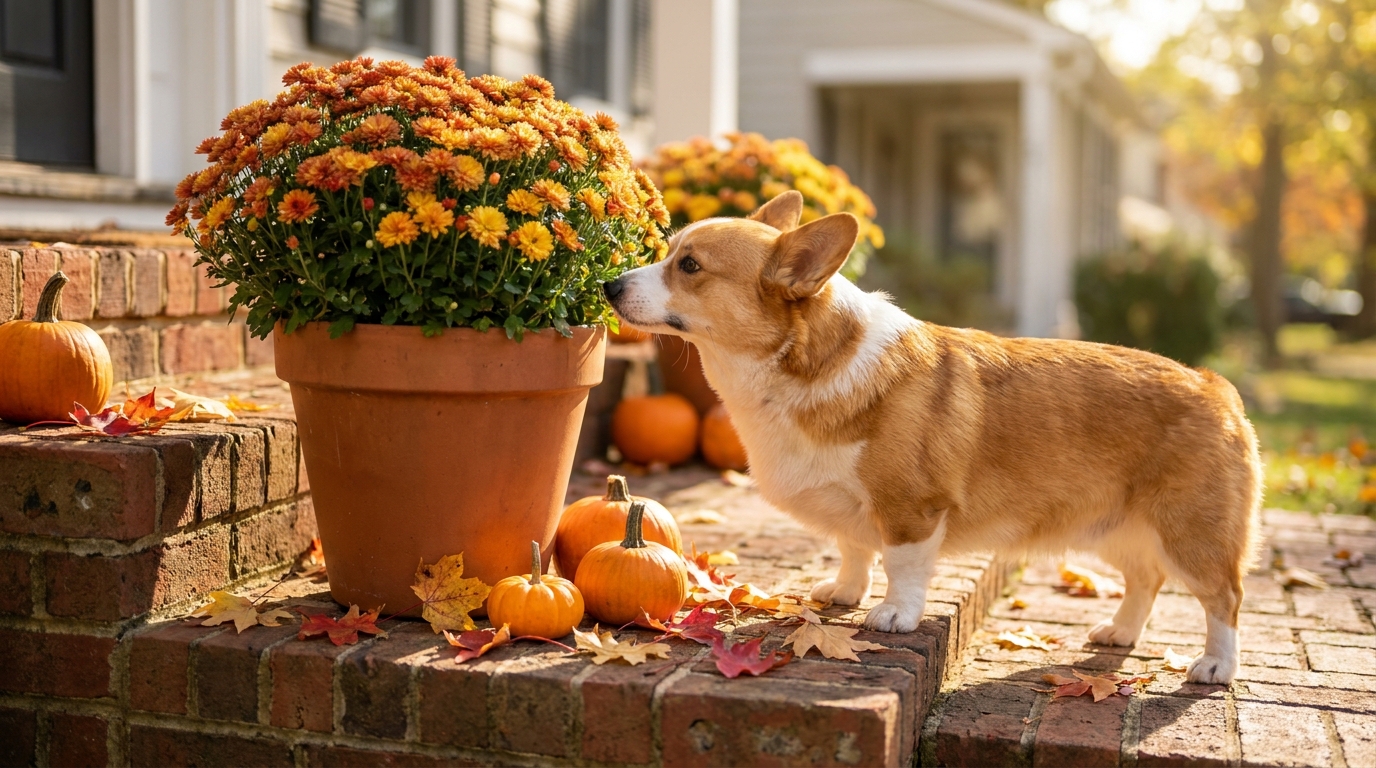
Dog or cat ate mums? Chrysanthemums usually upset the stomach and cause drooling, but wobbliness or repeated vomiting means call a vet now.
Go to an emergency vet or call a poison line now if your pet is wobbly or uncoordinated, vomits or has diarrhea again and again, is very weak, or if a cat may also have chewed lilies from a fall bouquet.
Mums are everywhere in the fall: on front steps, in buckets by the checkout, and tucked into bouquets on the kitchen table. So it is no surprise when a puppy chews a potted mum or a cat nibbles the flowers in a vase.
This guide covers what the plant can do, what to do in the first few minutes, and which signs mean you should go in instead of waiting to see.
Dog or cat ate mums: how toxic are chrysanthemums?
The ASPCA's chrysanthemum plant card lists the plant as "Toxic to Dogs, Toxic to Cats, Toxic to Horses." It names the toxic principles as "Sesquiterpene, lactones, pyrethrins and other potential irritants." In plain terms, the plant contains natural compounds that can upset your pet's stomach and irritate the skin.
The ASPCA lists these clinical signs:
- Vomiting
- Diarrhea
- Hypersalivation, which means drooling
- Incoordination, which means your pet looks wobbly or unsteady
- Dermatitis, which means red, itchy or irritated skin
Pet Poison Helpline puts the risk in perspective: "Pyrethrins, which are used in dog flea and tick medications, can be extracted from this plant though ingestion of plant material is typically only going to cause gastrointestinal upset."
So the usual problem after a pet chews on a mum is an upset stomach. That does not mean you can ignore it. The signs your pet shows, not the fact that it ate some of the plant, tell you what to do next.
When to go now: emergency signs to watch
Do not wait at home to see whether these pass. Go to an emergency vet or call a poison line now if:
- Your pet is wobbly, unsteady or uncoordinated
- Your pet vomits or has diarrhea again and again
- Your pet seems very weak
- Your cat may have chewed a lily from a fall bouquet, even if it seems fine right now
Two animal poison lines answer around the clock:
- ASPCA Animal Poison Control: (888) 426-4435, open 24/7
- Pet Poison Helpline: (855) 764-7661, open 24/7
A fee may apply for either call. Keep the plant, or a photo of it, close by when you call, along with your best guess of how much your pet ate and when.
If you are not sure whether what you are seeing counts as an emergency, the practical pet emergency checklist for dog and cat owners walks through the signs that mean go now. If you live in New York City, see what to do about pet poisoning in NYC.
The first few minutes at home
If your pet has none of the emergency signs above, a few calm steps now will help you and whoever you call next.
- Stop the snacking. Move the pot or bouquet somewhere your pet cannot reach, and pick up any leaves and petals on the floor.
- Clear around the mouth gently. Wipe any leaves or petals from around the mouth with a damp cloth. Do not reach into the mouth if your pet resists.
- Note how much and when. A rough guess is fine: a few petals, a leaf or two, or a good chunk of the pot. Write down the time you found it.
- Photograph the plant and its pot tag. The tag or the florist's card helps confirm the plant is a chrysanthemum and shows whether anything else, such as lilies, was in the arrangement.
- Keep your pet quiet and watch. Settle your pet somewhere calm where you can see it, and look for drooling, vomiting, diarrhea, wobbliness and skin redness.
Two things not to do:
- Do not try to make your pet vomit at home.
- Do not give milk, oil or any home remedy.
Skin and fur: managing contact irritation
The ASPCA lists dermatitis among the signs, so the skin matters too. If your pet lay in or chewed the plant, residue on the fur and skin can irritate the skin, and cats may groom it off their coats.
Rinse the fur and skin where your pet touched the plant with plain, lukewarm water. If your pet will not tolerate a rinse, wipe the area with a damp cloth instead. For a cat, a quick wipe of the paws, face and chest is often the easiest option and the least stressful for both of you.
Afterward, keep an eye on the area. Redness or itching where your pet touched the plant is worth watching and mentioning to a vet if it does not settle.
Cats and fall bouquets: check for lilies
Some fall arrangements mix mums with lilies, and for a cat that changes everything. The ASPCA's lily plant card lists lilies as "Toxic to Cats," with "Clinical Signs: Cats: kidney failure."
If your cat may have chewed a lily, go to an emergency vet now. Do not wait for signs, and do not treat it as a watch-at-home situation the way a nibble of mum might be.
If you are not sure what is in a bouquet, check the florist's card or take a photo and bring it with you. The safest plan in a home with a cat is to keep lilies out of the house entirely. For other common plants that can be risky for dogs and cats, see the guide to poisonous plants for pets.
Fall porches in Florida, New York and Virginia
In New York and Virginia, mums fill porches, front steps and garden centers through the fall. In Florida, they show up in entryways, on lanais and in pots by the pool. Wherever you live, a pot at nose height is an easy target for a bored puppy or a curious kitten.
A few simple habits keep fall decorations and pets apart:
- Put pots up high on a sturdy stand or table, or outside the fence where your pet does not go.
- Sweep up fallen leaves and petals so none end up on the floor or the porch boards.
- Watch puppies and kittens closely around fall decorations, since they explore with their mouths.
- Keep indoor bouquets in rooms your cat cannot get into, especially if they may contain lilies.
Mums are not the only fall-yard hazard. If your dog also scavenges under oak trees, see what to do if your dog ate acorns and is throwing up.
What a RexVet online vet can and cannot do
If your pet has no emergency signs but you want a professional opinion, a video visit can help you decide what comes next. RexVet is a 501(c)(3) non-profit veterinary telehealth service.
On a video visit, the veterinarian can:
- Identify the plant from your photo or the pot tag
- Ask how much your pet ate and when
- Watch your pet walk and look at the mouth on camera
- Help you decide between watching at home, seeing a clinic in person or going to an emergency vet
Clear photos and short videos make the visit more useful. See how to upload pet photos and videos for an online vet review.
A video visit cannot run bloodwork, give fluids or treat your pet in person. If the veterinarian decides medication is appropriate, they can prescribe where state rules allow. In Florida, a veterinarian who has seen your pet only by video may prescribe only FDA-approved animal drugs used as labeled, for up to 14 days (1 month for flea-and-tick-only products), and cannot renew without an in-person exam.
If your pet has no emergency signs and you would like a vet to take a look, book a RexVet video visit. A video visit is $64.99, vets are available 24/7, and RexVet's veterinarians are licensed in Florida, New York and Virginia, so visits are for pet parents in those three states only.
When to be seen in person in Florida, New York or Virginia
For a pet that ate mums, go in person, to an emergency vet or your own clinic, if:
- Your pet shows any of the emergency signs above
- Signs last or get worse
- Your pet is very small or very young
- A cat may have chewed a lily
In South Florida, see pet poisoning help in Miami.
Florida law (Fla. Stat. 474.2021) requires a veterinarian practicing telehealth to give you "the contact information for at least one physical veterinary clinic in the vicinity of the patient's location." That way you have somewhere to go if a video visit shows your pet needs hands-on care.
For non-urgent questions about video visits in your state, see the online vet pages for Florida, New York and Virginia.
Frequently Asked Questions
Are mums poisonous to dogs?
Yes. The ASPCA lists chrysanthemums as toxic to dogs, with signs that include vomiting, diarrhea, drooling, incoordination and skin irritation. Pet Poison Helpline says eating the plant material is typically only going to cause stomach upset. If your dog ate mums and becomes wobbly, vomits again and again or seems very weak, go to an emergency vet or call a poison line.
Are mums poisonous to cats?
Yes. The ASPCA lists chrysanthemums as "Toxic to Cats," with the same signs: vomiting, diarrhea, drooling, incoordination and dermatitis. If your cat ate mums from a bouquet, check whether the arrangement also had lilies. If your cat may have chewed a lily, go to an emergency vet now; the ASPCA lists "Cats: kidney failure" for lilies.
How much of a mum plant is dangerous?
No safe amount can be given. Your pet's size and the signs you see are what matter, so a very small or very young pet, or any of the signs listed above, is a reason to call. If you are unsure, call your vet or a poison line.
Should I make my pet throw up after eating mums?
No. Do not try to make your pet vomit at home, and do not give milk, oil or any home remedy. Gently wipe plant bits from around the mouth, keep your pet quiet and call your vet or a poison line.
Can I keep mums on the porch if I have pets?
Yes, as long as they are out of reach. Put pots up high or outside the fence, sweep up fallen leaves and petals, and watch puppies and kittens closely around fall decorations. Keep bouquets that may include lilies out of any home with a cat.
If your dog or cat ate mums and has no emergency signs, but you would like a veterinarian to look at the plant, watch your pet walk and help you plan next steps, book a video visit now. A visit is $64.99, vets are available 24/7 including nights, weekends and holidays, and RexVet's veterinarians are licensed in Florida, New York and Virginia, so video visits are for pet parents in those three states only. For any emergency sign, go to an emergency vet or call a poison line first.
FAQs
Are mums poisonous to dogs?
Yes. The ASPCA lists chrysanthemums as toxic to dogs, with signs that include vomiting, diarrhea, drooling, incoordination and skin irritation. Pet Poison Helpline says eating the plant material is typically only going to cause stomach upset. If your dog ate mums and becomes wobbly, vomits again and again or seems very weak, go to an emergency vet or call a poison line.
Are mums poisonous to cats?
Yes. The ASPCA lists chrysanthemums as "Toxic to Cats," with the same signs: vomiting, diarrhea, drooling, incoordination and dermatitis. If your cat ate mums from a bouquet, check whether the arrangement also had lilies. If your cat may have chewed a lily, go to an emergency vet now; the ASPCA lists "Cats: kidney failure" for lilies.
How much of a mum plant is dangerous?
No safe amount can be given. Your pet's size and the signs you see are what matter, so a very small or very young pet, or any of the signs listed above, is a reason to call. If you are unsure, call your vet or a poison line.
Should I make my pet throw up after eating mums?
No. Do not try to make your pet vomit at home, and do not give milk, oil or any home remedy. Gently wipe plant bits from around the mouth, keep your pet quiet and call your vet or a poison line.
Can I keep mums on the porch if I have pets?
Yes, as long as they are out of reach. Put pots up high or outside the fence, sweep up fallen leaves and petals, and watch puppies and kittens closely around fall decorations. Keep bouquets that may include lilies out of any home with a cat.
If your dog or cat ate mums and has no emergency signs, but you would like a veterinarian to look at the plant, watch your pet walk and help you plan next steps, book a video visit now. A visit is $64.99, vets are available 24/7 including nights, weekends and holidays, and RexVet's veterinarians are licensed in Florida, New York and Virginia, so video visits are for pet parents in those three states only. For any emergency sign, go to an emergency vet or call a poison line first.
Medically Reviewed
Reviewed by Dr. Tiffany Delacruz, DVM — licensed veterinarian and CEO of RexVet. Last reviewed September 24, 2026.
Content is for informational purposes and does not replace professional veterinary advice.
Chief Executive Officer · Licensed Veterinarian
Dr. Delacruz is a licensed Doctor of Veterinary Medicine specializing in preventive care and veterinary telehealth. She reviews all health content on RexVet to ensure accuracy and clinical relevance.
Sources & References
- · American Veterinary Medical Association — Telehealth Guidelines
- · AVMA — Pet Care Resources
- · U.S. FDA — Animal & Veterinary
Need an Expert Opinion on This Topic?
Connect with a certified vet via video call in minutes
Talk to Vet Now