
Dog Got Pepper Sprayed? How to Flush the Eyes and Face Now
By RexVet Team | Reviewed by Dr. Tiffany Delacruz, DVM
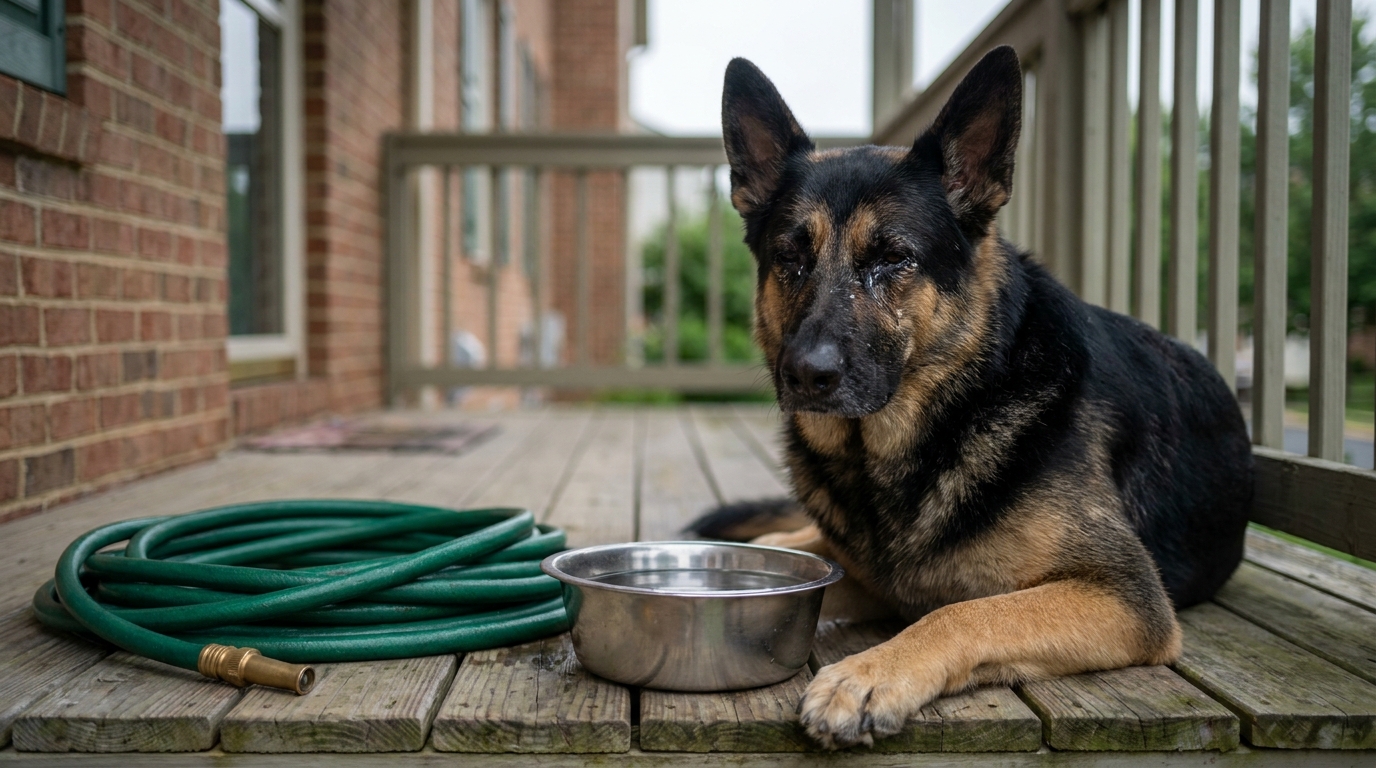
Dog got pepper sprayed? Flush the eyes with plenty of lukewarm water, keep paws off the face, and watch breathing and squinting closely.
Go to an emergency vet now if your dog is struggling to breathe, keeps coughing or gagging, collapses, is a flat-faced breed breathing noisily, or cannot open an eye after a thorough flush.
If your dog is breathing comfortably, start the eye flush below right away. Before you touch the face, protect your own hands and eyes. The National Pesticide Information Center notes that capsaicin "is very irritating to the skin and eyes," and that includes yours.
Dog got pepper sprayed? What capsaicin does to a dog
The burning comes from capsaicin, which the National Pesticide Information Center (NPIC, Oregon State University) describes as "the main chemical that makes chili peppers hot." Whether it was pepper spray, bear spray on a dog or a dog repellent spray, NPIC notes that "Pets may be exposed to capsaicin if they are sprayed with an animal repellent" and that "Products containing capsaicin are used to deter bears and dogs."
On what happens next, the NPIC capsaicin fact sheet is plain: "In animals, capsaicin causes coughing, temporary blindness, and prevents the vocal cords from working for a short time."
Here is what that tends to look like at home. You may see:
- Squinting, fast blinking, or eyes clamped shut and streaming
- Pawing or rubbing at the face
- Sneezing and coughing
- Drooling or licking the lips
- A quiet dog who cannot bark for a little while
"Temporary blindness" in NPIC's wording means the eyes clamp shut and stream. It does not mean your dog has lost their sight. NPIC describes the blindness as temporary, but that is not a promise that the eyes are unharmed once they open. Checking the surface of the eye for injury takes an in-person exam, which is covered below.
Emergency signs: go to an ER now, not a video call
Flushing at home is the first step, but some signs mean you should skip the wait and go in now. Head to the nearest emergency vet if your dog:
- Is struggling or laboring to breathe
- Keeps coughing or gagging, and it does not settle
- Collapses or cannot stand
- Is a flat-faced breed (such as a pug, bulldog or French bulldog) and is breathing noisily
- Cannot open an eye, or has an eye that looks cloudy, after a thorough flush
For a wider list of signs that mean "go now," see our pet emergency checklist for dog and cat owners.
How to flush the eyes safely at home
The eyes come first. A dog pepper sprayed in the eyes needs a gentle, steady rinse, not a quick splash.
ASPCA Poison Control's guidance on ASPCApro says "Normal saline is preferred for use in the eyes," "Tepid tap water is ok to use in a pinch," and "For most liquids, 10 minutes of flushing is ideal." The Merck Veterinary Manual gives the same starting point for chemical splashes to the eye: "Eye exposures should be treated immediately by flushing the eye with saline solution."
If you have sterile saline in the house, use it. If not, lukewarm tap water is OK in a pinch. Here is how to do it:
- Protect yourself. Put on gloves if you have them. Keep your own hands away from your face until you have washed them.
- Get a helper if you can. One person steadies the dog, ideally sitting on the floor with the dog's body tucked against them. The other person rinses.
- Use a gentle flow. Pour lukewarm water or saline from a clean cup, a squeeze bottle or a soft-flow tap. Never use a high-pressure hose nozzle or a sprayer.
- Rinse from the inside corner outward. Gently hold the lids open and let the water run across the eye from the corner nearest the nose toward the outer corner, so it drains away from the face and the other eye.
- Take short breaks. If your dog is fighting you, pause, let them settle, then go back to rinsing.
- Do both eyes if both were hit, even if one seems better.
Use only sterile saline or plain lukewarm water. Do not put milk, medicated or human eye drops, ointments or any other product in the eyes.
If an eye stays shut or looks cloudy after a thorough flush, go to an emergency vet now. Redness or squinting that lingers or comes back needs an in-person eye exam.
Wash the face and coat, and stop the pawing
Once the eyes are rinsed, turn to the face, because spray left on the muzzle and the fur around the eyes can end up back in the eyes.
Rinse the muzzle and face with plenty of lukewarm water, directing it away from the eyes. A wet washcloth that you rinse often works well around the lips and cheeks. Lukewarm water is simply more comfortable for your dog, which makes them easier to handle.
If the spray hit your dog's body, a bath helps. Writing about household chemicals on the skin, the Merck Veterinary Manual advises that "Bathing with mild shampoo and thorough rinsing is recommended for significant skin exposures." Save the shampoo for the body, and keep lather away from the eyes. Rinse the coat well afterwards so no soapy residue is left behind.
Next, stop the rubbing. Your dog will want to paw at their face or scrub it on carpets, rugs and furniture, which spreads the residue back onto the face and eyes. A few things help:
- Put on a cone (an Elizabethan collar) if you have one.
- Keep your dog in a room with hard floors and no soft furniture for now.
- Let them have fresh air, outside on a leash or near an open window, away from wherever the spray happened.
- Wash towels, bedding and your own clothes that touched the spray.
Finally, wash your own hands and arms well with soap and water, even if you wore gloves.
Pepper spray is not skunk spray
Pepper spray and skunk spray are different chemicals and need different first aid: pepper spray is a capsaicin irritant that burns, so the focus is flushing the eyes and washing it off. If your dog met a skunk instead, follow our skunk spray guide.
Watching the eyes afterwards
Keep an eye on your dog's eyes over the following days, not just the first evening. Any of these signs means your dog needs an in-person eye exam:
- Squinting that comes back after the eyes had settled
- Redness that does not fade
- Discharge from one or both eyes
- A cloudy spot on the eye
- Pawing or rubbing at one eye
After a chemical splash, the Merck Veterinary Manual notes that "Your veterinarian will stain the cornea to detect any corneal injuries." That test needs your dog in the exam room.
For more on what red, weepy or goopy eyes can mean, read our guide to dog eye infections.
What a RexVet online vet can and cannot do after pepper spray
A video visit is for a dog who is breathing comfortably, and it can help you decide between an ER now, a clinic today or watching at home. Any emergency sign above means going straight to an emergency vet instead.
On a video call, a veterinarian can:
- Coach you through the eye flush live, including how to hold your dog
- Watch your dog's breathing effort on camera
- Look at both eyes in good light and compare them
- Ask about the spray, so it helps to have the product type or can nearby if you have it
What a video visit cannot do: stain the cornea, measure eye pressure or treat your dog in person. If the vet sees anything that needs those, they will tell you to go in.
If the veterinarian decides medication is appropriate, they can prescribe where state rules allow. In Florida, a veterinarian who has seen your pet only by video may prescribe only FDA-approved animal drugs used as labeled, for up to 14 days (1 month for flea-and-tick-only products), and cannot renew without an in-person exam.
RexVet is a 501(c)(3) non-profit, and RexVet's veterinarians are licensed in Florida, New York and Virginia. They are available 24/7, including nights, weekends and holidays, for pet parents in those three states. A video visit is $64.99. If your dog is breathing easily but you want a vet's eyes on the face and eyes tonight, book a RexVet video visit.
Clear photos or a short video of the eyes in daylight can help the vet. Here is how to upload pet photos and videos for an online vet review.
When to be seen in person in Florida, New York or Virginia
Any sign in the emergency checklist above means the ER now, not a clinic appointment and not a video call. That includes trouble breathing, coughing or gagging that does not settle, collapse, noisy breathing in a flat-faced breed, and an eye that stays shut or looks cloudy after a thorough flush.
Outside of an emergency, plan an in-person visit today if:
- Squinting, redness, pawing or discharge comes back after the eyes had settled
- One eye looks different from the other
In Florida, state law requires a telehealth vet to give you "the contact information for at least one physical veterinary clinic in the vicinity of the patient's location" (Fla. Stat. 474.2021), so you know where to go if your dog needs hands-on care.
For more on how online vet care works where you live, see our pages for Florida, New York and Virginia.
Frequently Asked Questions
Is pepper spray toxic to dogs?
It is mainly a strong irritant. The National Pesticide Information Center says capsaicin "is very irritating to the skin and eyes," and describes its effects in animals as coughing, temporary blindness and a short-lived loss of voice. The danger to watch for is trouble breathing, which needs an emergency vet right away. Otherwise, the job at home is to flush the eyes and wash the spray off.
Can pepper spray permanently blind a dog?
NPIC describes the blindness as temporary: the eyes clamp shut and stream. That does not rule out an injury to the cornea, the clear surface of the eye. The Merck Veterinary Manual notes that your veterinarian will stain the cornea to detect any corneal injuries, and that needs an in-person exam.
Can I use milk or eye drops to flush my dog's eyes?
No. Stick to sterile saline, which ASPCA Poison Control's guidance on ASPCApro says is preferred for eyes, or tepid tap water if that is all you have. Do not use milk, human eye drops or ointments.
Should I bathe my dog after pepper spray?
Rinse the muzzle and face with plenty of lukewarm water, keeping it out of the eyes. If the spray hit the body, bathe your dog: for significant skin exposures to household chemicals, the Merck Veterinary Manual recommends bathing with mild shampoo and rinsing thoroughly. Wear gloves if you have them, and keep your dog from rubbing their face on carpets or furniture.
What should I do if a stranger sprayed my dog?
Care for your dog first: flush the eyes, rinse the face and watch the breathing. If you can, note the product name or type of spray so you can tell your veterinarian. Anything else can wait until your dog is comfortable.
If your dog is breathing comfortably but you are unsure about the eyes, the squinting or what to watch for tonight, a veterinarian can look with you by video. RexVet's veterinarians are licensed in Florida, New York and Virginia and are available 24/7, nights, weekends and holidays included. A video visit is $64.99. Book a video visit now.
FAQs
Is pepper spray toxic to dogs?
It is mainly a strong irritant. The National Pesticide Information Center says capsaicin "is very irritating to the skin and eyes," and describes its effects in animals as coughing, temporary blindness and a short-lived loss of voice. The danger to watch for is trouble breathing, which needs an emergency vet right away. Otherwise, the job at home is to flush the eyes and wash the spray off.
Can pepper spray permanently blind a dog?
NPIC describes the blindness as temporary: the eyes clamp shut and stream. That does not rule out an injury to the cornea, the clear surface of the eye. The Merck Veterinary Manual notes that your veterinarian will stain the cornea to detect any corneal injuries, and that needs an in-person exam.
Can I use milk or eye drops to flush my dog's eyes?
No. Stick to sterile saline, which ASPCA Poison Control's guidance on ASPCApro says is preferred for eyes, or tepid tap water if that is all you have. Do not use milk, human eye drops or ointments.
Should I bathe my dog after pepper spray?
Rinse the muzzle and face with plenty of lukewarm water, keeping it out of the eyes. If the spray hit the body, bathe your dog: for significant skin exposures to household chemicals, the Merck Veterinary Manual recommends bathing with mild shampoo and rinsing thoroughly. Wear gloves if you have them, and keep your dog from rubbing their face on carpets or furniture.
What should I do if a stranger sprayed my dog?
Care for your dog first: flush the eyes, rinse the face and watch the breathing. If you can, note the product name or type of spray so you can tell your veterinarian. Anything else can wait until your dog is comfortable.
If your dog is breathing comfortably but you are unsure about the eyes, the squinting or what to watch for tonight, a veterinarian can look with you by video. RexVet's veterinarians are licensed in Florida, New York and Virginia and are available 24/7, nights, weekends and holidays included. A video visit is $64.99. Book a video visit now.
Medically Reviewed
Reviewed by Dr. Tiffany Delacruz, DVM — licensed veterinarian and CEO of RexVet. Last reviewed September 24, 2026.
Content is for informational purposes and does not replace professional veterinary advice.
Chief Executive Officer · Licensed Veterinarian
Dr. Delacruz is a licensed Doctor of Veterinary Medicine specializing in preventive care and veterinary telehealth. She reviews all health content on RexVet to ensure accuracy and clinical relevance.
Sources & References
- · American Veterinary Medical Association — Telehealth Guidelines
- · AVMA — Pet Care Resources
- · U.S. FDA — Animal & Veterinary
Need an Expert Opinion on This Topic?
Connect with a certified vet via video call in minutes
Talk to Vet Now