
Dog Drank Toilet Water With Cleaner in It? What to Do Now
By RexVet Team | Reviewed by Dr. Tiffany Delacruz, DVM
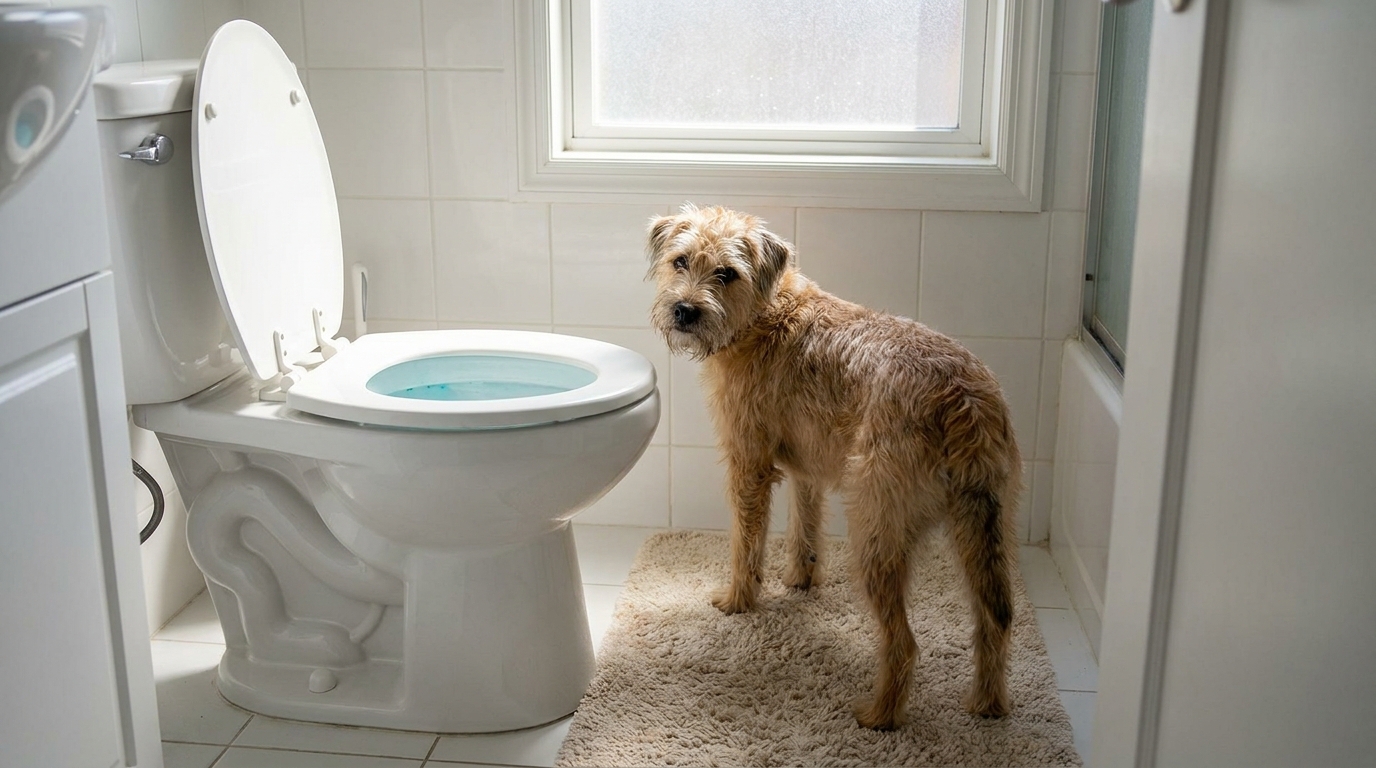
Dog drank toilet water with cleaner in it? Diluted blue water usually causes mild stomach upset at most; a chewed tablet is a poison-line call now.
Call a poison line and go to an emergency vet now if your pet chewed or swallowed the tablet or puck itself, drank from a bowl with undiluted cleaner or bleach poured in, or is drooling heavily, pawing at the mouth, vomiting, not eating, weak, or has red or sore-looking gums or tongue; winter toilet antifreeze is always an emergency.
Dog drank toilet water with cleaner: why most cases are mild
The ASPCA says "that blue water is unlikely to harm your pet," because the chemicals from the tablets or discs "are diluted in water, and although they can cause some mild stomach upset, more severe signs aren’t expected." The ASPCA still does not recommend letting pets drink treated water as a habit, so this is not a green light.
A Pet Poison Helpline veterinarian told PetMD that pets who drink toilet water with diluted cleaning products "typically only experience mild mouth irritation and potentially an upset stomach."
So there are really three different situations hiding behind "my dog drank from the toilet":
- Diluted water from a drop-in or clip-on cleaner. Usually mild; offer fresh water if your pet is not vomiting, and watch.
- A chewed or swallowed tablet, or undiluted cleaner or bleach poured into the bowl. This can burn the mouth and throat. Poison line and emergency vet now.
- Antifreeze added to a toilet in winter. This is a lethal poison. Emergency vet now.
The color alone doesn’t tell you the strength. Check the label, and check whether anyone poured something into the bowl on top of the drop-in product.
Emergency signs: when it is not mild
Go now, even if your pet looks fine, if any of these apply: your pet chewed or swallowed the tablet or puck, drank from a bowl with undiluted cleaner or bleach poured in, or could have reached antifreeze. Go now, too, if you see heavy drooling, pawing at the mouth, vomiting, not eating, weakness, or red or sore-looking gums or tongue.
The ASPCA is clear about the tablet itself: "If your pet manages to ingest the disc or tablet that goes into the toilet directly, the results can be much more serious. Many of these products can cause burns in the mouth and the throat." PetMD adds that "the risk of serious poisoning increases significantly if your pet ingests undiluted" toilet cleaning products.
Winter brings a separate danger. The ASPCA notes that some people pour antifreeze into toilets in cold weather to stop the water from freezing. In the ASPCA’s words, "Antifreeze is a lethal poison for dogs and cats." If there is any chance your pet drank from a toilet treated with antifreeze, do not wait for signs. Go to an emergency vet.
On the way, or while someone else drives, call an animal poison line. Both are open 24/7, and a fee may apply:
- ASPCA Animal Poison Control: (888) 426-4435
- Pet Poison Helpline: (855) 764-7661
Use one of these, not a human poison center. They are set up for animal exposures. If you are unsure whether something counts as an emergency, our pet emergency checklist walks through the signs that mean go now.
Read the product first
Before you call anyone, grab the package. Toilet products come in four main forms:
- A drop-in tablet that sits in the tank or bowl
- A clip-on rim block that hangs under the rim
- A gel stamped or squeezed onto the bowl
- Liquid bleach or cleaner poured straight into the bowl
Keep the package, photograph the label, and have it in your hand when you call the poison line or the vet. The ingredient list helps a poison line or veterinarian judge the risk quickly.
Ingredients do differ. Pet Poison Helpline lists phenols, found in household cleaners "from toilet bowl cleaners to all-purpose sprays," as products that can be "highly corrosive" if swallowed.
Bleach is a little different. A Pet Poison Helpline veterinarian told PetMD that regular household bleach "is an irritant but not a corrosive agent," while ultra-concentrated bleach is more serious. Either way, bleach poured into the bowl is not the same as a diluted drop-in product, and it belongs in the call-now group.
What to do right now
If anything from the emergency section above applies, head to an emergency vet now and call one of the poison lines listed there on the way. Do not let the steps below slow you down.
For every case, while you get your bearings:
- Close the lid, or shut the bathroom door, so nobody goes back for more.
- Take away any tablet, block or pieces you can find, and keep the package.
- Look in the mouth. Check the gums and tongue for redness or sore-looking spots.
- Wipe the muzzle and paws with a damp cloth so your pet doesn’t lick more residue off later.
- Do not make your pet vomit.
Fresh water is for the diluted-water case only. If your pet drank diluted blue water, is not vomiting and has no redness or soreness in the mouth, offer fresh water. The ASPCA says "you can give them a small amount of milk or fresh water to help dilute the mixture even further." Do not give milk or water to a pet that is vomiting or has a sore mouth. For a chewed tablet, undiluted cleaner, bleach or antifreeze, skip this step and ask the poison line what to do.
After that, the ASPCA says to contact your veterinarian or Animal Poison Control "if more than mild stomach upset develops."
Cats drink from toilets too
This isn’t only a dog problem. The ASPCA mentions the dog, or "a very adventurous cat," with its head in the bowl. If your cat drank toilet water with cleaner, the same three-way split applies.
With bleach in particular, PetMD lists signs that include "heavy drooling (especially in cats)" along with redness in and around the mouth. Cats can also pick up bleach by walking through a spill and licking their paws afterward, so wipe their feet as well as their face.
For plain diluted drop-in water, offer fresh water if your cat is not vomiting, and watch. Cats can be reluctant drinkers, and a Pet Poison Helpline veterinarian quoted by PetMD suggests "a little bit of tuna water" to make water more appealing.
If bleach or cleaner was poured into the bowl, or your cat is drooling heavily, pawing at the mouth, hiding or won’t drink, call a poison line and go to a vet now. For other hazards around the house, see our guide to common household items toxic to cats.
What to watch for the next day
If this was a diluted-water case and your pet seems fine now, keep an eye on them in the hours and days after. PetMD’s advice is to "Monitor your dog for changes in appetite, dropping food, vomiting, drooling, or pawing at the mouth." Those signs can point to irritation in the mouth, esophagus or stomach.
PetMD is direct about what to do if you see them: "If your dog has any of these signs, is lethargic, or has blood in their stool, they should be seen by a veterinarian immediately."
If vomiting does start after a diluted-water drink, call your vet or a poison line now. Our guide on why a dog is vomiting explains what a vet will want to know.
Keeping pets out of the toilet
The simplest fix is the ASPCA’s: keep the seat down. In a small New York City bathroom, it is often easier to keep the door shut.
The ASPCA also suggests fresh running water, such as a pet water fountain. PetMD notes that toilet water can seem colder and fresher than a warm or stale water bowl, which is a big part of the pull.
Pay attention to thirst. If your pet suddenly seems thirstier than usual and drinks from anywhere it can, a vet should check for a medical cause such as kidney disease or diabetes. PetMD makes the same point: seeking out unusual water sources can be a sign of an underlying health issue. Our article on dogs drinking too much water covers the common causes.
Finally, store cleaners, tablets and refill packs up high or behind a latched door. If you use antifreeze in a toilet at a winter home, keep pets out of that bathroom entirely. Our room-by-room household toxins guide covers the rest of the house.
What a RexVet online vet can and cannot do
Anything from the emergency section above goes to a poison line and an in-person vet first, not to a video visit. For a diluted-water case with no warning signs, or when you honestly aren’t sure what was in the bowl, a video vet can help you decide what comes next.
On a video visit, a RexVet veterinarian can:
- Read the cleaner label with you, live
- Look at your pet’s mouth, gums and tongue on camera
- Help sort a diluted-water exposure from a tablet or undiluted exposure
- Decide with you whether home watching is reasonable, or whether you need a poison line or an ER
A video vet cannot treat mouth burns, give fluids, run bloodwork or scope the throat. If your pet needs any of those, the answer is an in-person emergency vet.
If the veterinarian decides medication is appropriate, they can prescribe where state rules allow. In Florida, a veterinarian who has seen your pet only by video may prescribe only FDA-approved animal drugs used as labeled, for up to 14 days (1 month for flea-and-tick-only products), and cannot renew without an in-person exam.
RexVet is a 501(c)(3) non-profit. RexVet's veterinarians are licensed in Florida, New York and Virginia, and they are available 24/7, including nights, weekends and holidays. If your pet drank diluted blue water, shows no warning signs, and you want a vet to look at the mouth and the label with you, you can book a RexVet video visit for $64.99, for pet parents in Florida, New York and Virginia only.
When to go in person in Florida, New York or Virginia
The exposures in the emergency section above mean an emergency vet now, even if your pet seems fine, and so do the warning signs listed there.
A diluted-water case that looked mild at first can change over the next day. Go in person if any of those warning signs appear later, or if your pet becomes lethargic or has blood in the stool.
Vomiting after diluted water means a call to your vet or a poison line now, and PetMD advises that your pet be seen right away. If your own vet cannot do that, go to an emergency vet.
In Florida, state law requires a veterinarian practicing telehealth to give you "the contact information for at least one physical veterinary clinic in the vicinity of the patient's location" (Fla. Stat. 474.2021). For state-specific details, see our pages for Florida, New York and Virginia.
Frequently Asked Questions
Is blue toilet water poisonous to dogs?
Usually not in the way people fear. The ASPCA says "that blue water is unlikely to harm your pet" because the chemicals are diluted, though it can cause mild stomach upset. It is still not safe to drink as a habit, so close the lid and offer fresh water if your dog is not vomiting. A chewed tablet is different; see the next question.
What if my dog chewed a toilet bowl cleaner tablet?
Treat it as an emergency. The ASPCA warns that these products can cause burns in the mouth and throat. Call ASPCA Animal Poison Control at (888) 426-4435 or Pet Poison Helpline at (855) 764-7661 (both 24/7; a fee may apply), bring the package, and head to an emergency vet.
My cat drank toilet water with bleach in it; what do I do?
It depends on how the bleach got there. For water from a diluted drop-in product, wipe the face and paws, offer fresh water if your cat is not vomiting, and watch closely. Bleach poured into the bowl, or a cat that is drooling heavily, pawing at the mouth, hiding or won’t drink, means a poison line and a vet now. PetMD notes regular household bleach is an irritant, while ultra-concentrated bleach is more serious.
Should I make my dog throw up?
No. Do not make your pet vomit after drinking toilet water with cleaner or chewing a tablet, and do not give any human medicine. For a chewed tablet or undiluted cleaner, call a poison line on the way to an emergency vet and follow their advice. For diluted blue water, offer fresh water only if your pet is not vomiting and has no sore mouth.
Why does my dog keep drinking from the toilet?
Toilet water can seem colder and fresher than a stale bowl, so a clean bowl or a pet water fountain often helps. But a pet that suddenly seeks out extra water may have a medical reason for it, such as kidney disease or diabetes. If the thirst is new, have a vet check it.
If your dog drank diluted blue water, shows no warning signs, and you want a veterinarian to look at the mouth and the label with you tonight, you can book a video visit now. A RexVet visit is $64.99, available 24/7, for pet parents in Florida, New York and Virginia only. For anything on the emergency list above, go to an emergency vet first.
FAQs
Is blue toilet water poisonous to dogs?
Usually not in the way people fear. The ASPCA says "that blue water is unlikely to harm your pet" because the chemicals are diluted, though it can cause mild stomach upset. It is still not safe to drink as a habit, so close the lid and offer fresh water if your dog is not vomiting. A chewed tablet is different; see the next question.
What if my dog chewed a toilet bowl cleaner tablet?
Treat it as an emergency. The ASPCA warns that these products can cause burns in the mouth and throat. Call ASPCA Animal Poison Control at (888) 426-4435 or Pet Poison Helpline at (855) 764-7661 (both 24/7; a fee may apply), bring the package, and head to an emergency vet.
My cat drank toilet water with bleach in it; what do I do?
It depends on how the bleach got there. For water from a diluted drop-in product, wipe the face and paws, offer fresh water if your cat is not vomiting, and watch closely. Bleach poured into the bowl, or a cat that is drooling heavily, pawing at the mouth, hiding or won’t drink, means a poison line and a vet now. PetMD notes regular household bleach is an irritant, while ultra-concentrated bleach is more serious.
Should I make my dog throw up?
No. Do not make your pet vomit after drinking toilet water with cleaner or chewing a tablet, and do not give any human medicine. For a chewed tablet or undiluted cleaner, call a poison line on the way to an emergency vet and follow their advice. For diluted blue water, offer fresh water only if your pet is not vomiting and has no sore mouth.
Why does my dog keep drinking from the toilet?
Toilet water can seem colder and fresher than a stale bowl, so a clean bowl or a pet water fountain often helps. But a pet that suddenly seeks out extra water may have a medical reason for it, such as kidney disease or diabetes. If the thirst is new, have a vet check it.
If your dog drank diluted blue water, shows no warning signs, and you want a veterinarian to look at the mouth and the label with you tonight, you can book a video visit now. A RexVet visit is $64.99, available 24/7, for pet parents in Florida, New York and Virginia only. For anything on the emergency list above, go to an emergency vet first.
Medically Reviewed
Reviewed by Dr. Tiffany Delacruz, DVM — licensed veterinarian and CEO of RexVet. Last reviewed September 23, 2026.
Content is for informational purposes and does not replace professional veterinary advice.
Chief Executive Officer · Licensed Veterinarian
Dr. Delacruz is a licensed Doctor of Veterinary Medicine specializing in preventive care and veterinary telehealth. She reviews all health content on RexVet to ensure accuracy and clinical relevance.
Sources & References
- · American Veterinary Medical Association — Telehealth Guidelines
- · AVMA — Pet Care Resources
- · U.S. FDA — Animal & Veterinary
Need an Expert Opinion on This Topic?
Connect with a certified vet via video call in minutes
Talk to Vet Now