
Dog Ate Sugar-Free Gum: How Many Pieces Is an Emergency?
By RexVet Team | Reviewed by Dr. Tiffany Delacruz, DVM
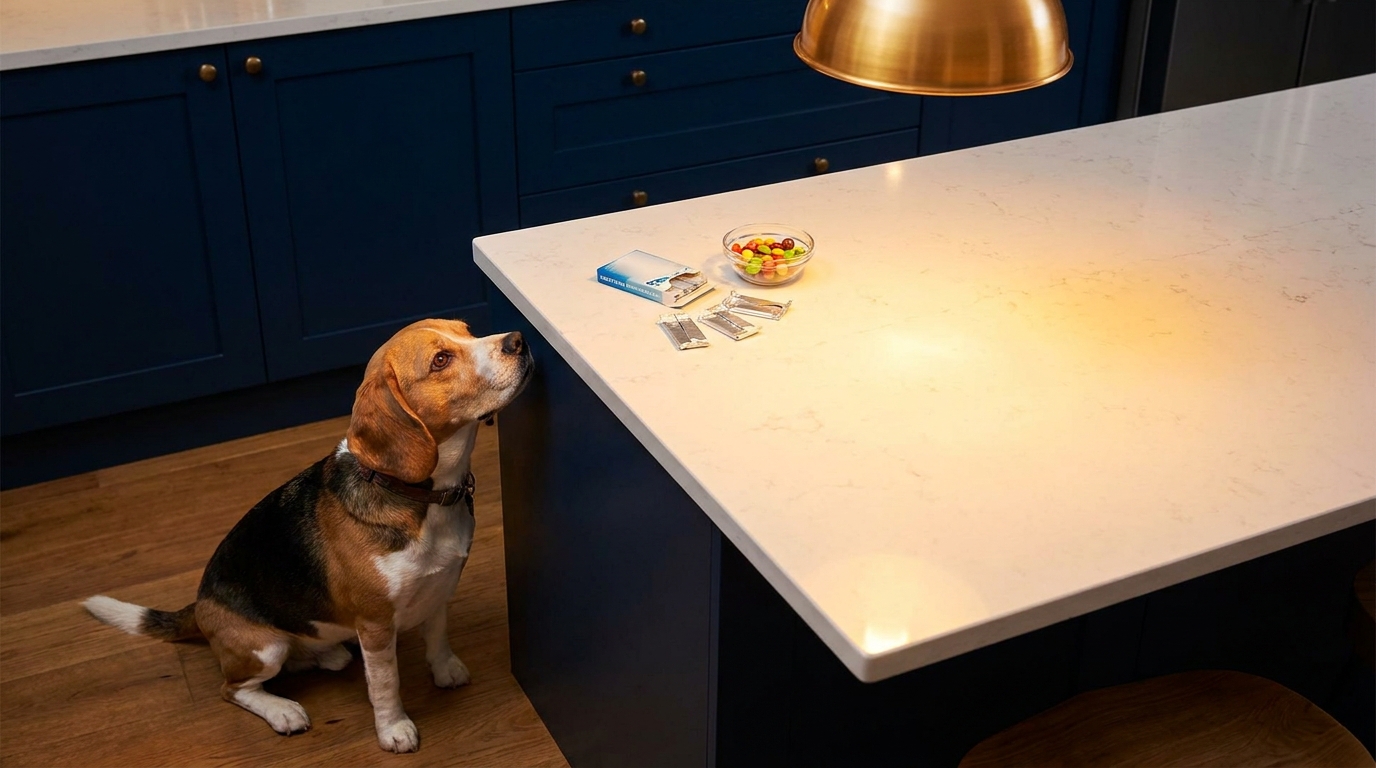
One piece of xylitol gum can poison a small dog. Check the label, do the pieces-by-weight math and know when to go to the ER tonight.
Quick answer: If the gum lists xylitol or birch sugar, as little as one piece can drop a 10-pound dog's blood sugar within an hour, so call an emergency vet or pet poison line now, even if your dog seems fine. Time is your biggest enemy here. Xylitol is highly toxic to dogs, triggering a rapid insulin release that causes dangerous hypoglycemia. While you might worry about intestinal blockage from the gum base, the real threat is the chemical toxicity that can lead to liver failure.
If your dog ate sugar-free gum, you must act fast. Signs like weakness, wobbling or vomiting can appear in under an hour. Because xylitol is so dangerous, call an emergency vet or a pet poison line immediately, even if your dog seems fine.
Immediate Steps When Your Dog Eats Gum
When you realize your dog ate sugar-free gum, the first step is to inspect the packaging immediately. Look specifically for xylitol or birch sugar on the ingredient list. These sweeteners are highly toxic to dogs and can trigger a life-threatening insulin release. Even a small amount, about 0.045 grams (45 mg) per pound of body weight, can cause severe hypoglycemia. While some owners worry about an intestinal blockage from the gum base, the rapid onset of chemical toxicity is the primary veterinary emergency.
If your dog ate sugar-free gum, consider these critical warning signs that require immediate action:
- Sudden loss of coordination or stumbling
- Extreme lethargy or inability to stand
- Pale gums indicating shock
- Seizures or muscle tremors
- Persistent vomiting or abdominal pain
If the gum contains xylitol, don't wait for these signs: call an emergency vet or a pet poison line now, even if your dog seems fine.
Why Xylitol Is Toxic to Your Dog
The danger comes from how this sweetener tricks the canine body. Unlike humans, dogs experience a massive, rapid insulin release after eating xylitol. This surge makes blood sugar plummet, leading to hypoglycemia. Because it happens so quickly, a dog can go from acting normal to trembling or collapsing in less than an hour.
Even a tiny amount can trigger this metabolic crisis. While you might worry about the gum base, the real danger is the effect on your dog's blood sugar and liver. If you can't tell whether the gum contains xylitol, treat it as if it does and call an emergency vet or a pet poison line.
Calculating the Risk Based on Body Weight
If your dog ate sugar-free gum, the risk depends heavily on your pet's body weight. Because xylitol is highly potent, a small dog faces a much higher risk than a larger breed. Generally, about 0.045 grams (45 mg) of xylitol per pound of body weight is enough to cause low blood sugar, and about 0.225 grams (225 mg) per pound is linked to liver damage. Since a single piece of gum typically contains between 0.2 to 1 gram of this sweetener, even one piece can be dangerous for a small breed.
| Dog Weight (lbs) | Risk Level for 1 Piece |
|---|---|
| 5-10 lbs | Emergency: one piece can be toxic |
| 20-30 lbs | Possible emergency: call a vet or poison line now |
| 50+ lbs | Lower risk from one piece, but call to check; several pieces can be toxic |
While liver failure is a slower, more serious complication, the immediate danger is a rapid drop in blood sugar. Do not wait for symptoms like pale gums or weakness to appear. A pet poison line or emergency vet can calculate your dog's exact risk from the brand and the number of pieces, so keep the packaging.
Recognizing Signs of Xylitol Poisoning
Keep a sharp eye out for physical warning signs. Xylitol impacts a dog's body rapidly, often manifesting as profound weakness, stumbling, or even a sudden collapse within just thirty to sixty minutes. You might notice your pet acting unusually disoriented, as if they are intoxicated, which is a direct result of their blood sugar crashing. Another critical indicator is the appearance of their gums. If you lift your dog's lip and see pale, white, or yellow gums instead of a healthy pink, this is a major red flag indicating shock or liver stress.
Because these symptoms can be subtle at first, do not wait for them to worsen. If your dog is showing any of these signs, go to an emergency vet now.
Can a Video Visit Help?
If the gum contains xylitol, a video visit is not the right first step: your dog may need vomiting induced and blood sugar checked within the hour, which only a clinic can do. Call an emergency vet or a pet poison line now.
A RexVet video visit is useful when the gum clearly had no xylitol and you're watching for stomach upset or a blockage, or afterwards for follow-up questions once your dog has been treated.
What Happens During Professional Veterinary Treatment
When a clinic treats a dog that ate xylitol gum, the primary goal is rapid decontamination to prevent further absorption of xylitol. If the ingestion was recent, veterinarians may safely induce emesis to empty the stomach before the sweetener enters the bloodstream. Once the dog is stabilized, the medical team focuses on continuous glucose monitoring. Because xylitol causes a dangerous spike in insulin, blood sugar levels can plummet, necessitating intravenous dextrose supplementation to maintain stability.
Beyond immediate stabilization, vets often check liver values at the start. Even if your dog seems fine, delayed liver damage is possible, so monitoring can continue for up to 72 hours. There is no antidote, which is why getting your dog seen early matters so much.
Securing Your Home Against Hidden Xylitol
Beyond the obvious packs of gum in your purse, xylitol hides in many household items, including some peanut butters, breath mints, sugar-free toothpaste and chewable vitamins. These are often kept in easy reach on nightstands or kitchen counters, and with Halloween candy bowls out this month, keep sugar-free gum and mints well out of reach.
Because the toxic threshold is so low, it is worth auditing your home for anything labeled xylitol or birch sugar. If you suspect your dog has eaten any of these, don't wait for symptoms: call an emergency vet or a pet poison line right away.
RexVet is a nonprofit online vet service. Our veterinarians are licensed in Florida, New York and Virginia and see dogs by video 24/7, so if you live in one of those states a vet can look at your dog tonight and help you decide where to go next.
Not sure if that gum had xylitol? If you live in Florida, New York or Virginia, book a video visit with a licensed RexVet vet. A live video visit is $64.99, and the Family Plan is a one-time $120 for four visits over 12 months — no subscription. Go straight to an emergency vet if the gum lists xylitol or birch sugar, or if your dog is vomiting, wobbling, weak, collapsing, seizing or has yellow gums.
Related RexVet guides: Dog ate a cough drop? Check for xylitol · Dog ate candy wrappers · Toxic foods for dogs · When to go to the emergency vet
Frequently Asked Questions
What should I do if I think my dog ate gum with xylitol?
Act now: even one piece can be dangerous if it contains xylitol. Because xylitol is highly toxic to dogs, it causes a rapid insulin release leading to life-threatening hypoglycemia. Do not wait for symptoms to appear. Check the gum packaging immediately for xylitol or birch sugar. If you find these ingredients, contact an emergency veterinarian or a pet poison control center right away to determine the next steps for your dog's safety.
Why is xylitol in sugar-free gum so dangerous for my dog?
Xylitol is a sugar substitute that is perfectly safe for humans but toxic to dogs. When a dog ingests it, their body mistakenly absorbs it as real sugar, triggering a massive insulin release from the pancreas. This causes the dog's blood sugar to crash, resulting in hypoglycemia. In higher doses, xylitol can also cause severe liver failure. Because the reaction happens so fast, quick action is critical.
Are there other household items that contain xylitol besides gum?
Yes, xylitol is hidden in many common products. Beyond the concern of xylitol gum, you should check labels for:
- Peanut butter (some brands)
- Breath mints and mouthwash
- Sugar-free baked goods
- Certain vitamins and supplements
- Protein bars
Can I use a virtual vet visit if my dog ate sugar-free gum?
If the gum contains xylitol, go to an emergency vet or call a pet poison line first; your dog may need vomiting induced and blood sugar monitored, which can't be done by video. A RexVet video visit is useful when the gum had no xylitol and you're watching for stomach upset, or for follow-up questions after treatment.
What are the warning signs of xylitol poisoning in dogs?
Symptoms of xylitol poisoning often appear within 30 to 60 minutes. Watch for hypoglycemia signs such as weakness, wobbling, vomiting, or seizures. You might also notice pale gums or lethargy. Because liver failure can occur later, do not assume your dog is safe just because they seem fine initially. Remember that early intervention is the best way to prevent these severe, life-threatening symptoms from progressing.
How do I calculate if the amount of gum my dog ate is toxic?
Toxicity is based on the dog's weight and the amount of xylitol. About 0.045 grams (45 mg) of xylitol per pound of body weight can cause low blood sugar, and about 0.225 grams (225 mg) per pound is linked to liver damage. Keep in mind that a single piece of gum can contain 0.2 to 1 gram of xylitol. If you know the brand and number of pieces, a veterinarian can quickly determine if the dose is dangerous. Always keep the packaging to show the vet exactly what was consumed.
Can a RexVet vet help if my dog ate gum and I live in Florida, New York or Virginia?
Yes. RexVet veterinarians are licensed in Florida, New York and Virginia and can assess your dog by video at any hour, tell you whether the signs point to the ER, a same-day clinic visit or home care, and explain exactly what to watch for. Hands-on care such as induced vomiting, repeated blood sugar checks, IV fluids and liver blood work happens in person. Any prescription is the vet's decision: in Florida, medication from a video-only visit is limited to 14 days and can't be renewed without an in-person exam, and New York's rules are stricter, so your vet may refer you to a clinic. If the gum contains xylitol, go to an emergency vet or call a pet poison line first; a video visit is for follow-up questions, not a substitute for ER care.
FAQs
What should I do if I think my dog ate gum with xylitol?
Act now: even one piece can be dangerous if it contains xylitol. Because xylitol is highly toxic to dogs, it causes a rapid insulin release leading to life-threatening hypoglycemia. Do not wait for symptoms to appear. Check the gum packaging immediately for xylitol or birch sugar. If you find these ingredients, contact an emergency veterinarian or a pet poison control center right away to determine the next steps for your dog's safety.
Why is xylitol in sugar-free gum so dangerous for my dog?
Xylitol is a sugar substitute that is perfectly safe for humans but toxic to dogs. When a dog ingests it, their body mistakenly absorbs it as real sugar, triggering a massive insulin release from the pancreas. This causes the dog's blood sugar to crash, resulting in hypoglycemia. In higher doses, xylitol can also cause severe liver failure. Because the reaction happens so fast, quick action is critical.
Are there other household items that contain xylitol besides gum?
Yes, xylitol is hidden in many common products. Beyond the concern of xylitol gum, you should check labels for:
- Peanut butter (some brands)
- Breath mints and mouthwash
- Sugar-free baked goods
- Certain vitamins and supplements
- Protein bars
Can I use a virtual vet visit if my dog ate sugar-free gum?
If the gum contains xylitol, go to an emergency vet or call a pet poison line first; your dog may need vomiting induced and blood sugar monitored, which can't be done by video. A RexVet video visit is useful when the gum had no xylitol and you're watching for stomach upset, or for follow-up questions after treatment.
What are the warning signs of xylitol poisoning in dogs?
Symptoms of xylitol poisoning often appear within 30 to 60 minutes. Watch for hypoglycemia signs such as weakness, wobbling, vomiting, or seizures. You might also notice pale gums or lethargy. Because liver failure can occur later, do not assume your dog is safe just because they seem fine initially. Remember that early intervention is the best way to prevent these severe, life-threatening symptoms from progressing.
How do I calculate if the amount of gum my dog ate is toxic?
Toxicity is based on the dog's weight and the amount of xylitol. About 0.045 grams (45 mg) of xylitol per pound of body weight can cause low blood sugar, and about 0.225 grams (225 mg) per pound is linked to liver damage. Keep in mind that a single piece of gum can contain 0.2 to 1 gram of xylitol. If you know the brand and number of pieces, a veterinarian can quickly determine if the dose is dangerous. Always keep the packaging to show the vet exactly what was consumed.
Can a RexVet vet help if my dog ate gum and I live in Florida, New York or Virginia?
Yes. RexVet veterinarians are licensed in Florida, New York and Virginia and can assess your dog by video at any hour, tell you whether the signs point to the ER, a same-day clinic visit or home care, and explain exactly what to watch for. Hands-on care such as induced vomiting, repeated blood sugar checks, IV fluids and liver blood work happens in person. Any prescription is the vet's decision: in Florida, medication from a video-only visit is limited to 14 days and can't be renewed without an in-person exam, and New York's rules are stricter, so your vet may refer you to a clinic. If the gum contains xylitol, go to an emergency vet or call a pet poison line first; a video visit is for follow-up questions, not a substitute for ER care.
Medically Reviewed
Reviewed by Dr. Tiffany Delacruz, DVM — licensed veterinarian and CEO of RexVet. Last reviewed October 5, 2026.
Content is for informational purposes and does not replace professional veterinary advice.
Chief Executive Officer · Licensed Veterinarian
Dr. Delacruz is a licensed Doctor of Veterinary Medicine specializing in preventive care and veterinary telehealth. She reviews all health content on RexVet to ensure accuracy and clinical relevance.
Sources & References
- · American Veterinary Medical Association — Telehealth Guidelines
- · AVMA — Pet Care Resources
- · U.S. FDA — Animal & Veterinary
Need an Expert Opinion on This Topic?
Connect with a certified vet via video call in minutes
Talk to Vet Now