
Dog Ate Cat Food? Is It Dangerous and What to Do Now
By RexVet Team | Reviewed by Dr. Tiffany Delacruz, DVM
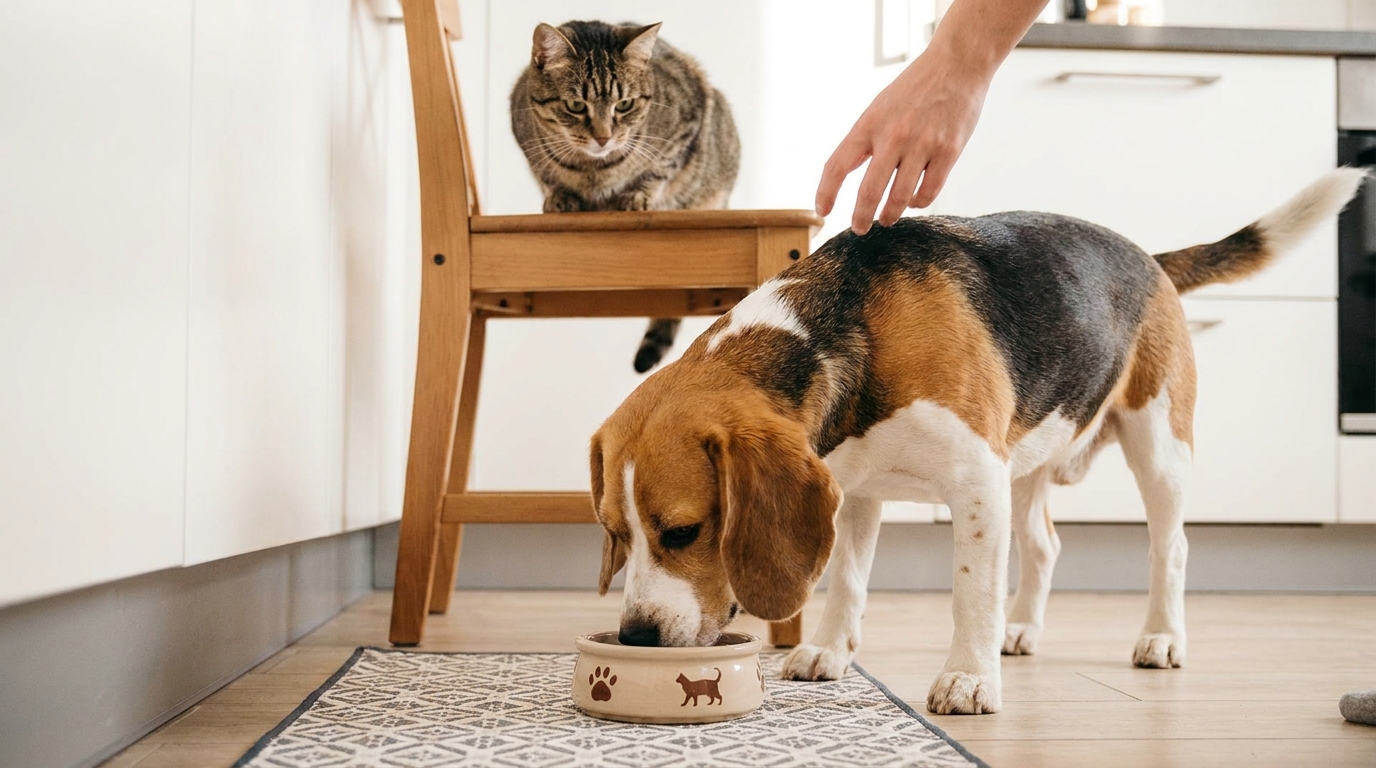
Cat food is rich, not toxic: how much matters for your dog's size, which food types change the plan, and the signs that mean go in now.
Quick answer: Cat food isn't poisonous to dogs; a few bites usually cause mild upset. After a bigger meal, watch 4 days: Pet Poison Helpline says fatty-meal vomiting can start 1-4 days later. One vomit in a bright dog, or a high-risk dog: call a vet today. Refusing food: in-person vet today. Vomiting more than once, belly pain, dry retching, weakness or collapse: emergency vet now. Cat medicine in food: poison line now. Moldy food: vet now.
This article is general information, not a diagnosis. If you think your pet is in danger, go to the nearest emergency animal hospital.
Is cat food dangerous for dogs?
Cat food is not poisonous to dogs, but PetMD notes it is higher in protein and fat than dog food, so the real risks for a dog are an upset stomach and, after a large amount, pancreatitis, an inflammation of the pancreas. PetMD says a small amount will not harm most dogs.
AAFCO's nutrient profiles set these minimums for adult food (dry matter basis):
| Nutrient | Adult dog | Adult cat |
|---|---|---|
| Protein | 18% | 26% |
| Fat | 5.5% | 9% |
These are minimums for complete and balanced food, not what any product contains.
When is a dog that ate cat food an emergency?
Vomiting more than once, blood in the vomit, not keeping water down, a painful, hunched or swollen belly, black or bloody stool, pale or yellow gums, weakness or collapse means a dog that ate cat food needs an emergency vet now, however little it ate.
These signs also mean an emergency vet now:
- Vomiting with lethargy (dull or listless), even once, or the prayer position (front legs down, rear end up).
- Coughing or labored breathing after vomiting, wobbliness, trembling or a seizure.
- Possible bloat: any dog, most often a large, deep-chested one, that dry-retches, paces, drools heavily, breathes fast or has a tight, growing belly after a big raid. The Merck Veterinary Manual calls bloat (GDV) a life-threatening emergency.
- A puppy 6 weeks to 6 months old, or not fully vaccinated, with diarrhea plus vomiting, low energy or no appetite, or a toy-breed puppy that stops eating.
The cat's pill, a medicated treat, or a cat flea or deworming product in or near the food means a poison line now, with the label and the time of the raid ready. ASPCA Animal Poison Control: (888) 426-4435 (a consultation fee may apply). Pet Poison Helpline: (855) 764-7661 (a per-incident fee applies). Both poison lines take calls every day, including holidays.
Moldy or rotten cat food, or food from the trash or compost, means a vet now (an emergency hospital if your clinic is closed), even with no signs, before tremors start; the Merck Veterinary Manual says signs can begin within 1 to 2 hours.
How much cat food is too much for a dog?
No safe amount of cat food is set for dogs: what matters is how much a dog ate compared with its size, so a small dog that emptied the cat's bowl needs a vet call today, while a bright, large dog that licked a dish can be watched for 4 days.
| What happened | Your dog | Next step |
|---|---|---|
| A few bites | Acting normal | Watch 4 days |
| Full bowl, big dog | Bright, eating | Watch 4 days |
| Full bowl, small dog | Seems fine | Call a vet today |
| High-risk dog | Seems fine | Call a vet today |
| Vomited once | Bright, eating | Call a vet today |
| Diarrhea only | Adult, bright | Call a vet today |
| Puppy diarrhea | Still bright | In-person vet today |
| Refuses food | No other signs | In-person vet today |
| Vomiting and diarrhea | Adult dog | In-person vet today |
| Puppy diarrhea | Vomits, dull or not eating | ER now |
| Vomits again | Any dog | ER now |
| Big raid | Dry retching, tight belly | ER now |
| Pills in food | Any dog | Poison line now |
If more than one row fits, follow the most urgent. Each new raid starts a new 4 days, and a quiet stretch is not an all-clear.
How long after eating cat food will a dog get sick?
A dog that ate cat food can show mild upset the same day, but Pet Poison Helpline says vomiting after a fatty meal can start 1 to 4 days later, so watch the dog for 4 days.
The Merck Veterinary Manual lists loss of appetite, vomiting, weakness, belly pain, dehydration and diarrhea as the most common signs of severe pancreatitis, and VCA Animal Hospitals adds fever. Many dogs never hold the prayer position, so don't wait for it. One vomit in a bright dog, a dog that is quieter or eats less, or diarrhea only in an adult dog means call a vet today; refusing food, vomiting with diarrhea, or any puppy with diarrhea means an in-person vet today, and a puppy with diarrhea plus vomiting, low energy or no appetite needs an emergency vet now. The same watch follows any fatty meal; see pancreatitis signs to watch after a dog eats fat.
What should I do in the next few hours?
In the first few hours after a dog eats cat food, take the rest away, note how much is missing and when, check the bowl and label for the cat's medicine or anything that isn't food, and don't make your dog vomit unless a vet or poison line tells you to.
- Never try a home method; see when making a dog throw up helps and when it harms.
- Keep fresh water available; after a big raid, ask a vet how to offer it.
- Keep your dog calm, with no running or play, for the rest of the day after a big raid; the Merck Veterinary Manual says dogs with bloat have often eaten a large meal followed by exercise.
- Ask a vet before fasting or any home remedy, never fast a puppy, a toy breed or a diabetic dog, and give no human medicines. A diabetic dog that vomits, has diarrhea or skips a meal needs a same-day call to the vet who manages its diabetes before any change to meals or medicine.
- Keep your dog on its usual food (see diarrhea after switching food or new treats).
Which dogs are at higher risk after eating cat food?
A dog needs a vet call the same day after eating cat food, even if it seems fine, if it has had pancreatitis before or eats a low-fat prescription diet, is a Miniature Schnauzer or another prone breed, has Cushing's disease, high blood fats, diabetes, extra weight, or kidney or liver disease, or ate a lot for its size.
Pet Poison Helpline says Miniature Schnauzers are especially prone, and the Merck Veterinary Manual adds Yorkshire Terriers, Cocker Spaniels, Dachshunds and Poodles. A 2022 review in the Journal of Veterinary Internal Medicine lists diabetes and being overweight among suggested risk factors, and PetMD flags kidney and liver disease. With diarrhea, toy breeds and seniors need a same-day call and any puppy needs an in-person vet today (see diarrhea after table food or holiday leftovers).
A dog with a liver shunt or on a protein-restricted liver diet that turns wobbly, blind or confused, presses its head against things or has a seizure after the raid needs an emergency vet now; the American College of Veterinary Surgeons says shunt signs may be more noticeable after eating.
Does the type of cat food matter?
The type of cat food matters: fresh wet or dry cat food mostly means a 4-day watch for stomach upset and pancreatitis in a dog, but moldy, raw or medicated food, or a chewed can or pouch, changes what you do next.
| Food type | Main worry | Next step |
|---|---|---|
| Fresh wet or dry | Fat, upset | Watch 4 days |
| Big dry raid | Bloat, fat | Watch 4 days; ER if retching or tight belly |
| Moldy, rotten | Tremors | Vet now, even if fine |
| Raw | Germs | Wash hands; watch 4 days |
| Rx cat diet | Fat, upset | Watch 4 days |
| Medicated or pill | The drug | Poison line now |
| Chewed can or pouch | Cuts, blockage | In-person vet today; lid gone: vet now |
Swallowed pouch or can pieces need an in-person vet today even if your dog seems fine (bring the packaging; at night or on a holiday, that usually means an emergency vet); any vomiting, gagging, drooling, retching, refusing food or belly pain means an emergency vet now, and a missing sharp lid or bleeding from the mouth means a vet now, or an emergency vet if no clinic can see your dog (see what to do after a dog eats foil with food on it).
For raw cat food, the FDA says people who feed raw diets may face a higher risk of Salmonella and Listeria, advises washing hands with soap and water for at least 20 seconds and cleaning and disinfecting bowls and surfaces. The FDA also requires covered pet food makers that use raw poultry or raw milk and other cattle products to plan for H5N1 bird flu, which can make cats severely ill; dogs usually show mild signs. Vomiting, diarrhea or low energy after raw food means an in-person vet today.
Why does my dog keep eating the cat's food?
Many dogs raid the cat bowl because cat food is richer in protein and fat, but a dog that is suddenly much hungrier, or hungry and losing weight, needs a vet check within a few days: diabetes, Cushing's disease, exocrine pancreatic insufficiency (EPI) or a steroid medicine can raise appetite.
A sudden change, not a big appetite alone, is the warning sign (see a dog suddenly eating poop, which covers the same causes). The Merck Veterinary Manual links a bigger appetite with more thirst and urination to Cushing's disease and diabetes, and lists it as a side effect of steroid medicine; don't change a steroid without the vet who prescribed it. A dog that is drinking, peeing and eating more and losing weight, and now vomits, refuses food or is weak, needs an emergency vet now.
How do I keep my dog out of the cat food?
To keep a dog out of cat food, feed the cat where the dog cannot reach: up high if your dog can't climb or jump there, behind a gate or door gap the dog is too big to fit through, in a closed room, or from a microchip feeder, and pick up leftovers after each meal.
PetMD notes that a gap or plain cat door fails for a dog about the cat's size; an electronic cat door keyed to the cat's tag, or a crate for the dog at mealtimes, can help. Scoop the litter box daily and keep it out of reach.
When a live video visit can help
RexVet, a nonprofit online vet service (a 501(c)(3)), serves pets located in Florida, New York and Virginia by video visit. A video visit fits when your dog ate plain, fresh cat food with no medicine, mold, packaging or raw-food illness, has vomited no more than once or has diarrhea only, and is still bright, eating, keeping water down and not sore in the belly. It also fits a higher-risk dog that seems fine so far, such as a Miniature Schnauzer, or a dog that keeps raiding the cat bowl or is suddenly hungrier.
In a $64.99 live video visit, a licensed RexVet vet, a veterinarian licensed in your pet's state (Florida, New York or Virginia, with your pet located there during the visit), reviews what was eaten, how much, when, and your dog's size and history. The veterinarian looks at your dog's posture, belly and gums on camera, tells you whether your dog needs to be seen in person, and helps you set up the 4-day watch and a feeding plan that keeps the dog and cat apart, with a clear point to go in. Live slots run about 8 AM to 11 PM ET. 28% of RexVet video visits started between 6 PM and 11 PM in the pet owner's local time. 90% of RexVet video visits took place the same day they were booked. Holiday availability isn't confirmed, so check open slots when you book. Book a video visit.
When it doesn't fit: vomiting more than once, blood in the vomit, black or bloody stool, not keeping water down, belly pain, pale gums, weakness or collapse, vomiting with lethargy even once, trembling or a seizure, coughing or labored breathing, dry retching or a tight belly after a big raid, a puppy with diarrhea plus vomiting, low energy or no appetite, or any vomiting after swallowed packaging means an emergency vet now; the cat's medicine in the food, a poison line now; moldy food or a missing sharp lid, a vet now, even with no signs; and swallowed packaging, refusing food, vomiting with diarrhea, illness after raw food or any puppy with diarrhea, an in-person vet today.
Limits: a video visit can't confirm or rule out pancreatitis, bloat, diabetes or Cushing's disease, feel the belly, make your dog vomit, remove swallowed packaging, run blood or urine tests or X-rays, or give IV fluids and hospital care. The veterinarian won't direct home vomiting over video.
No prescription is promised; any medicine is the veterinarian's decision after the visit, within the state and federal rules in the last question below. RexVet isn't a pharmacy: if the veterinarian prescribes and you ask RexVet to send the prescription to an outside pharmacy, a pharmacy transfer fee applies.
Need an Expert Opinion on This Topic?
Book a video visit with a licensed vet, evenings and weekends included
See open timesFrequently Asked Questions
Can cat food give a dog pancreatitis?
Yes, a large amount can. PetMD says a lot of cat food can cause an upset stomach or pancreatitis, because it is higher in protein and fat. Watch for 4 days; vomiting more than once, belly pain, weakness or collapse means an emergency vet now.
Can cat food kill a dog?
Rarely. PetMD says a dog can die from eating cat food, for example from severe pancreatitis, but that it is very unlikely. Pet Poison Helpline says the outlook is good when pancreatitis is treated early and appropriately, so don't wait it out: vomiting more than once, belly pain, weakness or collapse means an emergency vet now.
My dog ate cat food and threw up once. What should I do?
Call a vet today if your dog is still bright and eating; if it vomits again, go to an emergency vet now. Vomiting with lethargy, even once, also means an emergency vet now, and refusing food or vomiting with diarrhea means an in-person vet today (a puppy with vomiting and diarrhea needs an emergency vet now). If pouch or can pieces may have been swallowed, any vomiting means an emergency vet now. Keep watching for 4 days.
Is wet cat food worse for dogs than dry cat food?
Not by itself. What matters most is how much your dog ate for its size, and whether the food was moldy, raw or medicated. Wet food that turned moldy or rotten means a vet now, and dry retching or a tight belly after a big dry-food raid means an emergency vet now.
Can I give my dog cat food if I run out of dog food?
Not without asking a vet first. PetMD says to feed cat food to a dog only if a veterinarian has advised it, and warns it is especially risky for dogs on a low-fat diet or with past pancreatitis, high blood fats, or kidney or liver disease. Never use it as a long-term food.
Should I make my dog throw up after it ate cat food?
No. Don't make your dog throw up unless a vet or poison line tells you to, and never try a home method. If the cat's medicine or a flea or deworming product was in the food, call a poison line now; the poison line or vet decides whether vomiting is safe.
Can I talk to a vet online if my dog ate cat food?
Yes, for a dog located in Florida, New York or Virginia that ate plain, fresh cat food and is still bright. Your dog should also be eating, keeping water down and not sore in the belly, with no more than one vomit, no blood in the vomit or stool, and no medicine, mold or packaging involved. A veterinarian licensed in your pet's state can review what was eaten, check posture, belly and gums on camera, set up the 4-day watch and say whether your dog needs to be seen in person; blood tests, X-rays, IV fluids and any check for pancreatitis or bloat need an in-person vet. No prescription is promised. In Florida, a video-only prescription is limited to FDA-approved animal drugs used as labeled, for up to 14 days (1 month for products labeled solely for flea and tick control), with no renewal without an in-person exam; human-labeled, controlled and compounded anti-infective drugs need an in-person exam first. Federal rules require an in-person exam before any vet prescribes a human or off-label drug. Virginia allows an electronic exam, and New York's rules for veterinary video care, including prescribing, are still unsettled, so a visit there may cover less.
FAQs
Can cat food give a dog pancreatitis?
Yes, a large amount can. PetMD says a lot of cat food can cause an upset stomach or pancreatitis, because it is higher in protein and fat. Watch for 4 days; vomiting more than once, belly pain, weakness or collapse means an emergency vet now.
Can cat food kill a dog?
Rarely. PetMD says a dog can die from eating cat food, for example from severe pancreatitis, but that it is very unlikely. Pet Poison Helpline says the outlook is good when pancreatitis is treated early and appropriately, so don't wait it out: vomiting more than once, belly pain, weakness or collapse means an emergency vet now.
My dog ate cat food and threw up once. What should I do?
Call a vet today if your dog is still bright and eating; if it vomits again, go to an emergency vet now. Vomiting with lethargy, even once, also means an emergency vet now, and refusing food or vomiting with diarrhea means an in-person vet today (a puppy with vomiting and diarrhea needs an emergency vet now). If pouch or can pieces may have been swallowed, any vomiting means an emergency vet now. Keep watching for 4 days.
Is wet cat food worse for dogs than dry cat food?
Not by itself. What matters most is how much your dog ate for its size, and whether the food was moldy, raw or medicated. Wet food that turned moldy or rotten means a vet now, and dry retching or a tight belly after a big dry-food raid means an emergency vet now.
Can I give my dog cat food if I run out of dog food?
Not without asking a vet first. PetMD says to feed cat food to a dog only if a veterinarian has advised it, and warns it is especially risky for dogs on a low-fat diet or with past pancreatitis, high blood fats, or kidney or liver disease. Never use it as a long-term food.
Should I make my dog throw up after it ate cat food?
No. Don't make your dog throw up unless a vet or poison line tells you to, and never try a home method. If the cat's medicine or a flea or deworming product was in the food, call a poison line now; the poison line or vet decides whether vomiting is safe.
Can I talk to a vet online if my dog ate cat food?
Yes, for a dog located in Florida, New York or Virginia that ate plain, fresh cat food and is still bright. Your dog should also be eating, keeping water down and not sore in the belly, with no more than one vomit, no blood in the vomit or stool, and no medicine, mold or packaging involved. A veterinarian licensed in your pet's state can review what was eaten, check posture, belly and gums on camera, set up the 4-day watch and say whether your dog needs to be seen in person; blood tests, X-rays, IV fluids and any check for pancreatitis or bloat need an in-person vet. No prescription is promised. In Florida, a video-only prescription is limited to FDA-approved animal drugs used as labeled, for up to 14 days (1 month for products labeled solely for flea and tick control), with no renewal without an in-person exam; human-labeled, controlled and compounded anti-infective drugs need an in-person exam first. Federal rules require an in-person exam before any vet prescribes a human or off-label drug. Virginia allows an electronic exam, and New York's rules for veterinary video care, including prescribing, are still unsettled, so a visit there may cover less.
Medically Reviewed
Reviewed by Dr. Tiffany Delacruz, DVM — licensed veterinarian and CEO of RexVet. Last reviewed November 15, 2026.
Content is for informational purposes and does not replace professional veterinary advice.
Chief Executive Officer · Licensed Veterinarian
Dr. Delacruz is a licensed Doctor of Veterinary Medicine specializing in preventive care and veterinary telehealth. She reviews all health content on RexVet to ensure accuracy and clinical relevance.
Sources & References
- · American Veterinary Medical Association — Telehealth Guidelines
- · AVMA — Pet Care Resources
- · U.S. FDA — Animal & Veterinary