
Cat Not Eating After Another Cat Died? Grief or Illness?
By RexVet Team | Reviewed by Dr. Tiffany Delacruz, DVM
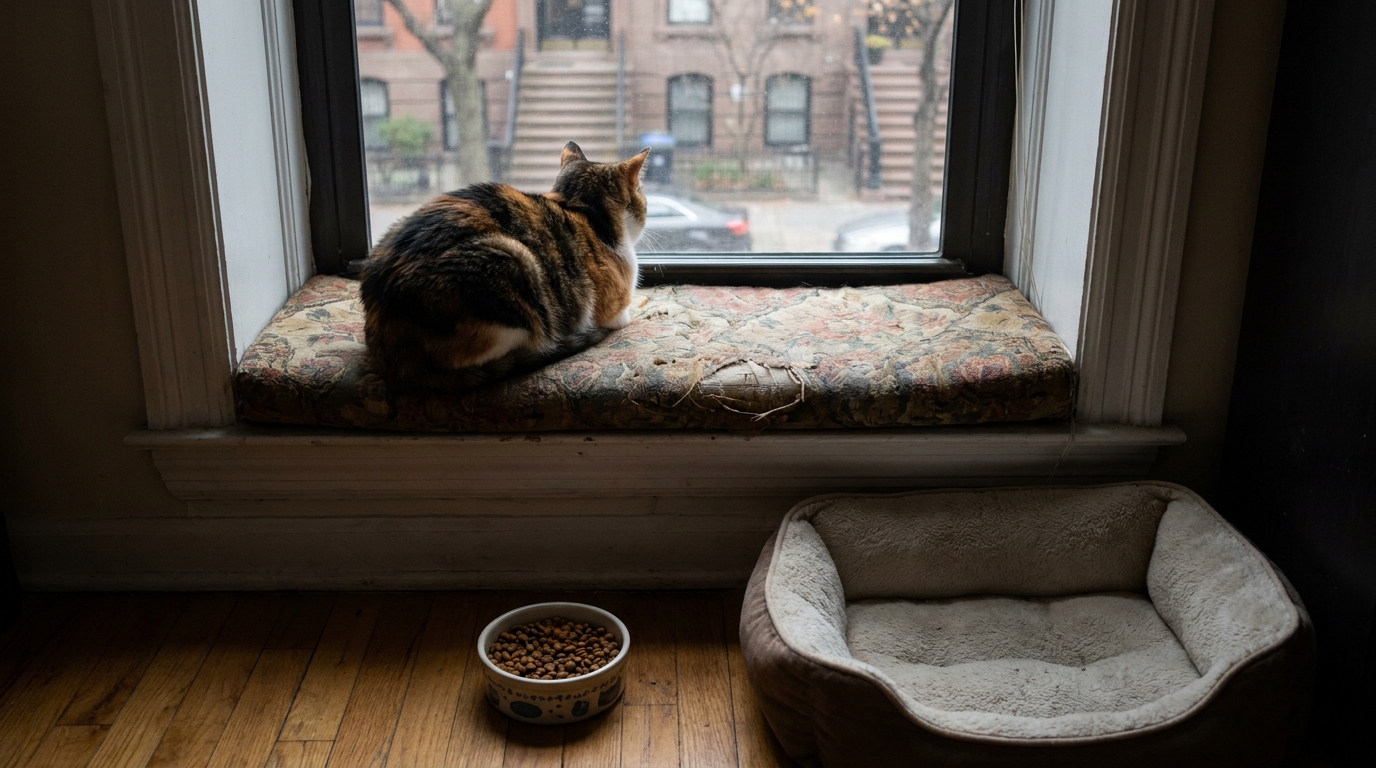
Cat not eating after another cat died? Grief can do that, but a cat that skips food for a day needs a vet, and yellow gums mean go now.
Go to an emergency vet now if your cat has yellow gums, ears or eye whites, keeps vomiting, drools and backs away from food, can't hold up its head, breathes with effort, collapses, or strains in the litter box with little or no urine; if the cat that died was poisoned, call a poison line on the way.
We're sorry about your loss. Here is how to tell ordinary mourning from a cat that needs a vet, starting tonight.
Cat Not Eating After Another Cat Died: Is It Grief?
Yes, cats mourn, and eating less is one of the signs. VCA Animal Hospitals describes grieving cats this way: "They may become depressed and listless." It adds, "They may have a decreased appetite and decline to play," and "They may hide under the bed, choosing to be alone even more than usual for cats."
VCA reports that in the ASPCA's 1996 Companion Animal Mourning Project, "46% of cats experienced a decreased appetite following the loss of a feline companion." Cornell's Feline Health Center has seen it too: "We've even seen cats who have lost their appetites after suffering the loss of a feline companion."
International Cat Care describes grief in stages. At first a cat may be "more vocal, pacing and searching the house." Later it may pull back: "Some cats will even hide." The same source notes that caregivers report bonded cats that rested close together and groomed each other being affected more strongly.
"There's no set period for grieving in cats," International Cat Care says. Grief can explain a quieter cat. It doesn't explain away a cat that has stopped eating.
Emergency Signs: Go to an ER Now, Not a Video Call
Don't put any of these down to grief. If your cat shows even one of them, go to an emergency vet now:
- Yellow gums, ears or eye whites
- Vomiting that keeps coming back
- Drooling and backing away from the bowl
- Can't hold up its head
- Labored or open-mouth breathing
- Collapse
- Straining in the litter box with little or no urine
Several of these can be signs of fatty liver disease. The Merck Veterinary Manual lists "Jaundice or pale mucous membranes, excessive drooling, enlarged liver, inability to hold up the head" among them. VCA describes jaundice as "a yellow color in the whites of the eyes or in the skin."
If the cat that died may have been poisoned, or died suddenly after possibly eating something toxic, your surviving cat may have been exposed too. The ASPCA lists Easter and tiger lilies among plants that are toxic to cats, so if sympathy flowers in your home include lilies, keep them away from your cat. If your cat may have chewed or touched a lily, call a poison line and go to an emergency vet now; don't wait for signs. The Merck Veterinary Manual also lists rodent poisons among substances that are toxic to the liver. Call ASPCA Animal Poison Control at (888) 426-4435 or Pet Poison Helpline at (855) 764-7661 (both 24/7; a fee may apply) and head to an emergency vet. Don't wait for signs, and don't try any home treatment.
The pet emergency checklist for dog and cat owners covers other signs that can't wait.
Why a Grieving Cat Can't Safely Skip Meals
Cornell's Feline Health Center warns, "Whatever its cause, anorexia can have a severe impact on a mature cat's health if it persists for as little as 24 hours." Anorexia here simply means not eating, and Cornell adds that "the condition is never the result of a cat's simply deciding not to eat."
The biggest worry is fatty liver, or hepatic lipidosis. The Merck Veterinary Manual says, "Hepatic lipidosis is the most common cause of liver disease in cats." Among the things that can set off the appetite loss behind it, Merck lists "other stressful events (such as moving, boarding, introduction of a new pet, getting lost, or death of other pets or owners)." Your household's loss is on that list.
VCA explains that when fat is broken down quickly to feed a cat that isn't eating, it can overwhelm the liver's ability to process it. A cat with fatty liver usually "has recently gone through a period of anorexia (little or no eating) for three to four consecutive days," VCA says, and "The chances of hepatic lipidosis occurring are greater if the cat was overweight or obese before the anorexia began."
Don't treat those days as a safe waiting period. A heavy cat, a senior cat or a cat with a known health problem should not be left to wait out its grief, and any cat that has eaten little or nothing for a day needs a vet.
Grief or Illness? What to Check Tonight
International Cat Care puts it plainly: "We shouldn't assume that any signs are purely due to emotional causes."
Start a short log:
- When your cat last ate a real meal, and roughly how much
- Whether it is drinking
- Any vomiting or diarrhea
- What is, or isn't, in the litter box
- Whether it is hiding or still coming to greet you
- Whether it has stopped grooming
Next, check color. In good light, gently lift the lip or look inside the ear flap, and don't force the mouth open. Pale or yellow gums mean going to the emergency vet now, and so does any sign on the emergency list above. If you can't tell what you're seeing, go to an emergency vet now.
Think about what the other cat died of. If it was an infectious illness, or the cause was never found, tell the vet, because your cats shared bowls, litter and grooming.
Finally, if none of the emergency signs apply, film a short clip of your cat walking up to (or turning away from) its bowl and walking across the room. This guide explains how to upload pet photos and videos for an online vet review.
How to Help a Grieving Cat Eat Again, Gently
Keep the days predictable. International Cat Care advises, "Try to maintain the general routines of the house as much as possible," and says "don't be too quick to remove the deceased cat's favourite bedding."
- Feed at the usual times, in a quiet spot away from household traffic.
- Offer your cat's usual food, fresh.
- Stay nearby while it eats, without hovering.
- If your cat goes outdoors and seems to be searching, keep it inside for now.
Let your cat come to you. International Cat Care suggests you "make yourself available to your cat, so they can initiate contact with you if that's what they want."
Don't push food into its mouth. Cornell's Feline Health Center says, "We've gotten away from the idea of forcing food into a cat's mouth. That can make a cat's aversion to food even worse."
Don't give your cat any human medicine, home remedy or over-the-counter product to make it eat. A veterinarian first has to find out why it stopped eating.
What a RexVet Online Vet Can and Cannot Do for a Grieving Cat
If you see or suspect any emergency sign above, or can't tell, skip the call and go to an ER now. For a cat without those signs, a video visit can help you decide what comes next.
On camera, the vet can judge body condition and alertness and look for emergency signs you may have missed; if they see one, they will send you to an ER now. The vet can go through your eating log, the litter box and what the other cat died of, and separate likely grief from signs of illness. Then the vet can help you choose between the ER now, an in-person exam and bloodwork soon, or a home feeding-and-routine plan with a clear recheck point.
A video vet cannot weigh your cat, feel its belly or liver, run bloodwork or ultrasound, or place a feeding tube, so if those are needed you will be sent for an in-person exam.
If the veterinarian decides medication is appropriate, they can prescribe where state rules allow. In Florida, a veterinarian who has seen your pet only by video may prescribe only FDA-approved animal drugs used as labeled, for up to 14 days (1 month for flea-and-tick-only products), and cannot renew without an in-person exam.
RexVet's veterinarians are licensed in Florida, New York and Virginia and are available 24/7; a video visit is $64.99. If your cat has no emergency signs, you can book a RexVet video visit tonight.
How a Vet Checks a Cat That Won't Eat in Person
Cornell's Feline Health Center says, "A cat that is not eating deserves to have a full veterinary workup—a thorough physical exam followed by any lab work and imaging that's indicated by the exam." That exam includes "a close look at the patient's teeth and gums," because a sore mouth can also put a cat off its food.
For fatty liver, the Merck Veterinary Manual says, "Veterinarians diagnose hepatic lipidosis based on a cat's history, physical examination findings, blood tests, and abdominal ultrasonography." Your eating log is part of that history, so bring it.
There is real hope here: VCA says fatty liver "is treatable with aggressive nutritional support until a normal appetite returns." That support happens under a vet's care.
Should You Get Another Cat to Help?
International Cat Care says "replacing a familiar long-term and predictable companion with a young, boisterous kitten isn't usually an appropriate substitute," and VCA advises, "don't rush to find a replacement."
VCA warns that a new pet may add more stress to an already stressful situation, and Merck lists the introduction of a new pet among the stressful events that can set off the appetite loss behind fatty liver. Give your cat time, and let it set the pace.
If you do bring a new cat home later, the guide to an older cat not eating after a new kitten explains what a new arrival can do to an older cat's appetite.
When to Be Seen in Person in Florida, New York or Virginia
Yellow gums or eyes, vomiting that keeps coming back, or a cat too weak to hold up its head means the emergency vet now, not tomorrow (see the full list above).
Without those signs, your cat still needs a hands-on exam and bloodwork soon, not just time, if:
- It has eaten little or nothing for a day
- It is losing weight
- It is overweight or a senior and has stopped eating
- It already has a known health problem
- The cat that died had an infectious illness, or no one found the cause (if it died suddenly or may have been poisoned, call a poison line and go to an emergency vet now instead)
International Cat Care's advice is direct: "If your cat has stopped eating, or is showing any signs of illness, contact your veterinary team as soon as possible." In Florida, a telehealth vet must give you "the contact information for at least one physical veterinary clinic in the vicinity of the patient's location," so a video visit can point you to hands-on care nearby.
If none of the emergency signs above apply, a vet can go over your eating log and video with you and tell you where to turn next. RexVet's veterinarians are licensed in Florida, New York and Virginia, they see pets around the clock, and for $64.99 you can book a video visit now.
Frequently Asked Questions
How long can a grieving cat go without eating before it's dangerous?
Cornell warns that anorexia "can have a severe impact on a mature cat's health if it persists for as little as 24 hours." VCA notes that cats with fatty liver have usually gone "three to four consecutive days" with little or no food. Don't use that as a waiting period: a cat off food for a day needs a vet. If your cat has yellow gums, ears or eye whites, keeps vomiting, drools and backs away from food, can't hold up its head, breathes with effort, collapses or strains to urinate, go to an emergency vet now.
How long do cats grieve the loss of another cat?
"There's no set period for grieving in cats," according to International Cat Care. Some cats move through it in a matter of days, while a few stay unsettled for weeks or even months. If your cat has stopped eating, call a vet instead of waiting for grief to run its course. If it also has yellow gums, ears or eye whites, keeps vomiting, drools and backs away from food, can't hold up its head, breathes with effort, collapses or strains to urinate, go to an emergency vet now.
Should I let my cat see the body of the cat that died?
International Cat Care says that if there is no specific risk of disease transmission and it is practical, "there is no harm in doing so," though some cats react badly to unfamiliar smells on the body. If the other cat died of an infection or an unknown cause, ask your vet first. If it may have been poisoned, call ASPCA Animal Poison Control or Pet Poison Helpline and take your surviving cat to an emergency vet now, even if it seems fine.
Will a new kitten help my cat start eating again?
Usually not. International Cat Care says a young, boisterous kitten "isn't usually an appropriate substitute" for a long-term companion, and VCA advises, "don't rush to find a replacement." A new arrival is one more stress for a cat that is already off its food. A cat that has stopped eating needs a vet, and if it has yellow gums, ears or eye whites, keeps vomiting, drools and backs away from food, can't hold up its head, breathes with effort, collapses or strains to urinate, go to an emergency vet now.
Can I give my cat something to make it eat?
Not on your own. Skip human medicines, home remedies and anything else meant to coax food into your cat. The reason it stopped eating has to be found first, so call a vet if your cat has eaten little or nothing for a day. If it has yellow gums, ears or eye whites, keeps vomiting, drools and backs away from food, can't hold up its head, breathes with effort, collapses or strains to urinate, go to an emergency vet now.
FAQs
How long can a grieving cat go without eating before it's dangerous?
Cornell warns that anorexia "can have a severe impact on a mature cat's health if it persists for as little as 24 hours." VCA notes that cats with fatty liver have usually gone "three to four consecutive days" with little or no food. Don't use that as a waiting period: a cat off food for a day needs a vet. If your cat has yellow gums, ears or eye whites, keeps vomiting, drools and backs away from food, can't hold up its head, breathes with effort, collapses or strains to urinate, go to an emergency vet now.
How long do cats grieve the loss of another cat?
"There's no set period for grieving in cats," according to International Cat Care. Some cats move through it in a matter of days, while a few stay unsettled for weeks or even months. If your cat has stopped eating, call a vet instead of waiting for grief to run its course. If it also has yellow gums, ears or eye whites, keeps vomiting, drools and backs away from food, can't hold up its head, breathes with effort, collapses or strains to urinate, go to an emergency vet now.
Should I let my cat see the body of the cat that died?
International Cat Care says that if there is no specific risk of disease transmission and it is practical, "there is no harm in doing so," though some cats react badly to unfamiliar smells on the body. If the other cat died of an infection or an unknown cause, ask your vet first. If it may have been poisoned, call ASPCA Animal Poison Control or Pet Poison Helpline and take your surviving cat to an emergency vet now, even if it seems fine.
Will a new kitten help my cat start eating again?
Usually not. International Cat Care says a young, boisterous kitten "isn't usually an appropriate substitute" for a long-term companion, and VCA advises, "don't rush to find a replacement." A new arrival is one more stress for a cat that is already off its food. A cat that has stopped eating needs a vet, and if it has yellow gums, ears or eye whites, keeps vomiting, drools and backs away from food, can't hold up its head, breathes with effort, collapses or strains to urinate, go to an emergency vet now.
Can I give my cat something to make it eat?
Not on your own. Skip human medicines, home remedies and anything else meant to coax food into your cat. The reason it stopped eating has to be found first, so call a vet if your cat has eaten little or nothing for a day. If it has yellow gums, ears or eye whites, keeps vomiting, drools and backs away from food, can't hold up its head, breathes with effort, collapses or strains to urinate, go to an emergency vet now.
Medically Reviewed
Reviewed by Dr. Tiffany Delacruz, DVM — licensed veterinarian and CEO of RexVet. Last reviewed September 30, 2026.
Content is for informational purposes and does not replace professional veterinary advice.
Chief Executive Officer · Licensed Veterinarian
Dr. Delacruz is a licensed Doctor of Veterinary Medicine specializing in preventive care and veterinary telehealth. She reviews all health content on RexVet to ensure accuracy and clinical relevance.
Sources & References
- · American Veterinary Medical Association — Telehealth Guidelines
- · AVMA — Pet Care Resources
- · U.S. FDA — Animal & Veterinary
Need an Expert Opinion on This Topic?
Connect with a certified vet via video call in minutes
Talk to Vet Now