
Bladder Stones and Crystals in Dogs: Signs, Types and Diet
By RexVet Team | Reviewed by Dr. Tiffany Delacruz, DVM
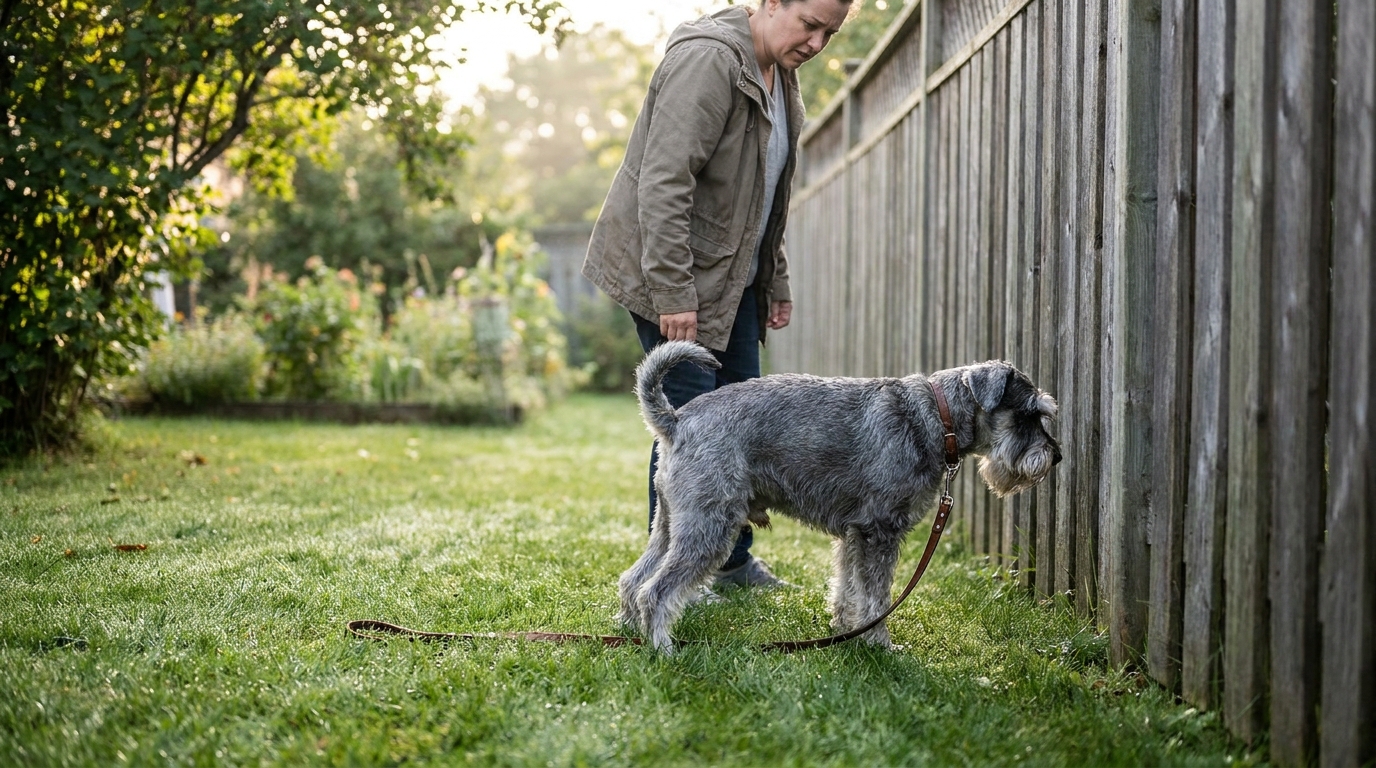
How to spot bladder stones in dogs, what crystals on a urine test mean, which stones a diet can dissolve, and when straining is an emergency.
Quick answer: Bladder stones in dogs usually cause frequent small pees, straining, accidents and blood in the urine, the same signs as a UTI, and some dogs show no signs. Struvite stones can often be dissolved with a prescription diet, while calcium oxalate stones cannot and usually need removal. A dog straining with little or no urine, especially a male dog, may be blocked and needs an emergency vet now.
This article is general information, not a diagnosis. If you think your pet is in danger, go to the nearest emergency animal hospital.
Emergency: A Dog That Cannot Pee
A dog that strains with little or no urine, cries while trying to pee, or has a hard, swollen or painful belly may have a stone blocking the urethra and needs an emergency vet now. The Merck Veterinary Manual says the most common cause of a urinary blockage is a stone lodged in the urethra, especially in male dogs, but female dogs can block too. Early on, a blocked dog may pass only drops or a weak stream, and if you can't tell whether your dog is straining to pee or to poop, treat it as a possible blockage.
Merck warns that a complete blockage can quickly cause dangerous changes in the blood and can lead to death if it is not treated promptly, so do not wait to see if it passes. Cornell's Riney Canine Health Center adds that a blockage can cause vomiting, belly pain, lethargy, dehydration and possibly a burst bladder, so a dog that was straining and then seems more tired, vomits or has a swelling belly needs an emergency vet now, even if the straining has stopped.
| Sign | What it may mean | How fast |
|---|---|---|
| Straining, little or no urine | Blocked urethra | ER now |
| Drops or a weak stream | Partial blockage | ER now |
| Crying while trying to pee | Blockage, pain | ER now |
| Hard, swollen or painful belly | Overfull bladder, blockage | ER now |
| Clots, or dark red, brown or cola urine | Heavy bleeding or cell damage | ER now |
| Pale or yellow gums, weakness, collapse | Serious illness | ER now |
| Repeated vomiting | Blockage, kidney harm | ER now |
| One vomit, tired or not eating, peeing normally | Kidney infection or stone | Same day |
| Blood in urine, acting normal | UTI, stones, crystals | Within 24 hours |
| Frequent small pees, accidents | UTI or stones | Vet in 1-2 days |
Stop at the first row that fits your dog. "Within 24 hours" and "1-2 days" mean an in-person urine test, and they apply only when no ER sign is present. This guide to which urinary signs mean the ER now uses the same timing.
While you get your dog to care, do not squeeze or press the bladder, give human pain relievers or leftover antibiotics, limit water, add salt to food, or wait to see whether a stone passes.
Common Signs of Bladder Stones in Dogs
Frequent small pees, straining, blood in the urine and accidents in the house are the common signs of bladder stones in dogs, and some dogs show no signs at all. Cornell's Riney Canine Health Center names those four as the most common signs.
These are also UTI signs, and the two often go together. Cornell lists licking the genitals as a UTI sign and bladder stones as a UTI risk factor; the guide to a dog licking its private area a lot covers that overlap. Signs that return after antibiotics need a urine culture plus an ultrasound or X-rays, not just more antibiotics.
RexVet's study of its video visits found: "After skin, urinary health was the most-selected specific concern, named in 14% of RexVet visits. That is more than vomiting, diarrhea and digestive problems combined (8%)."
Crystals Versus Stones: What Urine Results Mean
Crystals in a dog's urine sample are not the same as bladder stones: the Merck Veterinary Manual says crystals alone do not mean a dog has stones, and crystals can form in a sample after it is collected. Merck adds that stones can exist with no crystals.
Researchers at the Minnesota Urolith Center found crystals can form in a urine sample that is refrigerated or left to sit, and recommend testing urine within 60 minutes of collection. Bring a home-collected sample in promptly and ask the clinic how to store it. One exception in dogs: Merck says cystine crystals do point to a risk of cystine stones.
Types of Bladder Stones and Their Causes
Struvite and calcium oxalate are the two most common bladder stones in dogs, and the stone type decides whether a diet can dissolve them. The Merck Veterinary Manual names urate as the third most common type, and says most struvite stones in dogs form during a urinary infection with Staphylococcus or Proteus bacteria.
| Stone type | Often linked to | Can it dissolve? |
|---|---|---|
| Struvite | Urine infection | Often |
| Calcium oxalate | Small breeds, older dogs | No |
| Urate | Dalmatians, liver shunts | Sometimes |
| Cystine | Inherited, intact males | Sometimes |
In dogs, dissolving struvite usually needs antibiotics for the urine infection as well as the diet. Urate and cystine stones do not dissolve on diet alone: they need a prescription medicine, with a strict diet for urate stones and usually for cystine stones, and urate stones do not dissolve while a liver shunt is uncorrected.
Merck says urate stones come from a gene mutation found in Dalmatians, some English Bulldogs and Black Russian Terriers, or from a liver shunt, so urate stones in other breeds call for liver tests. Cystine stones come from inherited cystinuria, in breeds such as English Bulldogs, Mastiffs, French Bulldogs and Newfoundlands, mostly in younger, intact males.
Which Dogs Are at Higher Risk?
The Merck Veterinary Manual says small breeds such as Miniature Schnauzers, Shih Tzus, Bichon Frises, Yorkshire Terriers and Lhasa Apsos are more often affected by calcium oxalate stones, and Dalmatians are prone to urate stones. Merck's list also includes Chihuahuas, and calcium oxalate stones tend to form in middle-aged to older dogs.
Female dogs get more UTIs, and a UC Davis study found they are more prone to struvite stones. Male dogs are more likely to become blocked. Merck recommends neutering male dogs that form cystine stones, because some cystinuria depends on male hormones.
How Vets Diagnose Bladder Stones
Finding bladder stones in a dog takes a urinalysis, a urine culture and X-rays or an ultrasound, so the diagnosis happens at a clinic in person. Cornell's Riney Canine Health Center also lists analysis of the stone itself, and says a vet may be able to feel bladder stones during the exam.
The Merck Veterinary Manual says urate stones, and occasionally cystine stones, may not show on plain X-rays, so an ultrasound or contrast X-ray may be needed. Until a removed stone is analyzed, the stone type is only a best guess. The ACVIM consensus statement says a urine culture should come before antibiotics and that urine pH checks are no substitute for a culture. Home urine pH strips cannot diagnose or track a stone or an infection.
For calcium oxalate stones, Merck says the workup should look for conditions that raise urine calcium, such as Cushing's disease. Tell the veterinarian about any change in how much your dog drinks; this guide to a dog drinking too much water explains why that matters.
Dissolving Stones With a Prescription Diet
Struvite stones in dogs can often be dissolved with a prescription diet plus antibiotics for the urine infection, while calcium oxalate stones cannot be dissolved and are removed when they cause signs or could cause a blockage. The Merck Veterinary Manual says no other food, including treats, should be fed during dissolution, and fresh water should always be available.
Merck lists a urethral blockage, high blood fats and pancreatitis as reasons not to use a dissolving diet, so it starts only after a diagnosis and bloodwork, with a recheck after about 4 weeks. Merck says complete dissolution takes 1-2 months on average but can take longer. Keep feeding the diet until the veterinarian confirms on imaging that the stones are gone; do not stop when signs fade.
A stone can still lodge in the urethra while a dog is on a dissolving diet, so a dog straining with little or no urine during the diet needs an emergency vet now.
How Bladder Stones Are Removed in Dogs
Bladder stones in dogs that cannot be dissolved, such as calcium oxalate, are flushed out, broken up or removed with surgery, and the Merck Veterinary Manual prefers non-surgical methods when possible, because bladder stitches raise the risk of new stones. The ACVIM consensus recommends:
- Stones small enough to pass the urethra: dissolution, voiding urohydropropulsion (flushing them out of a saline-filled bladder under anesthesia) or basket retrieval.
- Stones too large to pass: dissolution, laser lithotripsy or percutaneous cystolithotomy instead of open bladder surgery.
ACVIM notes that not every clinic offers every minimally invasive method, so it is reasonable to ask which options fit your dog or get a second opinion before a planned surgery; a dog with emergency signs should not wait for one. After any removal, ask for X-rays to confirm every stone is out; leftover stones are a main reason struvite comes back. A dog that strains with little or no urine after a stone-removal procedure needs an emergency vet now.
Preventing Bladder Stones From Coming Back
More water, the right diet for the stone type and regular rechecks lower the chance that bladder stones come back in a dog, though calcium oxalate stones often return anyway. The ACVIM consensus calls high-moisture food one of the cornerstones of prevention for every stone type except infection-related struvite.
- More moisture: wet food, or water added to dry food. Never limit your dog's water.
- More potty breaks: Merck lists urine volume and how often a dog urinates among stone risk factors.
- Rechecks: Merck advises X-rays every 3-6 months for dogs at high risk of calcium oxalate stones.
For infection-related struvite, ACVIM says prevention mainly means keeping the infection gone. What prevents one stone type can encourage another, so do not add supplements, acidifiers or urinary products without the veterinarian, and never add salt to make a dog drink.
Cranberry has not been shown to prevent or treat urinary infections in dogs, and it does not replace a urine test; ask the veterinarian before giving any cranberry supplement to a dog with a history of bladder stones or on a prescription urinary diet. The guide to cranberries and UTIs in dogs has more.
Cats: Crystals and Urinary Blockage
In cats, urethral plugs and crystals are a leading cause of urinary blockage in males, and a male cat straining in the litter box with little or no urine is an emergency. The Merck Veterinary Manual warns that owners may mistake a blocked cat for a constipated one. Cornell's Feline Health Center calls urethral obstruction an absolute emergency and says male cats are at greater risk because their urethra is longer and narrower. For cats, Merck also says struvite crystals in fresh urine that are heavy, persistent or come with urinary signs should be managed with a diet the veterinarian chooses.
When a Video Visit Helps
RexVet, a nonprofit online vet service, can help by video once a dog's bladder stones or crystals have been diagnosed, or when a dog has mild urinary signs but is still peeing normal amounts. RexVet serves pets located in Florida, New York and Virginia by video visit, and your dog needs to be in one of those states during the visit.
A live video visit with a licensed RexVet vet is $64.99, and live slots run about 8 AM to 11 PM ET, every day. Book a video visit.
The veterinarian can go over the urine, culture and imaging reports you share, explain the likely stone type and the usual next step, and discuss water intake and recheck timing. A video visit is also a practical way to get a second opinion on a surgery plan, based on the records and images you share.
A dog with new urinary signs and no emergency sign still needs an in-person urine test: within 24 hours for blood in the urine, or within 1-2 days for frequent small pees, accidents or strong-smelling urine (today if your dog is also vomiting, not eating or acting sick). A video visit can help you plan that visit but does not replace it. The diagnosis also needs a culture and imaging at a clinic, and that clinic starts and rechecks any dissolving diet. For a dog on a long-term prevention diet chosen after a stone analysis and up to date on in-person rechecks, the veterinarian can review the records and decide whether renewing that diet is appropriate.
No prescription is promised; any medicine is the veterinarian's decision after the visit. In Florida, a video-only prescription is limited to FDA-approved animal drugs used on-label for up to 14 days (1 month for products labeled only for fleas and ticks), with no renewal without an in-person exam and no human-labeled, controlled or compounded anti-infective drugs. In every state, federal rules require an in-person exam before a veterinarian uses a human drug or uses a drug off-label, and many medicines for bladder stones are human drugs. Virginia allows the exam to be electronic; New York's rules for prescribing after a video-only visit are still unsettled. A pharmacy transfer fee may apply if RexVet sends a prescription to an outside pharmacy.
The one-time $120 Family Plan covers 4 visits over 12 months for every pet in the home and never renews. It can cover follow-up questions between the in-person rechecks a dissolving diet needs.
Not a fit for video: straining with little or no urine, crying while trying to pee, clots or dark red, brown or cola-colored urine, pale gums, weakness or collapse, a hard, swollen or painful belly, repeated vomiting or vomiting with any of these signs, or any dog or cat that cannot pee (male dogs and cats block most often). Go to the nearest emergency vet now. There are no overnight video visits, so after about 11 PM ET, or in any emergency, go to a 24-hour emergency hospital.
Need an Expert Opinion on This Topic?
Book a video visit with a licensed vet, evenings and weekends included
See open timesFrequently Asked Questions
Can bladder stones in dogs go away on their own?
No, not usually. Struvite stones shrink only on a dissolving diet, plus antibiotics when there is a urine infection, and the Merck Veterinary Manual says calcium oxalate stones do not dissolve at all. The ACVIM consensus says stones that cause no signs and are too large to slip into the urethra need only periodic monitoring with repeat X-rays, while those likely to block it should be removed. If your dog starts straining and passes little or no urine, go to an emergency vet now.
How long does it take a prescription diet to dissolve my dog's bladder stones?
The Merck Veterinary Manual says struvite stones in dogs take 1-2 months to dissolve on average, and sometimes longer. Merck says stones that have not shrunk after 1-2 months are probably not struvite. These are typical times, not a promise.
Can a dog pass a bladder stone on its own?
Sometimes, but a stone that moves into the urethra is the most common cause of a urinary blockage, especially in male dogs. If your dog strains and passes little or no urine, go to an emergency vet now; do not wait for the stone to pass. Female dogs can block too.
What should a dog with bladder stones not eat?
It depends on the stone type, so feed only the diet the veterinarian chose; during a struvite dissolving diet, feed nothing else, including treats. For urate stones, the ACVIM consensus says high-purine foods, especially organ meats and fish, are the concern. ACVIM advises avoiding excessive protein and urine acidifiers for calcium oxalate stones, and high-protein diets for cystine stones. Do not add salt, supplements or acidifiers without the veterinarian. Never limit your dog's water.
Do bladder stones in dogs come back after they are removed?
Often, yes, especially calcium oxalate stones, which the Merck Veterinary Manual says should be expected to recur. Merck says cystine stones tend to recur within 1 year if not managed. Have the stone analyzed so prevention fits its type.
Do crystals in my dog's urine mean my dog has bladder stones?
No, not by themselves, and that includes struvite crystals. The Merck Veterinary Manual says crystals alone do not mean a dog has stones, and stones can exist with no crystals. One exception: Merck says cystine crystals in a dog's urine do point to a risk of cystine stones. Ask the veterinarian which crystal was seen, whether the sample was fresh, and whether X-rays or an ultrasound are needed.
Can an online vet manage my dog's bladder stones if we live in Florida, New York or Virginia?
Partly: a video visit can review your dog's results and plan, but diagnosing, removing or rechecking stones needs an in-person clinic. If your dog is in Florida, New York or Virginia during the visit, a licensed RexVet vet can review urine, culture and imaging reports, explain the likely stone type and discuss diet, water and rechecks. A vet on camera cannot feel the bladder or test urine, so video cannot diagnose a stone or rule out a blockage. If medicine comes up, Florida limits video-only prescriptions to FDA-approved animal drugs used on-label for up to 14 days, with no renewal without an in-person exam and no human-labeled, controlled or compounded anti-infective drugs. Federal rules require an in-person exam for any human or off-label drug in every state. Virginia allows an electronic exam, and New York's rules are still unsettled. A pharmacy transfer fee may apply.
FAQs
Can bladder stones in dogs go away on their own?
No, not usually. Struvite stones shrink only on a dissolving diet, plus antibiotics when there is a urine infection, and the Merck Veterinary Manual says calcium oxalate stones do not dissolve at all. The ACVIM consensus says stones that cause no signs and are too large to slip into the urethra need only periodic monitoring with repeat X-rays, while those likely to block it should be removed. If your dog starts straining and passes little or no urine, go to an emergency vet now.
How long does it take a prescription diet to dissolve my dog's bladder stones?
The Merck Veterinary Manual says struvite stones in dogs take 1-2 months to dissolve on average, and sometimes longer. Merck says stones that have not shrunk after 1-2 months are probably not struvite. These are typical times, not a promise.
Can a dog pass a bladder stone on its own?
Sometimes, but a stone that moves into the urethra is the most common cause of a urinary blockage, especially in male dogs. If your dog strains and passes little or no urine, go to an emergency vet now; do not wait for the stone to pass. Female dogs can block too.
What should a dog with bladder stones not eat?
It depends on the stone type, so feed only the diet the veterinarian chose; during a struvite dissolving diet, feed nothing else, including treats. For urate stones, the ACVIM consensus says high-purine foods, especially organ meats and fish, are the concern. ACVIM advises avoiding excessive protein and urine acidifiers for calcium oxalate stones, and high-protein diets for cystine stones. Do not add salt, supplements or acidifiers without the veterinarian. Never limit your dog's water.
Do bladder stones in dogs come back after they are removed?
Often, yes, especially calcium oxalate stones, which the Merck Veterinary Manual says should be expected to recur. Merck says cystine stones tend to recur within 1 year if not managed. Have the stone analyzed so prevention fits its type.
Do crystals in my dog's urine mean my dog has bladder stones?
No, not by themselves, and that includes struvite crystals. The Merck Veterinary Manual says crystals alone do not mean a dog has stones, and stones can exist with no crystals. One exception: Merck says cystine crystals in a dog's urine do point to a risk of cystine stones. Ask the veterinarian which crystal was seen, whether the sample was fresh, and whether X-rays or an ultrasound are needed.
Can an online vet manage my dog's bladder stones if we live in Florida, New York or Virginia?
Partly: a video visit can review your dog's results and plan, but diagnosing, removing or rechecking stones needs an in-person clinic. If your dog is in Florida, New York or Virginia during the visit, a licensed RexVet vet can review urine, culture and imaging reports, explain the likely stone type and discuss diet, water and rechecks. A vet on camera cannot feel the bladder or test urine, so video cannot diagnose a stone or rule out a blockage. If medicine comes up, Florida limits video-only prescriptions to FDA-approved animal drugs used on-label for up to 14 days, with no renewal without an in-person exam and no human-labeled, controlled or compounded anti-infective drugs. Federal rules require an in-person exam for any human or off-label drug in every state. Virginia allows an electronic exam, and New York's rules are still unsettled. A pharmacy transfer fee may apply.
Medically Reviewed
Reviewed by Dr. Tiffany Delacruz, DVM — licensed veterinarian and CEO of RexVet. Last reviewed November 4, 2026.
Content is for informational purposes and does not replace professional veterinary advice.
Chief Executive Officer · Licensed Veterinarian
Dr. Delacruz is a licensed Doctor of Veterinary Medicine specializing in preventive care and veterinary telehealth. She reviews all health content on RexVet to ensure accuracy and clinical relevance.
Sources & References
- · American Veterinary Medical Association — Telehealth Guidelines
- · AVMA — Pet Care Resources
- · U.S. FDA — Animal & Veterinary