
Why Is My Dog Peeing in the House?
By RexVet Team | Reviewed by Dr. Tiffany Delacruz, DVM
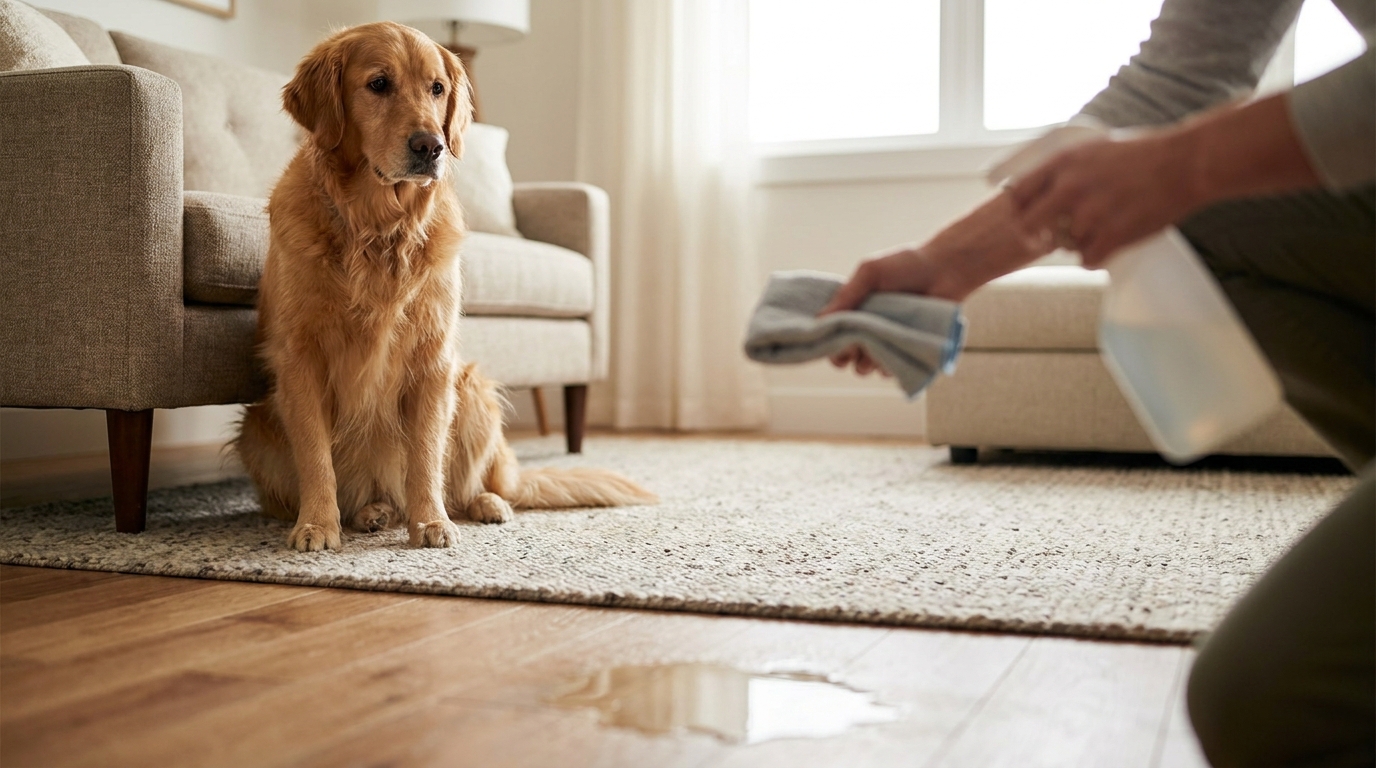
Finding a puddle on your floor is frustrating, especially if your pet was previously well-trained. If you are asking, Why Is My Dog Peeing in the House?, you are certainly not alone. Many pet parents face this sudden change in behavior, which can stem from various physical or psychological triggers. Understanding the root cause is the first step toward finding a solution and restoring harmony in your home.
When a dog suddenly starts having accidents, it is easy to assume it is purely a behavioral issue. However, medical conditions like a urinary tract infection or bladder stones often play a significant role. Distinguishing between a medical concern and a behavioral habit is vital for your pet's health. By asking Why Is My Dog Peeing in the House?, you are taking a proactive approach to your dog's well-being. Whether it is marking territory, stress, or an underlying health issue, our team at RexVet is here to help you triage these symptoms quickly and affordably. If your dog suddenly started peeing indoors, ask a licensed vet online for $64.99 to get the clarity and guidance you need without the stress of an in-person clinic visit.
Behavior vs Medical Causes
When you find yourself asking Why Is My Dog Peeing in the House?, the first step is determining if the issue is physical or behavioral. Medical issues often involve involuntary loss of control, whereas behavioral problems are typically intentional choices driven by environment or training gaps.
Physical ailments often present with symptoms like straining, frequent small amounts of urine, or increased water consumption. Conversely, behavioral causes usually manifest when a dog feels anxious, territorial, or improperly house-trained. If your pet is suddenly having accidents, consider these key differences:
- Medical issues: Often accompanied by changes in appetite , lethargy, or visible discomfort during urination.
- Behavioral issues: Frequently triggered by life changes, such as a new pet, moving homes, or separation anxiety .
Distinguishing between these categories is essential for effective treatment. If you are still wondering Why Is My Dog Peeing in the House?, remember that medical conditions require professional diagnostics , while behavioral habits benefit from consistent positive reinforcement. RexVet provides an accessible way to triage these concerns from home, helping you decide if a physical exam is necessary or if a training adjustment will suffice.
Common Behavior Reasons Dogs Pee Indoors
When you find yourself asking Why Is My Dog Peeing in the House?, you may be dealing with behavioral triggers rather than illness. Territorial urine marking is a frequent culprit, especially in unneutered males or dogs introduced to new environments. These pets often deposit small amounts of urine on vertical surfaces to claim space. Similarly, stress from loud noises, household changes, or separation anxiety can lead to accidents as a physical manifestation of their emotional state.
Sometimes the answer to Why Is My Dog Peeing in the House? lies in inconsistent house training during puppyhood or a regression caused by a change in routine. If a dog was never fully house-broken, they may simply lack the understanding of where they should eliminate. Additionally, submissive urination often occurs when a dog feels overwhelmed by greetings or loud voices, causing them to lose bladder control involuntarily. Regardless of the cause, avoid punishment, as it often increases anxiety and worsens the cycle. Instead, focus on positive reinforcement and consistent schedules. If you need help identifying if these behaviors are the root cause, our team at RexVet offers accessible virtual triage to guide you through these training hurdles effectively.
Medical Reasons Dogs May Have Accidents
When you ask Why Is My Dog Peeing in the House?, it is crucial to consider internal health factors. Urinary tract infections (UTIs) are a common culprit, causing inflammation that makes holding urine painful and difficult. Dogs with diabetes often experience increased thirst and urination, leading to accidents when they simply cannot reach the door in time. Similarly, kidney issues can impair a dog's ability to concentrate urine, resulting in a higher volume of output that overwhelms their bladder capacity.
These conditions are not just behavioral quirks; they are medical realities that require professional assessment. If you notice your pet drinking significantly more water or straining to pass even a few drops, these are major red flags. Because these issues can progress quickly, identifying them early is essential for effective treatment. If you are still wondering Why Is My Dog Peeing in the House?, our team at RexVet can help you triage these symptoms remotely. By consulting a licensed vet online for $64.99, you gain immediate clarity on whether your pet needs urgent care or a simple medication adjustment, all from the comfort of your home.
What to Track Before Asking a Vet
Before you reach out to a professional, gathering objective data can significantly speed up the diagnostic process. When you ask Why Is My Dog Peeing in the House?, start by maintaining a detailed log for at least three days. Note exactly when accidents occur, the volume of urine, and any specific triggers like loud noises or visitors. Tracking your dog's daily water intake is equally critical, as excessive thirst is a common indicator of underlying metabolic conditions.
Use the following table to organize your observations, which will help our team provide more accurate triage during your virtual visit:
Observation Category | What to Record |
|---|---|
Accident Timing | Time of day and proximity to last outdoor break |
Drinking Habits | Estimated volume consumed per 24-hour period |
Urine Characteristics | Color, odor, and signs of straining or discomfort |
Environment | Recent changes in routine or household stress |
By bringing this data to your consultation, you help our vets determine if the issue is behavioral or requires a physical exam. If you are still wondering Why Is My Dog Peeing in the House?, having these records ready allows us to triage your pet's needs efficiently. If your dog suddenly started peeing indoors, ask a licensed vet online for $64.99 to get the clarity and guidance you need without the stress of an in-person clinic visit.
When Online Vet Guidance Can Help
When you are frantically asking Why Is My Dog Peeing in the House?, waiting days for an in-person appointment can feel like an eternity. Telehealth bridges this gap by offering immediate, professional triage from the comfort of your living room. Instead of guessing if your pet needs an emergency visit or a simple behavior modification plan, our virtual consultations provide rapid clarity. By connecting with a licensed veterinarian through a secure video call, you can describe the specific timing and nature of the accidents, allowing our experts to determine if the cause is likely a medical emergency or a manageable behavioral habit.
Using telehealth for fast professional triage helps you save time and money while reducing the stress often associated with a trip to the clinic. If you are still wondering Why Is My Dog Peeing in the House?, remember that early intervention is key to preventing long-term damage or worsening health conditions. Our non-profit model ensures that you receive compassionate, accessible guidance whenever you need it most. If your dog suddenly started peeing indoors, ask a licensed vet online for $64.99 to get the professional support you deserve without the hassle of a traditional office visit.
Ask RexVet Express for $64.99
When you find yourself asking Why Is My Dog Peeing in the House?, you do not have to navigate the stress of a clinic visit alone. Our platform offers a direct line to licensed professionals who specialize in non-emergency triage. By choosing our virtual service, you receive expert guidance tailored to your pet's specific symptoms, whether you suspect a medical ailment or a behavioral regression. Why Is My Dog Peeing in the House? is a question that often requires a nuanced answer, and our vets are equipped to help you distinguish between urgent health risks and manageable training hurdles. Our $64.99 flat-fee model ensures that cost is never a barrier to getting the professional insight you need for your canine companion. If your dog suddenly started peeing indoors, ask a licensed vet online for $64.99 to secure peace of mind and a clear path forward. Our team provides the compassionate, accessible support that every pet parent deserves, helping you determine if a simple adjustment or a deeper medical investigation is the right next step for your household.
Safety Signs Requiring Urgent Care
While you may be asking Why Is My Dog Peeing in the House?, it is vital to recognize that certain symptoms demand immediate veterinary attention. If your pet displays signs like blood in the urine, persistent straining without output, or a complete inability to void, these are potential indicators of a life-threatening blockage or severe infection. Such cases require urgent care to prevent systemic illness or bladder rupture.
Beyond urinary changes, watch for systemic red flags that suggest your dog is in distress. If you observe severe lethargy, repeated vomiting, or signs of collapse, do not wait for a scheduled appointment. These symptoms often point to metabolic crises or acute toxicity that necessitate rapid intervention. When you are wondering Why Is My Dog Peeing in the House?, prioritize your dog's safety by monitoring for these dangerous warning signs.
If you are unsure whether your dog's condition is an emergency, our virtual triage service provides a safe, non-profit alternative to immediate in-person clinic visits. We help you assess if your pet requires an urgent trip to an emergency hospital or if the situation can be managed through our professional guidance. Protecting your companion starts with knowing when to act fast.
Frequently Asked Questions
Why is my trained dog suddenly peeing inside?
When a house-trained dog starts peeing in the house, it is often a sign that something has changed. First, consider medical issues like a urinary tract infection or diabetes, which can cause sudden accidents. If a vet clears your pet, look for behavioral triggers such as new pets, moving to a new home, or changes in your daily schedule. Tracking the timing and frequency of these accidents can help you determine if it is a medical or behavioral concern.
Can a UTI cause indoor accidents?
Yes, a urinary tract infection (UTI) is a very common reason for a dog peeing in the house. When a dog has a UTI, they may feel an urgent need to urinate, making it impossible to wait for a walk. You might notice them straining to go, licking their genital area, or producing small, frequent puddles. If you suspect an infection, consult a veterinarian via a virtual visit to discuss symptoms and potential treatment plans.
Why is my dog peeing in at night?
Nighttime accidents can be frustrating. For senior dogs, it may be due to incontinence or cognitive decline, while younger dogs might simply be drinking too much water before bed. If your dog is peeing in the house specifically at night, try limiting water intake two hours before bedtime and ensuring they have a final potty break right before sleep. If the behavior persists, it is wise to rule out underlying health issues with a professional.
Should I punish my dog for peeing indoors?
No, you should never punish your dog for accidents. Punishment often leads to fear, which can actually increase anxiety and cause your dog to hide while peeing, making the problem worse. Instead, focus on positive reinforcement when they go outside and use an enzymatic cleaner to remove all traces of the scent. If you are struggling with why your dog is peeing in the house, reach out to our team for non-judgmental, professional guidance.
How can I tell if my dog is marking or just having an accident?
Urine marking usually involves small amounts of urine deposited on vertical surfaces like furniture, walls, or door frames. In contrast, an accident due to a health issue or lack of training often results in a larger puddle on the floor. If you notice your dog peeing in the house on specific items, it is likely territorial marking. Neutering or spaying can often reduce this behavior, but you should always verify the cause with a vet to ensure no medical condition is present.
When should I see a vet for my dog's indoor accidents?
You should seek advice if you notice a sudden change in behavior, blood in the urine, excessive thirst, or signs of pain. If your dog is peeing in the house frequently, it is better to be proactive. Our virtual platform allows you to triage symptoms from home, saving you a stressful trip to the clinic. If you see signs like lethargy or vomiting, please contact a professional immediately to ensure your pet stays safe and healthy.
FAQs
Why is my trained dog suddenly peeing inside?
When a house-trained dog starts peeing in the house, it is often a sign that something has changed. First, consider medical issues like a urinary tract infection or diabetes, which can cause sudden accidents. If a vet clears your pet, look for behavioral triggers such as new pets, moving to a new home, or changes in your daily schedule. Tracking the timing and frequency of these accidents can help you determine if it is a medical or behavioral concern.
Can a UTI cause indoor accidents?
Yes, a urinary tract infection (UTI) is a very common reason for a dog peeing in the house. When a dog has a UTI, they may feel an urgent need to urinate, making it impossible to wait for a walk. You might notice them straining to go, licking their genital area, or producing small, frequent puddles. If you suspect an infection, consult a veterinarian via a virtual visit to discuss symptoms and potential treatment plans.
Why is my dog peeing in the house at night?
Nighttime accidents can be frustrating. For senior dogs, it may be due to incontinence or cognitive decline, while younger dogs might simply be drinking too much water before bed. If your dog is peeing in the house specifically at night, try limiting water intake two hours before bedtime and ensuring they have a final potty break right before sleep. If the behavior persists, it is wise to rule out underlying health issues with a professional.
Should I punish my dog for peeing indoors?
No, you should never punish your dog for accidents. Punishment often leads to fear, which can actually increase anxiety and cause your dog to hide while peeing, making the problem worse. Instead, focus on positive reinforcement when they go outside and use an enzymatic cleaner to remove all traces of the scent. If you are struggling with why your dog is peeing in the house, reach out to our team for non-judgmental, professional guidance.
How can I tell if my dog is marking or just having an accident?
Urine marking usually involves small amounts of urine deposited on vertical surfaces like furniture, walls, or door frames. In contrast, an accident due to a health issue or lack of training often results in a larger puddle on the floor. If you notice your dog peeing in the house on specific items, it is likely territorial marking. Neutering or spaying can often reduce this behavior, but you should always verify the cause with a vet to ensure no medical condition is present.
When should I see a vet for my dog's indoor accidents?
You should seek advice if you notice a sudden change in behavior, blood in the urine, excessive thirst, or signs of pain. If your dog is peeing in the house frequently, it is better to be proactive. Our virtual platform allows you to triage symptoms from home, saving you a stressful trip to the clinic. If you see signs like lethargy or vomiting, please contact a professional immediately to ensure your pet stays safe and healthy.
Medically Reviewed
Reviewed by Dr. Tiffany Delacruz, DVM — licensed veterinarian and CEO of RexVet. Last reviewed June 17, 2026.
Content is for informational purposes and does not replace professional veterinary advice.
Chief Executive Officer · Licensed Veterinarian
Dr. Delacruz is a licensed Doctor of Veterinary Medicine specializing in preventive care and veterinary telehealth. She reviews all health content on RexVet to ensure accuracy and clinical relevance.
Sources & References
- · American Veterinary Medical Association — Telehealth Guidelines
- · AVMA — Pet Care Resources
- · U.S. FDA — Animal & Veterinary
Need an Expert Opinion on This Topic?
Connect with a certified vet via video call in minutes
Talk to Vet Now