
Dr. Tiffany Delacruz, DVM • Chief Executive Officer, RexVet • 2026-06-28 • 11 min read
Cat Losing Weight But Eating Normally? A FL, NY & VA Vet's Guide
A cat losing weight on a normal appetite is a real warning sign. The 6 causes — hyperthyroidism, diabetes, IBD, lymphoma, kidney disease and EPI.
Medically reviewed by Dr. Tiffany Delacruz, DVM
A cat that's losing weight despite eating normally — sometimes eating MORE than usual — is showing you one of the clearest signs in feline medicine. This pattern dramatically narrows what's wrong and points to specific diseases. This guide is written for cat parents in Florida, New York, and Virginia. It covers the 6 most common causes, what diagnosis looks like, and how telehealth fits long-term management.
Why this combination matters
Weight loss WITH decreased appetite usually means: GI disease, dental pain, depression, or terminal illness. Weight loss WITH normal-to-increased appetite is much more specific. The body is breaking down — but appetite isn't the issue — meaning something is interfering with absorption, metabolism, or hormonal balance.
The 6 most common causes
- Hyperthyroidism — thyroid hormone excess speeds metabolism. #1 cause in cats over 10.
- Diabetes mellitus — glucose can't be used, spills into urine. Often increased thirst + urination first.
- Inflammatory bowel disease (IBD) — chronic intestinal inflammation impairs absorption.
- Small-cell lymphoma — same presentation as IBD; distinguishing requires biopsy.
- Chronic kidney disease (later stages) — eventually causes weight loss as appetite + absorption decline.
- Exocrine pancreatic insufficiency (EPI) — rare in cats, but presents as ravenous appetite + weight loss + diarrhea.
When weight loss becomes meaningful
- 5% loss of body weight is the clinical threshold — a 10-pound cat losing half a pound is significant
- Cats lose muscle (sarcopenia) before fat — visible spine, hip bones, or shoulder blades = significant loss
- Score body condition 1-9: 5 is ideal, 4 is mildly underweight, 3 needs vet eval
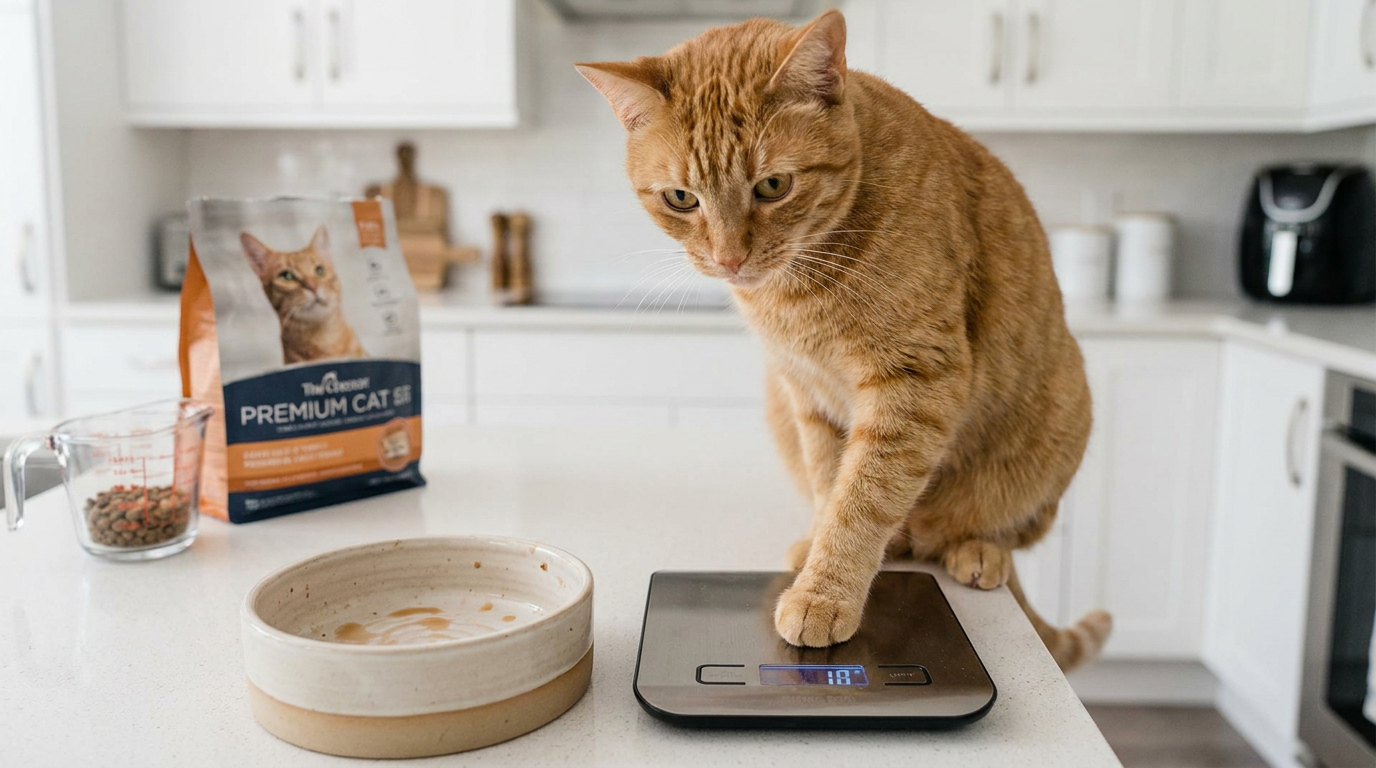
- Photograph your cat from above and from the side monthly — easier to see trends
Red flags that escalate
- Vomiting + weight loss + increased appetite — classic hyperthyroidism + IBD overlap
- Increased thirst + urination + weight loss — diabetes or CKD likely
- Sudden refusal of all food after weight loss — hepatic lipidosis (fatty liver) is now in play
- Yellow tinge to gums or eyes — jaundice, urgent
- Severe lethargy
- Collapse
Standard workup
- CBC + Chemistry — kidney, liver, electrolytes, glucose, anemia
- T4 (total thyroxine) — screens hyperthyroidism; in borderline cases, free T4 by dialysis
- Urinalysis — concentrating ability, glucose, protein
- Fructosamine — confirms diabetes vs. stress hyperglycemia
- Fecal float + Giardia — rules out parasites
- B12 + folate — low B12 suggests IBD or pancreatitis
- Abdominal ultrasound — bowel wall, lymph nodes, kidney size
- Endoscopy with biopsy for IBD vs. lymphoma definitive diagnosis
Treatment by cause
- Hyperthyroidism: methimazole (Felimazole) daily oral OR radioactive iodine (curative) OR diet (Hill's y/d, sometimes effective)
- Diabetes: insulin (typically glargine — Lantus, ProZinc), prescription diabetic diet, glucose curves
- IBD: hydrolyzed protein diet trial → prednisolone + B12 if needed
- Lymphoma: chlorambucil + prednisolone for small-cell; chemotherapy for large-cell
- CKD: prescription kidney diet, ACE inhibitor, phosphorus binder, sub-Q fluids
- EPI: pancreatic enzyme supplementation (Pancrezyme) lifelong
Florida senior cat patterns
Hyperthyroidism rates in Florida senior cats are among the highest in the US. Any FL cat over 10 with weight loss should get a T4 screen first. Florida heat also drives polydipsia which can mask early diabetes signs.
New York: apartment + IBD overlap
NYC senior cats often have IBD or small-cell lymphoma as the underlying cause. Apartment-bound cats with chronic mild GI symptoms often present with weight loss as the first noticeable change. Multi-cat households make weight monitoring harder — weigh each cat separately.
Virginia: tick disease + cancer overlap
VA cats with outdoor access can develop weight loss from tick-borne illness (less common in cats than dogs but possible). Lymphoma rates in VA senior cats are notable. Workup should include 4Dx test alongside the standard panel.
How telehealth fits
$64.99 RexVet video visits with FL/NY/VA-licensed vets are excellent for chronic management: refill requests (where state rules allow), dietary coaching, monitoring schedules, and weight tracking review. Initial diagnosis typically needs in-person bloodwork + urine + ultrasound + sometimes biopsy. Once diagnosed, most ongoing management is telehealth.
Emergency signals
When to contact a veterinarian
- Sudden refusal of all food after weight loss — hepatic lipidosis risk
- Vomiting blood
- Jaundice (yellow gums/eyes)
- Severe lethargy or collapse
- Sudden severe weight loss (10%+ in a month)
- Diabetic cat refusing food — hypoglycemia risk
Frequently asked questions
Why is my cat losing weight but still eating?
The pattern points to specific diseases: hyperthyroidism (#1 in cats over 10), diabetes, inflammatory bowel disease, small-cell lymphoma, late-stage CKD, or exocrine pancreatic insufficiency. Each has a different diagnostic path. RexVet FL/NY/VA-licensed vets can triage and order workup.
How much weight loss in a cat is concerning?
5% of body weight is the clinical threshold. A 10-pound cat losing half a pound is significant. Cats lose muscle before fat — visible spine or hip bones means meaningful loss. Weigh monthly to catch trends.
Can a RexVet online vet diagnose what's wrong?
We can triage symptoms and explain what testing is needed. The actual diagnosis requires in-person bloodwork (CBC, Chem, T4, fructosamine), urinalysis, and often ultrasound. Once diagnosed, RexVet handles chronic management (refill requests where state rules allow, dietary coaching, monitoring) by $64.99 video visit.
Is hyperthyroidism curable?
Yes — radioactive iodine (I-131) treatment cures most cases. Alternatives: daily methimazole (Felimazole) tablets or transdermal gel, or prescription iodine-restricted diet (Hill's y/d) for cats who tolerate it. RexVet FL/NY/VA-licensed vets manage methimazole patients long-term by telehealth.
What is the difference between IBD and lymphoma?
They look identical in early presentation. Endoscopy with biopsy is the only definitive way to distinguish. Treatment overlaps significantly — prednisolone + B12 + diet for IBD, plus chlorambucil for small-cell lymphoma. Many cats are managed empirically as 'IBD vs. small-cell lymphoma' with the same protocols.
Continue reading
Related guides

Puppy Not Eating: 7 Causes, Timeline & When to Call a Vet — FL, NY & VA
A puppy not eating is more urgent than an adult dog — low blood sugar and dehydration hit fast. 7 causes, a clear timeline, FL/NY/VA vets.
Cat Not Eating? A Vet Guide for FL, NY & VA Pet Parents
Cat not eating — when it is stress, when a $64.99 telehealth visit fits, and when it is an emergency. A licensed FL, NY and VA vet explains.

Best Dog Food for Senior Dogs (2026): What Vets Look For
Vet guide to the best dog food for senior dogs in 2026: AAFCO labels, calories, protein, joint and kidney support, and when a prescription diet is needed.
About the author

Dr. Tiffany Delacruz, DVM
Chief Executive Officer, RexVet
Licensed veterinarian and CEO of RexVet (Rex Vets Inc.). Practicing across Florida, New York, and Virginia via licensed telehealth. Reviews every clinical article on RexVet before publication.