
Newly Adopted Dog Not Eating: Stress or Sick? Vet Guide
By RexVet Team | Reviewed by Dr. Tiffany Delacruz, DVM
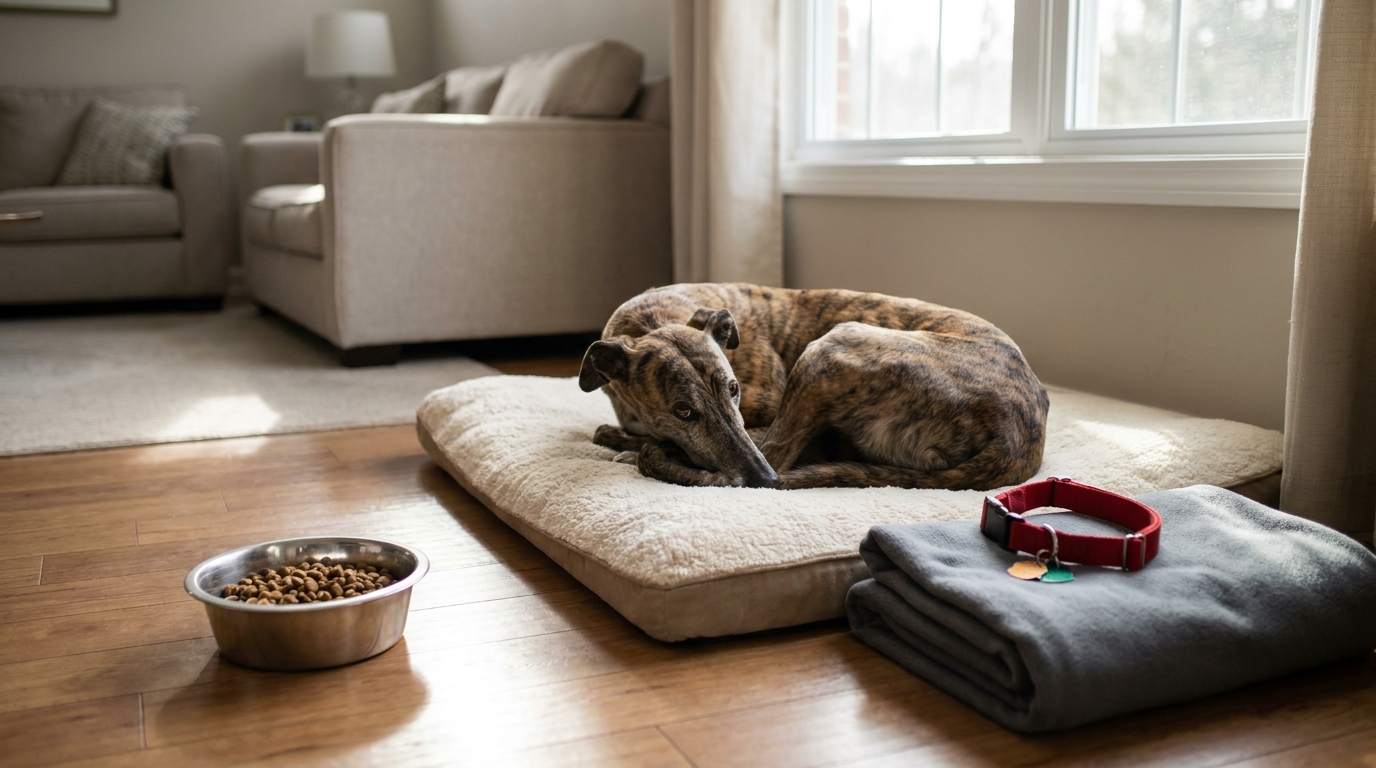
A newly adopted dog not eating may just be stressed; call a vet after 24 to 48 hours, or sooner for a puppy or with vomiting or lethargy.
Go to an in-person emergency vet now if your new dog is vomiting repeatedly, has bloody diarrhea, cannot keep water down, cannot stand or stay awake, has pale or white gums, retches without bringing anything up, has a tense or swollen belly, is struggling to breathe, has a seizure, seems to be in severe pain, or may have swallowed something toxic or a foreign object. A puppy that is weak, wobbly or trembling needs an emergency vet too.
A newly adopted dog not eating can be unsettling in the first days after adoption. Stress from a new environment is one common reason, but shelter illnesses can look similar at first, so watch for other signs. The clues that help most are your dog's energy, whether they are drinking, what their stool looks like, and how they respond when you come near.
Why a New Dog May Stop Eating
Moving from a shelter, foster home or transport into your house is a big change. New smells, new people, new sounds and a new routine all arrive at once, and a frightened dog may simply not feel safe enough to eat.
It helps to know what fear can look like in the body. The Merck Veterinary Manual lists signs of acute fear and anxiety that include a fast heart rate, fast breathing, excessive drooling and stomach upset, plus low body posture, vocalizing, yawning and lip licking. So a new dog who pants, drools and turns away from the bowl may be scared rather than sick.
One important caution: breathing that looks labored, or stays fast while your dog is resting quietly, is not a stress sign to wait out. Go to an emergency vet.
Stress is only one possible explanation. VCA Animal Hospitals lists stress, altered routines and changes in the environment among the causes of appetite loss, alongside illness, pain, nausea and gastrointestinal blockage, and advises getting your veterinarian involved early. That is why the rest of this guide focuses on how to tell the difference.
What Settling In Can Look Like at Home
Many rescues are overwhelmed at first and may prefer to retreat to a quiet corner rather than approach a food bowl. Your dog might sniff the meal and walk away, sleep for long stretches, or watch you from behind the couch. This can be part of settling in.
A dog who is decompressing usually stays alert. They lift their head when you walk in, follow sounds with their eyes, and may take a treat even while ignoring the bowl. Taking food from you but not from the dish suggests their appetite is still there and their comfort level is what is low.
Encouraging signs during this phase include:
- Drinking water
- Normal or only mildly soft stool, with no vomiting
- Alert and responsive when you approach, even if shy
- Interest in treats, smells or the yard
- Gums that look their usual pink color
If that describes your dog, keep things calm and give them room.
The Clock: When Not Eating Becomes a Concern
Skipped meals from nerves should not stretch on indefinitely. According to PetMD, a dog that refuses food for more than 24 to 48 hours, or stops eating and has vomiting, diarrhea, lethargy or trouble breathing, should be evaluated by a veterinarian as soon as possible. Treat 24 to 48 hours as the outer limit for an otherwise bright adult dog, not a target to wait for.
Puppies are different. PetMD notes that puppies cannot go as long as adult dogs without food, so if a puppy is skipping meals, contact a veterinarian right away. If our puppy not eating guide fits your situation better, start there. A puppy that is weak, wobbly or trembling needs an emergency vet.
Other signs change the timeline for adult dogs too:
- Vomiting, diarrhea or lethargy along with not eating: call a vet now rather than waiting.
- Not drinking: call a vet the same day. A dog that is not drinking and is also weak or vomiting needs an emergency vet.
- Struggling to breathe, collapse, repeated vomiting or bloody diarrhea: go to an in-person emergency vet now. This is not a situation for a log or a video call.
For the milder situations, keep a simple log: when your dog last ate and how much, how much water they drank, and what their stool and any vomit looked like. Those notes make any vet conversation faster and more useful. If vomiting is part of the picture, our guide on dog vomiting and not eating goes into more detail.
When You Must Head to an Emergency Clinic
Some problems need hands-on care, such as intravenous fluids, blood tests and imaging, that cannot be done remotely. Go straight to an in-person emergency vet if your new dog:
- Is vomiting repeatedly or cannot keep water down
- Has bloody or watery diarrhea
- Cannot stand or stay awake
- Has pale, white, bluish or yellow gums
- Retches without bringing anything up, or has a tense or swollen belly
- Is struggling to breathe, or breathes fast while resting
- Has a seizure
- Seems to be in severe pain
- May have swallowed something toxic or a foreign object in the new home
- Is a puppy that is weak, wobbly or trembling, or a puppy with vomiting or diarrhea
If you see any of these signs, skip the video visit and go straight to the nearest emergency vet; call ahead on the way if you can.
Stress Versus Illness: A Side-by-Side Checklist
When a newly adopted dog not eating is your main worry, the other signs are what separate nerves from illness. Compare what you see with these two lists.
Signs that point to settling-in stress
- Food interest: sniffs food or takes treats, even if the bowl is ignored
- Energy: sleeps a lot or hides but is alert and responsive when approached
- Stool and vomit: normal or mildly soft stool, no vomiting
- Mouth and gums: normal pink gums; some drooling or lip licking, which can come from fear
- Water: drinking on their own
Signs that need a vet
- Food interest: refuses all food past 24 to 48 hours, or refuses food along with any other sign on this list
- Energy: dull, weak, hard to rouse, or cannot stand (cannot stand or stay awake means an emergency vet now)
- Stool and vomit: repeated vomiting, bloody or watery diarrhea, or any vomiting or diarrhea in a puppy (these need an emergency vet now); a single episode in an otherwise bright adult means call a vet and watch closely
- Mouth and gums: pale, white, bluish or yellow gums (emergency vet now); pawing at the mouth; drooling with nausea or retching
- Water: not drinking, or cannot keep water down
Stress-related soft stool that does not settle down, or gets worse, is also worth a call to the vet.
Shelter Illnesses That Can Show Up After You Get Home
Shelters and transport vans put many dogs close together, and some infections only show once your dog is home.
Parvovirus
Parvo is a serious concern for puppies and dogs that are not fully vaccinated. According to the Merck Veterinary Manual, signs usually appear within 5 to 7 days of infection but can show up anywhere from 2 to 14 days, starting with lethargy, loss of appetite and fever before vomiting and bloody diarrhea.
If a puppy or under-vaccinated dog stops eating and is vomiting or has diarrhea, call an in-person veterinarian or emergency clinic right away. Call ahead so they can isolate your dog, and keep them away from other dogs. Merck notes that dogs with these signs should be tested promptly so isolation can begin. Parvo cannot be treated over video.
Kennel cough
Kennel cough spreads easily where dogs are housed close together. The Merck Veterinary Manual describes it as a mild, self-limiting disease that may progress to pneumonia in puppies, and notes that puppies are more prone to severe disease.
A cough plus not eating deserves a prompt in-person vet check. Merck lists fever, thick or colored nasal discharge, dullness, loss of appetite and a wet, productive cough as signs of bronchopneumonia. Labored or rapid breathing at rest, or extreme lethargy, means an emergency vet now. Keep a coughing dog away from other dogs until a vet has seen them.
Keep your shelter or rescue paperwork handy. The vaccine and deworming history helps any veterinarian judge which infections are likely.
Feeding Tips for a New Rescue
Small, calm changes around mealtime can help a nervous dog feel safe enough to eat.
- Keep the familiar food. Keep feeding the food the shelter or rescue used while your dog settles in. If you switch later, do it gradually. PetMD advises changing a dog's diet gradually over several days to weeks to avoid stomach upset.
- Pick a quiet spot. Put the bowl in a low-traffic area away from doors, the TV and busy hallways.
- Don't hover. Staring at or standing over a nervous dog while they eat can make them feel pressured. Set the bowl down and step away.
- Use set mealtimes. Offer meals at the same times each day and pick up what is not eaten before the next meal, so you can track how much your dog is actually eating.
- Separate other pets. Feed resident dogs and cats in another room so your new dog does not feel they have to compete.
- Try a little hand-feeding, carefully. Offering a few pieces by hand can build trust, but only if your dog is comfortable with you close by. Otherwise, toss a few pieces of food nearby and step back.
- Keep fresh water available. Put water somewhere your dog can reach without walking past people or other pets.
- Skip the medicine cabinet. Do not give human medicines or try to force-feed. If appetite does not return, talk to a veterinarian instead.
What a RexVet Online Visit Can Do for You
If there are no emergency signs and you are unsure whether you are seeing decompression or early illness, a video visit can help. RexVet's veterinarians are licensed in Florida, New York and Virginia and are available 24/7 by video.
During a visit, a RexVet veterinarian can watch your dog's breathing and behavior, look at their gums with your help and in good light, and review the shelter paperwork to help decide whether your dog needs an in-person visit. A video visit cannot replace a hands-on exam, bloodwork or X-rays.
If the veterinarian decides medication is appropriate, they can prescribe where state rules allow. In Florida, under section 474.2021 of the Florida Statutes, telehealth-only prescribing is limited to a 14-day supply with no renewal without an in-person exam. RexVet's veterinarians do not prescribe controlled substances by video.
If your new dog is bright and drinking but still not interested in food, or you just want a veterinarian's eyes on the situation, you can book a RexVet video visit for $64.99. You can read more about online vet care for dogs before you book.
Frequently Asked Questions
How long can a newly adopted dog go without eating before I should worry?
PetMD advises that a dog refusing food for more than 24 to 48 hours should be evaluated by a veterinarian, and sooner if not eating comes with vomiting, diarrhea, lethargy or trouble breathing. Puppies cannot go as long as adult dogs without food, so if a puppy is skipping meals, contact a veterinarian right away. Trouble breathing, collapse or bloody diarrhea means an emergency vet now.
Is it normal for a rescue dog to not eat or drink the first day home?
Skipping food on the first day can be stress. Your dog should still drink. If your new dog is not drinking, or is a puppy, call a veterinarian the same day. A dog that cannot keep water down, or is not drinking and is also weak or vomiting, needs an emergency vet.
Should I switch my adopted dog to a new food right away?
No. Keep feeding the food the shelter or rescue used while your dog settles in. If you switch later, do it gradually by mixing the new food into the old, as described in the feeding tips above.
My new shelter dog is coughing and not eating. Is that kennel cough?
It could be, but the loss of appetite matters. The Merck Veterinary Manual lists fever, thick or colored nasal discharge, dullness, loss of appetite and a wet cough as signs that kennel cough may have progressed to pneumonia, and puppies are more prone to severe disease. A coughing dog that has stopped eating should be seen by a veterinarian in person promptly. Labored or rapid breathing at rest means an emergency vet now.
Can an online vet tell if my adopted dog is sick or just stressed?
Often, yes, for mild or unclear cases. A veterinarian can watch your dog's behavior and breathing on camera and help you decide whether this looks like decompression or needs an in-person exam. A video visit cannot replace bloodwork, X-rays or a hands-on exam, and any emergency sign means going straight to an emergency vet. RexVet's veterinarians are licensed in Florida, New York and Virginia. Video visits are available 24/7 for $64.99.
Give your new dog time, quiet and a steady routine, and keep an eye on water, energy and stool. If you want help deciding whether your rescue's appetite is nerves or something more, you can book a RexVet video visit any time of day or night.
FAQs
How long can a newly adopted dog go without eating before I should worry?
PetMD advises that a dog refusing food for more than 24 to 48 hours should be evaluated by a veterinarian, and sooner if not eating comes with vomiting, diarrhea, lethargy or trouble breathing. Puppies cannot go as long as adult dogs without food, so if a puppy is skipping meals, contact a veterinarian right away. Trouble breathing, collapse or bloody diarrhea means an emergency vet now.
Is it normal for a rescue dog to not eat or drink the first day home?
Skipping food on the first day can be stress. Your dog should still drink. If your new dog is not drinking, or is a puppy, call a veterinarian the same day. A dog that cannot keep water down, or is not drinking and is also weak or vomiting, needs an emergency vet.
Should I switch my adopted dog to a new food right away?
No. Keep feeding the food the shelter or rescue used while your dog settles in. If you switch later, do it gradually by mixing the new food into the old, as described in the feeding tips above.
My new shelter dog is coughing and not eating. Is that kennel cough?
It could be, but the loss of appetite matters. The Merck Veterinary Manual lists fever, thick or colored nasal discharge, dullness, loss of appetite and a wet cough as signs that kennel cough may have progressed to pneumonia, and puppies are more prone to severe disease. A coughing dog that has stopped eating should be seen by a veterinarian in person promptly. Labored or rapid breathing at rest means an emergency vet now.
Can an online vet tell if my adopted dog is sick or just stressed?
Often, yes, for mild or unclear cases. A veterinarian can watch your dog's behavior and breathing on camera and help you decide whether this looks like decompression or needs an in-person exam. A video visit cannot replace bloodwork, X-rays or a hands-on exam, and any emergency sign means going straight to an emergency vet. RexVet's veterinarians are licensed in Florida, New York and Virginia. Video visits are available 24/7 for $64.99.
Give your new dog time, quiet and a steady routine, and keep an eye on water, energy and stool. If you want help deciding whether your rescue's appetite is nerves or something more, you can book a RexVet video visit any time of day or night.
Medically Reviewed
Reviewed by Dr. Tiffany Delacruz, DVM — licensed veterinarian and CEO of RexVet. Last reviewed September 22, 2026.
Content is for informational purposes and does not replace professional veterinary advice.
Chief Executive Officer · Licensed Veterinarian
Dr. Delacruz is a licensed Doctor of Veterinary Medicine specializing in preventive care and veterinary telehealth. She reviews all health content on RexVet to ensure accuracy and clinical relevance.
Sources & References
- · American Veterinary Medical Association — Telehealth Guidelines
- · AVMA — Pet Care Resources
- · U.S. FDA — Animal & Veterinary
Need an Expert Opinion on This Topic?
Connect with a certified vet via video call in minutes
Talk to Vet Now