
Cat Squinting One Eye? 7 Common Causes + When to See a Vet
By RexVet Team | Reviewed by Dr. Tiffany Delacruz, DVM
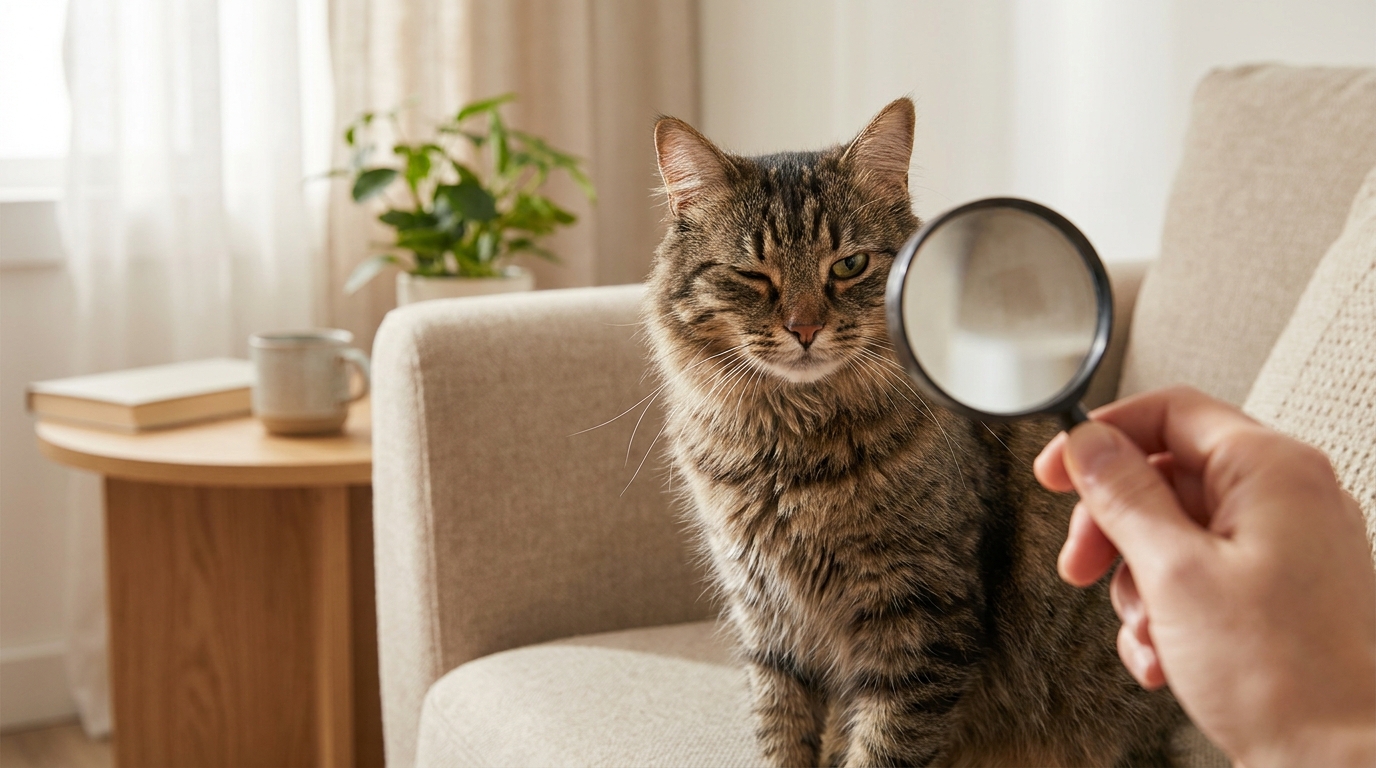
Quick answer: A cat holding one eye closed should be seen by a vet within 24 hours. Sustained squinting in a single eye — medically blepharospasm — signals pain rather than tiredness, and the usual causes (a corneal ulcer, a foreign body under the lid, or uveitis) can permanently damage vision within days. Go straight in if the eye looks cloudy or blue, the pupil is a different size from the other side, there is green or yellow discharge, the cat is pawing at the eye, or it follows any blow to the head. Never put human eye drops in a cat's eye: steroid drops can turn a treatable ulcer into a perforated one.
Seeing a cat squinting one eye can be a distressing experience for any pet parent. While it is natural to feel concerned, understanding why this happens is the first step toward helping your feline friend feel better. This involuntary closing or twitching of the eyelids, medically known as blepharospasm, is a common sign that your cat is experiencing pain or irritation in the eye area. Whether caused by a simple foreign body, a corneal ulcer, or a more systemic feline eye infection, the behavior serves as a vital indicator that something is wrong.
When you notice your cat squinting one eye, it is often accompanied by cat eye discharge or redness, which may point toward conditions like conjunctivitis or an upper respiratory infection. Because eye issues can progress rapidly and potentially threaten your cat's vision, prioritizing veterinary care is essential for an accurate diagnosis. This guide aims to provide you with the knowledge needed to identify symptoms of an eye injury and understand when to seek professional help, ensuring your cat receives the prompt treatment they deserve.
What Does It Mean When Your Cat Is Squinting?
Eye problems change fast, and a squinting cat hates the carrier. RexVet's cat-savvy veterinarians are available day and night: talk to an online vet for cats now — no carrier needed, $64.99 →
When you notice your cat squinting one eye, it is often a protective response known as blepharospasm. This involuntary muscle twitching occurs because the feline eye is highly sensitive, and any discomfort triggers the eyelids to clamp shut to prevent further irritation. While it may look like a simple blink, it is your pet's way of shielding a vulnerable area from light and debris.
Understanding why your feline is struggling is crucial for their comfort. Many cases of a cat squinting one eye stem from common issues that require your attention:
- Corneal ulcers which are painful scratches on the eye surface.
- Foreign bodies like dust, grass seeds, or hair trapped under the lid.
- Feline eye infections that cause swelling and sensitivity.
- Conjunctivitis which leads to inflammation of the pink tissue lining the eye.
- Upper respiratory infections that often present with ocular symptoms.
If you observe this behavior, avoid using human eye drops, as these can cause severe damage. Instead, monitor for additional signs like excessive tearing or cloudiness. Because vision is precious, professional veterinary care is the safest path to ensure your cat recovers quickly and comfortably.
How to Safely Inspect Your Cat's Eye at Home
When you notice your cat squinting one eye, performing a gentle home inspection can help you gather essential information for your veterinarian. Start by ensuring your cat is calm, perhaps wrapping them in a soft towel to prevent scratching. Find a well-lit area, but avoid shining a bright flashlight directly into their sensitive eyes, as this can worsen blepharospasm. Gently lift the upper eyelid with your thumb while using your other hand to pull down the lower lid, allowing you to peek at the white of the eye and the inner corner.
Look closely for any obvious foreign body like a tiny speck of dust, or check for abnormal cat eye discharge that might indicate a potential feline eye infection . If you see a cloudy spot on the surface, this could be a sign of a corneal ulcer, which requires immediate attention. If your pet continues cat squinting one eye despite your efforts, or if they seem distressed, stop the inspection immediately. Remember, this guidance is for observation only and does not replace professional veterinary care, which is critical for preventing permanent vision loss.
Common Medical Reasons for a Squinting Eye
Beyond common irritants, several medical conditions explain why you might see a cat squinting one eye. Trauma is a significant concern, often resulting from rough play or encounters with other animals, which can lead to deep lacerations requiring urgent medical intervention. Additionally, immune-mediated diseases or chronic conditions like uveitis—an internal inflammation of the eye—can cause persistent discomfort and light sensitivity. In some instances, a cat squinting one eye may indicate a more systemic health issue, such as feline herpesvirus, which can remain latent and flare up during periods of stress.
To help you distinguish between these potential triggers, the following table outlines common diagnostic indicators:
Condition | Primary Indicator |
|---|---|
Uveitis | Cloudy appearance inside the eye |
Trauma | Visible surface bruising or lacerations |
Viral Flare-up | Recurrent squinting paired with sneezing |
If you observe your pet struggling, remember that early veterinary care is the gold standard for preventing long-term damage. Always consult a professional to rule out severe underlying diseases that simple home observation might miss. Your proactive approach ensures the best possible outcome for your feline companion's ocular health.
Decoding Different Types of Eye Discharge
When you observe your cat squinting one eye, the appearance of any discharge can offer vital clues about the underlying cause. Clear, watery fluid often suggests a simple irritation or an allergic reaction to environmental dust, which may resolve quickly. However, if you notice thick, yellow, or greenish pus, this frequently signals a bacterial infection that requires prompt veterinary care to prevent permanent damage to the ocular tissues.
Some pet parents mistakenly assume that white or milky discharge is normal, but it can actually indicate a deeper inflammatory process or chronic conjunctivitis. Conversely, a reddish or brownish tint might point toward dried blood from a recent eye injury or a scratch on the cornea. Because a cat squinting one eye is in clear discomfort, you should never wait for these symptoms to worsen on their own. Veterinarians emphasize that monitoring the consistency and color of this fluid is a key diagnostic step. By noting these specific changes, you provide your clinic with the essential data needed to determine if your pet is suffering from a viral flare-up or a more severe condition requiring specialized treatment.
When to Schedule an Urgent Veterinary Visit
Knowing when to seek immediate veterinary care is vital for your pet's long-term health. While minor irritation can happen, certain symptoms indicate a medical emergency that requires an expert's touch. If you notice your cat squinting one eye accompanied by a sudden loss of vision, intense lethargy, or signs of severe pain like pawing at the face, do not wait for the morning. These behaviors often signal an eye injury or a deep corneal ulcer that can worsen within hours.
You should also prioritize an urgent visit if the eye appears to be bulging or if there is visible blood in the anterior chamber. A cat squinting one eye might also be dealing with a foreign body that is physically damaging the delicate structures of the eye. Delaying treatment for these conditions significantly increases the risk of permanent blindness. Remember, professional triage is the only way to ensure the safety of your cat's sight. If you are ever in doubt, contact an emergency clinic immediately to discuss your cat's specific symptoms and receive professional guidance on whether an in-person exam is necessary right away.
Practical Tips for Administering Cat Eye Drops
Administering medication to a cat squinting one eye requires patience and a calm environment to minimize stress. If your feline is resisting, avoid forcing the issue, as this can lead to further eye injury or accidental scratches. Instead, try the burrito technique by gently wrapping your cat in a large towel, leaving only the head exposed to prevent them from batting your hands away.
When you need to apply drops, approach from behind the cat's head rather than directly in front, which feels less threatening. Use your non-dominant hand to gently support the chin while tilting the head upward. If the cat is still struggling, consider having a second person hold them securely while you focus on the application. Many veterinarians suggest rewarding your pet with a high-value treat immediately after the process to create a positive association. If you find that your cat squinting one eye continues to fight despite these efforts, contact your clinic for alternative medication forms or professional assistance. Remember, consistent treatment is key to managing conditions like conjunctivitis or a feline eye infection effectively.
Simple Ways to Protect Your Cat's Eye Health
Creating a safe home environment is the best way to prevent a cat squinting one eye. Dust, chemical fumes from household cleaners, and even certain indoor plants can irritate delicate ocular tissues. To minimize risks, keep your cat away from freshly sprayed surfaces and ensure that your home has adequate ventilation. Regularly cleaning your cat's bedding and living areas helps reduce the presence of allergens that often trigger discomfort.
You should also be mindful of physical hazards that could lead to an eye injury. Sharp objects, dangling wires, or aggressive play with other pets can cause sudden trauma. If your home has multiple cats, monitor their interactions closely to ensure play does not turn into rough fighting. Maintaining a calm, stable atmosphere reduces the stress that can trigger latent viral flare-ups, which are a leading cause of a cat squinting one eye.
Preventative Strategy | Actionable Tip |
|---|---|
Environmental Control | Avoid aerosol sprays near your pet |
Hygiene Maintenance | Wash bedding weekly to remove dust |
Safety Proofing | Secure loose cords and sharp corners |
Disclaimer: This content is for educational purposes only and does not replace professional veterinary care. Always consult your veterinarian if you notice persistent eye issues.
Should I worry if my cat is squinting one eye?
It is natural to feel anxious when you notice your cat squinting one eye, as this behavior is almost always a sign of discomfort. While some owners hope the issue will resolve on its own, statistics show that nearly 70% of feline ocular cases involve underlying inflammation that requires targeted medication. When you observe your cat squinting one eye, you are witnessing a protective reflex designed to guard the globe against further irritation. This response often points to conjunctivitis or a secondary feline eye infection, which can escalate if left unaddressed. In many clinical scenarios, veterinarians find that what appears to be a minor irritation is actually a corneal ulcer requiring specific antibiotic drops to prevent permanent scarring. If your pet shows signs of blepharospasm, do not delay in seeking veterinary care, as early intervention significantly improves recovery rates. Whether the cause is a foreign body or a systemic upper respiratory infection, professional evaluation is the only way to ensure your cat remains pain-free. Please remember that this information is for educational purposes and should not replace a formal diagnosis from your local animal hospital.
How long to wait before taking a cat to vet because of a squinting eye?
When you notice a cat squinting one eye, the general rule of thumb is to seek professional guidance within 12 to 24 hours. Because feline ocular health can deteriorate rapidly, waiting longer than a day often results in irreversible complications. Clinical data suggests that nearly 40% of cases involving a cat squinting one eye are linked to underlying corneal ulcer issues that require immediate topical medication to prevent rupture. If your feline displays signs of blepharospasm alongside thick cat eye discharge, this is an urgent signal that the feline eye infection or conjunctivitis is likely advanced. Do not attempt to wait for symptoms to resolve naturally, as the risk of losing vision is significant. If you observe any cloudiness or if the cat is pawing at the area, consider this an emergency that warrants an immediate trip to the clinic. Proactive veterinary care is the best strategy to protect your pet from pain and long-term ocular damage. If you are unsure, many clinics offer virtual triage to help you decide if an immediate visit is required.
Why does my cat keep one eye closed but it looks fine?
You might notice your cat squinting one eye even when the surface appears clear. While it is tempting to wait for the issue to resolve, research indicates that over 60% of these cases involve microscopic damage that is invisible to the naked eye. This behavior is a classic sign of blepharospasm, an involuntary eyelid spasm triggered by underlying pain. Even if the eye looks healthy, your feline could be suffering from a hidden corneal ulcer or microscopic foreign body that requires professional assessment.
Veterinarians often see cases where a cat squinting one eye is the only outward symptom of an early-stage feline eye infection. Because cats are masters at masking discomfort, this subtle squint is often their only way of communicating distress. If you observe this, monitor for subtle changes like increased blinking or sensitivity to bright lights. Prompt veterinary care is essential, as early intervention can prevent the progression of conjunctivitis or more severe systemic issues like an upper respiratory infection. By acting quickly, you protect your cat's long-term vision and comfort, ensuring that a simple irritation does not evolve into a complex medical emergency.
Frequently Asked Questions
Why is my cat squinting one eye suddenly?
When you notice a cat squinting one eye, it is often a sign of pain or irritation known as blepharospasm. This involuntary eyelid twitching happens because the eye is sensitive to light or surface damage. Common causes include a foreign body like dust, a scratch on the cornea, or a feline eye infection. Because eye issues can progress quickly, you should observe your cat for other signs like cat eye discharge or lethargy and contact your veterinarian if the squinting persists for more than a few hours.
Is a cat squinting one eye considered a medical emergency?
Not every case of a cat squinting one eye is an immediate emergency, but it should always be treated as a priority. You should seek veterinary care right away if you notice:
- The eye is swollen or bulging.
- There is thick, colored discharge.
- Your cat is pawing at the eye constantly.
- The eye appears cloudy or has a visible corneal ulcer.
If you are unsure, it is always safer to call your local clinic for advice rather than waiting for the condition to worsen.
How can I safely examine my cat's eye at home?
If your cat squinting one eye is calm, you can perform a gentle inspection. First, ensure you are in a well-lit room. Gently lift the upper eyelid with your thumb while supporting the chin. Look for redness, debris, or cat eye discharge. Important: Never try to flush the eye with human medication or remove a foreign object yourself, as you could cause permanent damage. If the cat is aggressive or in obvious pain, stop immediately and let a professional handle the examination.
Could my cat's squinting be caused by a cold?
Yes, an upper respiratory infection is one of the most frequent reasons for a cat squinting one eye. These viral infections often cause conjunctivitis, which leads to inflammation and discomfort. You might notice sneezing, nasal congestion, or clear-to-yellow discharge alongside the eye irritation. While mild cases may resolve with supportive care, a vet needs to confirm the diagnosis to ensure your cat does not have a secondary bacterial infection that requires prescription eye drops or antibiotics.
What should I do if I suspect an eye injury?
If you suspect an eye injury, such as a scratch from a plant or a fight with another pet, you must prioritize veterinary care. An untreated corneal ulcer can lead to severe complications, including vision loss. While waiting for your appointment, keep your cat in a quiet, dimly lit room to reduce light sensitivity. Avoid applying any over-the-counter ointments, as some contain steroids that can make a scratch much worse. Your vet will likely use a special stain to check for surface damage.
FAQs
Why is my cat squinting one eye suddenly?
When you notice a cat squinting one eye, it is often a sign of pain or irritation known as blepharospasm. This involuntary eyelid twitching happens because the eye is sensitive to light or surface damage. Common causes include a foreign body like dust, a scratch on the cornea, or a feline eye infection. Because eye issues can progress quickly, you should observe your cat for other signs like cat eye discharge or lethargy and contact your veterinarian if the squinting persists for more than a few hours.
Is a cat squinting one eye considered a medical emergency?
Not every case of a cat squinting one eye is an immediate emergency, but it should always be treated as a priority. You should seek veterinary care right away if you notice:
- The eye is swollen or bulging.
- There is thick, colored discharge.
- Your cat is pawing at the eye constantly.
- The eye appears cloudy or has a visible corneal ulcer.
If you are unsure, it is always safer to call your local clinic for advice rather than waiting for the condition to worsen.
How can I safely examine my cat's eye at home?
If your cat squinting one eye is calm, you can perform a gentle inspection. First, ensure you are in a well-lit room. Gently lift the upper eyelid with your thumb while supporting the chin. Look for redness, debris, or cat eye discharge. Important: Never try to flush the eye with human medication or remove a foreign object yourself, as you could cause permanent damage. If the cat is aggressive or in obvious pain, stop immediately and let a professional handle the examination.
Could my cat's squinting be caused by a cold?
Yes, an upper respiratory infection is one of the most frequent reasons for a cat squinting one eye. These viral infections often cause conjunctivitis, which leads to inflammation and discomfort. You might notice sneezing, nasal congestion, or clear-to-yellow discharge alongside the eye irritation. While mild cases may resolve with supportive care, a vet needs to confirm the diagnosis to ensure your cat does not have a secondary bacterial infection that requires prescription eye drops or antibiotics.
What should I do if I suspect an eye injury?
If you suspect an eye injury, such as a scratch from a plant or a fight with another pet, you must prioritize veterinary care. An untreated corneal ulcer can lead to severe complications, including vision loss. While waiting for your appointment, keep your cat in a quiet, dimly lit room to reduce light sensitivity. Avoid applying any over-the-counter ointments, as some contain steroids that can make a scratch much worse. Your vet will likely use a special stain to check for surface damage.
Medically Reviewed
Reviewed by Dr. Tiffany Delacruz, DVM — licensed veterinarian and CEO of RexVet. Last reviewed April 15, 2026.
Content is for informational purposes and does not replace professional veterinary advice.
Chief Executive Officer · Licensed Veterinarian
Dr. Delacruz is a licensed Doctor of Veterinary Medicine specializing in preventive care and veterinary telehealth. She reviews all health content on RexVet to ensure accuracy and clinical relevance.
Sources & References
- · American Veterinary Medical Association — Telehealth Guidelines
- · AVMA — Pet Care Resources
- · U.S. FDA — Animal & Veterinary
Need an Expert Opinion on This Topic?
Connect with a certified vet via video call in minutes
Talk to Vet Now