
Dog Sick During Pet Insurance Waiting Period? What to Do
By RexVet Team | Reviewed by Dr. Tiffany Delacruz, DVM
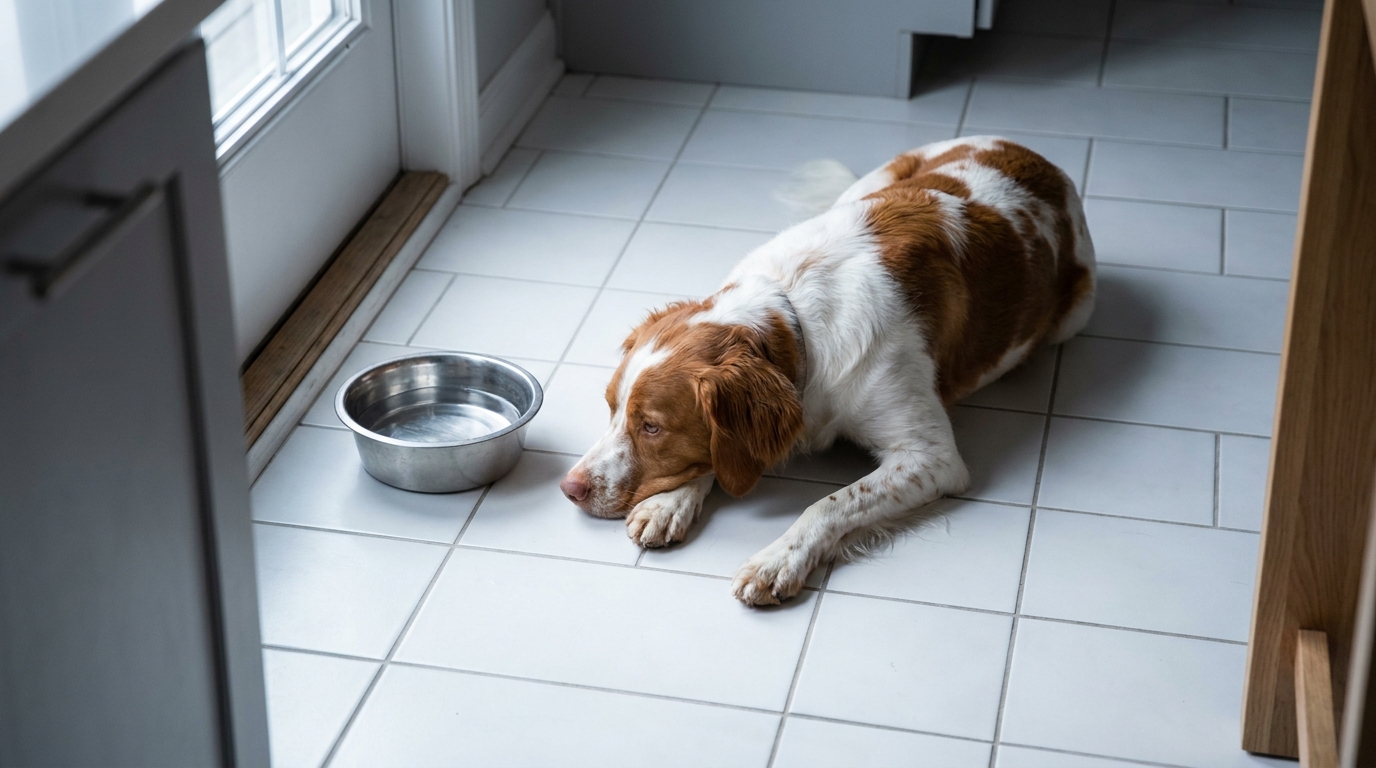
An illness that starts in the waiting period will not be covered, so waiting will not help; get your dog seen now and pay for that visit yourself.
If your dog has trouble breathing, collapses, has a seizure, is bleeding heavily, has a swollen or hard belly, cannot urinate, is overheating or may have been poisoned, go to an in-person emergency vet now and sort out the insurance later.
If none of those signs are present, take a breath. If you searched for 'dog sick during pet insurance waiting period', you are probably worried about two things: the policy will not pay yet, and a vet visit might create a pre-existing-condition exclusion. Under the NAIC model definition of a pre-existing condition, though, the symptoms already count whether or not a veterinarian sees your dog. Below: what the waiting period means, what to do tonight, and what an online vet can and cannot do.
What the waiting period actually means for your new policy
In plain words, a waiting period is the time after your policy starts that must pass before some or all coverage begins, which is also how the NAIC Pet Insurance Model Act (Section 3J) defines it. The NAIC's pet insurance page notes that many companies have waiting periods before benefits begin.
The model act is a template NAIC members adopted in Summer 2022 for states to consider; it is not automatically the law in Florida, New York or Virginia. Under that model, waiting periods for illnesses or for orthopedic conditions not caused by an accident do not exceed 30 days, and "Waiting periods for accidents are prohibited." Your own policy controls how long your wait is and what it applies to.
Why waiting to see a vet will not protect your coverage
The NAIC model act (Section 3F) treats a condition as preexisting when any of the following is true before the policy's effective date or during any waiting period:
- a veterinarian provided medical advice about it;
- the pet received previous treatment for it; or
- "based on information from verifiable sources, the pet had signs or symptoms directly related to the condition for which a claim is being made."
That third limb matters tonight. The vomiting, the limp or the scratching is the symptom, and it exists whether a veterinarian writes it down or not; the model act does not say what counts as a verifiable source, so an insurer could point to your own texts, photos or a breeder's note. The illness itself, not the visit, is what matters. Skipping the exam does not erase the symptoms; it only delays treatment. The NAIC also notes that most pet insurance companies exclude pre-existing conditions.
One point works in your favor. Under NAIC Section 5A, the pet insurer has the burden of proving that the preexisting-condition exclusion applies. A dated record from a licensed veterinarian pins down exactly what was wrong and when, so an unrelated problem months from now is harder to sweep into the exclusion than a vague gap would allow. Nobody can promise the outcome, but a precise record beats none.
Dog sick during pet insurance waiting period: what to do first
Before anything else, rule out an emergency. The Merck Veterinary Manual lists these as examples of emergencies needing immediate veterinary care, and says to take a pet with heat stroke to the vet right away:
- poisoning;
- severe pain;
- severe or uncontrolled bleeding;
- trouble breathing;
- eye injuries;
- suspected broken bones, or a limb that cannot move;
- heat stroke or overheating.
If any apply, go to an in-person emergency vet now. If none apply, do not watch for a week: get a licensed veterinarian to look at your dog the same day, in person or on video, so a small problem is treated before it becomes a bigger one.
Before the visit, write down:
- when the signs started, and whether they are getting better or worse;
- what your dog ate in the last day or two, treats and scavenged things included;
- how many times your dog has vomited or had diarrhea, and what it looked like;
- whether your dog is eating, drinking and keeping water down;
- energy level: bright and pestering you, or flat and hiding.
Take a short, clear phone video of the symptom. Keep every receipt and visit summary from now on in one folder.
What not to do while you are in the waiting period
- Do not delay care hoping to keep the illness off the record. Under the NAIC definition, the symptoms already are the record.
- Do not misstate dates or symptoms to the insurer. An honest timeline is your best footing later.
- Do not give human medicines or guess at doses. This is dangerous and can mask serious underlying problems.
- Do not treat a video visit as a way to hide the illness. A RexVet visit is a real veterinary consultation that creates a dated medical record; it cannot hide anything from an insurer.
- Do not assume a video visit waives the waiting period. Under NAIC Section 5B, a waiver requires a medical examination the insurer may specify; your policy says what counts.
Do not let fear of a pre-existing-condition label keep you from getting the guidance your dog needs today.
Paying out of pocket: what a video visit gives you
RexVet's veterinarians are licensed in Florida, New York and Virginia, and they are available 24/7, including nights, weekends and holidays. You must be located in one of those three states during the visit. A visit is one flat fee, and you can book an appointment from your phone.
On camera, the veterinarian takes the history, looks at your dog, watches your video, and asks you to show gums, belly, skin or how your dog moves. Then the veterinarian says plainly whether this is a watch-at-home case with a home-care plan or an in-person case that needs hands-on testing. Afterward you get a written visit summary for your file, a dated record of what was seen and advised.
What a RexVet online vet can and cannot do for a sick dog in the waiting period
A RexVet veterinarian can:
- triage how serious the signs are, and review your notes and phone video;
- give a home-care plan for mild vomiting, diarrhea, itching, mild limping or an appetite change;
- name the specific signs that mean stop watching and go in;
- document the visit as a dated medical record;
- if the veterinarian decides medication is appropriate, they can prescribe where state rules allow.
A RexVet veterinarian cannot:
- waive or shorten a waiting period, or decide what your insurer covers;
- hide a condition from your insurer;
- run bloodwork, x-rays or a hands-on exam;
- give fluids or injections;
- treat an emergency;
- prescribe controlled substances.
In Florida, prescriptions based only on a telehealth evaluation are limited to up to 14 days of treatment (up to one month for products labeled solely for flea and tick control), may not be renewed without an in-person examination, and may not include controlled substances without an in-person physical exam (Florida Statutes 474.2021). The Florida telehealth guide explains those rules.
Online vet or in person: which one your sick dog needs right now
In person now means every sign in the bold line at the top, plus anything that needs hands-on testing:
- your dog cannot keep water down;
- a limp, floppy or unresponsive puppy;
- a hard or swollen belly;
- straining to urinate, or not urinating;
- pale or white gums.
These often need bloodwork, x-rays, fluids or injections that no video visit can deliver. The emergency vet guide walks through those decisions.
Video first means mild signs in a dog that is otherwise bright, drinking and breathing normally: loose stools, a single vomit, scratching, a mild limp or a skipped meal. A video visit cannot replace an emergency clinic, and if the veterinarian sees something that needs in-person diagnostics, you will be told plainly to go in.
If your dog is bright, drinking and breathing normally, you can book a RexVet video visit now for $64.99. RexVet's veterinarians are licensed in Florida, New York and Virginia only and are available 24/7. It is triage and a dated record, not a substitute for an emergency clinic.
Florida, New York and Virginia: what the rules mean for your visit
In Florida, Florida Statutes 474.2021 lets a veterinarian establish the veterinarian-client-patient relationship with an initial telehealth evaluation done by synchronous, audiovisual communication. The veterinarian must use sound professional judgment about whether telehealth is an appropriate way to give advice or treatment. The prescribing limits above apply to any telehealth-only visit.
In Virginia, Va. Code 54.1-3303 says a bona fide veterinarian-client-patient relationship can rest on an examination made either physically or "by the use of instrumentation and diagnostic equipment through which images and medical records may be transmitted electronically," with the veterinarian "available to provide follow-up care."
In New York, the New York State Education Department's practice guidelines say a valid relationship requires the veterinarian to be "personally acquainted with the keeping and care of the patient" through a timely examination, and to remain available for follow-up; a veterinarian should only prescribe once that relationship exists and the drug is therapeutically indicated. RexVet's veterinarians are licensed in Florida, New York and Virginia; any medication decision is the veterinarian's, under the rules of the state you are in.
After the visit: records, the rest of the waiting period, and your first claim
Put the visit summary and receipt in the folder with your notes on when the signs began. That dated record is what the insurer looks at, and since the insurer must prove a preexisting-condition exclusion applies (NAIC Section 5A), a precise record helps you more than a blank spot.
Two more NAIC model facts: under Section 3J, waiting periods may not be applied to renewals of existing coverage, and under Section 3F, a condition covered on a policy cannot be considered preexisting on any renewal. Again, your own policy controls.
Once the waiting period ends, ask the insurer in writing how the illness will be classified going forward, and keep the answer. Nobody can promise the result, but a written answer beats a surprise later. For reimbursement after paying a veterinarian yourself, read whether pet insurance covers online vet visits; for submitting a RexVet visit summary, see online vets and pet insurance in Florida, New York and Virginia.
You do not have to sit through the rest of the waiting period guessing. If your dog has none of the emergency signs above but is not right, you can book a video visit now with a RexVet veterinarian for $64.99, 24/7; RexVet's veterinarians are licensed in Florida, New York and Virginia only. The veterinarian will say plainly whether your dog can be watched at home or needs to be seen in person tonight.
Frequently asked questions
What happens if my dog gets sick during the pet insurance waiting period?
The illness will not be covered by that policy. The NAIC's pet insurance page says most pet insurance companies exclude pre-existing conditions, and under the NAIC model definition a condition with signs or symptoms during the waiting period is preexisting. Seek veterinary care now rather than waiting for the policy to kick in.
If I do not take my dog to the vet, will the illness still count as pre-existing?
Yes, it likely will. The NAIC definition counts signs or symptoms shown by information from verifiable sources, not only veterinary records. A clear, dated medical record from a licensed veterinarian can actually help you prove exactly when an issue started and what it was.
Can an online vet visit shorten or waive my pet insurance waiting period?
No, a video visit cannot change the terms of your insurance contract. Under the NAIC model, an insurer that uses a waiting period must allow a waiver after a medical examination, which it may require a licensed veterinarian to perform after purchase. Your policy says what counts; do not assume a RexVet video visit satisfies that requirement.
Is a video vet visit cheaper than an in-person exam while I am paying out of pocket?
A RexVet video visit is one flat fee per visit. Whether that is less than a clinic exam depends on the clinic, and a video visit cannot replace hands-on tests. Its value in the waiting period is a dated veterinary opinion tonight on whether your dog can be watched at home or needs to go in. If the veterinarian says go in, that trip is not optional.
Will my insurer see the record from an online vet visit?
Yes, any consultation with a licensed veterinarian creates a formal medical record, and the insurer can ask for it. It may confirm that the illness started during the waiting period, and it gives a clear, dated timeline of your dog's symptoms and the advice you received.
Sources
FAQs
What happens if my dog gets sick during the pet insurance waiting period?
The illness will not be covered by that policy. The NAIC's pet insurance page says most pet insurance companies exclude pre-existing conditions, and under the NAIC model definition a condition with signs or symptoms during the waiting period is preexisting. Seek veterinary care now rather than waiting for the policy to kick in.
If I do not take my dog to the vet, will the illness still count as pre-existing?
Yes, it likely will. The NAIC definition counts signs or symptoms shown by information from verifiable sources, not only veterinary records. A clear, dated medical record from a licensed veterinarian can actually help you prove exactly when an issue started and what it was.
Can an online vet visit shorten or waive my pet insurance waiting period?
No, a video visit cannot change the terms of your insurance contract. Under the NAIC model, an insurer that uses a waiting period must allow a waiver after a medical examination, which it may require a licensed veterinarian to perform after purchase. Your policy says what counts; do not assume a RexVet video visit satisfies that requirement.
Is a video vet visit cheaper than an in-person exam while I am paying out of pocket?
A RexVet video visit is one flat fee per visit. Whether that is less than a clinic exam depends on the clinic, and a video visit cannot replace hands-on tests. Its value in the waiting period is a dated veterinary opinion tonight on whether your dog can be watched at home or needs to go in. If the veterinarian says go in, that trip is not optional.
Will my insurer see the record from an online vet visit?
Yes, any consultation with a licensed veterinarian creates a formal medical record, and the insurer can ask for it. It may confirm that the illness started during the waiting period, and it gives a clear, dated timeline of your dog's symptoms and the advice you received.
Sources
Medically Reviewed
Reviewed by Dr. Tiffany Delacruz, DVM — licensed veterinarian and CEO of RexVet. Last reviewed September 19, 2026.
Content is for informational purposes and does not replace professional veterinary advice.
Chief Executive Officer · Licensed Veterinarian
Dr. Delacruz is a licensed Doctor of Veterinary Medicine specializing in preventive care and veterinary telehealth. She reviews all health content on RexVet to ensure accuracy and clinical relevance.
Sources & References
- · American Veterinary Medical Association — Telehealth Guidelines
- · AVMA — Pet Care Resources
- · U.S. FDA — Animal & Veterinary
Need an Expert Opinion on This Topic?
Connect with a certified vet via video call in minutes
Talk to Vet Now