
Dog's Nose Turning Pink? Snow Nose or a Reason to See a Vet
By RexVet Team | Reviewed by Dr. Tiffany Delacruz, DVM
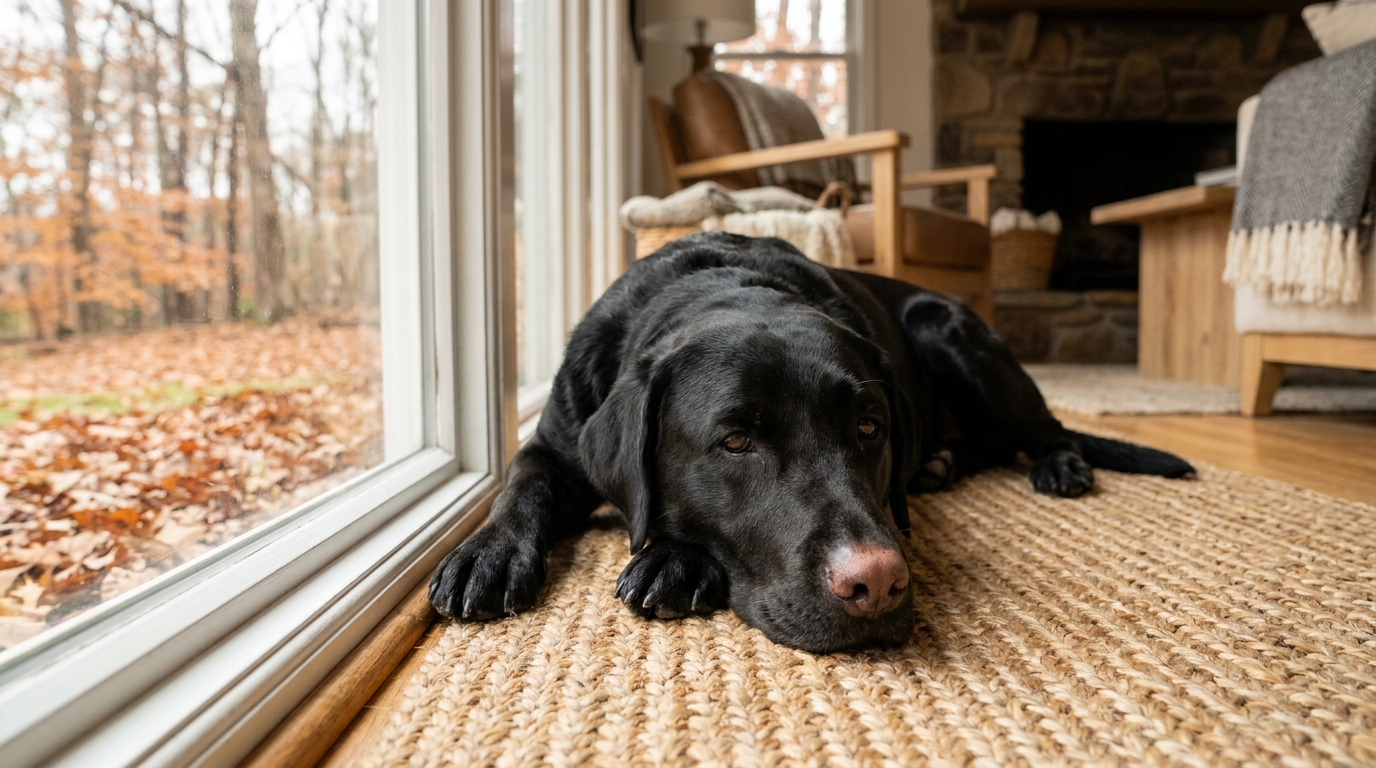
Dog's nose turning pink as the days get shorter? It is often snow nose, which is harmless. Crusts, sores or a smooth, flat surface need a vet.
If your dog's nose is bleeding heavily or will not stop bleeding, or is suddenly swollen, go to a vet in person now; open sores, crusts or ulcers on the nose need an in-person exam soon.
A black Lab's nose fading to pink as winter comes on can look alarming. This guide explains what snow nose is, the signs that point to something else, and a look-only check you can do at home in good daylight.
Dog's nose turning pink: what snow nose is
According to PetMD, "Snow nose is a harmless, temporary condition where a dog's nose turns from black to pink, often during winter months."
Nobody knows exactly why it happens. PetMD says "The exact cause is unknown, but it may be related to weather, reduced sunlight, enzyme changes, or genetics."
Some dogs seem to get it more than others. PetMD says snow nose is "most commonly seen in Labrador Retrievers, Siberian Huskies, and Bernese Mountain Dogs."
One point matters before anything else: this guide cannot tell you that your dog's pink nose is snow nose. A nose losing pigment can also be an early sign of a skin condition, so the rest of this guide is about telling the two apart and knowing when a vet needs to look.
Red flags first: when a pink nose is not snow nose
Start with the urgent signs. If the nose is bleeding heavily or will not stop bleeding, or it is suddenly swollen, take your dog to a vet or an emergency clinic in person now. Open sores, crusts or ulcers on the nose need an in-person exam soon.
The key difference between snow nose and a problem is texture. PetMD puts it simply: "With snow nose, only the color of the nose is affected, not the texture of the nose."
One condition that can look similar is discoid lupus erythematosus, often shortened to DLE. According to VCA Animal Hospitals, dogs with DLE typically develop "erosions, ulcers, and de-pigmented areas" around the nose. VCA also notes that in many dogs the hairless skin around the nostrils "becomes smooth, losing its bumpy, cobblestone-like texture."
These sores can also bleed. VCA warns that "if skin lesions occur near a major blood vessel, heavy bleeding can result." That is why heavy or non-stop bleeding goes straight to an in-person vet.
Changes that go beyond color include:
- Bleeding from the nose or the nose skin, including sneezing blood
- Sudden swelling
- Open sores, ulcers or raw spots
- Crusts or scaling
- Redness
- A surface that has turned smooth and flat instead of bumpy
Any of these means the pink color should not be treated as snow nose until a vet has examined your dog.
The texture check you can do at home
A close look in daylight can tell you whether the change is only color or also texture. It cannot tell you what is causing it.
- Take your dog near a window or outside in good natural light.
- Look closely at the surface of the nose. A close-up photo helps, because you can zoom in and compare it with older pictures.
- Do not press on or pick at crusts, sores or bleeding areas. This check is for your eyes only.
A normal nose has a bumpy, cobblestone-like surface. Fading color on that normal bumpy surface fits snow nose, but it does not prove it.
That is because lupus can start quietly. The University of Minnesota dermatology handbook says "Lesions usually start as depigmentation, erythema, and scaling of the nasal planum and progress to deep erosions or shallow ulcers, crusts and loss of architecture of the nasal planum skin in chronic cases." Erythema means redness, and the nasal planum is the hairless tip of the nose.
So color change plus redness or scaling needs a vet, and so does a nose that looks smooth, flat, crusted or raw. PetMD's advice is clear: "If you notice changes other than the color of your dog's nose, bring them to the vet for an accurate diagnosis."
Good pictures make any vet visit easier. Our guide to which photos and videos to send an online vet shows what to capture.
Why shorter days matter, and can it happen in Florida?
PetMD links snow nose to winter and to shorter days: "The shorter days of the winter months might contribute to pink noses in dogs."
So if you live in New York or Virginia, winter is a good time to keep an eye on your dog's nose. Florida dogs are not left out, though. PetMD notes: "Snow nose in dogs most commonly happens in the winter months; however, it has been seen in some dogs throughout the summer or in warmer climates too."
In strong sun, a pale nose needs more attention, not less. VCA says "ultraviolet (UV) light appears to worsen DLE and the condition is more common in sunny climates." If you live in Florida and your dog's nose is losing color, the texture check matters even more, and any redness, scaling or crusting is worth showing a vet.
A pink nose and the sun
A pink nose can sunburn. PetMD advises protecting it "from sunburn even on cloudy days."
Sun also matters for the look-alike condition. The University of Minnesota handbook says lupus lesions "are exacerbated by sunlight because the skin pigment is lost."
Ask your veterinarian which sun protection is safe for your dog, and do not use a product made for people. Your vet can also tell you whether shade and walk timing are enough for your dog's nose.
If the nose is also dry or cracked, our guide to dry nose causes in dogs explains when that needs a vet.
Does snow nose need treatment?
If your vet agrees it is snow nose, PetMD says it "does not need treatment as it is a temporary, harmless condition." PetMD adds: "Veterinarians recommend a watch and wait approach."
The color usually comes back on its own. According to PetMD, "Dogs will slowly get pigment back in their noses once the weather begins warming up again and there is more sunlight each day."
There is also nothing you can do to stop it. PetMD explains: "Because veterinarians don't know exactly what causes snow nose in dogs, there's no way to prevent dogs' noses from turning pink from this condition."
You do not need to buy balms, supplements or other products for snow nose. What you can do is keep watching:
- If the nose stays pale well after the days lengthen, have it checked.
- If the texture changes, or you see redness, scaling, crusts or sores, have it checked.
- If it bleeds heavily or swells suddenly, go to a vet in person now.
What a RexVet online vet can and cannot do for a pink nose
A video visit works as a first look and a triage step. In a video visit, the veterinarian can look at close-up daylight photos and live video of the nose, check the texture and look for crusting, and ask about your dog's breed, age and when the color started to change. From there, the vet can tell you whether watching and waiting is reasonable or whether your dog needs an in-person exam.
If the veterinarian decides medication is appropriate, they can prescribe where state rules allow. In Florida, a veterinarian who has seen your pet only by video may prescribe only FDA-approved animal drugs used as labeled, for up to 14 days (1 month for flea-and-tick-only products), and cannot renew without an in-person exam.
There are firm limits. A video visit cannot include a biopsy or a culture. As VCA notes, "The diagnosis of DLE requires a skin biopsy," and that is done in person. A vet on video also cannot promise that a pink nose is only snow nose.
Before the visit, it helps to have your pictures ready. See how to upload photos and videos for your vet.
RexVet is a 501(c)(3) non-profit, and its vets are available 24/7, including nights, weekends and holidays. RexVet's veterinarians are licensed in Florida, New York and Virginia, and a video visit is $64.99. If the change is only color and you want a vet to look, you can book a RexVet video visit.
When to be seen in person in Florida, New York or Virginia
Go to an emergency vet in person now if your dog has:
- Heavy or non-stop bleeding from the nose, including sneezing blood
- Sudden swelling of the nose or face
Book an in-person exam soon if you see:
- Crusts, sores, ulcers or scaling on the nose
- Redness along with the color change
- A smooth, flat surface where the nose used to be bumpy
- Changes spreading beyond the nose. VCA says lupus lesions "most commonly affect the skin around the eyes, around the lips, on the ear flaps (pinnae), and around the genitals (rarely)."
- A nose that stays pale well after the days lengthen
At an in-person visit, your vet can examine the nose up close and take a biopsy if one is needed. In Florida, a telehealth vet must give you the contact information for at least one physical veterinary clinic near you. If you do not already have a local vet, it is worth finding one before the winter months.
If the change is only color and you would like a veterinarian's opinion without leaving home, you can book a RexVet video visit day or night. Vets are available 24/7, a video visit is $64.99, and RexVet's veterinarians are licensed in Florida, New York and Virginia.
Frequently Asked Questions
Is snow nose painful for my dog?
No. PetMD says "Snow nose in dogs is not a painful condition." If the nose seems sore, bleeds, crusts or looks raw, that goes beyond a color change, and your dog needs an in-person exam.
Will my dog's nose turn black again?
If it is snow nose, it usually does. PetMD says dogs "will slowly get pigment back in their noses once the weather begins warming up again and there is more sunlight each day." If the nose stays pale well after the days lengthen, or the texture changes, have it checked.
Which breeds get snow nose?
PetMD says snow nose is "most commonly seen in Labrador Retrievers, Siberian Huskies, and Bernese Mountain Dogs." If you have one of these breeds, watch the surface closely: it should keep its normal bumpy texture. A nose that turns smooth, flat, scaly or crusted needs an in-person exam.
Can a dog get snow nose in Florida?
It can. PetMD notes snow nose "has been seen in some dogs throughout the summer or in warmer climates too." In strong sun, a pale nose needs more care, because VCA says lupus is more common in sunny climates. Ask your vet which sun protection is safe for your dog.
How can I tell snow nose from lupus?
With snow nose, only the color changes and the surface stays bumpy. Lupus can begin with color loss, redness and scaling (University of Minnesota) and later cause sores, crusts and a smooth, flat surface, so you cannot rule it out at home. VCA says "The diagnosis of DLE requires a skin biopsy," which is done in person. Heavy or unstoppable bleeding means go in person now.
FAQs
Is snow nose painful for my dog?
No. PetMD says "Snow nose in dogs is not a painful condition." If the nose seems sore, bleeds, crusts or looks raw, that goes beyond a color change, and your dog needs an in-person exam.
Will my dog's nose turn black again?
If it is snow nose, it usually does. PetMD says dogs "will slowly get pigment back in their noses once the weather begins warming up again and there is more sunlight each day." If the nose stays pale well after the days lengthen, or the texture changes, have it checked.
Which breeds get snow nose?
PetMD says snow nose is "most commonly seen in Labrador Retrievers, Siberian Huskies, and Bernese Mountain Dogs." If you have one of these breeds, watch the surface closely: it should keep its normal bumpy texture. A nose that turns smooth, flat, scaly or crusted needs an in-person exam.
Can a dog get snow nose in Florida?
It can. PetMD notes snow nose "has been seen in some dogs throughout the summer or in warmer climates too." In strong sun, a pale nose needs more care, because VCA says lupus is more common in sunny climates. Ask your vet which sun protection is safe for your dog.
How can I tell snow nose from lupus?
With snow nose, only the color changes and the surface stays bumpy. Lupus can begin with color loss, redness and scaling (University of Minnesota) and later cause sores, crusts and a smooth, flat surface, so you cannot rule it out at home. VCA says "The diagnosis of DLE requires a skin biopsy," which is done in person. Heavy or unstoppable bleeding means go in person now.
Medically Reviewed
Reviewed by Dr. Tiffany Delacruz, DVM — licensed veterinarian and CEO of RexVet. Last reviewed September 29, 2026.
Content is for informational purposes and does not replace professional veterinary advice.
Chief Executive Officer · Licensed Veterinarian
Dr. Delacruz is a licensed Doctor of Veterinary Medicine specializing in preventive care and veterinary telehealth. She reviews all health content on RexVet to ensure accuracy and clinical relevance.
Sources & References
- · American Veterinary Medical Association — Telehealth Guidelines
- · AVMA — Pet Care Resources
- · U.S. FDA — Animal & Veterinary
Need an Expert Opinion on This Topic?
Connect with a certified vet via video call in minutes
Talk to Vet Now