
What Photos and Videos Should I Send to an Online Vet?
By RexVet Team | Reviewed by Dr. Tiffany Delacruz, DVM
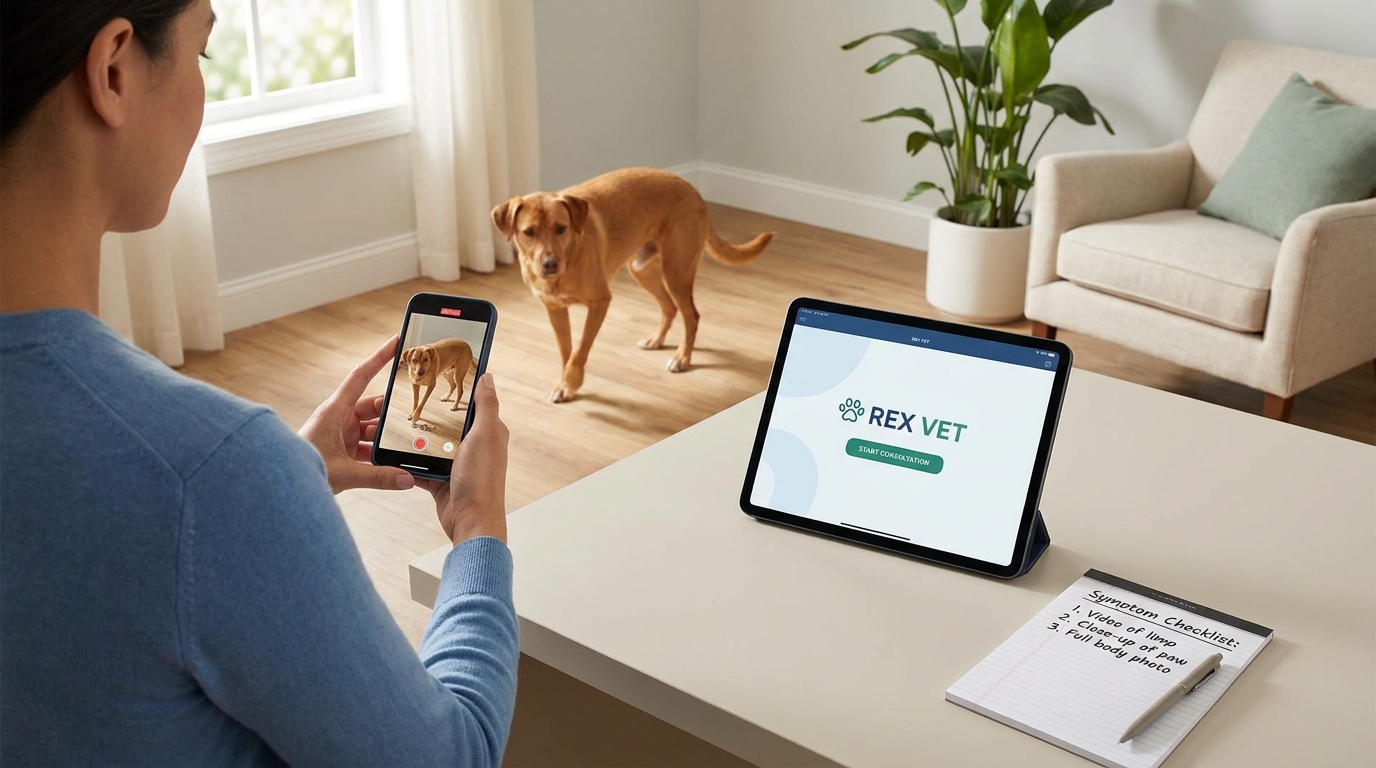
When your pet is feeling under the weather, knowing exactly what photos and videos to send to an online vet can make a significant difference in the speed and accuracy of your virtual consultation. Providing clear, high-quality visuals allows our licensed veterinarians to better assess your pet’s condition from the comfort of your home. To ensure the best outcome, capture a full-body shot, a clear close-up of the affected area, and a 15 to 60-second video of any concerning behaviors like limping or coughing. Always use a well-lit area and keep your camera steady to avoid blurry images.
Understanding what photos and videos to send to an online vet helps you act as a vital partner in your pet’s care. Beyond visuals, keep notes on your pet’s appetite, energy levels, and any recent changes in their routine. If you are ready to get professional guidance, RexVet offers a convenient, $64.99, no-subscription option for non-emergency issues. Please remember that this service is not for emergencies; if your pet shows signs of breathing trouble, seizures, or severe trauma, seek immediate in-person care. Book a RexVet video visit today to get the support your pet deserves.
Why Quality Visuals Improve Your Pet's Care
When you prepare for a virtual vet appointment , high-quality media acts as your pet's voice. Understanding What Photos and Videos Should I Send to an Online Vet? is essential for a precise diagnosis . Clear visuals help our team differentiate between minor irritations and conditions requiring urgent attention. By capturing the right angles, you bridge the gap between your home and our clinic, often preventing unnecessary stress for your companion.
To ensure our licensed veterinarians get the full picture, consider these tips when documenting your pet's symptoms:
- Comparison Views: Always photograph the healthy side alongside the affected area to show baseline anatomy.
- Stable Motion: When filming a pet symptom video, keep your elbows tucked in to reduce camera shake, which makes it easier to track subtle movements like tremors or limps.
- Contextual Lighting: Avoid harsh flashes that wash out skin or eye details; natural, indirect light provides the most accurate color representation.
Asking What Photos and Videos Should I Send to an Online Vet? helps you become a proactive partner in your pet's wellness journey. Providing a clear timeline of changes alongside your media empowers us to provide the best care. If you have concerns, book a RexVet video visit today for expert guidance.
Essential Photos for Every Virtual Visit
When you ask What Photos and Videos Should I Send to an Online Vet?, consider that your documentation acts as the primary diagnostic tool for our team. Beyond simple snapshots, providing a comprehensive history is vital. Before your session, gather your pet's current medication list, recent dietary changes, and a brief log of symptom onset. This context allows our licensed veterinarians to assess your pet's health records more effectively during your virtual vet appointment.
To capture the best data, focus on environmental control. A well-lit area is crucial for revealing skin irritations or coat issues that are otherwise hidden in shadows. If you are wondering What Photos and Videos Should I Send to an Online Vet?, remember that steady, short clips of your pet moving or resting often provide more insight than static images. For those needing professional triage, RexVet offers a $64.99, no-subscription path to expert advice 24/7. Please note that this service is strictly for non-emergency concerns. If your companion exhibits signs of severe pain, breathing distress, or trauma, please seek emergency care at a physical clinic immediately. Book a RexVet video visit to begin your consultation.
How to Film Your Pet's Symptoms Successfully
When you ask yourself, What Photos and Videos Should I Send to an Online Vet?, the goal is to provide a clear window into your pet's daily life. To capture the best footage, focus on stable camera techniques by resting your elbows against your torso to prevent shaky hands. This simple trick makes a massive difference when our licensed veterinarian team needs to analyze subtle movements or gait changes during a video consultation.
You should prioritize well-lit areas, preferably using natural daylight near a window to avoid the harsh glare of a camera flash. If you are wondering What Photos and Videos Should I Send to an Online Vet?, consider recording a 30-second clip of your pet walking on a non-slip surface, as this helps us evaluate potential orthopedic issues more accurately than static images. Providing this level of detail allows our experts to offer precise guidance without the stress of a clinic visit. If you need professional triage for non-emergency issues, book a RexVet video visit today for a $64.99, no-subscription consultation. Please remember that this service is not for emergencies; if your pet shows signs of severe distress, breathing trouble, or trauma, seek in-person care immediately.
Gathering Your Pet's Medical History Details
When preparing for your virtual consultation, organizing your pet's medical history is just as vital as capturing clear media. If you are wondering What Photos and Videos Should I Send to an Online Vet?, start by gathering a concise timeline of when symptoms first appeared. Note any recent dietary shifts, changes in household routine, or new medications your pet has received. Having this information ready allows our licensed veterinarian team to perform a more accurate physical examination during your video consultation.
Beyond the timeline, keep a list of current prescriptions or supplements handy. Documenting your pet's energy levels and appetite over the last 48 hours provides essential context that helps us distinguish between minor issues and situations requiring emergency care. When considering What Photos and Videos Should I Send to an Online Vet?, remember that these details act as the foundation for our triage process. For non-emergency concerns, RexVet provides a simple, $64.99, no-subscription path to professional guidance. Book a RexVet video visit today to get the expert support your pet needs from the comfort of home.
When to Use RexVet for Care
When you are navigating a pet health concern, knowing What Photos and Videos Should I Send to an Online Vet? is a powerful way to accelerate your path to answers. Our non-profit platform, RexVet, empowers you to act as a diagnostic partner by providing high-quality visual data that helps our licensed U.S. veterinarians assess your pet effectively. By choosing to use our $64.99, no-subscription service, you gain 24/7 access to professional triage, which often resolves non-emergency issues without the stress of a clinic visit.
When considering What Photos and Videos Should I Send to an Online Vet?, focus on capturing the full context of your pet's environment. For instance, if your cat is grooming excessively, a video showing the behavior in their natural setting is more valuable than a static image. Always prioritize clear, steady footage and avoid using a camera flash, which can distort skin or eye conditions. Remember, this service is designed for non-emergency guidance. If your pet experiences breathing trouble, seizures, or trauma, please seek immediate in-person emergency care. Book a RexVet video visit today to receive the compassionate, affordable support your pet deserves.
Recognizing When Your Pet Needs Emergency Care
When your pet exhibits subtle health changes, you might wonder, What Photos and Videos Should I Send to an Online Vet? Providing accurate visual data is crucial for our licensed veterinarians to assess your pet effectively. Beyond the basics, try to capture your pet's environment to show how they interact with their surroundings. For instance, if your dog is pacing or showing signs of discomfort, a 30-second clip of them walking on a non-slip floor helps our team evaluate their gait without the stress of a clinic visit.
When considering What Photos and Videos Should I Send to an Online Vet?, remember that consistency is key. If you are documenting a skin issue, use a ruler or a common object like a coin next to the area for scale. This simple trick provides our team with a clear sense of size. Always ensure your media is in a well-lit area to avoid shadows that hide important details. If you need professional guidance, book a RexVet video visit today for a simple, $64.99, no-subscription consultation. Please remember that this service is not for emergencies; if your pet shows signs of breathing trouble, seizures, or trauma, seek immediate in-person care.
Are online vet chats legit?
When you start a virtual vet appointment, providing high-quality media is the best way to help our team triage your pet's needs. You might ask, What Photos and Videos Should I Send to an Online Vet? To get the most accurate assessment, start by capturing a wide shot that shows your pet's entire body, followed by a clear, focused close-up of the specific area of concern. If you are documenting a limp, a 15-second video of your pet walking on a flat, non-slip surface is incredibly helpful for our licensed veterinarians to observe their gait.
When considering What Photos and Videos Should I Send to an Online Vet?, remember that lighting is everything. Avoid using a harsh camera flash, which can wash out subtle skin redness or discharge. Instead, use natural, indirect light to ensure the true colors are visible. If you are ready to get professional advice, book a RexVet video visit for a flat $64.99 fee. This no-subscription service connects you with experts 24/7. Please note that this is for non-emergency issues only; if your pet shows signs of severe lethargy, trauma, or breathing distress, seek immediate in-person emergency care.
Can I send a video to a vet?
When you seek professional advice for your pet, you might wonder, What Photos and Videos Should I Send to an Online Vet? Providing the right visual evidence helps our licensed veterinarians quickly assess your pet's needs. Beyond simple images, we recommend capturing a pet symptom video that shows your animal in their natural environment. If your pet is experiencing mobility issues, a short clip of them walking on a flat, non-slip surface is often more informative than a still photo.
To ensure our team gets the best data, prioritize well-lit areas and avoid using a camera flash, which can distort skin colors. If you are asking, What Photos and Videos Should I Send to an Online Vet?, consider including a scale reference, such as a coin next to a skin lesion, to help us evaluate the severity. Our RexVet service provides a $64.99, no-subscription video consultation option 24/7 for non-emergency concerns. Please note that this service is not for emergencies; if your pet shows signs of breathing trouble, seizures, or trauma, seek immediate in-person care. Book a RexVet video visit today for expert guidance.
Can I send a photo to a vet?
When you prepare for a remote consultation, understanding What Photos and Videos Should I Send to an Online Vet? is key to getting a fast, accurate assessment. Beyond static images, providing a pet symptom video helps our team see how your companion moves or interacts with their environment. For instance, if your dog has a persistent cough, a short clip capturing the sound and rhythm of the cough provides more diagnostic value than any written description. When considering What Photos and Videos Should I Send to an Online Vet?, remember to include a frame of reference, such as a common household object next to a skin bump, to help our veterinarians gauge actual size.
You should also document your pet's daily habits, including recent appetite changes or energy dips, as these details round out the clinical picture. RexVet makes this process seamless with a $64.99, no-subscription fee for 24/7 expert triage. Book a RexVet video visit today to get professional guidance from the comfort of home. Please note that this service is for non-emergencies; if your pet shows signs of severe lethargy, trauma, or breathing distress, seek immediate in-person care.
Is Dr. Chris Brown really a vet?
When exploring the credentials of online professionals, pet parents often ask, What Photos and Videos Should I Send to an Online Vet? Dr. Chris Brown is a well-known television personality and veterinarian, but for your own pet’s specific needs, you require a direct connection to a licensed professional. At RexVet, we bridge that gap by connecting you with U.S. licensed veterinarians who can assess your pet’s unique needs during a live video visit.
Knowing What Photos and Videos Should I Send to an Online Vet? is a simple way to help our team provide accurate guidance. We recommend including a pet symptom video that captures movement, clear photos of the affected area, and a brief summary of recent changes. By providing these details, you help our experts triage non-emergency concerns efficiently. This proactive approach often saves you from unnecessary clinic visits. If you are ready to get professional support, book a RexVet video visit today for a flat $64.99 fee. Please remember that this service is not for emergencies; if your pet shows signs of severe distress, such as breathing trouble or trauma, please seek immediate in-person care.
Frequently Asked Questions
What photos and videos should I send to an online vet to get the best advice?
When considering what photos and videos to send to an online vet, start with a full-body shot of your pet to provide context. Follow this with clear, close-up photos of the affected area, such as a skin rash or wound. If the issue involves an eye, ear, or paw, always include a comparison photo of the healthy side. Finally, record a 15-60 second pet symptom video that captures the behavior in a well-lit area. This visual evidence helps our licensed veterinarians provide a more accurate assessment of your pet's condition.
How do I film my pet's symptoms effectively for a virtual vet appointment?
To learn how to film dog symptoms or cat behaviors, focus on stability and lighting. Use a well-lit area, preferably with natural light, and keep your camera steady to avoid blurry footage. Start by filming from a distance to show the pet's overall posture and movement, then slowly move closer to focus on the specific area of concern. If your pet is limping or coughing, try to capture the action from the side. A clear, steady video is one of the most helpful tools when determining what photos and videos to send to an online vet.
Can I use RexVet if I am not sure if my pet's issue is an emergency?
RexVet is designed for non-emergency pet issues. If you are unsure, please review our guidelines: seek immediate in-person care for breathing trouble, seizures, severe lethargy, suspected poisoning, heavy bleeding, trauma, severe pain, or vomiting blood. For non-urgent concerns like skin irritations or mild digestive upset, our $64.99 live video visit lets you show your photos and videos to a licensed vet. Having the right photos and videos ready helps the vet assess your pet during the video visit and decide the best path forward.
What information should I include alongside my pet's photos and videos?
Beyond the visual media, provide a symptom timeline detailing when the issue started and if it has changed over time. Include a current list of medications or supplements your pet is taking, along with notes on their recent appetite and energy levels. Having these pet health records ready helps the veterinarian understand the full picture. When you ask yourself what photos and videos to send to an online vet, remember that these supporting details are just as important as the images themselves for a thorough virtual consultation.
Why is it better to send photos and videos instead of just describing symptoms?
Visual evidence allows our licensed veterinarians to see exactly what you are seeing, which significantly improves diagnostic accuracy. A description of a skin lesion or a limp is helpful, but seeing the color, texture, or movement pattern provides immediate clarity. By capturing high-quality media, you reduce the need for stressful, unnecessary trips to a clinic. When you prepare for your appointment by considering what photos and videos to send to an online vet, you are actively participating in your pet's care and helping us provide the most effective guidance from the comfort of your home.
FAQs
What photos and videos should I send to an online vet to get the best advice?
When considering what photos and videos should I send to an online vet, start with a full-body shot of your pet to provide context. Follow this with clear, close-up photos of the affected area, such as a skin rash or wound. If the issue involves an eye, ear, or paw, always include a comparison photo of the healthy side. Finally, record a 15-60 second pet symptom video that captures the behavior in a well-lit area. This visual evidence helps our licensed veterinarians provide a more accurate assessment of your pet's condition.
How do I film my pet's symptoms effectively for a virtual vet appointment?
To learn how to film dog symptoms or cat behaviors, focus on stability and lighting. Use a well-lit area, preferably with natural light, and keep your camera steady to avoid blurry footage. Start by filming from a distance to show the pet's overall posture and movement, then slowly move closer to focus on the specific area of concern. If your pet is limping or coughing, try to capture the action from the side. A clear, steady video is one of the most helpful tools when determining what photos and videos should I send to an online vet.
Can I use RexVet if I am not sure if my pet's issue is an emergency?
RexVet is designed for non-emergency pet issues. If you are unsure, please review our guidelines: seek immediate in-person care for breathing trouble, seizures, severe lethargy, suspected poisoning, heavy bleeding, trauma, severe pain, or vomiting blood. For non-urgent concerns like skin irritations or mild digestive upset, our $64.99 live video visit lets you show your photos and videos to a licensed vet. Having the right photos and videos ready helps the vet assess your pet during the video visit and decide the best path forward.
What information should I include alongside my pet's photos and videos?
Beyond the visual media, provide a symptom timeline detailing when the issue started and if it has changed over time. Include a current list of medications or supplements your pet is taking, along with notes on their recent appetite and energy levels. Having these pet health records ready helps the veterinarian understand the full picture. When you ask yourself what photos and videos should I send to an online vet, remember that these supporting details are just as important as the images themselves for a thorough virtual consultation.
Why is it better to send photos and videos instead of just describing symptoms?
Visual evidence allows our licensed veterinarians to see exactly what you are seeing, which significantly improves diagnostic accuracy. A description of a skin lesion or a limp is helpful, but seeing the color, texture, or movement pattern provides immediate clarity. By capturing high-quality media, you reduce the need for stressful, unnecessary trips to a clinic. When you prepare for your appointment by considering what photos and videos should I send to an online vet, you are actively participating in your pet's care and helping us provide the most effective guidance from the comfort of your home.
Medically Reviewed
Reviewed by Dr. Tiffany Delacruz, DVM — licensed veterinarian and CEO of RexVet. Last reviewed May 19, 2026.
Content is for informational purposes and does not replace professional veterinary advice.
Chief Executive Officer · Licensed Veterinarian
Dr. Delacruz is a licensed Doctor of Veterinary Medicine specializing in preventive care and veterinary telehealth. She reviews all health content on RexVet to ensure accuracy and clinical relevance.
Sources & References
- · American Veterinary Medical Association — Telehealth Guidelines
- · AVMA — Pet Care Resources
- · U.S. FDA — Animal & Veterinary
Need an Expert Opinion on This Topic?
Connect with a certified vet via video call in minutes
Talk to Vet Now