
Dog Paws Burned by Ice Melt or Rock Salt? What to Do in NY
By RexVet Team | Reviewed by Dr. Tiffany Delacruz, DVM
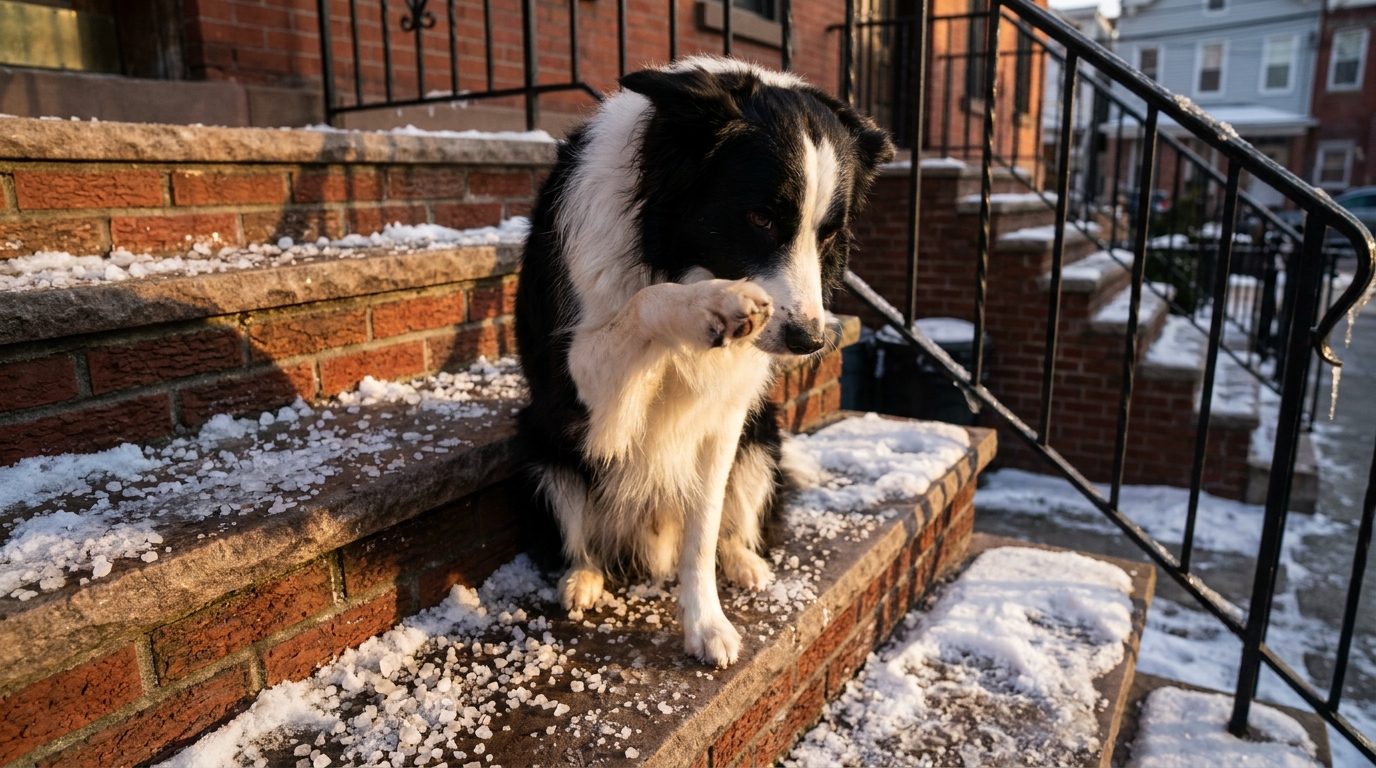
Wash and dry the paws, stop the licking, and check the pads for cracks or raw spots; if your dog is still limping, a vet can look by video.
Go to an in-person emergency vet now, and call ASPCA Poison Control at (888) 426-4435 on the way, if your dog swallowed a mouthful of ice melt or is vomiting repeatedly, stumbling, trembling, seizing or collapsing, or if a pad is bleeding heavily, deeply split, or looks pale, gray or bluish.
Dog paws burned by ice melt look like this at home: a limp after a salted sidewalk, a paw held up, or licking at raw pads. It is not a heat burn but chemical irritation from the salt. Most cases need a wash, a towel and a night of rest; knowing which signs mean go in tonight helps you decide fast.
Dog paws burned by ice melt: what the salt does to the pads
ASPCApro notes that ice melts are often made of sodium chloride, and that other common ingredients are potassium chloride, calcium chloride and magnesium chloride. Pet Poison Helpline ranks calcium salts as the harshest irritants among ice-melt ingredients. None of them burn like heat; the salt irritates the skin, and pellets wedged between the toes rub with every step.
Pet Poison Helpline describes ice melt stuck in the paws causing redness, cracking or chapping, and Cornell notes that paws can get cracks or cuts from ice and salt on the roads. At home that looks like red skin between the toes, split pads, a paw held up, and licking once the dog settles.
First aid tonight: wash, dry, inspect, stop the licking
Start as soon as you are inside; the ASPCA and Cornell give the same routine:
- Wash the feet and stomach to remove ice, salt and chemicals; plain water is enough. Wipe down the paws, legs and belly.
- Remove any snowballs packed between the pads and look for salt pellets still lodged there.
- Pat dry with a clean towel, getting between the toes.
- Check for cracks in the pads or redness between the toes.
- Stop the licking with a cone or a clean sock. ASPCA warns that winter walks can become downright dangerous if ice-melt chemicals are licked off bare paws, so this is first aid, not an afterthought. If the licking predates the snow, see the dog paw licking guide.
Do not put any human cream, ointment or pain reliever on the pads, and do not give your dog any human medicine by mouth.
"Wash and watch" means the dog rests indoors, skips salted walks, and you recheck the pads in the morning. Still sore or raw after washing, with none of the bold-line signs: a veterinarian can look by video. Any bold-line sign: go in person.
Salt burn, cut pad or frostbite? How to tell them apart
- Salt irritation: red, chapped or cracked pads with the skin otherwise a normal color and no deep wound; the wash-and-watch case.
- A cut pad: a split or a flap that bleeds; Cornell notes that ice and salt on the roads can cause it.
- Frostbite: VCA Animal Hospitals says the paws, ears and tail are the most commonly affected tissues; the skin looks pale, gray or bluish, feels cold or brittle, and may be painful or swollen.
If you suspect frostbite, VCA's instructions are specific: carefully warm the area with warm, not hot, water; do not rub or massage it; no heating pad or hair dryer; and seek medical attention immediately. A cut pad and frostbite are both in-person problems; a video visit can help you recognize them but cannot treat them.
My dog licked the salt off and is vomiting: what swallowing ice melt does
Pet Poison Helpline says ingestion of ice melt can cause mild to severe toxicity: upset stomach, vomiting, and neurologic signs such as trouble walking, muscle tremors or seizures. How much went in is the question.
Licked a little off the paws: ASPCApro says that after a skin exposure the primary concern is possible self-limiting drooling, vomiting or diarrhea. A dog that vomited once and is otherwise bright is usually here.
Ate pellets from the bag: ASPCApro says larger ingestions of sodium, potassium or magnesium chloride can lead to more significant vomiting and diarrhea, dehydration and electrolyte abnormalities, and large amounts of calcium chloride may cause painful ulcerations in the mouth and stomach.
The ASPCA's advice is direct: if you think your pet has ingested a potential toxin, contact your veterinarian or ASPCA Poison Control at (888) 426-4435 immediately. Never try to make your dog vomit at home, and do not give salt water, hydrogen peroxide, milk or any human medicine. A swallowed mouthful, repeated vomiting, wobbling or trembling is never a video-first problem.
Is 'pet-safe' ice melt actually safe?
Pet Poison Helpline puts it plainly: urea-based ice melts are generally the ones labeled as safe for use around pets, yet all types of ice melts have a potential to be hazardous. The granules of any product can still pack between the toes and upset the stomach if licked off.
Cornell advises using pet-friendly de-icers whenever possible, which you can do on your own steps. You do not control what the city spreads on the sidewalk, so the after-walk wash-and-dry routine matters more than the label.
Go in person now: the signs that mean an emergency clinic tonight
Go straight to an in-person emergency clinic if you see any of these:
- Repeated vomiting, stumbling, muscle tremors or seizures, the signs Pet Poison Helpline lists for ice-melt toxicity, as well as diarrhea that keeps going, or collapse.
- A known large ingestion: an open bag or a dog seen eating pellets.
- Any chance the product was antifreeze rather than ice melt; Cornell warns that antifreeze containing ethylene glycol can be deadly to pets.
- Pads or toes that look pale, gray or bluish, which VCA describes as a frostbite sign.
- Heavy bleeding, a deep split, a hanging flap of pad, a puncture, or a dog that refuses to bear weight.
Video cannot help here: no fluids, no bloodwork, no stitches, no frostbite treatment can come through a phone. If the problem is something your dog swallowed, call ASPCA Poison Control at (888) 426-4435 on the way.
What a RexVet video visit can and cannot do for salt-burned paws
For the far more common case, a sore, red or chapped paw with no emergency signs, a RexVet video visit fits the decision. The veterinarian asks you to show the pads under bright light, checks between the toes for redness, chapping or cracking, watches the dog walk, and asks how much salt was licked and when. They then decide between simple irritation to manage at home and a cut, burn or possible infection needing hands-on care, and set a wash-and-protect plan, a watch window after a small lick, and the signs that mean go in. New Yorkers can start at talk to a vet in New York.
If the veterinarian decides medication is appropriate, they can prescribe where state rules allow. In Florida, a prescription based solely on a telehealth evaluation is limited to 14 days of treatment and may not be renewed without an in-person examination (Florida Statutes 474.2021).
A video visit cannot give fluids, run bloodwork, close a wound, treat frostbite, or replace poison control after a large ingestion. RexVet's veterinarians are licensed in Florida, New York and Virginia, and your dog must be physically in one of those states during the visit.
If your dog is limping or licking after a salted walk with none of the emergency signs, you can book a RexVet video visit now for $64.99, 24/7, for pets in Florida, New York and Virginia only.
New York specifics: NYC sidewalks, upstate winters and Northern Virginia storms
In New York City, sidewalks in all five boroughs get salted after a storm, and a dog cannot walk a block without crossing it. Small dogs have it worst: their bellies drag through slush, which is why ASPCA says to wash the stomach too and Cornell says to wipe the paws, legs and belly. See limping in NYC dogs if the limp is the main complaint, and poisoning in NYC if something may have been swallowed.
Upstate, Buffalo, Rochester, Syracuse and Albany get months of road salt, so pads face repeated exposure all season; vomiting in New York dogs helps sort a salt lick from other causes, and the online vet for New York page covers the state. Arlington, Alexandria and Fairfax in Northern Virginia see salt after each storm rather than all season; Virginia pets use the online vet for Virginia page.
Preventing the next burn: boots, balm and the after-walk routine
Before the walk, both ASPCA and Cornell suggest working petroleum jelly or another vet-approved paw protectant into the pads, which may help prevent and ease cracking. Booties do even more: they keep salt from lodging between bare toes, and it is worth training the dog to wear a well-fitting pair.
After the walk, Cornell's routine is to wipe or wash the paws to remove salt, de-icers or snowballs and to include the legs and belly; ASPCA adds drying the feet and checking between the toes. Done every time, this prevents more salt burns than anything spread on the sidewalk.
If the pads are still red, chapped or sore after washing and rest, and your dog is not vomiting, wobbling or bleeding, you can book a video visit with a RexVet veterinarian for $64.99, 24/7; RexVet's veterinarians are licensed in Florida, New York and Virginia only. A swallowed mouthful, repeated vomiting, tremors, collapse, heavy bleeding, or pale, gray or bluish pads still mean an emergency clinic tonight.
Frequently asked questions
Can ice melt burn a dog's paws?
Yes, as chemical irritation rather than a heat burn. Pet Poison Helpline describes pellets stuck in the paws causing redness, cracking or chapping, which is what dog paws burned by ice melt look like at home.
What should I do if my dog walked on rock salt and is limping?
Wash and dry the feet and belly, remove any pellets between the pads, check for cracks or redness, and stop the licking with a cone or clean sock. Rest the dog and recheck in the morning. A limp that continues without bleeding, pale skin or vomiting is a video-visit question; a deep split, a flap or refusing to bear weight is an in-person problem.
My dog licked ice melt off his paws and threw up: is that an emergency?
It depends on how much went in. ASPCApro says that after a couple of licks off the paws the main concern is possible self-limiting drooling, vomiting or diarrhea. Repeated vomiting, stumbling or trembling means go to an in-person emergency vet now and call ASPCA Poison Control at (888) 426-4435 on the way. Never make the dog vomit at home.
Is 'pet-safe' ice melt really safe for dogs?
Not entirely. Pet Poison Helpline says urea-based products usually carry the pet-safe label, but every type of ice melt can still be hazardous. You cannot control the public sidewalk, so the after-walk wash-and-dry routine matters more than the label.
Can an online vet look at my dog's salt-burned paws in New York?
Yes. RexVet's veterinarians are licensed in Florida, New York and Virginia; on a video visit they look at the pads on camera, watch the dog walk and help you decide between a wash-and-protect plan and an in-person clinic. Cuts, frostbite and a large ingestion need in-person care; telehealth cannot replace emergency treatment.
Sources
- Pet Poison Helpline: Ice Melts Safe For Dogs
- Pet Poison Helpline: Winter Hazards For Your Pet
- ASPCA: Cold Weather Safety Tips
- ASPCApro: Ice Melt Toxicity in Pets
- Cornell University College of Veterinary Medicine: Winter safety tips
- VCA Animal Hospitals: Frostbite in Dogs
- Florida Statutes 474.2021: Veterinary telehealth
FAQs
Can ice melt burn a dog's paws?
Yes, as chemical irritation rather than a heat burn. Pet Poison Helpline describes pellets stuck in the paws causing redness, cracking or chapping, which is what dog paws burned by ice melt look like at home.
What should I do if my dog walked on rock salt and is limping?
Wash and dry the feet and belly, remove any pellets between the pads, check for cracks or redness, and stop the licking with a cone or clean sock. Rest the dog and recheck in the morning. A limp that continues without bleeding, pale skin or vomiting is a video-visit question; a deep split, a flap or refusing to bear weight is an in-person problem.
My dog licked ice melt off his paws and threw up: is that an emergency?
It depends on how much went in. ASPCApro says that after a couple of licks off the paws the main concern is possible self-limiting drooling, vomiting or diarrhea. Repeated vomiting, stumbling or trembling means go to an in-person emergency vet now and call ASPCA Poison Control at (888) 426-4435 on the way. Never make the dog vomit at home.
Is 'pet-safe' ice melt really safe for dogs?
Not entirely. Pet Poison Helpline says urea-based products usually carry the pet-safe label, but every type of ice melt can still be hazardous. You cannot control the public sidewalk, so the after-walk wash-and-dry routine matters more than the label.
Can an online vet look at my dog's salt-burned paws in New York?
Yes. RexVet's veterinarians are licensed in Florida, New York and Virginia; on a video visit they look at the pads on camera, watch the dog walk and help you decide between a wash-and-protect plan and an in-person clinic. Cuts, frostbite and a large ingestion need in-person care; telehealth cannot replace emergency treatment.
Sources
- Pet Poison Helpline: Ice Melts Safe For Dogs
- Pet Poison Helpline: Winter Hazards For Your Pet
- ASPCA: Cold Weather Safety Tips
- ASPCApro: Ice Melt Toxicity in Pets
- Cornell University College of Veterinary Medicine: Winter safety tips
- VCA Animal Hospitals: Frostbite in Dogs
- Florida Statutes 474.2021: Veterinary telehealth
Medically Reviewed
Reviewed by Dr. Tiffany Delacruz, DVM — licensed veterinarian and CEO of RexVet. Last reviewed September 16, 2026.
Content is for informational purposes and does not replace professional veterinary advice.
Chief Executive Officer · Licensed Veterinarian
Dr. Delacruz is a licensed Doctor of Veterinary Medicine specializing in preventive care and veterinary telehealth. She reviews all health content on RexVet to ensure accuracy and clinical relevance.
Sources & References
- · American Veterinary Medical Association — Telehealth Guidelines
- · AVMA — Pet Care Resources
- · U.S. FDA — Animal & Veterinary
Need an Expert Opinion on This Topic?
Connect with a certified vet via video call in minutes
Talk to Vet Now