
Dog Ate Cold or Flu Medicine? What to Do Right Now
By RexVet Team | Reviewed by Dr. Tiffany Delacruz, DVM
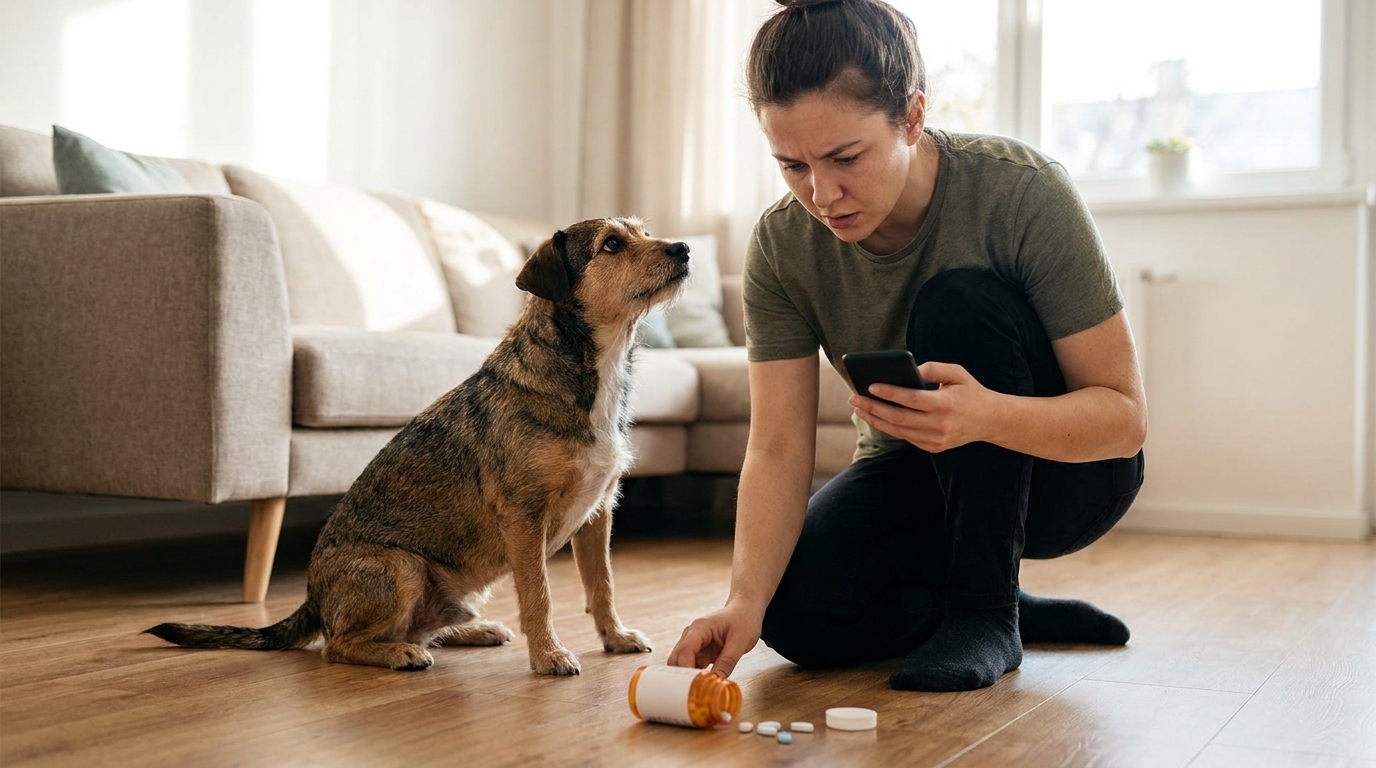
Dog ate cold, flu or cough medicine? Call a pet poison line now with the box, read the label letters, and know which signs mean the ER.
Quick answer: If your dog swallowed any human cold, flu or cough medicine, call a pet poison line or an emergency vet now with the package in hand, even if your dog seems fine. Go to an emergency vet now, calling on the way, if the label lists xylitol or is unreadable, or for a racing heart, tremors, a seizure or collapse. Never make your dog vomit unless told to.
This article is general information, not a diagnosis. If you think your pet is in danger, go to the nearest emergency animal hospital.
What should I do right now if my dog ate cold or flu medicine?
If your dog ate cold or flu medicine, call a pet poison line or an emergency vet now with the package in your hand, even if your dog seems fine, and do not make your dog vomit unless a poison line or vet tells you to. Go straight to an emergency vet, calling on the way, if the label lists xylitol, birch sugar or wood sugar, if it is a sugar-free or low-sugar product whose full ingredient list you cannot check, if you cannot read the label, or if your dog has a racing heart, tremors, a seizure or collapse.
- Pick up every pill and wrapper, keep the box, and check whether another pet got into it.
- Note the product, its strength, how many are missing, the time and your dog's weight, plus every medicine, supplement and flea or tick product your dog takes.
- Call ASPCA Animal Poison Control at (888) 426-4435 (a consultation fee may apply) or Pet Poison Helpline at (855) 764-7661 (a per-incident fee applies).
- Give nothing at home: no food, milk, salt, hydrogen peroxide or charcoal.
Whether to make a dog vomit is the poison line's or vet's call; see when making a dog throw up helps and when it harms. During a seizure, keep your hands away from your dog's mouth, give nothing by mouth, keep your dog away from stairs and water, and time the seizure; then go to the ER, calling a poison line on the way.
How do I read the label: what do D, PE, DM and PM mean?
The letters after a cold medicine's name tell you what was added: D or PE means a decongestant, DM means the cough drug dextromethorphan, PM or nighttime means a sleep-causing antihistamine, and multi-symptom or severe often adds acetaminophen, so every one of them is a poison-line call now. Pet Poison Helpline says a D likely means pseudoephedrine and PE often means phenylephrine, and that one tablet can hold several active ingredients, so read the whole Drug Facts box to the poison line.
| Label says | What it adds | Next step |
|---|---|---|
| D or -D | Nose drug | Poison line now |
| PE | Nose drug | Poison line now |
| DM | Cough drug | Poison line now |
| PM or Night | Sleep drug, often pain drug | Poison line now |
| Severe or Multi | Often pain drug, plus more | Poison line now |
| Sinus | Nose drug, often pain drug | Poison line now |
| 12-hour, XR | Slow release | Poison line now |
| Chest, mucus | Mucus drug, maybe more | Poison line now |
| Sugar-free | May be xylitol | Dogs: ER now* |
| No label | Unknown | ER now |
*A dog goes to an emergency vet now if the product lists xylitol, birch sugar or wood sugar, or if you cannot check its full ingredient list; otherwise call a poison line now. On every ER now row, call a poison line on the way, not instead of going. For a cat, any product with acetaminophen (common in PM, severe, multi-symptom and sinus products) means an emergency vet now.
Which cold medicine ingredients are most dangerous for dogs?
Pseudoephedrine, acetaminophen and xylitol are among the most dangerous ingredients in human cold and flu products for dogs, and Pet Poison Helpline says pseudoephedrine has a narrow safety margin that can lead to seizures and even death. The ASPCA Animal Poison Control Center ranked over-the-counter medications and supplements as the No. 1 pet toxin category of 2025, at 16.9% of the exposures it got calls about.
Phenylephrine has a much wider safety margin, Pet Poison Helpline says, but it is not safe: the Merck Veterinary Manual says vomiting is its most common sign, and agitation and high blood pressure can happen. Ibuprofen and naproxen in some cold and sinus pills can cause stomach ulcers and kidney damage, and ulcers can be present before any sign shows. See what human pain relievers do to dogs.
| Ingredient | Main risk | Next step |
|---|---|---|
| Nose drug pill | Racing heart, seizures | Poison line now |
| Fever reducer | Liver, red cells | Poison line now; cats: ER now |
| NSAID pain pill | Ulcers, kidneys | Poison line now |
| Cough drug | Hives, agitation, tremors | Poison line now |
| Sleep drug | Sleepy or wired | Poison line now |
| Opioid syrup | Slow breathing, collapse | Poison line now |
| Nose spray, red-eye drops | Slow heart, collapse | Poison line now |
| Camphor rub | Vomiting; large amounts: seizures | Poison line now |
| Xylitol | Low blood sugar | Dogs: ER now |
The fever reducer is acetaminophen, the sleep drug is diphenhydramine, doxylamine or chlorpheniramine, and decongestant nose sprays and red-eye drops hold an imidazoline such as oxymetazoline, tetrahydrozoline, naphazoline or xylometazoline.
How fast do signs start, and how long should I watch?
In a dog, signs from a liquid or regular pseudoephedrine decongestant can start within 15 to 30 minutes, ASPCA Poison Control says, while 12-hour and other extended-release products can delay signs for hours and acetaminophen liver damage can show up a day or more later, so a dog that looks fine still needs a call now.
- Extended-release pseudoephedrine: 3 to 6 hours or longer (ASPCA Poison Control), or 2 to 8 hours with longer-lasting signs (Merck Veterinary Manual).
- Sleep antihistamines: 30 to 60 minutes, or 2 to 4 hours for chlorpheniramine (Merck).
- Nose sprays and red-eye drops: usually 30 minutes to 4 hours (Merck).
- Dextromethorphan: slowly over several hours (American College of Veterinary Pharmacists).
- Xylitol: a dog's blood sugar can drop within 10 to 60 minutes, though sometimes not for 12 to 24 hours (FDA).
- Acetaminophen liver damage: a day or more; Merck says liver values are rechecked at 24 and 48 hours.
Follow the poison line's watch plan; no waiting time is safe on its own.
Signs of cold medicine poisoning in dogs
A racing or very slow heart, pacing, overheating, tremors, a seizure, collapse, hard-to-wake sleepiness, slow breathing, gums that look brown, muddy, pale, gray or blue, or a swollen face after a dog gets into cold medicine means an emergency vet now.
| Sign | Likely cause | Do this |
|---|---|---|
| Racing heart, pacing | Nose drug | ER now |
| Dilated pupils, hiding, restless | Nose drug | ER now |
| Hot, heavy panting | Nose or cough drug | ER now |
| Tremors, seizure | Nose or cough drug | ER now |
| Wobbly, very sleepy | Sleep drug, xylitol, alcohol | ER now |
| Hard to wake, slow breaths | Opioid, sleep drug | ER now |
| Slow heart, weak, collapse | Nose spray, xylitol | ER now |
| Brown or muddy gums | Fever reducer | ER now |
| Pale, gray or blue gums | Many | ER now |
| Swollen face, paws | Fever or cough drug | ER now |
| Heavy breathing | Fever reducer | ER now |
| Vomit blood, black stool | NSAID pain pill | ER now |
| Peeing much more, or none | NSAID pain pill | ER now |
| Yellow gums later | Liver injury | ER now |
| Vomiting, drooling | Many | Poison line now |
On every ER now row, call a poison line on the way. The xylitol rows are dog rules. Never give an antihistamine at home for a swollen face or paws.
My dog ate one pill and seems fine. Do I still need to call?
Yes, a dog that ate one cold, flu or sinus pill and seems fine still needs a pet poison line call now, because whether one pill is dangerous depends on your dog's size and on the exact ingredients and strength, which only the package shows. That includes a single PE pill, a plain guaifenesin chest-congestion pill and a zinc lozenge.
Cough syrup, gel caps, nose sprays and rubs: what changes?
Cold and cough liquids, gel caps, nose sprays and chest rubs that a dog gets into are poison-line calls just like pills. You cannot tell how much of a chewed syrup bottle was swallowed, and some nighttime liquids list alcohol.
- Cough syrup: Pet Poison Helpline says cough medicines can contain codeine, guaifenesin, dextromethorphan and menthol, and overdoses cause vomiting, lethargy, collapse and slow breathing.
- Sugar-free products: the FDA lists cough syrup among products that may contain xylitol, also listed as birch sugar or wood sugar. Use the same label check as for sugar-free candy canes and peppermints.
- Nose sprays and red-eye drops: Pet Poison Helpline says even small amounts swallowed can cause a low heart rate, stumbling, collapse and death, so a slow heartbeat or weakness means the ER now. Never put them in a pet's nose or eyes.
- Chest rubs: Pet Poison Helpline says camphor is readily absorbed through the skin and should never be applied to dogs or cats.
- Zinc lozenges: the Merck Veterinary Manual calls them a low toxicity risk, but other ingredients, such as xylitol, still decide the next step.
My cat got into cold medicine. Is that worse?
Yes: the FDA says acetaminophen is fatal to cats, so a cat that licked or swallowed any cold or flu product with acetaminophen needs an emergency vet now, with a poison-line call on the way, before signs start. The Merck Veterinary Manual says brown or muddy gums, a fast heart rate, heavy breathing and a swollen face or paws can follow within a few hours. Syrup licked off fur, or a chest rub licked off a person's skin, counts as exposure. Any other cold product a cat licked means a poison-line call now, or the ER now for drooling or vomiting after a chest rub, or for wobbling, tremors, a seizure, collapse, a racing or very slow heart, hard-to-wake sleepiness or labored breathing; never make a cat vomit at home.
From RexVet's visit study: Cats made up 28% of RexVet visits but 61% of visits for respiratory problems. A sneezing cat needs a veterinarian's advice, never a human cold pill. A first-ever wheeze or cough means an in-person vet the same day, and more than 35 breaths a minute at rest or open-mouth breathing means the ER now; see when a wheezing cat is an emergency.
What will the poison line or emergency vet do?
A pet poison line uses the package to work out the risk and gives you or your vet a treatment plan, and an emergency vet may make your dog vomit, give activated charcoal, run IV fluids, monitor the heart and treat agitation or seizures. For acetaminophen, the Merck Veterinary Manual says treatment includes an antidote that can reduce red-cell and liver damage, and the outlook depends on the amount and how soon treatment starts.
When a video visit helps, and when it does not
A dog or cat that swallowed a cold, flu or cough product needs a pet poison line or an emergency vet first, not a video visit, and a video visit can help afterward once the poison line has said watching at home is enough.
RexVet, a nonprofit online vet service, serves pets located in Florida, New York and Virginia by video visit, and every visit is with a veterinarian licensed in your pet's state. A $64.99 live video visit with a licensed RexVet vet can help after the call, once a poison line or emergency vet has said home watching is enough, if your pet is located in one of those states during the visit and is eating, alert and breathing comfortably.
Have the package and the poison line's case number ready. On camera, the veterinarian can go over the instructions, watch breathing, gum color, walking and behavior, explain which signs mean the ER, and say whether an in-person recheck is needed; a dog with an acetaminophen exposure may still need in-person bloodwork even after a poison line clears home watching, because liver damage can show up a day or more later. A cat that got into any acetaminophen product needs an emergency vet now, not a video visit. A visit also fits a pet with a mild sniffle that is eating and breathing easily; a sniffly puppy, kitten, senior, flat-faced or unvaccinated pet, or one with heart or airway disease, needs an in-person vet the same day.
Live video slots run about 8 AM to 11 PM ET; a same-day slot is not guaranteed, and holiday hours aren't confirmed. Outside those hours, or when no slot is open, call a poison line or go to an emergency vet that is open now. A video visit cannot make a pet vomit, give charcoal, run bloodwork, start IV fluids or monitor the heart, so xylitol in a dog, an unreadable label, a racing heart, tremors, a seizure, collapse or discolored gums means an emergency vet now.
The veterinarian cannot approve, recommend or dose any human cold, flu, cough or allergy product by video, and no prescription is promised; any medicine is the veterinarian's decision after the visit, within the limits in the FAQ below. RexVet is not a pharmacy; a pharmacy transfer fee applies when RexVet sends a prescription to an outside pharmacy.
How do I keep cold medicine away from pets this winter?
To keep pets safe, store every cold, flu and allergy product in a closed cabinet, not in a purse, nightstand, coat pocket or a guest's bag, and keep the package until the last dose so you can read it to a poison line. The ASPCA says over-the-counter products often turn up in backpacks and purses, and its 2025 list ranks human prescription medications, such as antidepressants and ADHD medicines, No. 3; the same closed-cabinet habit helps prevent a swallowed antidepressant, anxiety or ADHD pill.
Save both poison line numbers in your phone now.
Need an Expert Opinion on This Topic?
Book a video visit with a licensed vet, evenings and weekends included
See open timesFrequently Asked Questions
Can I give my dog cold medicine for a cold?
No, never give a dog human cold, flu or cough medicine, and ask a veterinarian before giving any medicine. For rest, moist air and the signs that mean a sniffly dog needs a vet, see whether dogs get colds and what is safe at home. If your dog already swallowed some, call a pet poison line now with the package.
Is phenylephrine safer than pseudoephedrine for dogs?
Phenylephrine has a wider safety margin, but it is not safe: a dog that swallowed it still needs a pet poison line call now. The Merck Veterinary Manual says vomiting is its most common sign, and agitation and high blood pressure can happen, though less often than with pseudoephedrine.
What happens if a dog eats nighttime cold medicine?
Call a pet poison line now: nighttime cold medicine often adds a sleep-causing antihistamine to acetaminophen, a cough drug or a decongestant. The Merck Veterinary Manual says these sleep drugs can cause sleepiness or agitation, a fast heart rate, tremors and possibly seizures, and signs start so fast that making a pet vomit is usually not appropriate. A very sleepy, wobbly or trembling dog needs an emergency vet now, and acetaminophen can harm the liver a day or more later.
Can cough syrup kill a dog?
Yes, some can: a swallowed cough syrup can cause seizures, collapse or slow breathing, so call a pet poison line now with the bottle. Syrups can combine an opioid, dextromethorphan, acetaminophen or an antihistamine, and some sugar-free syrups may contain xylitol, so check the label for xylitol, birch sugar or wood sugar: if it is listed, or you cannot check the full ingredient list, take your dog to an emergency vet now. A dog that is hard to wake, breathing slowly or seizing needs the ER now.
How long after eating cold medicine will a dog show signs?
Signs can start within 15 to 30 minutes, but some take hours or a day or more, so call a pet poison line now. ASPCA Poison Control says extended-release pseudoephedrine can take 3 to 6 hours or longer, and acetaminophen liver damage can show up a day or more later. No signs yet does not mean safe.
Can an online vet help if my dog ate cold medicine in Florida, New York or Virginia?
Not as the first step: a swallowed cold or flu product needs a pet poison line or an emergency vet first. Once the poison line says home watching is enough and your pet is located in Florida, New York or Virginia during the visit, a veterinarian licensed in your pet's state can review the package and watch breathing and gum color on camera. Making a pet vomit, bloodwork and IV fluids need in-person or emergency care, and any cat acetaminophen exposure needs an emergency vet now. No prescription is promised. In Florida, a video-only prescription is limited to FDA-approved animal drugs used as labeled, for up to 14 days (1 month for products labeled only for fleas and ticks), with no renewal without an in-person exam; human-labeled, controlled or compounded anti-infective drugs need an in-person exam. In every state, federal rules require an in-person exam before a vet uses a human-labeled drug or an animal drug off-label; Virginia allows the exam for other care to be electronic, and New York's rules are not settled.
FAQs
Can I give my dog cold medicine for a cold?
No, never give a dog human cold, flu or cough medicine, and ask a veterinarian before giving any medicine. For rest, moist air and the signs that mean a sniffly dog needs a vet, see whether dogs get colds and what is safe at home. If your dog already swallowed some, call a pet poison line now with the package.
Is phenylephrine safer than pseudoephedrine for dogs?
Phenylephrine has a wider safety margin, but it is not safe: a dog that swallowed it still needs a pet poison line call now. The Merck Veterinary Manual says vomiting is its most common sign, and agitation and high blood pressure can happen, though less often than with pseudoephedrine.
What happens if a dog eats nighttime cold medicine?
Call a pet poison line now: nighttime cold medicine often adds a sleep-causing antihistamine to acetaminophen, a cough drug or a decongestant. The Merck Veterinary Manual says these sleep drugs can cause sleepiness or agitation, a fast heart rate, tremors and possibly seizures, and signs start so fast that making a pet vomit is usually not appropriate. A very sleepy, wobbly or trembling dog needs an emergency vet now, and acetaminophen can harm the liver a day or more later.
Can cough syrup kill a dog?
Yes, some can: a swallowed cough syrup can cause seizures, collapse or slow breathing, so call a pet poison line now with the bottle. Syrups can combine an opioid, dextromethorphan, acetaminophen or an antihistamine, and some sugar-free syrups may contain xylitol, so check the label for xylitol, birch sugar or wood sugar: if it is listed, or you cannot check the full ingredient list, take your dog to an emergency vet now. A dog that is hard to wake, breathing slowly or seizing needs the ER now.
How long after eating cold medicine will a dog show signs?
Signs can start within 15 to 30 minutes, but some take hours or a day or more, so call a pet poison line now. ASPCA Poison Control says extended-release pseudoephedrine can take 3 to 6 hours or longer, and acetaminophen liver damage can show up a day or more later. No signs yet does not mean safe.
Can an online vet help if my dog ate cold medicine in Florida, New York or Virginia?
Not as the first step: a swallowed cold or flu product needs a pet poison line or an emergency vet first. Once the poison line says home watching is enough and your pet is located in Florida, New York or Virginia during the visit, a veterinarian licensed in your pet's state can review the package and watch breathing and gum color on camera. Making a pet vomit, bloodwork and IV fluids need in-person or emergency care, and any cat acetaminophen exposure needs an emergency vet now. No prescription is promised. In Florida, a video-only prescription is limited to FDA-approved animal drugs used as labeled, for up to 14 days (1 month for products labeled only for fleas and ticks), with no renewal without an in-person exam; human-labeled, controlled or compounded anti-infective drugs need an in-person exam. In every state, federal rules require an in-person exam before a vet uses a human-labeled drug or an animal drug off-label; Virginia allows the exam for other care to be electronic, and New York's rules are not settled.
Medically Reviewed
Reviewed by Dr. Tiffany Delacruz, DVM — licensed veterinarian and CEO of RexVet. Last reviewed November 16, 2026.
Content is for informational purposes and does not replace professional veterinary advice.
Chief Executive Officer · Licensed Veterinarian
Dr. Delacruz is a licensed Doctor of Veterinary Medicine specializing in preventive care and veterinary telehealth. She reviews all health content on RexVet to ensure accuracy and clinical relevance.
Sources & References
- · American Veterinary Medical Association — Telehealth Guidelines
- · AVMA — Pet Care Resources
- · U.S. FDA — Animal & Veterinary