
Dog Ate Bird Seed or Suet? When to Worry About Pancreatitis
By RexVet Team | Reviewed by Dr. Tiffany Delacruz, DVM
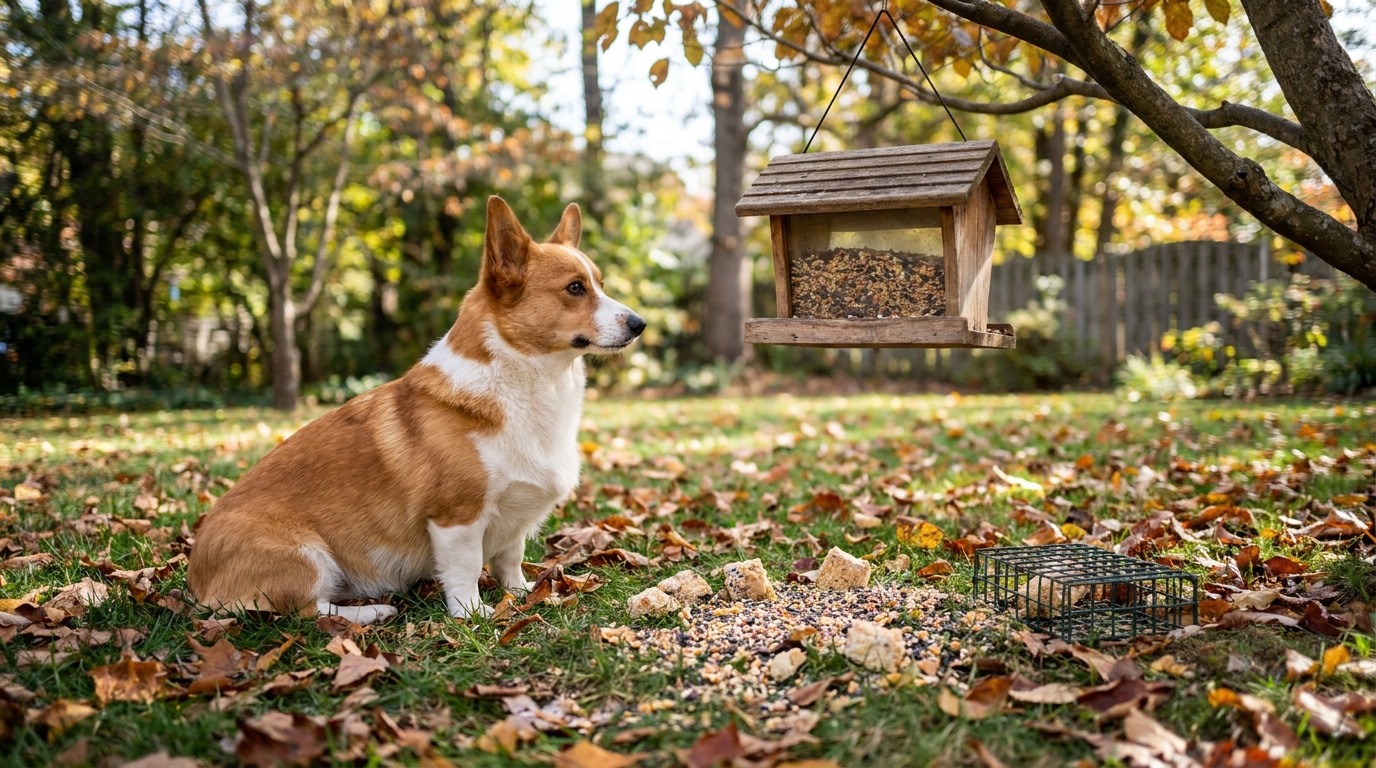
Dog ate bird seed or a suet cake? The fat in suet is the bigger worry, since a fatty meal can trigger pancreatitis. Watch for vomiting and belly pain.
Go to an emergency vet now if your dog is vomiting again and again, has a swollen or painful belly, is weak or collapses, or has tremors; call a poison line first if the mix contained raisins or macadamia nuts.
If your dog ate bird seed, start with two quick checks: look at the emergency signs below, then find the bag or wrapper and read what was in it. Those two steps tell you most of what you need to decide what happens next.
Dog ate bird seed: what's in a feeder mix
A feeder mix is mostly seeds and grains. Some mixes also list nuts or dried fruit, and a suet cake may be hanging nearby. Suet cakes are mostly fat, and fat is the bigger worry.
So the first job is simple: find the bag, the box or the suet wrapper and read the ingredient list. You are looking for three things:
- Nuts. Some mixes list nuts, so check the label.
- Dried fruit, especially raisins.
- Suet or other fat, either as a separate cake or blended into the seed.
Why do nuts matter? The ASPCA Animal Poison Control Center says, as a general note about nuts, that "Nuts, including almonds, pecans and walnuts, contain high amounts of oils and fats." It adds: "These fats can cause vomiting and diarrhea, and potentially pancreatitis in some pets."
That same thread, fat, runs through suet. A dog that got into the bird feeder and ate plain seed is in a different spot from a dog that pulled down and finished a suet cake. Keep the packaging handy either way. If you talk to a vet, the label is one of the most useful things you can show them.
Emergency signs and when to call a poison line
Some signs mean you should skip the waiting and go to an emergency vet now. Go in person right away if your dog:
- Is vomiting again and again
- Has a swollen or painful belly
- Is weak or collapses
- Has tremors or a seizure
If you see any of these, do not wait to see whether they pass.
If the label lists raisins or macadamia nuts, call a poison line first, on the way to the clinic if you need to. The ASPCA explains why these two stand out. On raisins: "Since dogs are not able to process tartaric acid, exposure to grapes/raisins can lead to kidney damage." On macadamia nuts: "Macadamia nuts can cause weakness, incoordination, depression, vomiting, tremors and hyperthermia in dogs."
Two poison lines answer around the clock:
- ASPCA Animal Poison Control: (888) 426-4435, open 24/7
- Pet Poison Helpline: (855) 764-7661, open 24/7
A fee may apply for either call. Have the bag or label in your hand when you dial so you can read out the ingredients.
If you are not sure whether what you are seeing counts as an emergency, our practical checklist for pet emergencies walks through the common red flags for dogs and cats.
Why suet worries vets
Suet is the bigger worry because it is mostly fat. VCA Animal Hospitals puts the link this way: "The exact cause of pancreatitis is unknown, although it may be triggered in some cases by a fatty meal or corticosteroid administration."
Notice the careful wording: "in some cases." A fatty meal does not mean pancreatitis is certain. But when a dog ate a suet cake, a fatty meal is exactly what happened, so it is worth knowing the signs.
According to VCA, "The most common clinical signs include nausea, vomiting, fever, lethargy, abdominal pain, diarrhea, and decreased appetite." VCA also describes a posture some dogs take during an attack, the "praying position," with the rear end up and the front legs and head lowered to the floor. If you see it, call a vet now.
Watch for those signs, and call a veterinarian if any of them appear. If any of the emergency signs above show up instead, go to an emergency vet. For a fuller look at the condition, read our guide to pancreatitis in dogs: symptoms, causes and when to ask an online vet.
What to do tonight
If none of the emergency signs are showing, a few calm steps will set you up well:
- Pick up what is left. Gather spilled seed, broken suet and any wrappers so your dog cannot go back for more. Put the rest of the bag somewhere your dog cannot reach.
- Keep the packaging. The ingredient list is the most useful thing you can show a vet or a poison line.
- Estimate how much is gone. A rough guess is fine: a scattering off the ground, half a suet cake, or most of a bag.
- Offer water. Leave fresh water where your dog can reach it.
- Skip the extras. Do not give treats, table scraps or anything fatty, and ask a vet before changing meals.
- Watch for VCA's signs. Nausea, vomiting, fever, lethargy, belly pain, diarrhea or a drop in appetite are all reasons to call a vet.
Do not try to make your dog vomit, and do not give any human medicine. If you think your dog needs something to settle the stomach, that is a question for a veterinarian.
Bird food is not the only fatty or risky thing a curious dog finds at home. Our guide to toxic foods for dogs covers other kitchen hazards worth knowing.
Feeder season in New York and Virginia
As feeders and suet cakes go back up in fall in New York and Virginia, a dog in the yard notices. A few habits keep the bird food for the birds:
- Hang feeders and suet out of reach. Think about how high your dog can jump or stretch, and how far seed falls.
- Add a seed-catching tray under the feeder so less seed lands on the ground.
- Clean up spilled seed and suet under your feeders regularly.
- Store seed in a closed bin in a spot your dog cannot open or tip over.
There is a bird-health reason to keep feeders clean, too. The Virginia Department of Wildlife Resources advises: "If sick or dead birds of any species are witnessed around a bird feeder, it should be removed for several weeks and thoroughly disinfected."
In Florida, feeders run year-round, so the same habits apply in every season.
What a RexVet online vet can and cannot do after a feeder raid
If your dog has none of the emergency signs and you want a professional opinion, a video visit can help you sort out the next step. RexVet is a 501(c)(3) non-profit veterinary telehealth service.
On a video visit, a veterinarian can:
- Go through what your dog ate and roughly how much
- Read the label with you and point out the ingredients that matter
- Check your dog's belly posture, energy and gums on camera
- Set a pancreatitis watch plan with you
- Help you decide between in-person bloodwork and watching at home
A video vet cannot run bloodwork or ultrasound, and cannot give fluids. VCA notes that pancreatitis is usually diagnosed with laboratory testing, which needs an in-person visit, so if your dog needs testing, the vet will tell you to go in person. It helps to have a short video of your dog walking and lying down ready before the call; our guide on how to upload pet photos and videos for an online vet review shows how.
In Florida, a veterinarian who has seen your pet only by video may prescribe only FDA-approved animal drugs used as labeled, for up to 14 days (1 month for flea-and-tick-only products), and cannot renew without an in-person exam. If the veterinarian decides medication is appropriate, they can prescribe where state rules allow.
RexVet's veterinarians are licensed in Florida, New York and Virginia and are available 24/7, including nights, weekends and holidays. A video visit is $64.99. Book a RexVet video visit.
When to be seen in person in Florida, New York or Virginia
Some situations need hands-on care, and a video call is not the right first step. Take your dog to an in-person vet, or an emergency vet after hours, if your dog has:
- Repeated vomiting
- A swollen or painful belly
- Stopped eating
- Any exposure to raisins or macadamia nuts (call a poison line first)
- Weakness, collapse, tremors or a seizure
If you do start with a telehealth visit in Florida, state law expects the vet to point you to a local clinic: under Fla. Stat. 474.2021, a telehealth vet must give "the contact information for at least one physical veterinary clinic in the vicinity of the patient's location."
For more on how online vet care works where you live, see our pages for Florida, New York and Virginia.
Frequently Asked Questions
Is bird seed toxic to dogs?
It depends on what is in the mix, so read the label. Some mixes list nuts, dried fruit or suet, and the ASPCA lists raisins and macadamia nuts as hazards for dogs. If either one is on the label, call a poison line or go to an emergency vet. If the mix contains suet or other fat, watch for VCA's pancreatitis signs and call a vet if any appear.
Can suet make a dog sick?
It can. Suet is mostly fat, and VCA notes that pancreatitis "may be triggered in some cases by a fatty meal." Watch for nausea, vomiting, fever, lethargy, belly pain, diarrhea or a drop in appetite, and call a vet if any appear.
How soon would pancreatitis show up after my dog ate suet?
VCA does not give an hour count to wait out, so do not go by the clock. Watch for VCA's signs instead: nausea, vomiting, fever, lethargy, abdominal pain, diarrhea and decreased appetite. Call a vet if any of them appear.
What if the bird seed mix had raisins?
Call a poison line or go to an emergency vet now. The ASPCA says, "Since dogs are not able to process tartaric acid, exposure to grapes/raisins can lead to kidney damage." ASPCA Animal Poison Control and Pet Poison Helpline both answer 24/7 (the numbers are in the emergency section above), and a fee may apply. Have the label in hand when you call.
Can dogs eat sunflower seeds from the bird feeder?
The sources this article relies on do not cover sunflower seeds or shells, so we will not guess at a safe amount. Treat them like any feeder mix: read the label for nuts, raisins or suet. If your dog ate a lot, or you are not sure what or how much was eaten, call a vet.
Whatever your dog found under the feeder, check the emergency signs first, and go to an emergency vet or call a poison line if any of them apply. If none of them do and you want a veterinarian to look at your dog and the label with you, RexVet's veterinarians are licensed in Florida, New York and Virginia and are available 24/7. A video visit is $64.99, and you can book a video visit now.
FAQs
Is bird seed toxic to dogs?
It depends on what is in the mix, so read the label. Some mixes list nuts, dried fruit or suet, and the ASPCA lists raisins and macadamia nuts as hazards for dogs. If either one is on the label, call a poison line or go to an emergency vet. If the mix contains suet or other fat, watch for VCA's pancreatitis signs and call a vet if any appear.
Can suet make a dog sick?
It can. Suet is mostly fat, and VCA notes that pancreatitis "may be triggered in some cases by a fatty meal." Watch for nausea, vomiting, fever, lethargy, belly pain, diarrhea or a drop in appetite, and call a vet if any appear.
How soon would pancreatitis show up after my dog ate suet?
VCA does not give an hour count to wait out, so do not go by the clock. Watch for VCA's signs instead: nausea, vomiting, fever, lethargy, abdominal pain, diarrhea and decreased appetite. Call a vet if any of them appear.
What if the bird seed mix had raisins?
Call a poison line or go to an emergency vet now. The ASPCA says, "Since dogs are not able to process tartaric acid, exposure to grapes/raisins can lead to kidney damage." ASPCA Animal Poison Control and Pet Poison Helpline both answer 24/7 (the numbers are in the emergency section above), and a fee may apply. Have the label in hand when you call.
Can dogs eat sunflower seeds from the bird feeder?
The sources this article relies on do not cover sunflower seeds or shells, so we will not guess at a safe amount. Treat them like any feeder mix: read the label for nuts, raisins or suet. If your dog ate a lot, or you are not sure what or how much was eaten, call a vet.
Whatever your dog found under the feeder, check the emergency signs first, and go to an emergency vet or call a poison line if any of them apply. If none of them do and you want a veterinarian to look at your dog and the label with you, RexVet's veterinarians are licensed in Florida, New York and Virginia and are available 24/7. A video visit is $64.99, and you can book a video visit now.
Medically Reviewed
Reviewed by Dr. Tiffany Delacruz, DVM — licensed veterinarian and CEO of RexVet. Last reviewed September 26, 2026.
Content is for informational purposes and does not replace professional veterinary advice.
Chief Executive Officer · Licensed Veterinarian
Dr. Delacruz is a licensed Doctor of Veterinary Medicine specializing in preventive care and veterinary telehealth. She reviews all health content on RexVet to ensure accuracy and clinical relevance.
Sources & References
- · American Veterinary Medical Association — Telehealth Guidelines
- · AVMA — Pet Care Resources
- · U.S. FDA — Animal & Veterinary
Need an Expert Opinion on This Topic?
Connect with a certified vet via video call in minutes
Talk to Vet Now