
Dog Ate a Moldy Pumpkin? Watch for Tremors and Act Fast
By RexVet Team | Reviewed by Dr. Tiffany Delacruz, DVM
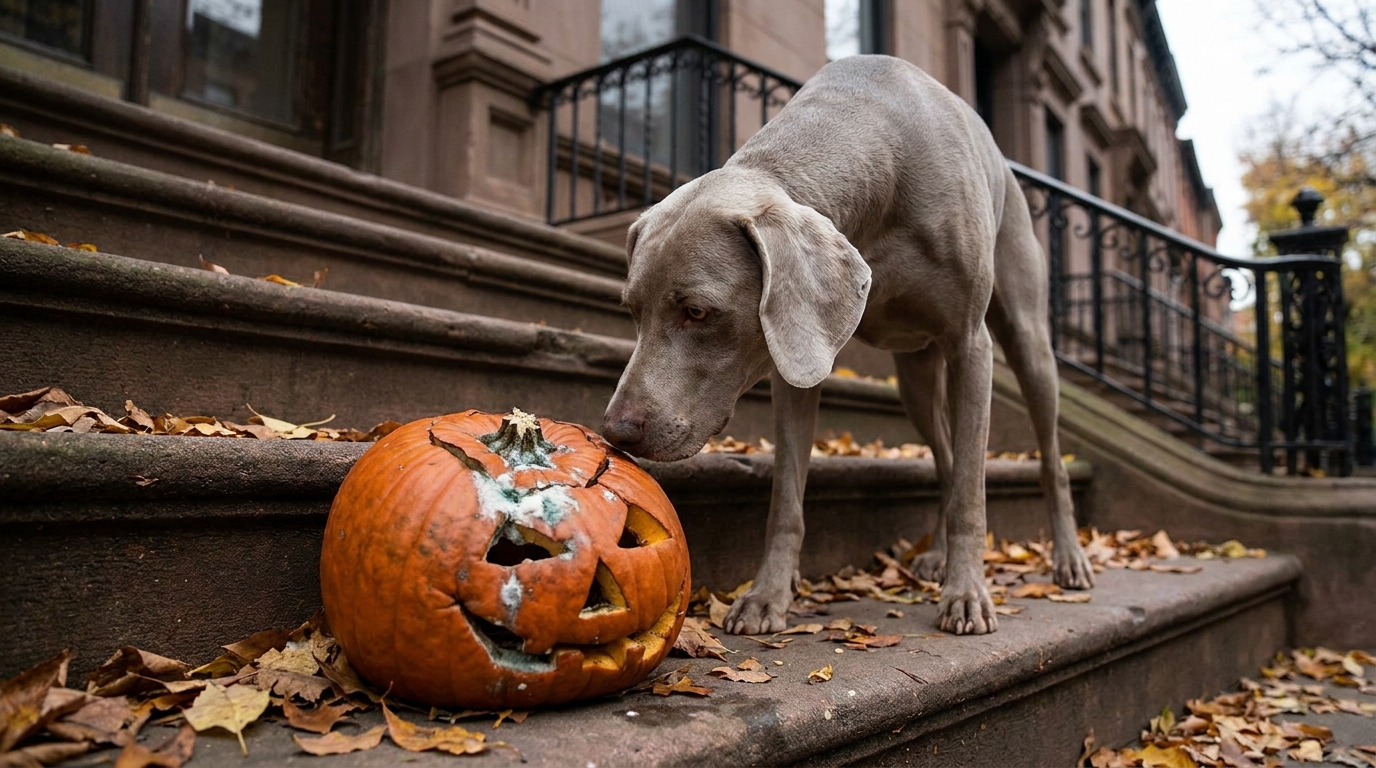
Dog ate a moldy pumpkin? Plain pumpkin is safe, but mold can make toxins that cause tremors fast. Call a vet or poison line now if a lot was eaten.
Go to an emergency vet now if your dog is trembling, twitching, wobbly, overheated, having a seizure, or vomiting repeatedly after eating moldy pumpkin, compost or other moldy food.
Pumpkin itself is not the danger here. The mold growing on it is. Below you will find how to tell the two apart, which signs mean you go in right now, and why you should call a vet even if your dog looks completely normal.
Dog ate a moldy pumpkin: fresh pumpkin vs moldy pumpkin
Plain pumpkin has a good reputation with dogs, and for the right kind, that is fair. According to PetMD, "Plain, cooked pumpkin and 100% canned pumpkin (with no added ingredients) are safe and nutritious for dogs."
Raw pumpkin is a different story. PetMD advises you to "Avoid raw pumpkin, which can be tough for dogs to digest and may pose a risk of choking or intestinal blockage." PetMD also says carving pumpkins "are safe too, but they tend to be stringy and watery." Keep in mind that a carving pumpkin is raw, and a carved pumpkin that has gone soft or moldy on the porch is a mold risk, not a snack.
That mold is the real problem. Today's Veterinary Practice explains that tremor-causing mycotoxin poisoning in dogs is linked to Penicillium mold species, and that these molds "grow on meat, cereals, nuts, cheese, eggs, fruits, processed/refrigerated food, refuse, and compost." Mycotoxins are toxins made by fungi. A soft, moldy pumpkin is spoiled fruit, so treat it like any other moldy food.
So a dog who licked a bit of a freshly cut pumpkin and a dog who ate a slumped, moldy jack-o-lantern are in very different situations. The first is mostly a question of digestion. The second is a possible poisoning, and it needs a phone call now.
Emergency signs: go to an ER now
The Merck Veterinary Manual calls this poisoning tremorgenic neuromycotoxicosis, and describes it this way: "Common clinical signs include vomiting, salivation, vocalization, blepharospasm, hyperthermia, ataxia, tachycardia, hyperesthesia, fasciculations, tremors, and seizures."
In plain words, after your dog ate rotten pumpkin, compost or other moldy food, go to an emergency vet now if you see any of these:
- Repeated vomiting
- Drooling
- Crying out or vocalizing
- Squinting
- Overheating
- Wobbly or unsteady walking
- A fast heartbeat
- Extra sensitivity to touch
- Twitching of the muscles under the skin
- Tremors or trembling
- Seizures
Do not wait for tremors before you act. Merck notes that "Vomiting can be the first clinical sign," and that "large tremorgenic toxin ingestions can cause seizures." So use one simple rule. If your dog vomits once and shows nothing else, call a vet or poison line right now. If the vomiting repeats, or you see any other sign on this list, go to an emergency vet now. One of these signs is enough reason to go.
Call the emergency clinic from the car if you can, so the team knows you are coming and what your dog ate. Bring a photo of the pumpkin, or what is left of it, if you have one.
Why you call now, even if your dog seems fine
A calm dog is not necessarily a dog in the clear. The timing of these toxins is the main reason to pick up the phone before anything shows.
Today's Veterinary Practice describes the "onset of clinical signs starting as soon as 15 minutes after exposure up to several hours later." The Merck Veterinary Manual puts it this way: "Onset of clinical signs can be within 1–2 hours or up to several hours." In other words, a dog who seems fine now can still get sick later.
There is a second reason to call now. According to Today's Veterinary Practice, "the window of opportunity to safely induce emesis and administer activated charcoal is generally limited." Emesis means vomiting. That decision belongs to a veterinarian, in a clinic. Do not try to make your dog vomit at home.
Even if your dog seems fine and ate only a little, call a vet or a poison line now. You can reach either of these animal poison lines:
- ASPCA Animal Poison Control: (888) 426-4435
- Pet Poison Helpline: (855) 764-7661
Both answer 24/7, and a fee may apply. Have your dog's rough weight, the time it happened and a guess at how much was eaten ready when you call.
For local poisoning help, see pet poisoning help in New York City and pet poisoning help in Tampa.
How much and how moldy
First check your dog for any of the emergency signs above, and call a vet or poison line. While you wait for an answer, or once you are off the phone, gather a few details. They help whoever is advising you.
- Note the time you found the damage, and your best guess at when it happened.
- Take a quick photo of what is left of the pumpkin, including any furry, dark or slimy patches.
- Guess how much is missing. A few bites, a large chunk, or most of it.
- Check where it came from. A fresh pumpkin on the counter, a soft one on the porch, or a pile in the compost.
A nibble of a freshly carved pumpkin is different from chunks of a soft, moldy, rotting one or a mouthful from the compost. Either way, the vet or poison line is the right one to weigh that difference, not a guess at home.
Big pieces of raw rind and stem are a separate worry. PetMD warns that raw pumpkin can be tough to digest and may pose a risk of intestinal blockage. For the warning signs of a blockage, see our guide on what to do when a dog ate acorns and is throwing up, another fall-yard hazard.
Candles and decorations
The ASPCA warns that "pets can easily knock over a lit pumpkin and start a fire." Use battery lights inside your jack-o-lanterns instead of flames, and call a vet if your dog chewed a candle or has a burn.
Porch cleanup and compost in Florida, New York and Virginia
Whether you live in Florida, New York or Virginia, check porch pumpkins often for soft or moldy spots. If pumpkins go into a backyard compost pile after Halloween, a curious dog can dig them out.
Compost matters here. The Merck Veterinary Manual notes that the exposure history in these cases "can involve the dog running unsupervised and accessing compost or food waste." Today's Veterinary Practice also lists refuse and compost among the places these molds grow.
A few simple habits help:
- Toss porch pumpkins that are soft, leaking or covered in mold.
- Put old pumpkins in a closed trash bin, not an open bag on the curb.
- Fence or cover your compost, or use a closed bin your dog cannot open.
- Keep an eye on your dog in the yard after Halloween, especially near leaf piles and compost.
For a wider look at kitchen and yard foods that can send a dog to the ER, see our toxic foods for dogs guide.
What a RexVet online vet can and cannot do
A video visit can be useful in this situation, but only for part of it. Here is an honest split.
A video vet can:
- Help you judge how much your dog ate and how moldy it was, from your photos. Our guide on how to upload pet photos and videos for an online vet review shows how to share them.
- Watch your dog on camera for early twitching or wobbliness.
- Tell you whether to head in to a clinic now.
- Follow up with you after an ER visit, once your dog is home.
A video vet cannot make your dog vomit, give activated charcoal or fluids, or treat tremors. If tremors have started, go to the ER, not a video call.
None of that replaces clinic care for a dog with signs of mold toxin poisoning. RexVet's veterinarians are licensed in Florida, New York and Virginia. If the veterinarian decides medication is appropriate, they can prescribe where state rules allow. In Florida, a veterinarian who has seen your pet only by video may prescribe only FDA-approved animal drugs used as labeled, for up to 14 days (1 month for flea-and-tick-only products), and cannot renew without an in-person exam.
If your dog has no emergency signs and you want a veterinarian to look at the photos and watch your dog with you right now, a RexVet video visit is $64.99, with vets available 24/7, including nights, weekends and holidays, for pet parents in Florida, New York and Virginia only. Book a RexVet video visit.
When to be seen in person in Florida, New York or Virginia
Go in person if any of these apply. If your regular clinic is closed, go to an emergency vet.
- Your dog shows any of the emergency signs listed above, including repeated vomiting.
- Your dog ate a large amount of clearly moldy pumpkin or compost. Merck notes that large ingestions of these toxins can cause seizures.
If your dog has vomited once and shows no other sign, call a vet or poison line now and follow their advice. Go in immediately for repeated vomiting, wobbliness, twitching, tremors or seizures.
In Florida, state law also requires a telehealth vet to give you "the contact information for at least one physical veterinary clinic in the vicinity of the patient's location" (Florida Statutes 474.2021), so you know where to go if in-person care is needed.
You can read more about video care in each state on our pages for an online vet in Florida, an online vet in New York and an online vet in Virginia.
Frequently Asked Questions
Is pumpkin safe for dogs?
Plain pumpkin can be. According to PetMD, "Plain, cooked pumpkin and 100% canned pumpkin (with no added ingredients) are safe and nutritious for dogs." PetMD advises avoiding raw pumpkin, which can be hard to digest and may pose a choking or blockage risk. Moldy food is a different matter: Today's Veterinary Practice notes that the molds behind tremor-causing toxins grow on fruits and compost, among other foods.
Can moldy food make dogs sick?
Yes. Today's Veterinary Practice notes that the molds behind tremor-causing toxins grow on foods, refuse and compost. The Merck Veterinary Manual lists signs such as vomiting, drooling, wobbly walking, tremors and seizures. If your dog already ate some, call a vet or poison line now, and go to the ER for repeated vomiting, tremors or any other emergency sign above.
How soon do signs show after a dog eats moldy food?
Today's Veterinary Practice says signs can start as soon as 15 minutes after exposure up to several hours later. The Merck Veterinary Manual says within 1–2 hours or up to several hours. Tremors, twitching, wobbliness, overheating, seizures or repeated vomiting mean go to an emergency vet now.
Should I make my dog throw up after eating a moldy pumpkin?
No. Do not try to make your dog vomit at home. Today's Veterinary Practice notes that the window to do this safely is limited, and that decision belongs to a veterinarian, in a clinic. Call a vet or poison line now instead.
How long do tremors from moldy food last?
The Merck Veterinary Manual says, "Clinical signs can resolve in a few days with treatment or may require several weeks." Any dog with tremors after eating moldy food needs to go to an emergency vet now.
If your dog is trembling, twitching, wobbly, overheated, having a seizure or vomiting again and again, go to an emergency vet first. If your dog seems fine but you want a veterinarian to look at the photos and watch for early signs with you, RexVet's vets are available 24/7 for pet parents in Florida, New York and Virginia only, at $64.99 a visit. Book a video visit now.
FAQs
Is pumpkin safe for dogs?
Plain pumpkin can be. According to PetMD, "Plain, cooked pumpkin and 100% canned pumpkin (with no added ingredients) are safe and nutritious for dogs." PetMD advises avoiding raw pumpkin, which can be hard to digest and may pose a choking or blockage risk. Moldy food is a different matter: Today's Veterinary Practice notes that the molds behind tremor-causing toxins grow on fruits and compost, among other foods.
Can moldy food make dogs sick?
Yes. Today's Veterinary Practice notes that the molds behind tremor-causing toxins grow on foods, refuse and compost. The Merck Veterinary Manual lists signs such as vomiting, drooling, wobbly walking, tremors and seizures. If your dog already ate some, call a vet or poison line now, and go to the ER for repeated vomiting, tremors or any other emergency sign above.
How soon do signs show after a dog eats moldy food?
Today's Veterinary Practice says signs can start as soon as 15 minutes after exposure up to several hours later. The Merck Veterinary Manual says within 1–2 hours or up to several hours. Tremors, twitching, wobbliness, overheating, seizures or repeated vomiting mean go to an emergency vet now.
Should I make my dog throw up after eating a moldy pumpkin?
No. Do not try to make your dog vomit at home. Today's Veterinary Practice notes that the window to do this safely is limited, and that decision belongs to a veterinarian, in a clinic. Call a vet or poison line now instead.
How long do tremors from moldy food last?
The Merck Veterinary Manual says, "Clinical signs can resolve in a few days with treatment or may require several weeks." Any dog with tremors after eating moldy food needs to go to an emergency vet now.
If your dog is trembling, twitching, wobbly, overheated, having a seizure or vomiting again and again, go to an emergency vet first. If your dog seems fine but you want a veterinarian to look at the photos and watch for early signs with you, RexVet's vets are available 24/7 for pet parents in Florida, New York and Virginia only, at $64.99 a visit. Book a video visit now.
Medically Reviewed
Reviewed by Dr. Tiffany Delacruz, DVM — licensed veterinarian and CEO of RexVet. Last reviewed September 24, 2026.
Content is for informational purposes and does not replace professional veterinary advice.
Chief Executive Officer · Licensed Veterinarian
Dr. Delacruz is a licensed Doctor of Veterinary Medicine specializing in preventive care and veterinary telehealth. She reviews all health content on RexVet to ensure accuracy and clinical relevance.
Sources & References
- · American Veterinary Medical Association — Telehealth Guidelines
- · AVMA — Pet Care Resources
- · U.S. FDA — Animal & Veterinary
Need an Expert Opinion on This Topic?
Connect with a certified vet via video call in minutes
Talk to Vet Now