
Cherry Eye in Dogs: Is the Red Bump an Emergency Tonight?
By RexVet Team | Reviewed by Dr. Tiffany Delacruz, DVM
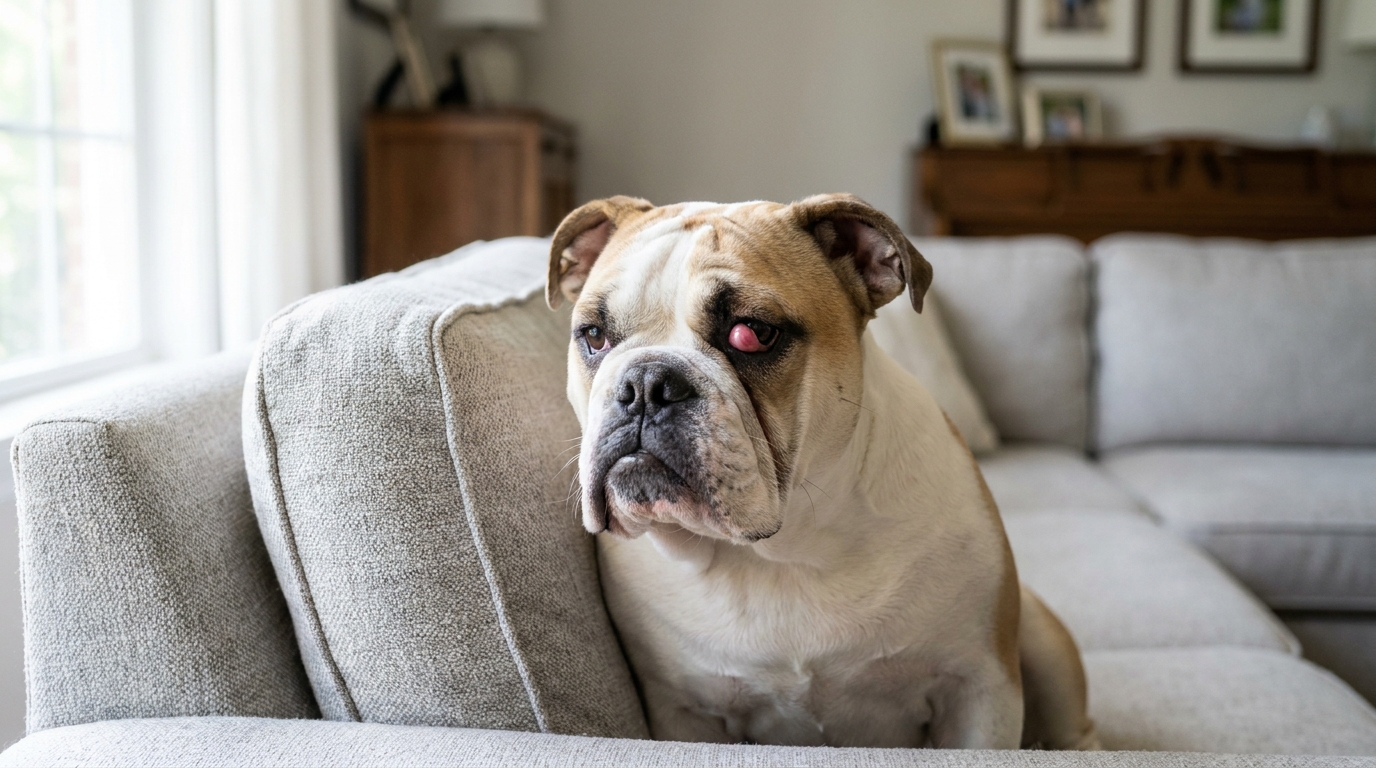
Cherry eye in dogs is a tear gland that slipped out of place. It is rarely an ER tonight, but it needs a vet soon and usually surgery.
Go to an emergency vet now if the eyeball itself looks pushed forward or out of its socket, the eye is cloudy, bleeding or squeezed shut, your dog keeps pawing at it in pain, or the red bump appeared after a fight, fall or other injury.
Cherry eye in dogs: what the red bump is
VCA explains that "cherry eye" is "a common name for a prolapsed (popping out) third eyelid gland." Dogs have a third eyelid in the inner corner of each eye. A tear gland sits at its base, normally out of sight. With cherry eye, that gland pops up into view.
VCA describes what you see as "a red, swollen mass on the lower eyelid near the nose or muzzle, resembling a cherry." If you just found a red bump in the corner of your dog's eye, that picture probably looks familiar.
The gland makes a large share of your dog's tears, which is why vets work hard to save it. Being out of place is hard on it. Veterinary Partner (VIN) puts it this way: "Out of its normal position, the gland does not circulate blood properly, may swell, and may not produce tears normally."
Who gets it? PetMD notes: "Cherry eye most often appears in young dogs. It typically starts in one eye, but both may eventually be affected."
VCA lists breeds that get it more often, including:
- English and French bulldogs
- Boston terriers
- Beagles
- Cocker spaniels
- Shih Tzus and Lhasa Apsos
- Pugs and other flat-faced breeds
Emergency signs: when a red eye is not cherry eye
PetMD says, "Cherry eye is not painful, so your dog may not notice the issue." That is the key clue. If the eye itself seems to hurt or looks wrong, something else may be going on, and your dog needs an emergency vet tonight or an in-person exam the same day.
Go to your nearest emergency vet now if you see any of these:
- The eyeball looks pushed forward or out of its socket.
- The eye is cloudy or bleeding.
- Your dog squints or keeps the eye squeezed shut.
- Your dog keeps pawing at the eye as if it hurts.
- The red bump showed up after a fight, a fall or another injury.
If you are not sure whether one of these applies, treat it as an emergency and go. Don't wait at home to see whether it settles.
For warning signs beyond the eye, you can read our practical pet emergency checklist for dog and cat owners.
Is cherry eye an emergency?
For a dog with a smooth pink or red bump and an eye that looks clear and comfortable, usually not. PetMD says: "While not painful or an emergency, untreated cherry eye can lead to complications like dry eye and usually requires surgical correction."
PetMD adds: "Although cherry eye is not an emergency, you should schedule a routine visit with your veterinarian to have it checked out."
VCA is firmer about timing: "If you notice a mass in your dog's eye, bring it to your veterinarian's attention immediately." It also notes: "It is essential to treat the condition as soon as possible to minimize permanent damage to the eye or third eyelid gland."
Put together, here is the plain answer. Unless a sign from the emergency list shows up, most dogs with cherry eye do not need the ER tonight, but they do need a vet check promptly. Call your regular vet as soon as they open to book an exam, rather than waiting to see if the bump goes away.
What to do tonight at home
This section is for a dog with none of the emergency signs above: your dog is comfortable and the eye looks clear. For that dog, the best home care is hands-off:
- Leave the bump alone. Don't push, squeeze, pull or trim it; leave that to your veterinarian.
- Keep everything out of the eye. Don't put any drops, ointment, gel, wash or other product in the eye unless a veterinarian who has examined your dog tells you to.
- Stop the rubbing. If your dog rubs its face on carpet or furniture, gently redirect it. If your dog already has a cone, it can stop that rubbing.
- Take a photo. A clear, close photo in good light helps your vet see what you saw, even if the gland slips back in later.
Before the visit, jot down what PetMD suggests telling your vet: "when you first noticed the problem, whether the gland is always or only sometimes visible, and if it causes discomfort for your dog."
If your dog also has mild eye discharge, our guide to mild eye discharge in dogs explains when it needs an exam.
How cherry eye is fixed
VCA states it plainly: "Treatment involves surgical replacement of the third eyelid gland." The goal is to put the gland back where it belongs, not to cut it out.
Can cherry eye go back in on its own? Sometimes for a while, but it does not stay there. PetMD explains: "Cherry eye won't go away without surgery. The gland may pop out off and on at first, but the condition usually becomes permanent over time."
Why the gland is kept, not removed
The American College of Veterinary Ophthalmologists (ACVO) explains why vets save the gland: "Ideally, a prolapsed gland should never be excised or removed, as this can immediately result in permanent dry eye (called keratoconjunctivitis sicca or KCS), as the third eyelid gland is the main tear producing gland of the eye."
Cherry eye surgery recovery
PetMD notes: "Most dogs heal from cherry eye surgery in 10 to 14 days, though the eye will look normal within a few days." Your vet will tell you how to care for the eye at home during that time and when to come back for a recheck.
Cherry eye can come back after surgery. Veterinary Partner (VIN) advises: "If it recurs, it is important to let your veterinarian know so that a second surgery, either with your veterinarian or an ophthalmologist, can be planned."
Surgery also does not end the story for the eye's tears. The section on dry eye below explains the follow-up checks ACVO recommends.
What a RexVet online vet can and cannot do for cherry eye
If any sign from the emergency list is present, skip the video visit and go to an emergency vet now. A video visit is for a dog with a calm, painless bump.
For that dog, a RexVet veterinarian can:
- Look at the bump on camera or in your photos and tell you whether it looks like a slipped gland or something else, such as an injury, a growth or a bulging eye.
- Check for squinting, cloudiness and discharge.
- Explain how to protect the eye until the clinic visit.
- Help you decide between an emergency clinic tonight and a hands-on exam with your regular vet soon.
A video visit has clear limits. A vet on camera can't run the eye tests PetMD lists, such as a "Fluorescein stain test," a "Schirmer tear test" or "Tonometry." They can't put the gland back, and they can't operate. Every cherry eye still needs an in-person exam, and only surgery at a clinic fixes it.
If the veterinarian decides medication is appropriate, they can prescribe where state rules allow. In Florida, a veterinarian who has seen your pet only by video may prescribe only FDA-approved animal drugs used as labeled, for up to 14 days (1 month for flea-and-tick-only products), and cannot renew without an in-person exam.
To get the most from the call, sit near a window or a bright lamp and have your photos ready. Our guide on how to upload pet photos and videos for an online vet review shows how to share clear pictures.
RexVet is a 501(c)(3) non-profit, and RexVet's veterinarians are licensed in Florida, New York and Virginia. Video visits are for pet parents located in Florida, New York or Virginia, vets are available 24/7, and a video visit is $64.99. If the bump is painless and you want a vet to look at it tonight, you can book a RexVet video visit.
The other eye, and dry eye later
Keep watching the other side, too. VCA notes: "Many pets with a prolapse in one eye will eventually experience a prolapse in the opposite eye." If a bump appears in the second eye, let your vet know.
Dry eye is the long-term risk. ACVO warns: "Following surgical replacement of a prolapsed third eyelid gland, there is FOREVER a risk for the development of dry eye."
For that reason, ACVO advises that "it is important that tear production is assessed in both eyes at least twice yearly by a veterinarian." Put those tear checks on your calendar alongside your dog's regular visits.
Dry eye can show up as discharge. Veterinary Partner (VIN) notes that when the eye can't get enough tears, "A thick yellow discharge results." Have your vet check any new discharge.
When to be seen in person in Florida, New York or Virginia
Every cherry eye needs a hands-on exam and a surgery plan. Book that exam with your regular vet promptly, even if the bump seems to come and go.
A painful, cloudy or injured eye can't wait for a routine appointment; treat it as an emergency, as the list above explains.
After surgery, keep watching. Veterinary Partner (VIN) advises: "If the eye appears suddenly painful or unusual in appearance, have it rechecked as soon as possible."
In Florida, a telehealth veterinarian must give you the contact information for at least one physical veterinary clinic near you. Either way, it helps to have your regular clinic's number and your nearest emergency vet's address saved before you need them.
A slipped gland looks alarming, but for a comfortable dog it is usually a reason for a prompt vet visit, not a race to the ER. If you would like a veterinarian to look at the bump first, RexVet's veterinarians are licensed in Florida, New York and Virginia, video visits are for pet parents located in those three states, and vets are available 24/7. A video visit is $64.99, and you can book a video visit now.
Frequently Asked Questions
Is cherry eye in dogs an emergency?
Usually not an ER trip. PetMD calls it "not painful or an emergency," while VCA says to "bring it to your veterinarian's attention immediately," so book a vet check promptly. The exception is any of the emergency signs above, such as a bulging, cloudy, bleeding or painful eye.
Can I push my dog's cherry eye back in?
No. Don't push, squeeze, pull or trim the bump; leave that to your veterinarian. PetMD notes: "Your vet may try to replace the gland back to its normal position to see how quickly it slips out of place." That is part of an exam, not a home fix.
Will cherry eye go away on its own?
No. PetMD says, "Cherry eye won't go away without surgery." It adds that the gland may pop out off and on at first, so a bump that disappears for a day still needs a vet visit.
Why not just remove the gland?
Because your dog needs its tears. ACVO says a prolapsed gland should ideally never be removed, because removal "can immediately result in permanent dry eye," and this gland is the main tear producing gland of the eye. VCA likewise describes treatment as surgical replacement of the gland, not removal.
Will my dog's other eye get it too?
It can. VCA notes that "Many pets with a prolapse in one eye will eventually experience a prolapse in the opposite eye." Your vet will watch both eyes at checkups, and you should call them if a bump appears on the other side.
FAQs
Is cherry eye in dogs an emergency?
Usually not an ER trip. PetMD calls it "not painful or an emergency," while VCA says to "bring it to your veterinarian's attention immediately," so book a vet check promptly. The exception is any of the emergency signs above, such as a bulging, cloudy, bleeding or painful eye.
Can I push my dog's cherry eye back in?
No. Don't push, squeeze, pull or trim the bump; leave that to your veterinarian. PetMD notes: "Your vet may try to replace the gland back to its normal position to see how quickly it slips out of place." That is part of an exam, not a home fix.
Will cherry eye go away on its own?
No. PetMD says, "Cherry eye won't go away without surgery." It adds that the gland may pop out off and on at first, so a bump that disappears for a day still needs a vet visit.
Why not just remove the gland?
Because your dog needs its tears. ACVO says a prolapsed gland should ideally never be removed, because removal "can immediately result in permanent dry eye," and this gland is the main tear producing gland of the eye. VCA likewise describes treatment as surgical replacement of the gland, not removal.
Will my dog's other eye get it too?
It can. VCA notes that "Many pets with a prolapse in one eye will eventually experience a prolapse in the opposite eye." Your vet will watch both eyes at checkups, and you should call them if a bump appears on the other side.
Medically Reviewed
Reviewed by Dr. Tiffany Delacruz, DVM — licensed veterinarian and CEO of RexVet. Last reviewed September 29, 2026.
Content is for informational purposes and does not replace professional veterinary advice.
Chief Executive Officer · Licensed Veterinarian
Dr. Delacruz is a licensed Doctor of Veterinary Medicine specializing in preventive care and veterinary telehealth. She reviews all health content on RexVet to ensure accuracy and clinical relevance.
Sources & References
- · American Veterinary Medical Association — Telehealth Guidelines
- · AVMA — Pet Care Resources
- · U.S. FDA — Animal & Veterinary
Need an Expert Opinion on This Topic?
Connect with a certified vet via video call in minutes
Talk to Vet Now