
Cat Sunburn on Ear Tips? When Crusty Ears Need a Vet
By RexVet Team | Reviewed by Dr. Tiffany Delacruz, DVM
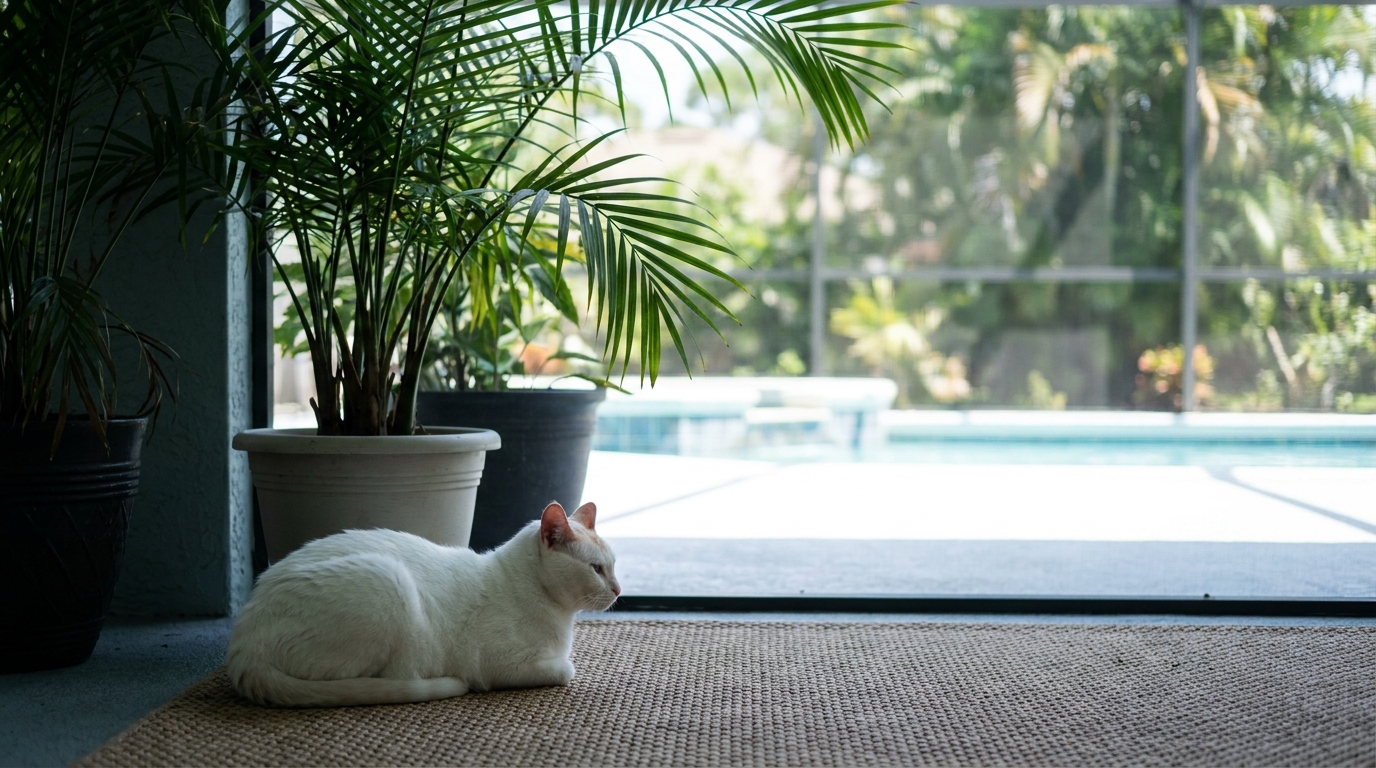
Cat sunburn on ear tips starts as pink, dry skin on pale ears. Crusts or sores that keep coming back need a vet, because they can turn into cancer.
Book a vet visit soon if your cat's ear tips are crusted, bleeding, ulcerated or growing, or if sores keep coming back or appear on the nose or eyelids: these need a vet, and often a biopsy, to rule out skin cancer.
White and pale-eared cats that nap on a sunny Florida lanai or on a summer windowsill in New York or Virginia can develop dry, pink ear tips. VCA's advice for keeping the condition from getting worse is to keep your cat out of the sun, but shade does not replace a vet. Redness that does not fade, and any crust or sore, should be checked, because VCA notes the damage can sometimes progress to skin cancer.
This guide walks through what the condition is, the signs that mean it is time to book a vet, why indoor cats are not automatically safe, how to set up shade at home, what else can cause crusty ear tips, and what a vet can and cannot do by video.
Cat Sunburn on Ear Tips: What Solar Dermatitis Is
The medical name for sun damage on a cat's skin is solar dermatitis. VCA Animal Hospitals explains that "Solar dermatitis is a skin disease caused by exposure to the sun. It occurs mainly in cats with white or pale patches of skin (non-pigmented areas)."
VCA adds that it "is more common in young adults and white-haired cats with blue eyes that spend a lot of time outside."
So if your cat has white ears, or pale pink skin showing through light fur, those ear tips are worth a gentle look whenever you are petting your cat. Check the nose and eyelids at the same time, since sores in those spots are also a reason to book a vet.
Signs That Mean It Is Time to Book a Vet
VCA describes how the condition tends to move along: "Solar dermatitis often starts as skin redness (erythema) and excessive dryness (resembling a sunburn). As it progresses, the skin becomes crusted (scabby) and ulcerated. Sometimes, it may progress to a malignant tumor called a squamous cell carcinoma at the site."
Redness and dryness come first. Crusts and sores that do not heal match the way PetMD describes the start of ear-tip cancer, so they need a vet to look at them.
PetMD describes the ear-tip form of that cancer this way: "This type of tumor starts out as red, crusty looking areas on the tips of the ears. The sores, or ulcers, may seem to come and go and will slowly get bigger with time."
That "come and go" pattern is the one to watch. A sore that heals and then returns does not mean the problem is over. It still needs a vet.
The shape of the ear can change, too. Pet Poison Helpline notes that if the ears are affected, the outer portions can begin to curl back.
Putting it all together, book a vet visit soon if you notice any of these:
- Crusts or scabs on the ear tips that do not heal
- Any bleeding, or an open sore (ulcer)
- A sore that grows, or returns after it seems to heal
- Sores on the nose or eyelids
- An ear edge that is starting to curl back
If an ear is bleeding and the bleeding will not stop, treat it as an emergency and go to an in-person emergency vet right away.
One habit that helps: take a clear, well-lit photo of each ear every so often and save them with the date. When you are unsure whether a spot is changing, side-by-side photos make it much easier for you, and for a vet, to tell.
Why Indoor Cats Are Still at Risk
A sunny window can feel like a safe place for a cat to soak up warmth. Pet Poison Helpline is direct about it: "Cats don't have to go outside to risk a sunburn."
The same source adds: "While glass does offer some sun protection, it is not sun proof."
In practice, the places to think about are the ones your cat picks for long naps. In Florida, that might be a sunroom, a screened lanai or a bright sliding door. In New York and Virginia, it is often a windowsill or cat tree that catches strong summer sun.
You do not have to take the window away. The goal is to cut down how long a pale cat spends lying in direct sun, which is what a shade plan is for.
A Shade Plan at Home
A shade plan is the main way to protect a pale cat's ears. VCA's advice is to "Keep your cat out of sunlight, ideally by keeping them indoors between the hours of 10:00 am and 4:00 pm on sunny days, because this is when ultraviolet (UV) light is most intense."
Simple changes you can make today:
- Move favorite beds and cat trees out of direct sun.
- Shade the sunniest window, especially the one your cat naps in.
- Keep pale cats off the lanai, patio or catio at midday.
- If your cat goes outdoors, bring them in during the hours VCA describes.
- Set up a comfortable bed in a shaded spot near the window, so your cat keeps the view without lying in the sunbeam.
Watch where the light lands through the day, because a spot that is shaded in the morning may be in full sun later on.
What about sunscreen? VCA warns that "Some products may be toxic to cats, so never use a human sunscreen without first checking with your veterinarian." Ask your vet before putting any cream or lotion on your cat's ears.
Shade helps prevent more sun damage, but it does not fix a crust or sore that is already there. Redness that persists, any crust and any sore still need a vet to look at them.
Look-Alikes a Vet Will Rule Out
White cat ear tips that look crusty are not always sun damage. Other problems can look much the same, and a vet is the one who tells them apart. The point of this list is not to diagnose at home. It is to show why an exam matters.
- Mosquito bite allergy. The Merck Veterinary Manual notes: "Mosquito allergy can cause crusted, slow-healing sores on the outer ears, nose, and rarely eyelids or footpads." That is worth keeping in mind in Florida, and during mosquito season in New York and Virginia.
- Mites. Merck notes that one kind of mange mite causes intense itching around the ears, head and neck, with redness, hair loss and grayish-yellow skin crusts. Our guide to ear mites in cats covers what a vet looks for.
- Other skin problems. A vet can also rule out other skin conditions, such as ringworm. See our guide to cat scabs and hair loss for more on crusty skin elsewhere on the body.
Notice that Merck lists the nose and eyelids for mosquito allergy, and those same spots are on the list of reasons to book a vet above. Whatever the cause, sores on the face deserve a vet's look rather than a guess.
How Veterinarians Diagnose Ear Tip Damage
A vet will look closely at the ears, nose and eyelids, and ask about your cat's sun exposure and how long the sores have been there. VCA explains the next step: "If there is any concern that the condition may be progressing to squamous cell carcinoma, your veterinarian will recommend taking a tissue biopsy from the affected area."
A biopsy means a small piece of the affected skin is removed so it can be examined in a lab. VCA also notes: "Most cats need general anesthesia for this procedure." A biopsy is always done in person, at a clinic.
Why it is worth doing: PetMD says "This type of cancer can be treated successfully if it is caught early." Treatment is decided in person with your vet, once the diagnosis is confirmed.
What a RexVet Online Vet Can and Cannot Do
RexVet is a 501(c)(3) non-profit veterinary telehealth service. RexVet's veterinarians are licensed in Florida, New York and Virginia, and they see cats by video for pet parents in those three states.
On a video visit, a veterinarian can:
- Look closely at the ear tips, nose and eyelids on camera and in the photos you share
- Compare photos over time to see whether a spot is growing, spreading or coming back
- Ask about sun exposure, favorite windows and outdoor time, and help you plan shade
- Decide whether a biopsy visit is needed, and how soon
A video vet cannot take a biopsy, do a skin scrape for mites or treat your cat in person. A confirmed diagnosis needs an in-person exam. Think of a video visit as a first look: it helps you decide whether an in-person biopsy visit is needed and how soon, and it does not replace that exam.
Clear photos make a video visit more useful. Our guide on uploading pet photos and videos for an online vet review shows how to share them.
If the veterinarian decides medication is appropriate, they can prescribe where state rules allow. In Florida, a veterinarian who has seen your pet only by video may prescribe only FDA-approved animal drugs used as labeled, for up to 14 days (1 month for flea-and-tick-only products), and cannot renew without an in-person exam.
If your cat's ear tips are pink, dry or starting to crust, you can book a RexVet video visit for $64.99 as that first look. Vets are available 24/7, including nights, weekends and holidays, for pet parents in Florida, New York and Virginia only. The vet will tell you whether an in-person biopsy visit is needed, and how soon. The video visit does not take the place of that exam.
When to Be Seen in Person in Florida, New York or Virginia
Some ear-tip changes need hands-on care, not just a camera. If you have noticed any of the signs listed earlier in this guide, plan an in-person exam rather than waiting to see whether they clear up.
VCA explains that the ears are the most commonly affected areas, "but the nose and the eyelids are sometimes involved," and that as the condition progresses the skin becomes crusted and ulcerated, sometimes turning into squamous cell carcinoma. VCA also notes that a cat may shake its head or scratch its ears, which can cause bleeding from the ear tips.
What happens at the clinic: the vet examines the ears, nose and eyelids up close. If there is any concern that the condition may be progressing to squamous cell carcinoma, VCA says the vet will recommend a tissue biopsy. If mites are a possibility, Merck notes that diagnosis includes identifying mites on scrapings of skin examined under the microscope, which also has to be done in person.
In Florida, a telehealth vet must give you "the contact information for at least one physical veterinary clinic in the vicinity of the patient's location" (Fla. Stat. 474.2021), so a video visit there always points you to a nearby clinic.
For more on how care works in each state, see our pages on online vet care in Florida, online vet care in New York and online vet care in Virginia.
Frequently Asked Questions
Can cats get sunburned through a window?
Yes. Pet Poison Helpline says "While glass does offer some sun protection, it is not sun proof." If a pale cat naps in a sunny window, shade that window or move the bed out of direct sun during the midday peak hours.
Why are my white cat's ear tips crusty?
Sun damage (solar dermatitis) is one cause, but Merck notes that mosquito allergy and some mange mites can also cause crusts on or around the ears. A vet can also rule out other skin conditions, such as ringworm. These can look alike, so a vet needs to tell them apart, and crusts that do not heal should be checked soon.
Can I put sunscreen on my cat's ears?
Not without asking your vet first. VCA warns that some products may be toxic to cats, so never use a human sunscreen without first checking with your veterinarian. The step VCA recommends is keeping your cat out of the sun, ideally indoors, during the midday hours.
Is ear-tip cancer in cats treatable?
PetMD says "This type of cancer can be treated successfully if it is caught early." That is why sores that come and go, or crusty areas that slowly get bigger, should be checked by a vet soon. Treatment is decided in person after a biopsy.
Do only white cats get sunburned?
No. VCA says solar dermatitis occurs mainly in cats with white or pale patches of skin, and is more common in white-haired cats with blue eyes. Pet Poison Helpline adds that "Any cat who has areas of white haircoat or a thinly-haired/sparse haircoat is at risk of sunburn, even if the cat just sunbathes indoors."
Shade is the everyday step for pale ears, but a crust or sore that will not heal needs a vet's eyes. If you are worried about cat sunburn on ear tips, you can book a RexVet video visit for $64.99, 24/7, including nights and weekends. RexVet's veterinarians are licensed in Florida, New York and Virginia, and they can look at your cat's ears, review your photos and tell you whether and how soon an in-person biopsy visit is needed.
FAQs
Can cats get sunburned through a window?
Yes. Pet Poison Helpline says "While glass does offer some sun protection, it is not sun proof." If a pale cat naps in a sunny window, shade that window or move the bed out of direct sun during the midday peak hours.
Why are my white cat's ear tips crusty?
Sun damage (solar dermatitis) is one cause, but Merck notes that mosquito allergy and some mange mites can also cause crusts on or around the ears. A vet can also rule out other skin conditions, such as ringworm. These can look alike, so a vet needs to tell them apart, and crusts that do not heal should be checked soon.
Can I put sunscreen on my cat's ears?
Not without asking your vet first. VCA warns that some products may be toxic to cats, so never use a human sunscreen without first checking with your veterinarian. The step VCA recommends is keeping your cat out of the sun, ideally indoors, during the midday hours.
Is ear-tip cancer in cats treatable?
PetMD says "This type of cancer can be treated successfully if it is caught early." That is why sores that come and go, or crusty areas that slowly get bigger, should be checked by a vet soon. Treatment is decided in person after a biopsy.
Do only white cats get sunburned?
No. VCA says solar dermatitis occurs mainly in cats with white or pale patches of skin, and is more common in white-haired cats with blue eyes. Pet Poison Helpline adds that "Any cat who has areas of white haircoat or a thinly-haired/sparse haircoat is at risk of sunburn, even if the cat just sunbathes indoors."
Shade is the everyday step for pale ears, but a crust or sore that will not heal needs a vet's eyes. If you are worried about cat sunburn on ear tips, you can book a RexVet video visit for $64.99, 24/7, including nights and weekends. RexVet's veterinarians are licensed in Florida, New York and Virginia, and they can look at your cat's ears, review your photos and tell you whether and how soon an in-person biopsy visit is needed.
Medically Reviewed
Reviewed by Dr. Tiffany Delacruz, DVM — licensed veterinarian and CEO of RexVet. Last reviewed September 24, 2026.
Content is for informational purposes and does not replace professional veterinary advice.
Chief Executive Officer · Licensed Veterinarian
Dr. Delacruz is a licensed Doctor of Veterinary Medicine specializing in preventive care and veterinary telehealth. She reviews all health content on RexVet to ensure accuracy and clinical relevance.
Sources & References
- · American Veterinary Medical Association — Telehealth Guidelines
- · AVMA — Pet Care Resources
- · U.S. FDA — Animal & Veterinary
Need an Expert Opinion on This Topic?
Connect with a certified vet via video call in minutes
Talk to Vet Now