
Cat in Heat or in Pain? How to Tell the Difference Tonight
By RexVet Team | Reviewed by Dr. Tiffany Delacruz, DVM
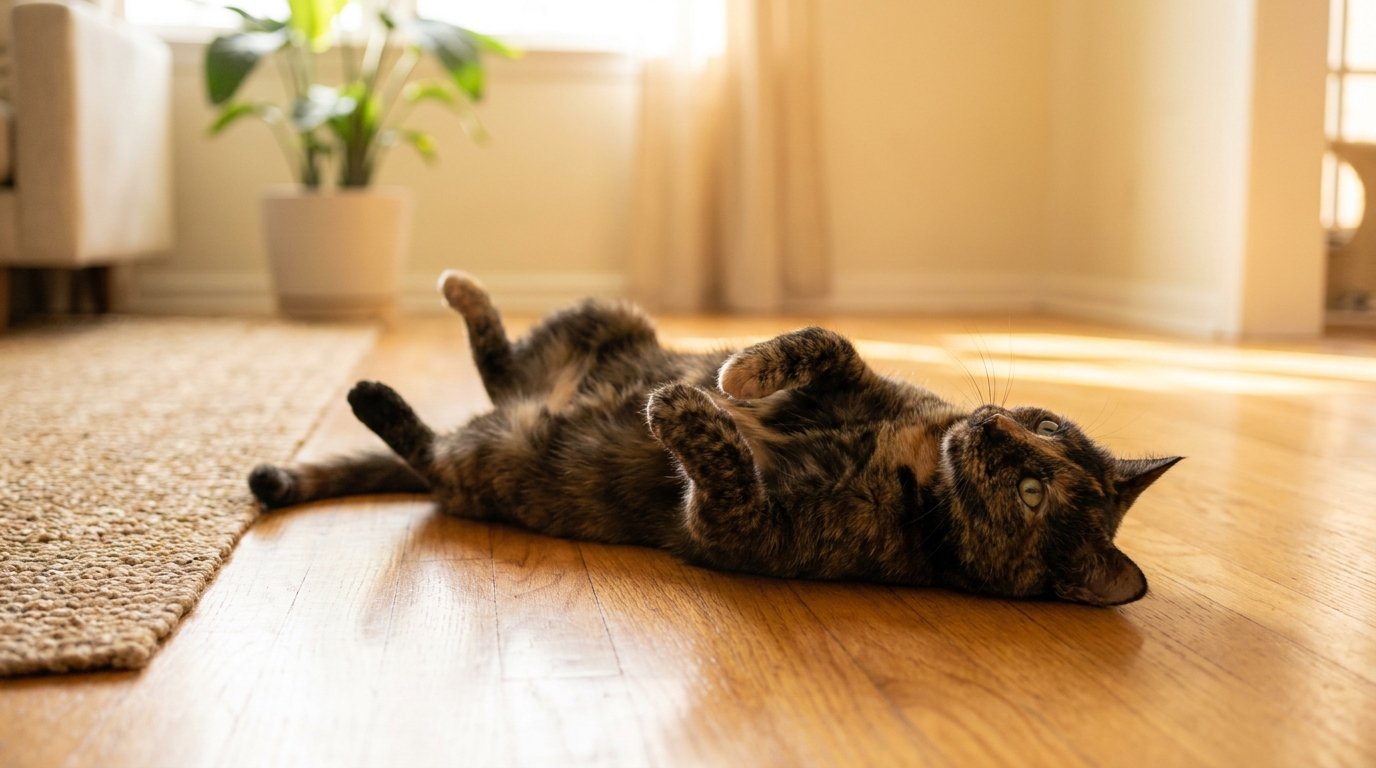
Cat in heat or in pain? Rolling, yowling and raising the rear are classic heat signs, but straining in the litter box is an emergency.
Go to an emergency vet now if your cat is straining in the litter box with little or no urine, has any vaginal bleeding, is a male cat crying and restless, or is vomiting, hiding and will not eat.
It is late, your cat has been howling all evening, and you cannot tell whether she wants attention or is hurting. Deciding whether you have a cat in heat or in pain comes down to a few specific checks: her sex and age, what her body is doing, and above all what is happening in the litter box. Start with the signs that should never wait.
Cat in Heat or in Pain: Why Owners Mix Them Up
Heat can look alarming, and you are not the first person to worry. VCA Animal Hospitals says, "These behavior changes can become annoying to owners, and sometimes owners think their cat has an illness."
PetMD makes the same point: "Because these behavioral changes can be dramatic, some pet parents worry that their cat is in pain."
The rolling, rubbing, calling and rear-raising that VCA describes are normal heat signs. Hiding and straining in the litter box are not on that list, and both appear in the blocked-bladder description below.
Emergency Signs That Are Not Heat
The most dangerous look-alike is a blocked bladder. The American College of Veterinary Surgeons describes it this way: "Once cats become completely obstructed, they may attempt to urinate in the litter box but will produce no urine. The cat may cry, move restlessly, or hide because of discomfort, and eventually lose their appetite and become lethargic."
Crying and restlessness also happen in heat, which is why this mix-up matters. ACVS is clear: "Cats that have urinary obstruction require emergency treatment." The ACVS page is about male cats, so take a crying, restless male especially seriously. Straining with little or no urine is an emergency in any cat, male or female. You can read more in our guide to cat urinary blockage and FLUTD, and in our page on urinary blockage emergencies in New York City.
Bleeding is the other red flag. PetMD notes, "Unlike dogs and humans, cats do not typically bleed during their heat cycle." It adds, "Any vaginal bleeding should be treated as an emergency and evaluated by a veterinarian immediately."
Treat any of these as an emergency, not a wait-and-see night:
- Straining in the litter box, or squatting with little or no urine coming out
- Any vaginal bleeding
- A male cat who is crying and restless, even if he seems to pass a little urine
- Lethargy together with not eating
- Vomiting together with hiding and refusing food
- Trouble breathing or collapse
If you see any of these, go to an emergency vet now. Do not wait to see if it passes.
Classic Cat in Heat Signs: A Checklist
If none of the emergency signs fit, look at what she is actually doing. VCA says, "The most notable signs of estrus in cats are behavioral." The signs VCA and PetMD describe are:
- Extra affection. VCA: "Most cats become very affectionate, even demanding: they persistently rub against their owners or objects, such as furniture, constantly wanting attention."
- Rolling. VCA: "They roll on the floor more often."
- Raising her rear. VCA: "When stroked along the back or spine, they raise their rear quarters into the air and tread with their back legs."
- Loud calling or yowling. VCA: "They also become very vocal."
- Restlessness. PetMD lists restlessness as a heat sign.
- Eating a little less than usual. PetMD notes her appetite may decrease.
If the noise is what keeps you up, our article on why a cat meows so much covers other causes too.
PetMD also mentions that some cats in heat urinate more often or outside the litter box, though it calls this less common. Straining with little or nothing coming out is a different picture. Likewise, a slightly smaller appetite can be part of heat, but a cat who stops eating and turns lethargic belongs on the emergency list above.
Signs That Point to Pain or Illness Instead
PetMD's general advice is simple: "Contact your veterinarian if your cat experiences sudden or unusual behavioral changes." Some signs are not on the heat checklist at all. ACVS says that early on, urinary trouble can show up as "straining to urinate, frequent urination, blood in the urine, painful urination," and PetMD lists other symptoms to call your veterinarian about during or after a heat. Take a closer look if you see:
- Hiding instead of seeking you out
- Straining to urinate
- Blood in the urine
- Vaginal discharge
- Vomiting or diarrhea
- Loss of appetite or lethargy
- Any of these in a male cat
Some of these, such as straining, or lethargy with no appetite, are already on the emergency list above, and that list always comes first. The rest are worth a call to a vet.
Two quick checks help. First, sex: PetMD says, "Because male cats do not have ovaries, they do not experience heat cycles." So do not put a crying, restless male down to a female in heat nearby. He needs an emergency vet now, even if he seems to pass some urine.
Second, age. VCA says puberty occurs on average at about six months of age, so if you are unsure whether a young cat could be in heat, have her checked.
How Long Is a Cat in Heat, and Why It Can Come Back This Fall
Knowing how long a heat lasts helps you spot signs that do not fit. According to VCA, "Each heat (the time during which the cat is receptive to males) generally lasts several days, with the average length being seven days; it can range from 1 to 21 days."
Heat also tends to come back. VCA notes, "In the Northern Hemisphere, cats usually cycle from January until late fall." PetMD adds, "Heat activity typically peaks between February and April and often continues through October or November."
VCA also notes that "cats in more tropical regions or mainly indoors may cycle year-round because of the increased number of daylight hours." An indoor cat in Florida may come into heat outside the usual season.
If her behavior does not fit these heat signs, or seems to go on longer than this range, talk to a vet.
Getting Through a Heat at Home
Once you are confident it is heat, PetMD is direct: "If your cat is in heat, the most important step is keeping her indoors to prevent unwanted pregnancy."
Keep intact males away, too. VCA warns that a tomcat nearby "may even attempt to enter the house to mate with the female." Keep doors, windows and screens closed.
PetMD suggests enrichment, a consistent routine and extra attention, which it says "may help reduce stress during a heat cycle." In practice, that can look like this:
- Play. Short sessions with a wand toy give her energy somewhere to go.
- A steady routine. Feed and play at the usual times so her day stays predictable.
- A warm, quiet spot. A soft bed in a calm room gives her a place to settle.
- Patience with the noise. A cat in heat crying at night is frustrating, but the calling is part of heat, so try not to scold her.
There is no at-home calming product to reach for. Do not give your cat any human medicine or over-the-counter calming product, and ask a veterinarian first if you are worried about how she is coping.
Spaying and When to Talk to a Vet
PetMD says, "Spaying is the only reliable way to prevent heat cycles and pregnancy." On timing, VCA says "most veterinarians recommend performing the procedure when the cat reaches six months of age." If your cat is already cycling, PetMD notes, "Once a cat begins cycling, delaying the procedure until anestrus may increase the risk of unwanted pregnancy and other reproductive complications. Your veterinarian can discuss the best timing for surgery."
Spaying is surgery, so it happens in person at a clinic. Our guide to the cost of spaying a cat in Florida can help you plan, and our kitten care guide covers the early months.
Also keep an eye on her during and after each heat. PetMD says, "Contact your veterinarian if your cat develops any of the following symptoms during or after a heat cycle:"
- Vaginal discharge
- Loss of appetite
- Diarrhea
- Vomiting
Bleeding, or vomiting together with hiding and not eating, is a different matter: check the emergency list above rather than waiting for a routine appointment.
What a RexVet Online Vet Can and Cannot Do
When there are no emergency signs and you still are not sure what you are seeing, a video visit can help you decide what to do next, including at night, on weekends and on holidays.
On a video visit, a RexVet veterinarian can:
- Watch the rolling, calling and rear-raise response on camera
- Ask about her age, spay status and litter-box habits
- Look for the blocked-bladder pattern and tell you to go to an emergency clinic if it fits
- Help you decide between the ER now, a clinic visit soon, or a home plan
- Answer questions about spay timing
A video vet cannot examine her by hand, feel her bladder, run a urine test or perform a spay. Those happen in person.
A short clip of her yowling, rolling or visiting the litter box helps. Our guide on how to upload pet photos and videos for an online vet review explains how to share them.
If the veterinarian decides medication is appropriate, they can prescribe where state rules allow. In Florida, a veterinarian who has seen your pet only by video may prescribe only FDA-approved animal drugs used as labeled, for up to 14 days (1 month for flea-and-tick-only products), and cannot renew without an in-person exam.
If you see any emergency sign, go to an emergency vet first. If not, RexVet's veterinarians are licensed in Florida, New York and Virginia and are available 24/7. You can book a RexVet video visit for $64.99.
When to Be Seen in Person in Florida, New York or Virginia
Some cats need hands-on care. The emergency list above always comes first. Beyond it, contact a clinic for an in-person visit if she develops any of the symptoms PetMD lists during or after a heat, if her signs do not match the heat checklist above, or if you notice anything from the pain-or-illness list.
In Florida, a telehealth vet must give you "the contact information for at least one physical veterinary clinic in the vicinity of the patient's location" (Florida Statutes 474.2021). For details on how video care works where you live, see our pages for Florida, New York and Virginia.
Frequently Asked Questions
How long does a cat stay in heat?
VCA puts the average heat at seven days, within a range of 1 to 21 days, and a cat can cycle again and again through the season. If the behavior runs past that range or does not look like heat, have a vet take a look.
Is my cat in pain when she is in heat?
VCA and PetMD describe rolling, calling and raising her rear as normal heat behavior, even though PetMD notes it can look dramatic enough to worry owners. Straining in the litter box, bleeding, or hiding with vomiting and no appetite are a different story, so check them against the emergency list near the top of this page.
Do male cats go into heat?
No. PetMD explains that males have no ovaries, so they do not cycle. A male who cries and moves restlessly is showing the same signs ACVS describes in a blocked bladder, so he needs emergency care right away, even if a little urine seems to come out.
Can I give my cat something to calm her during heat?
There is nothing from your medicine cabinet or the store shelf to give her. PetMD points to keeping her indoors, enrichment, a steady routine and extra attention, and calls spaying the only permanent solution. If she seems to be struggling, talk it through with a veterinarian.
When should I spay my cat?
According to VCA, most veterinarians recommend spaying once a cat reaches six months of age. If she has already started cycling, PetMD cautions that waiting for her inactive phase can raise the chance of pregnancy and other problems, so ask your veterinarian about timing. The surgery itself is done in person at a clinic.
Still not sure whether it is heat or something more? If none of the emergency signs above apply, RexVet, a 501(c)(3) non-profit, can help. RexVet's veterinarians are licensed in Florida, New York and Virginia and are available 24/7, so you can book a video visit now for $64.99.
FAQs
How long does a cat stay in heat?
VCA puts the average heat at seven days, within a range of 1 to 21 days, and a cat can cycle again and again through the season. If the behavior runs past that range or does not look like heat, have a vet take a look.
Is my cat in pain when she is in heat?
VCA and PetMD describe rolling, calling and raising her rear as normal heat behavior, even though PetMD notes it can look dramatic enough to worry owners. Straining in the litter box, bleeding, or hiding with vomiting and no appetite are a different story, so check them against the emergency list near the top of this page.
Do male cats go into heat?
No. PetMD explains that males have no ovaries, so they do not cycle. A male who cries and moves restlessly is showing the same signs ACVS describes in a blocked bladder, so he needs emergency care right away, even if a little urine seems to come out.
Can I give my cat something to calm her during heat?
There is nothing from your medicine cabinet or the store shelf to give her. PetMD points to keeping her indoors, enrichment, a steady routine and extra attention, and calls spaying the only permanent solution. If she seems to be struggling, talk it through with a veterinarian.
When should I spay my cat?
According to VCA, most veterinarians recommend spaying once a cat reaches six months of age. If she has already started cycling, PetMD cautions that waiting for her inactive phase can raise the chance of pregnancy and other problems, so ask your veterinarian about timing. The surgery itself is done in person at a clinic.
Still not sure whether it is heat or something more? If none of the emergency signs above apply, RexVet, a 501(c)(3) non-profit, can help. RexVet's veterinarians are licensed in Florida, New York and Virginia and are available 24/7, so you can book a video visit now for $64.99.
Medically Reviewed
Reviewed by Dr. Tiffany Delacruz, DVM — licensed veterinarian and CEO of RexVet. Last reviewed September 24, 2026.
Content is for informational purposes and does not replace professional veterinary advice.
Chief Executive Officer · Licensed Veterinarian
Dr. Delacruz is a licensed Doctor of Veterinary Medicine specializing in preventive care and veterinary telehealth. She reviews all health content on RexVet to ensure accuracy and clinical relevance.
Sources & References
- · American Veterinary Medical Association — Telehealth Guidelines
- · AVMA — Pet Care Resources
- · U.S. FDA — Animal & Veterinary
Need an Expert Opinion on This Topic?
Connect with a certified vet via video call in minutes
Talk to Vet Now