
Can Dogs Eat Sweet Potatoes or Mashed Potatoes? Safety Guide
By RexVet Team | Reviewed by Dr. Tiffany Delacruz, DVM
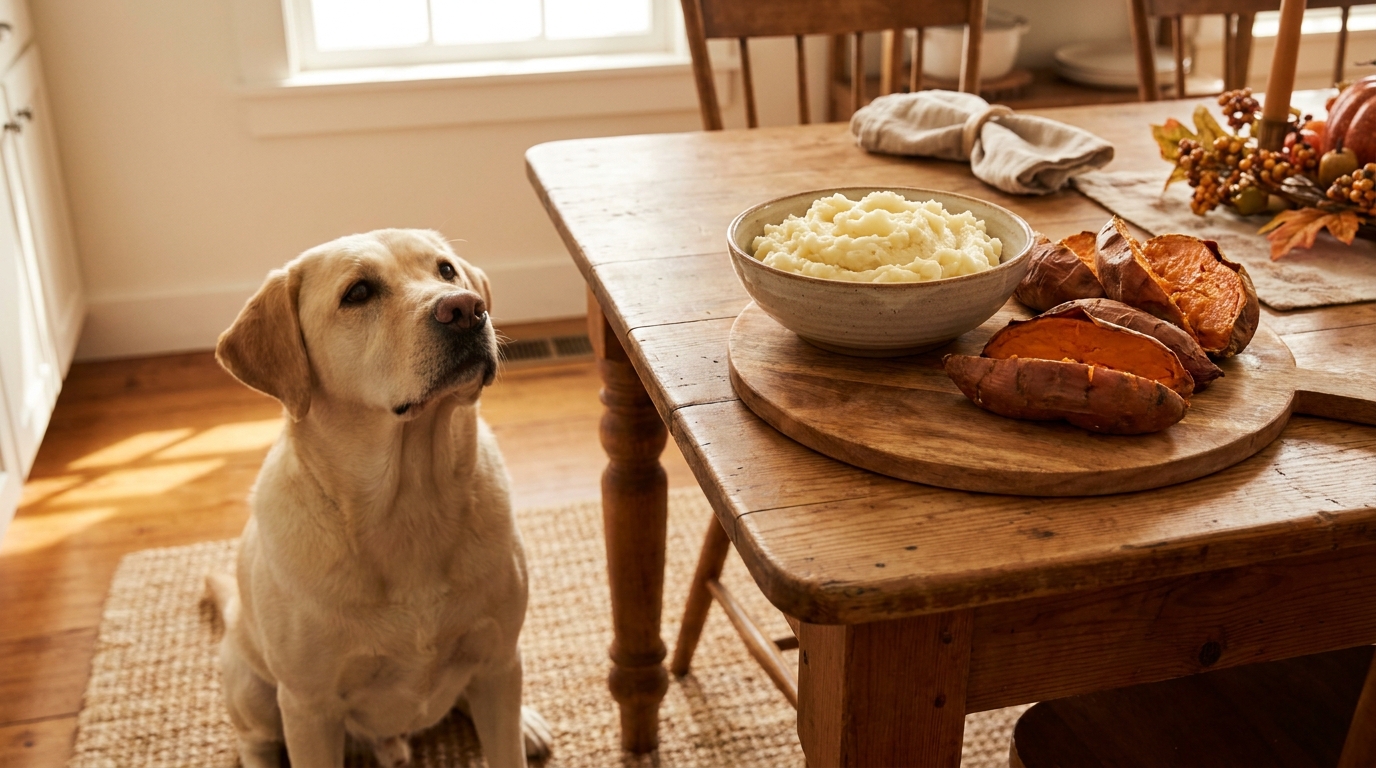
Which potatoes are safe for dogs, why mash from the serving bowl is not, and what to do if your dog already ate fries, mash or raw potato.
Quick answer: Yes, in small amounts: plain, cooked, peeled sweet potato or white potato (never green or sprouted) is a safe treat for most dogs if treats make up no more than 10% of daily calories. Mashed potatoes from the bowl, fries and casseroles are not. Garlic or chive mash means a poison line or your vet now; weakness, stumbling or tremors mean an emergency vet now.
This article is general information, not a diagnosis. If you think your pet is in danger, go to the nearest emergency animal hospital.
Go to an emergency vet now if you see these signs
Stumbling, tremors, a seizure, weakness, collapse, vomiting more than once, or a swollen or painful belly after any potato food, or any vomiting, retching or refusing food after a dog swallows a whole raw potato or a big chunk, means an emergency vet now, not a video call.
- Vomiting with lethargy, even once; blood in the vomit, not keeping water down, black or bloody stool, or pale gums.
- A hunched belly or the prayer position (front legs down, rear end up).
- Choking: gagging, heavy drooling, pawing at the mouth, trouble swallowing or breathing, or blue or gray gums after a chunk of potato or sweet potato.
- Dry retching (trying to vomit with nothing coming up), a swollen or tight belly, restlessness or drooling, especially in a large, deep-chested dog after a big meal or a pan of potatoes (possible bloat, which the Merck Veterinary Manual calls life-threatening).
- Pale or yellow gums, weakness, fast breathing, or red or brown urine in the days after garlic, onion or chive mash.
- A sugar-free pie or casserole (possible xylitol, which labels may also call birch sugar or wood sugar), or one you can't check, even if your dog seems fine; call a poison line on the way.
ASPCA Animal Poison Control, (888) 426-4435 (a consultation fee may apply), and Pet Poison Helpline, (855) 764-7661 (a per-incident fee applies). Both poison lines take calls every day, including holidays.
Potato by potato: what a dog can and can't eat
A dog can have a little plain, cooked, peeled sweet potato or white potato, but not raw, green or sprouted potato, potato leaves, mash from the bowl, fries, chips or casseroles.
| Food | Verdict | Why |
|---|---|---|
| Plain cooked sweet potato | OK, small amount | Peeled (AKC); set aside before butter, sugar or toppings (ASPCA) |
| Raw sweet potato | No | Choking, blockage |
| Plain cooked white potato | OK, small amount | Peeled, not green or sprouted |
| Raw white potato | No | Hard to chew; blockage |
| Green potato, sprouts, leaves | No | Solanine |
| Potato skins | Skip | Tough; green skin has the most solanine |
| Mashed potatoes from the bowl | No | Butter and cream; garlic or chives (onion family) |
| Instant or boxed mash | Skip | Salt; may hold onion or garlic powder |
| Fries, tots, chips | No | Salt, oil, onion or garlic powder |
| Sweet potato casserole | No | Sugar, butter, sweet toppings, pecans (high-fat nuts, ASPCA) |
| Sweet potato pie | No | Sugar, fat; sugar-free pies may contain xylitol (FDA) |
"OK" means a small piece of plain food, cooked and peeled, set aside before butter, milk, salt, onion, garlic, sugar or toppings.
Can dogs eat sweet potatoes?
Yes: plain, cooked, peeled sweet potato is a safe small treat for most dogs, and the ASPCA lists the sweet potato plant (Ipomoea batatas) as non-toxic to dogs and cats.
Sweet potato is not a nightshade (the USDA PLANTS Database puts it in a different plant family from the white potato), so with raw sweet potato the worry is choking and a gut blockage, not solanine. The American Kennel Club says never to feed it raw and advises removing the skin, which is harder to digest.
The American Animal Hospital Association (AAHA) says treats, including table scraps, should make up no more than 10% of a pet's daily calories.
Can dogs eat regular white potatoes?
Yes, dogs can eat white potato that is plain, cooked, peeled and not green: Cornell University's poisonous-plants database says solanine is highest in green skin and sprouts and is not destroyed by cooking, so never feed green or sprouted potato or the plant's leaves and stems.
Skip raw white potato for another reason: it is hard for a dog to chew and digest. The European Food Safety Authority reports that peeling and cooking lower potato glycoalkaloids only partly, while light (greening), sprouting and damage raise them. Pet Poison Helpline calls the potato plant mildly poisonous and says a few bites of the leaves are unlikely to cause more than minor nausea. Still, EFSA's 2020 review found no data on how potato glycoalkaloids affect dogs or cats, so no safe amount of green or sprouted potato is known.
After green potato, sprouts or leaves, call a poison line or your vet now, even if your dog seems fine.
Can dogs eat mashed potatoes?
Dogs should not eat mashed potatoes from the serving bowl: butter and cream make them fatty, and garlic or chives in the mash mean a call to a poison line or your vet now, even if your dog seems fine.
The ASPCA says pets don't make much lactase, so milk and other dairy can cause diarrhea or digestive upset. Garlic, onion and chives belong to the onion family. The Merck Veterinary Manual says they damage red blood cells whether raw, cooked, dried or powdered, and signs can take several days to appear. See what to do after a dog eats onion or garlic.
Buttery mash with no onion, garlic or chives means a 4-day watch, because Pet Poison Helpline says pancreatitis signs can appear up to 4 days after fatty food (see a dog that ate grease, butter or fat).
Can dogs eat potato skins, fries, tots or chips?
Dogs should skip potato skins, fries, tots and chips: skins are tough to digest and green skin carries the most solanine, while fries and chips are salty, oily and often seasoned with onion or garlic powder.
The ASPCA says large amounts of salt can cause excessive thirst and urination, and salt poisoning can bring vomiting, diarrhea, depression, tremors and seizures.
My dog already ate potatoes: what to do now
If a dog already ate potatoes, what was in the dish matters most: garlic, onion or chives mean a poison line or your vet now, a sugar-free pie or casserole means an emergency vet now, and a swallowed whole raw potato means calling a vet now.
| What your dog ate | What to do now |
|---|---|
| Mash, gravy, glaze or seasoning with garlic, onion, chives or alcohol | Poison line or your vet now, even if your dog seems fine |
| Sugar-free pie or casserole, or one you can't check | Emergency vet now, even if fine; call a poison line on the way |
| Buttery mash or sweet potato casserole (no onion, xylitol or alcohol) | Watch 4 days, as below |
| Casserole with old or moldy pecans | Clinic now, even with no signs, before tremors start |
| Green or sprouted potato, green peel, leaves or stems | Poison line or vet now, even if fine; vomiting again, drooling, wobbly, tremors, weak or collapse: ER now |
| Whole raw potato or big chunk (any size dog) | Call a vet now; any vomiting, retching, not eating, swollen belly or weakness: ER now |
| Small piece of raw potato or sweet potato, not green | Watch; one vomit but bright: vet today; gagging, pawing at mouth or trouble breathing: ER now |
| Fries, tots or chips | Watch 4 days; onion or garlic seasoning: poison line now |
The 4-day watch after buttery mash, casserole, fries or chips: one vomit in a bright, eating dog means call a vet today; refusing food, or vomiting with diarrhea, means an in-person vet today; vomiting again, belly pain or weakness means an emergency vet now, as do extreme thirst, wobbliness or tremors after fries or chips. Each new fatty plate starts a new 4 days, and a quiet stretch is not an all-clear. If more than one row fits, follow the most urgent.
Higher-risk dogs (past pancreatitis, a low-fat prescription diet, a Miniature Schnauzer, Cushing's disease, high blood fats, extra weight or a lot of fat for its size) need a vet call the same day even if they seem fine; for a diabetic dog, call the vet who manages the insulin. After plain potato, call a vet if loose stool lasts more than two days in a bright adult dog, the general threshold from Cornell's Riney Canine Health Center; toy breeds and seniors need a same-day call.
A dog that swallowed a whole potato or big chunk needs a vet now even if it seems fine: your own vet if they can see your dog right away, otherwise an emergency vet (see signs of an intestinal blockage in dogs). Don't make your dog vomit unless a vet or poison line tells you to; never use salt, mustard, soap or your fingers.
Dogs that should skip potato treats
Skip table food, potato and sweet potato treats included, for dogs with a history of pancreatitis, diabetes, stomach or kidney disease, food allergies or a prescription diet unless their own vet says otherwise.
For an overweight dog, ask your vet first, since AAHA's 10% limit covers every treat and scrap.
Potatoes at Thanksgiving
At Thanksgiving, set aside plain cooked potato or sweet potato for a dog before butter, garlic, sugar or marshmallows go on, and keep it a small treat mixed into its usual dinner, as the ASPCA suggests for sweet potatoes.
Thanksgiving is Thursday, Nov. 26, and the dish-by-dish Thanksgiving chart for dogs covers the rest of the meal. Pet Poison Helpline says the small amount of nutmeg baked into a sweet potato pie is very unlikely to cause serious poisoning, though a mild stomach upset can happen; a dog that ate a lot of nutmeg or the straight pie-spice blend needs a poison line now.
Sweet potato, grain-free food and heart disease (DCM)
A treat-size bite of sweet potato is not what the FDA investigated: its reports of dilated cardiomyopathy (DCM) involved dog foods with peas, lentils, other legume seeds or potatoes, sweet potatoes included, as main ingredients.
The FDA has not established that any diet causes DCM, and since December 2022 it has said it will not post further updates until there is meaningful new science. It has not said whether treats matter; if a dog has decreased energy, a cough or trouble breathing, or collapses, the FDA says to contact a veterinarian as soon as possible, or an emergency vet if signs are severe. A dog that collapses or is struggling to breathe needs an emergency vet now. Check with your veterinarian before changing a dog's diet, the FDA says.
What about cats?
Cats do not need potatoes, and a cat that ate green or sprouted potato, potato leaves or stems, or mash or gravy with onion, garlic or chives needs a poison line now.
The ASPCA lists the sweet potato plant as non-toxic to cats, and the Merck Veterinary Manual notes that even a little cooked onion has poisoned cats. Never make a cat vomit at home.
When a live video visit can help
A live video visit can help when an adult dog ate plain or buttery potato, a few plain fries or some sweet potato casserole from a recipe you can check, and is still bright, eating and keeping water down.
RexVet, a nonprofit online vet service, serves pets located in Florida, New York and Virginia by video visit. A visit fits an adult dog, located in one of those states during the visit, that swallowed no whole potato or big chunk, is not sore in the belly, and has had at most one soft stool or one vomit, not both. It can also be the same-day call a higher-risk dog needs, even if it seems fine.
A $64.99 live video visit is with a licensed RexVet vet, a veterinarian licensed in your pet's state. Live slots run about 8 AM to 11 PM ET, and a same-day slot is not guaranteed. Holiday hours aren't confirmed; if your dog is out of state for the holiday, use a local vet. Outside those hours, if no slot is open, or if anything is getting worse, go to an emergency vet. 28% of RexVet video visits started between 6 PM and 11 PM in the pet owner's local time.
The veterinarian will ask what was eaten, when and from what recipe; check energy, posture, gums, breathing and belly shape on camera; set up the 4-day watch with a clear point to go in; and say whether your dog needs to be seen in person. A video visit can't feel the belly, run blood tests or X-rays, rule out a blockage or pancreatitis, or give IV fluids, and the veterinarian won't direct home vomiting over video.
A visit ends with the veterinarian's advice and care plan, and no prescription is promised. RexVet isn't a pharmacy: if the veterinarian prescribes and you ask RexVet to send the prescription to an outside pharmacy, a pharmacy transfer fee applies.
Not a fit: garlic, onion, chives, green potato or leaves, chocolate, raisins, alcohol or a lot of nutmeg (poison line or your vet first); any emergency sign above or a possibly sugar-free pie (emergency vet now); a swallowed whole potato, big chunk or moldy pecans (in-person vet now); refusing food, vomiting with diarrhea, or a puppy with diarrhea or vomiting (in-person vet today).
Need an Expert Opinion on This Topic?
Book a video visit with a licensed vet, evenings and weekends included
See open timesFrequently Asked Questions
Is sweet potato or white potato better for my dog as a treat?
Plain cooked sweet potato is the simpler pick: it is not a nightshade, and the ASPCA lists the sweet potato plant as non-toxic. Plain cooked white potato is fine too if peeled and never green or sprouted.
Can dogs eat raw potatoes or raw sweet potatoes?
No: raw potato and raw sweet potato are hard for a dog to chew and digest and can cause choking or a gut blockage. Cook them soft, and skip green or sprouted potato. After a whole raw potato or a big chunk, call a vet now; any vomiting, retching, not eating, a swollen belly, weakness or gagging means an emergency vet now.
How much sweet potato can I give my dog?
Keep it small: the American Animal Hospital Association says treats, including table scraps, should be no more than 10% of a dog's daily calories. Ask your own vet what fits, especially for an overweight or diabetic dog.
Can dogs eat instant mashed potatoes?
Skip them: instant and boxed mash mixes can contain onion or garlic powder and are often made with salt, butter or milk. If your dog ate some, onion or garlic powder on the label means a poison line or your vet now, even if your dog seems fine; with no label to check, ask a poison line.
My dog ate french fries. What should I do?
Watch your dog for 4 days: fries are oily and salty. Onion or garlic seasoning means a poison line or your vet now. A small dog that ate a big serving, or one with past pancreatitis, needs a vet call today even if fine. One vomit in a bright, eating dog means call a vet today; refusing food or vomiting with diarrhea, an in-person vet today; and vomiting again, belly pain, weakness, extreme thirst, wobbliness or tremors, an emergency vet now.
Is sweet potato good for a dog with diarrhea?
Ask a vet first: no veterinary source we checked shows that sweet potato treats diarrhea in dogs. Advice on fasting and bland food differs, and puppies, toy breeds and diabetic dogs should never be fasted. Any puppy with diarrhea, or refusing food, means an in-person vet today; repeated vomiting, black stool, belly pain or weakness, or a toy-breed puppy that stops eating, means an emergency vet now. See dog diarrhea after table food or holiday leftovers.
Can I talk to a vet online if my dog ate mashed potatoes?
Yes, for an adult dog in Florida, New York or Virginia that ate plain or buttery mash, vomited once at most and is still bright, eating, keeping water down and not sore in the belly. On camera, a veterinarian licensed in your pet's state can review the recipe, check energy, gums, breathing and belly posture, and say whether your dog needs an in-person exam. Garlic, onion or chive mash goes to a poison line or your vet first, since video can't run red blood cell tests. Refusing food or vomiting with diarrhea needs an in-person vet today; a swallowed chunk needs a vet now, and any vomiting after it, repeated vomiting, belly pain or weakness needs an emergency vet now. No prescription is promised. In Florida, a video-only prescription is limited to FDA-approved animal drugs used as labeled, for up to 14 days (1 month for products labeled solely for flea and tick control), with no human-labeled, controlled or compounded anti-infective drugs and no renewal without an in-person exam. Federal rules require an in-person exam before any vet prescribes a human or off-label drug. Virginia allows an electronic exam, and New York's rules for veterinary video care, including prescribing, are still unsettled, so a visit there may cover less.
FAQs
Is sweet potato or white potato better for my dog as a treat?
Plain cooked sweet potato is the simpler pick: it is not a nightshade, and the ASPCA lists the sweet potato plant as non-toxic. Plain cooked white potato is fine too if peeled and never green or sprouted.
Can dogs eat raw potatoes or raw sweet potatoes?
No: raw potato and raw sweet potato are hard for a dog to chew and digest and can cause choking or a gut blockage. Cook them soft, and skip green or sprouted potato. After a whole raw potato or a big chunk, call a vet now; any vomiting, retching, not eating, a swollen belly, weakness or gagging means an emergency vet now.
How much sweet potato can I give my dog?
Keep it small: the American Animal Hospital Association says treats, including table scraps, should be no more than 10% of a dog's daily calories. Ask your own vet what fits, especially for an overweight or diabetic dog.
Can dogs eat instant mashed potatoes?
Skip them: instant and boxed mash mixes can contain onion or garlic powder and are often made with salt, butter or milk. If your dog ate some, onion or garlic powder on the label means a poison line or your vet now, even if your dog seems fine; with no label to check, ask a poison line.
My dog ate french fries. What should I do?
Watch your dog for 4 days: fries are oily and salty. Onion or garlic seasoning means a poison line or your vet now. A small dog that ate a big serving, or one with past pancreatitis, needs a vet call today even if fine. One vomit in a bright, eating dog means call a vet today; refusing food or vomiting with diarrhea, an in-person vet today; and vomiting again, belly pain, weakness, extreme thirst, wobbliness or tremors, an emergency vet now.
Is sweet potato good for a dog with diarrhea?
Ask a vet first: no veterinary source we checked shows that sweet potato treats diarrhea in dogs. Advice on fasting and bland food differs, and puppies, toy breeds and diabetic dogs should never be fasted. Any puppy with diarrhea, or refusing food, means an in-person vet today; repeated vomiting, black stool, belly pain or weakness, or a toy-breed puppy that stops eating, means an emergency vet now. See dog diarrhea after table food or holiday leftovers.
Can I talk to a vet online if my dog ate mashed potatoes?
Yes, for an adult dog in Florida, New York or Virginia that ate plain or buttery mash, vomited once at most and is still bright, eating, keeping water down and not sore in the belly. On camera, a veterinarian licensed in your pet's state can review the recipe, check energy, gums, breathing and belly posture, and say whether your dog needs an in-person exam. Garlic, onion or chive mash goes to a poison line or your vet first, since video can't run red blood cell tests. Refusing food or vomiting with diarrhea needs an in-person vet today; a swallowed chunk needs a vet now, and any vomiting after it, repeated vomiting, belly pain or weakness needs an emergency vet now. No prescription is promised. In Florida, a video-only prescription is limited to FDA-approved animal drugs used as labeled, for up to 14 days (1 month for products labeled solely for flea and tick control), with no human-labeled, controlled or compounded anti-infective drugs and no renewal without an in-person exam. Federal rules require an in-person exam before any vet prescribes a human or off-label drug. Virginia allows an electronic exam, and New York's rules for veterinary video care, including prescribing, are still unsettled, so a visit there may cover less.
Medically Reviewed
Reviewed by Dr. Tiffany Delacruz, DVM — licensed veterinarian and CEO of RexVet. Last reviewed November 6, 2026.
Content is for informational purposes and does not replace professional veterinary advice.
Chief Executive Officer · Licensed Veterinarian
Dr. Delacruz is a licensed Doctor of Veterinary Medicine specializing in preventive care and veterinary telehealth. She reviews all health content on RexVet to ensure accuracy and clinical relevance.
Sources & References
- · American Veterinary Medical Association — Telehealth Guidelines
- · AVMA — Pet Care Resources
- · U.S. FDA — Animal & Veterinary