
Can Dogs Eat Shrimp? Shells, Tails and Holiday Seafood
By RexVet Team | Reviewed by Dr. Tiffany Delacruz, DVM
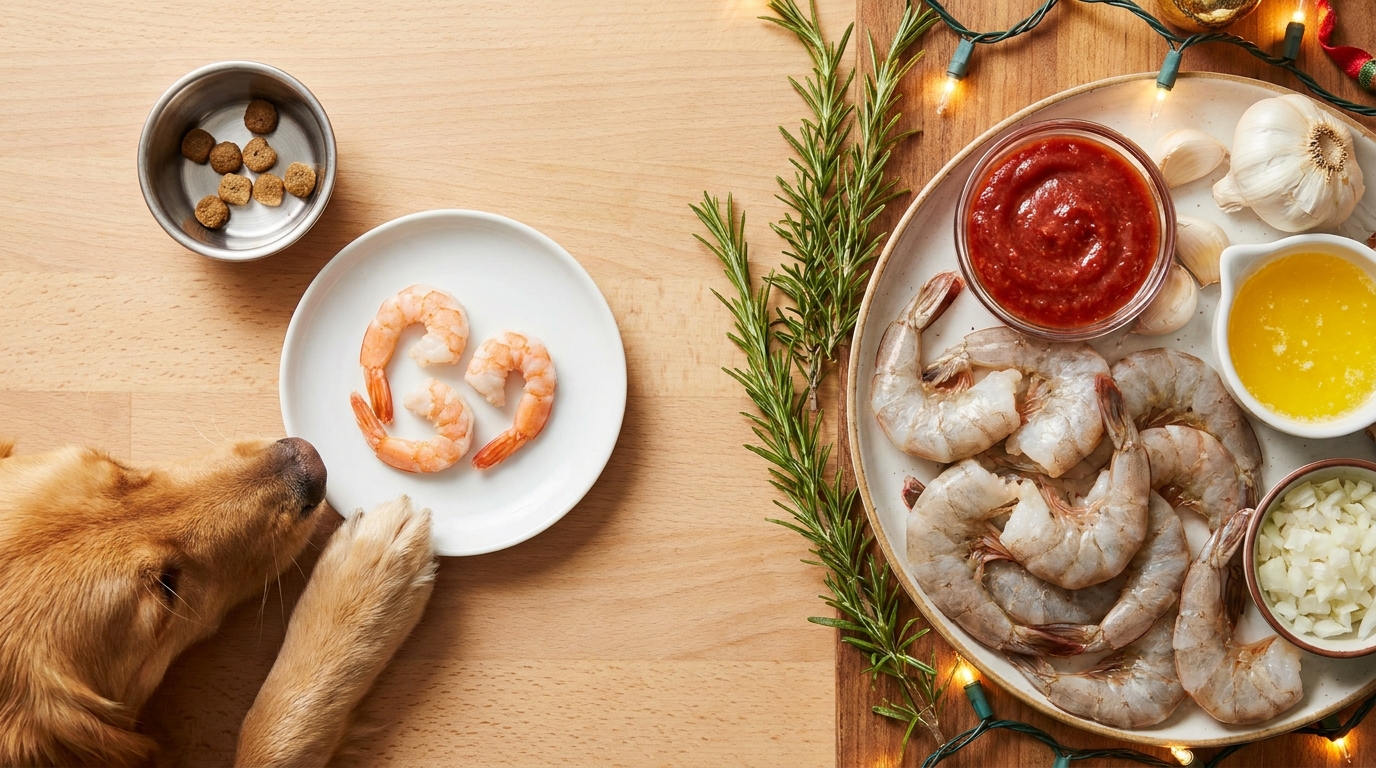
Plain cooked shrimp can be a dog treat, but shells, tails, garlic butter and cocktail picks are not.
Quick answer: Plain shrimp that is thoroughly cooked, with the shell, tail and vein removed, is usually safe for a dog as an occasional small treat. Raw shrimp, shells, tails and shrimp cooked with garlic, onion, butter or heavy salt are not. A dog that ate garlic or onion shrimp needs a poison line now; one that gags, vomits or strains after eating shells or tails needs an emergency vet now.
This article is general information, not a diagnosis. If you think your pet is in danger, go to the nearest emergency animal hospital.
Go to an emergency vet now if you see these signs
After eating shrimp, crab or lobster, a dog that gags or chokes, vomits even once after shells, tails or a pick, vomits more than once after plain or fried shrimp, has a swollen face with trouble breathing, has a sore or swollen belly, or strains without passing stool needs an emergency vet now.
Also go now for:
- Pawing at the mouth, struggling to breathe, blue or gray gums, drooling, repeated swallowing or bringing food back up after shells. Don't reach down the throat.
- Retching with nothing coming up, the prayer position (front legs down, rear end up), blood in the vomit, black or raspberry-jam stool, pale gums, weakness or collapse.
- Vomiting with lethargy, even once, water that won't stay down, or not eating after shells, tails or a pick.
- A large, deep-chested dog that dry-retches, is restless, drools, breathes fast or has a swollen or tight belly after a big meal, platter or trash raid (possible bloat).
- After garlic or onion: a large or unknown amount just eaten, pale or yellow gums, weakness, fast breathing, red or brown urine, or collapse.
- Vomiting, wobbling, trembling or a seizure after a salty sauce, after spoiled seafood or trash, or after eating shellfish found on a beach.
A swallowed or missing toothpick, skewer or cocktail pick, wood or plastic, means an emergency vet now even if your dog seems fine (see swallowed toothpicks and skewers). Bring the leftover picks, don't make your dog vomit or feed bread, and never pull a stick you can see.
For anything toxic, call ASPCA Animal Poison Control, (888) 426-4435 (a consultation fee may apply), or Pet Poison Helpline, (855) 764-7661 (a per-incident fee applies).
Can dogs eat shrimp?
Yes, dogs can eat shrimp in small amounts: the American Kennel Club says an occasional cooked shrimp can be a healthy treat, advises removing the shell completely, and warns that raw, uncooked shellfish contain harmful pathogens.
A veterinarian-reviewed PetMD guide says to cook shrimp thoroughly and remove the shell, vein and tail, with no butter, oil, seasoning, garlic or onion. The AKC says plain shrimp is low in fat, calories and carbohydrates, and steamed is best because fried or breaded shrimp contains unnecessary fats and oils.
Cut it up, offer it only as a treat, and watch for vomiting, diarrhea or itching the first time.
Shrimp tails and shells: what if my dog ate them?
Shrimp shells and tails don't break down well and can scratch the throat or block the gut, so a bright medium or large dog that ate a few needs a call to a vet today, a small dog or one that ate many needs an in-person vet today, and any vomiting, gagging, not eating, belly pain or straining means an emergency vet now.
The AKC warns that shrimp shells are a choking hazard and can cause obstructions, especially in small breeds. Signs can come and go for days, so a dog that seems fine the first night is not in the clear; watch for the signs of an intestinal blockage in dogs. Don't make your dog vomit or give bread, pumpkin, oil or fiber to push shells through.
| What your dog ate | Risk | Do this |
|---|---|---|
| Plain cooked, peeled | Usually OK | Small treat |
| Raw shrimp | Germs | Watch; call vet if sick |
| A few tails, bright dog | Throat, gut | Call a vet today |
| Many tails or small dog | Can block | In-person today |
| Vomits after shells | Can block | ER now |
| Crab or lobster shell | Sharp | In person now |
| Garlic or onion sauce | Red cells | Poison line now |
| Butter or fried | Fatty meal | Watch 4 days |
| Butter, at-risk dog | Pancreas | Call vet today |
| Bowl of salty sauce | Salt | Poison line now |
| Toothpick or pick | Can pierce | ER now |
- If more than one row fits, follow the most urgent.
- In person now means your own vet if they can see your dog right away, otherwise an emergency vet.
- After shells, tails or a pick, any vomiting, gagging, not eating, belly pain or straining means an emergency vet now. Watch for several days, because signs can come and go.
- At-risk means past pancreatitis, a low-fat prescription diet, a Miniature Schnauzer or another prone breed, Cushing's disease, diabetes, extra weight, or a lot of fat for its size.
- 'A few tails, bright dog' means a medium or large dog that has not vomited, retched or gagged and is eating normally.
Garlic butter, scampi, cocktail sauce and fried shrimp
The danger in most holiday shrimp dishes is the seasoning and fat: garlic or onion means a poison line call now, because both can damage a dog's red blood cells, and butter-soaked or fried shrimp calls for a 4-day pancreatitis watch.
Garlic or onion (scampi, garlic or herb butter, batter, dips, boil seasoning): call a vet or pet poison line now, even if your dog seems fine. The Merck Veterinary Manual says raw, cooked and powdered forms all count, that garlic is about 3 to 5 times more toxic than onion, and that red blood cell damage can take several days to show. A dog that turns quiet, tired or off food on days 1 to 5 needs an in-person vet for bloodwork today, or the ER at night (see onion and garlic poisoning in dogs).
Butter-soaked or fried shrimp: Pet Poison Helpline says pancreatitis signs after fatty food such as butter can appear up to 4 days later. Watch a bright dog for 4 days; each new fatty snack starts a new 4 days. Call a vet today for one vomit in a bright dog that swallowed no tails or shells, a quieter dog that hasn't vomited, or an at-risk dog even if it seems fine. Fried shrimp is often served tails-on, so count tails: any vomiting after tails or shells means the ER now. Refusing food or vomiting with diarrhea needs an in-person vet today; vomiting more than once or a sore belly means the ER now (see the grease, butter and pancreatitis watch).
Shrimp cocktail and salty sauces: shrimp cocktail is usually served tails-on, so count missing tails. After a few salty bites, call a vet if heavy thirst or diarrhea starts. A whole bowl of a very salty sauce or dip, or a dipping bowl of soy sauce, means a poison line now.
Can dogs eat raw shrimp or sushi?
No: raw or undercooked shellfish can carry harmful germs, so feed a dog shrimp only when it is thoroughly cooked.
PetMD advises a vet visit right away if vomiting, diarrhea or belly pain follows raw shrimp. If a bright dog vomits once or has diarrhea, call a vet as soon as you can today and follow their advice on coming in; go in person today for vomiting plus diarrhea or refusing food, and to the ER for repeated vomiting, dullness, a sore belly, blood or pale gums.
Raw sushi is out, and ceviche is no safer: Canada's National Collaborating Centre for Environmental Health says its citrus juice does not kill all germs and parasites. If the ceviche had onion or garlic in it, call a poison line now.
Can dogs eat crab, lobster or other shellfish?
Plain, thoroughly cooked crab or lobster meat is usually fine for a dog as a small treat, but the hard, sharp shell can injure the mouth and gut or cause a blockage, so a dog that swallowed shell needs an in-person vet now.
A veterinarian-written PetMD guide calls crab shell sharp and indigestible and notes that crabmeat is very high in sodium and iodine; it also advises against imitation crab and crab cakes. Treat a lobster shell like a crab shell or a cooked bone: in person now.
Never let a dog eat shellfish or dead sea life found on a beach: the FDA says natural shellfish toxins cannot be reliably removed by cooking or freezing. Drooling, trembling, wobbling, weakness or trouble breathing afterward means the ER now. The Merck Veterinary Manual adds that raw crabs or crayfish can give dogs lung flukes, which can cause a chronic cough that needs a vet visit.
Can dogs be allergic to shrimp?
True shrimp allergy is uncommon in dogs and usually builds with repeated feeding, so vomiting or diarrhea alone after a first taste is more likely an intolerance, but hives or a puffy face need an in-person vet within the hour.
Shellfish is not among the most common food allergens in dogs, according to the Merck Veterinary Manual and a 2016 review in BMC Veterinary Research. Hives or a puffy face with normal breathing and pink gums need an in-person vet within 1 hour, or the nearest emergency vet if the swelling grows or no vet is free. Hives plus vomiting, diarrhea, pale gums, weakness, collapse, noisy breathing, trouble swallowing or swelling toward the throat or tongue, or any face swelling in a flat-faced breed, means the ER now. So does sudden vomiting with pale gums or weakness soon after eating, because Merck says anaphylaxis in dogs shows mainly as gut signs.
Don't give a human antihistamine unless a vet who examined your dog says to, and keep shrimp out of an elimination diet unless the vet builds it in (see how a food allergy elimination diet works).
Holiday platter raids: what to do in the next hour
If a dog raided a shrimp platter, take the rest away, check the recipe or label for garlic, onion, butter and salt, count missing tails, shells, toothpicks and lemon wedges, and call a poison line now if garlic or onion was in it.
Note the time and your dog's weight, then follow the most urgent item:
- A missing pick or piece of broken glass: ER now.
- Possible xylitol (a sugar-free dessert, gum or mints) or raw bread dough: ER now, even if your dog seems fine.
- Chocolate, macadamia nuts, grapes or raisins: poison line now; grapes or raisins also need an in-person vet.
- Alcohol: poison line or vet now, and the ER if your dog is wobbly.
- Foil or plastic wrap: in-person vet today (bring the packaging), or the ER with any vomiting, not eating or belly pain.
- A corn cob from a seafood boil: in person now; a missing corn holder or prong: ER now.
- Spoiled shells from the trash: a clinic now (or an ER), before tremors start.
- A lemon wedge: usually only a minor stomach upset, says the ASPCA.
Don't make your dog vomit unless a vet or poison line tells you to (see when making a dog vomit helps or harms).
Can cats eat shrimp?
A small piece of plain, thoroughly cooked, peeled shrimp is usually fine for a cat, but raw shrimp, shells, tails and garlic or onion sauces carry the same risks, and the Merck Veterinary Manual says cats are the species most sensitive to onion and garlic.
A veterinarian-written PetMD cat guide agrees, and warns that shells and tails can cause choking or an intestinal blockage. A cat that swallowed shells or tails needs an in-person vet today, and any vomiting, gagging, not eating or straining afterward means the ER now. A cat that ate any onion or garlic needs a poison line now; never make a cat vomit at home. Vomiting more than once in a day, hiding, low energy or skipping food for about 24 hours needs an in-person vet the same day, and a male cat with any litter-box change, vomiting blood or material like coffee grounds, fast, hard or open-mouth breathing, weakness or collapse means the ER now.
When a video visit helps
A video visit helps when a dog ate plain shrimp, or shrimp cooked in plain butter or oil with no garlic, onion or herbs, and is bright, eating, keeping water down and not sore in the belly. RexVet, a nonprofit online vet service, serves pets located in Florida, New York and Virginia by video visit, with a veterinarian licensed in your pet's state; your dog must be in that state during the visit.
A video visit cannot X-ray, feel the belly, run blood tests or make a dog vomit, so it cannot rule out a blockage, pancreatitis or an allergic reaction. It does not fit garlic or onion (poison line now), a swallowed pick (ER now), crab or lobster shell (in person now), many tails, tails in a small dog or any puppy with diarrhea (in-person vet today), new hives (in-person vet within the hour), or any vomiting after shells, repeated vomiting, belly pain or straining (ER now). Outside video hours, if no slot is open, or if anything gets worse, go to an emergency vet or call a poison line.
A $64.99 live video visit with a licensed RexVet vet fits:
- A dog that ate plain shrimp or shrimp in plain butter or oil, has vomited at most once, has no diarrhea, and is bright, eating and keeping water down.
- An at-risk dog that seems fine after butter or fried shrimp (it needs a same-day vet call anyway).
- A few tails in a medium or large dog that is eating and has not vomited, retched or gagged; the veterinarian decides on X-rays.
- Planning safe holiday treats for a dog with a sensitive stomach or a food allergy.
The veterinarian can review the recipe, look at posture, belly and gums on camera, set up the 4-day fatty-meal watch, and say whether and how soon your dog needs to be seen in person. Video slots run about 8 AM to 11 PM ET; same-day and holiday slots are not guaranteed, so check open slots when you book.
No prescription is promised; the state limits are in the FAQ below. Book a live video visit.
Need an Expert Opinion on This Topic?
Book a video visit with a licensed vet, evenings and weekends included
See open timesFrequently Asked Questions
Can dogs eat cooked shrimp every day?
No: plain cooked shrimp is an occasional treat, not a daily food. AAHA nutrition guidelines say all treats and table food together should stay at or below about 10% of a dog's daily calories.
What happens if my dog ate shrimp tails?
Call a vet today; a small dog or many tails needs an in-person vet today, and any vomiting or gagging means an emergency vet now. Watch for several days, because blockage signs can come and go: retching, not eating, a sore belly or straining with little or no stool also mean the ER now. Don't make your dog vomit at home.
Can shrimp give a dog diarrhea?
Yes: shrimp is new to most dogs, and butter, oil, seasoning or undercooked shrimp make diarrhea more likely. For a bright adult dog with soft stool, stop the treats, offer water and call a vet if it lasts past 2 days (today if watery, after raw or undercooked shrimp, or for a toy breed or senior). Diarrhea with one vomit, or refusing food, needs an in-person vet today; vomiting more than once, belly pain, weakness, or black or raspberry-jam stool means the ER now. Don't give human anti-diarrhea or stomach medicine unless a vet tells you to.
Is shrimp good for dogs?
Plain shrimp is a lean protein treat, but a dog eating a complete and balanced dog food does not need it.
Can puppies eat shrimp?
Yes, a small piece: a veterinarian-reviewed PetMD guide says properly prepared shrimp is safe for dogs and puppies in small portions. Any puppy with diarrhea needs an in-person vet today, and a puppy that vomits, won't eat or is listless, or a toy-breed puppy that turns weak or trembly, needs an emergency vet now.
My dog ate garlic butter shrimp. What should I do?
Call a poison line or your vet now, even if your dog seems fine: garlic damages red blood cells, and signs can take days. Go to an emergency vet now for a large or unknown amount just eaten, pale or yellow gums, weakness, fast breathing, red or brown urine or collapse. Call ASPCA Animal Poison Control at (888) 426-4435 (a consultation fee may apply) or Pet Poison Helpline at (855) 764-7661 (a per-incident fee applies), and don't make your dog vomit unless the poison line or vet tells you to. The butter also means a 4-day pancreatitis watch.
Can I talk to an online vet if my dog ate shrimp in Florida, New York or Virginia?
Yes, for a bright dog located in Florida, New York or Virginia that ate plain shrimp, with no garlic, onion, picks or hard shell involved. A licensed RexVet vet, a veterinarian licensed in your pet's state, can review the recipe, check posture, belly and gums on camera and say how soon your dog needs to be seen; crab or lobster shell (now), many tails or tails in a small dog (today) and new hives (within the hour) need an in-person vet. No prescription is promised; any medicine is the veterinarian's decision after the visit. In Florida (s. 474.2021), a video-only prescription covers only FDA-approved animal drugs used as labeled, for up to 14 days (1 month for products labeled only for flea and tick control), with no renewal without an in-person exam; human-labeled, controlled and compounded anti-infective drugs need an in-person exam first. Federal rules (21 CFR 530.3) require an in-person exam for extralabel or human-drug use in every state. Virginia allows an electronic exam for an FDA-approved animal drug used as labeled, and New York's rules for video-only prescribing are unsettled. RexVet is not a pharmacy; a pharmacy transfer fee applies when RexVet sends a prescription to an outside pharmacy.
FAQs
Can dogs eat cooked shrimp every day?
No: plain cooked shrimp is an occasional treat, not a daily food. AAHA nutrition guidelines say all treats and table food together should stay at or below about 10% of a dog's daily calories.
What happens if my dog ate shrimp tails?
Call a vet today; a small dog or many tails needs an in-person vet today, and any vomiting or gagging means an emergency vet now. Watch for several days, because blockage signs can come and go: retching, not eating, a sore belly or straining with little or no stool also mean the ER now. Don't make your dog vomit at home.
Can shrimp give a dog diarrhea?
Yes: shrimp is new to most dogs, and butter, oil, seasoning or undercooked shrimp make diarrhea more likely. For a bright adult dog with soft stool, stop the treats, offer water and call a vet if it lasts past 2 days (today if watery, after raw or undercooked shrimp, or for a toy breed or senior). Diarrhea with one vomit, or refusing food, needs an in-person vet today; vomiting more than once, belly pain, weakness, or black or raspberry-jam stool means the ER now. Don't give human anti-diarrhea or stomach medicine unless a vet tells you to.
Is shrimp good for dogs?
Plain shrimp is a lean protein treat, but a dog eating a complete and balanced dog food does not need it.
Can puppies eat shrimp?
Yes, a small piece: a veterinarian-reviewed PetMD guide says properly prepared shrimp is safe for dogs and puppies in small portions. Any puppy with diarrhea needs an in-person vet today, and a puppy that vomits, won't eat or is listless, or a toy-breed puppy that turns weak or trembly, needs an emergency vet now.
My dog ate garlic butter shrimp. What should I do?
Call a poison line or your vet now, even if your dog seems fine: garlic damages red blood cells, and signs can take days. Go to an emergency vet now for a large or unknown amount just eaten, pale or yellow gums, weakness, fast breathing, red or brown urine or collapse. Call ASPCA Animal Poison Control at (888) 426-4435 (a consultation fee may apply) or Pet Poison Helpline at (855) 764-7661 (a per-incident fee applies), and don't make your dog vomit unless the poison line or vet tells you to. The butter also means a 4-day pancreatitis watch.
Can I talk to an online vet if my dog ate shrimp in Florida, New York or Virginia?
Yes, for a bright dog located in Florida, New York or Virginia that ate plain shrimp, with no garlic, onion, picks or hard shell involved. A licensed RexVet vet, a veterinarian licensed in your pet's state, can review the recipe, check posture, belly and gums on camera and say how soon your dog needs to be seen; crab or lobster shell (now), many tails or tails in a small dog (today) and new hives (within the hour) need an in-person vet. No prescription is promised; any medicine is the veterinarian's decision after the visit. In Florida (s. 474.2021), a video-only prescription covers only FDA-approved animal drugs used as labeled, for up to 14 days (1 month for products labeled only for flea and tick control), with no renewal without an in-person exam; human-labeled, controlled and compounded anti-infective drugs need an in-person exam first. Federal rules (21 CFR 530.3) require an in-person exam for extralabel or human-drug use in every state. Virginia allows an electronic exam for an FDA-approved animal drug used as labeled, and New York's rules for video-only prescribing are unsettled. RexVet is not a pharmacy; a pharmacy transfer fee applies when RexVet sends a prescription to an outside pharmacy.
Medically Reviewed
Reviewed by Dr. Tiffany Delacruz, DVM — licensed veterinarian and CEO of RexVet. Last reviewed November 16, 2026.
Content is for informational purposes and does not replace professional veterinary advice.
Chief Executive Officer · Licensed Veterinarian
Dr. Delacruz is a licensed Doctor of Veterinary Medicine specializing in preventive care and veterinary telehealth. She reviews all health content on RexVet to ensure accuracy and clinical relevance.
Sources & References
- · American Veterinary Medical Association — Telehealth Guidelines
- · AVMA — Pet Care Resources
- · U.S. FDA — Animal & Veterinary