
Accidentally Gave My Dog a Double Dose? What to Do Tonight
By RexVet Team | Reviewed by Dr. Tiffany Delacruz, DVM
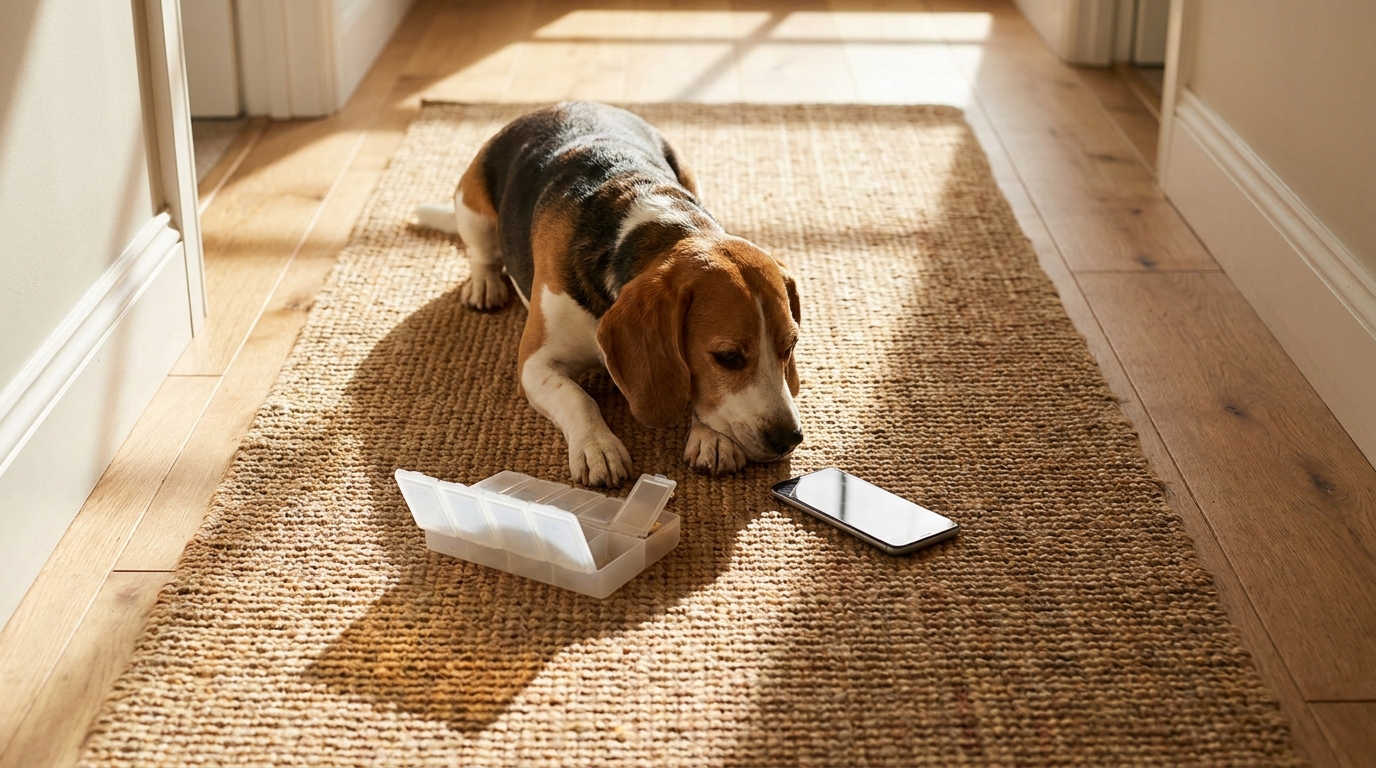
A doubled dose is not always an emergency, but heart, pain and insulin drugs can be: call a poison hotline or vet now, bottle in hand.
If your dog is collapsing, weak or wobbly, having a seizure or tremors, vomiting repeatedly, passing black or bloody stool, breathing hard, or has an unusually fast or slow heartbeat after a double dose, go to an in-person emergency vet now and call Pet Poison Helpline at (855) 764-7661 or ASPCA Animal Poison Control at (888) 426-4435 on the way.
If your first thought tonight was "I accidentally gave my dog a double dose, now what?", the answer is the phone call below, bottle in hand.
First: call a poison hotline with the bottle in your hand
Call Pet Poison Helpline at (855) 764-7661 or ASPCA Animal Poison Control at (888) 426-4435. Both answer 24/7; the ASPCA line runs 365 days a year, and a consultation fee may apply. Dial with the bottle in hand and read the label; call even if a detail is missing.
Have these ready:
- The drug name and the strength, exactly as printed on the label.
- How many pills or how much liquid went in altogether.
- The time of the extra dose, or your best guess.
- Your dog's approximate weight, age, and any kidney, liver or heart disease or diabetes.
- Anything else your dog takes.
Do not make your dog vomit or give anything at home, no food, milk, charcoal or remedy, unless the hotline or a vet tells you to. If the hotline says go, take the bottle; RexVet's household toxins and emergency response guide covers what else to bring.
How worried should I be? It depends on the drug, not the mistake
Risk is set by drug class, your dog's size and age, and any organ disease. Four tiers, by class only:
- Highest concern, treated as an emergency: heart medications such as pimobendan (Vetmedin) and insulin. Pet Poison Helpline says a dog that got too much Vetmedin needs immediate medical attention at a clinic; the Merck Veterinary Manual calls significantly low blood sugar after insulin a medical emergency.
- Call now: anti-inflammatory pain relievers (NSAIDs) such as carprofen, because the stomach, intestines and kidneys are at risk even when the dog looks fine.
- Assess and monitor: antihistamines, sedatives and anxiety medications such as diphenhydramine (Benadryl), trazodone and gabapentin. These usually mean drowsiness and heart-rate changes that a hotline or vet must judge; Pet Poison Helpline still says to call after an antihistamine overdose.
- Generally lower concern, still confirm: antibiotics and monthly parasite preventives. Call anyway.
This article cannot clear any drug. A very small dog, a senior, or a dog with kidney, liver or heart disease moves up a tier on the same medication.
Signs that mean go to the emergency vet right now
The milder signs below are the reason to call now, not to wait for collapse.
- After too much pimobendan (Vetmedin): Pet Poison Helpline lists collapse, depression, elevated heart rate, inappetence, lethargy and low blood pressure, and warns that untreated it can progress to severe respiratory distress and cardiac arrest and can be fatal. Get the dog to a clinic immediately.
- After too much insulin: the Merck Veterinary Manual lists weakness, lack of coordination, seizures and collapse as signs of life-threatening low blood sugar. Merck says to call your veterinarian immediately; the vet may recommend ways to raise blood sugar before you arrive.
- After an NSAID such as carprofen: the FDA lists vomiting, diarrhea, bloody or black stool, decreased appetite, decreased activity level, and yellowing of the gums or whites of the eyes, and says vomiting, decreased to no appetite, decreased activity and diarrhea are the NSAID side effects most often reported to it. The FDA advises owners who notice these side effects to stop the medication and call their veterinarian.
- After an antihistamine such as diphenhydramine (Benadryl): Pet Poison Helpline lists lethargy, agitation, drowsiness, hypertension, aggression, abnormal heart rate, vomiting and lack of appetite, and says to call Pet Poison Helpline at (855) 764-7661 and your vet; in an emergency a veterinarian may give activated charcoal, then monitor the heart and breathing with supportive care.
Any of these means a call to the hotline or your vet now, and a heartbeat that is unusually fast or slow, like every red-flag sign in the bold line, means an in-person emergency clinic, not a video call. The online vet vs emergency vet guide explains the difference.
If the hotline or vet says to watch at home: the next 24 hours
Only start here once the hotline or a veterinarian has said home monitoring is appropriate for this drug and this dog. It never applies to a heart medication or insulin, which are emergencies.
- A quiet room with enough light to check gum color; no stairs, walks or play.
- Fresh water within reach. A dog that becomes wobbly or too drowsy to stand is a go-now sign.
- Small meals only if the hotline or vet told you to feed.
- Write down the time of the extra dose and every symptom.
- Check gums, breathing and stool through the night; note anything pale, yellow, black or bloody.
- Keep the bottle out for reference.
- No over-the-counter products, human medications or home remedies.
Do not "balance it out" by skipping or delaying the next dose on your own; the prescribing vet, the online vet or the hotline decides that. If any sign from the bold line appears, monitoring is over: go.
Double dose vs missed dose: why the advice is opposite
A missed dose is a gap: the prescriber's usual instruction is to give it when you remember unless the next dose is close, never two to catch up, and that instruction comes from your dog's label or vet. A doubled dose is the opposite problem: an active surplus already in the body. Nothing is added to fix it; any schedule reset comes from the prescribing vet, the online vet or the hotline.
Only a licensed professional can decide whether the next dose is delayed, skipped or given as planned. RexVet's pet medication side-effects guide covers missed doses and the side effects worth a call.
Why double doses happen and how to prevent the next one
The usual causes: two caregivers in a Brooklyn apartment who each think the other has not done it; a twice-a-day schedule where morning blurs into evening; look-alike pills for a senior dog in Richmond; a refill in a different strength or a different-looking tablet.
- One named person per dose; if a partner or a Tampa pet sitter shares the job, the handoff is written.
- A weekly pill organizer, so an empty slot is the proof.
- A shared phone note or fridge checkbox, ticked the moment the dose goes in.
- Every drug in its original labeled container, with pet and human medications stored apart.
- Check the label strength against the last bottle every time a refill looks different.
Save both hotline numbers and your vet's number in your phone. The hotline is the first call every time.
How a RexVet online vet visit helps after a double dose
After the hotline call, a RexVet veterinarian can look at the bottle and pills on camera to confirm the product and label strength, compare what was given with what was prescribed, assign the risk tier for your dog, decide whether the next dose is given, delayed or skipped, set a monitoring plan with the go-now signs for the next 24 to 48 hours, and decide whether an in-person exam or bloodwork is needed. A video visit cannot treat an overdose in progress, examine a collapsed dog or replace poison control; RexVet's emergency online vet guide explains that line.
If the hotline or your vet has cleared home monitoring, you can book a RexVet video visit now for $64.99. RexVet's veterinarians are licensed in Florida, New York and Virginia, see pets by video only in those three states, and are available 24/7. The visit is for triage and monitoring, not for treating an overdose.
When it is in-person only, not a video call
A video visit cannot replace a physical exam in a crisis. Go to an in-person emergency clinic, and call the hotline on the way, for:
- Any red-flag sign from the bold line.
- Any double dose of a heart medication such as pimobendan, or of insulin, even if the dog looks normal.
- A very small or senior dog, or one with kidney, liver or heart disease.
- An NSAID double dose where the hotline advises decontamination or bloodwork.
- Any time the hotline or a vet says go.
These need hands-on care now. Do not delay.
Once the hotline or vet has confirmed home monitoring, a video visit gives you a clear plan for the night. Owners in Florida, New York and Virginia can book a video visit with a RexVet veterinarian for $64.99, 24/7; RexVet does not see pets outside those three states.
Frequently asked questions
I accidentally gave my dog a double dose of his medication. Should I go to the ER?
Call Pet Poison Helpline at (855) 764-7661 or ASPCA Animal Poison Control at (888) 426-4435 now, bottle in hand, and go straight to an emergency vet if your dog shows any red-flag sign or the drug was a heart medication or insulin. Otherwise the hotline or your vet decides whether home monitoring is enough.
Which dog medications are the most dangerous to double?
Heart medications such as pimobendan (Vetmedin) and insulin sit in the highest tier; Pet Poison Helpline and the Merck Veterinary Manual both describe overdoses of these as emergencies. NSAIDs such as carprofen come next because the stomach, intestines and kidneys are at risk, according to the FDA.
Should I skip my dog's next dose after a double dose?
No, do not decide to skip or delay a dose on your own. The timing of the next dose is decided by the prescribing vet, an online vet or a poison control specialist, based on the drug and your dog's health history.
What are the signs that a double dose is hurting my dog?
Early signs are lethargy, drowsiness, agitation, vomiting, diarrhea and refusing food; severe signs are collapse, wobbliness, tremors, seizures, hard breathing, an unusually fast or slow heartbeat, and black or bloody stool. Early signs mean call the hotline now; severe signs mean an in-person emergency vet right away.
Can an online vet help if I accidentally gave my dog a double dose?
Yes, for triage after the hotline call. A RexVet veterinarian can review the bottle on camera, assess the risk, decide the next dose, set a monitoring plan and say whether a clinic is needed; an online vet cannot treat an active overdose or examine a collapsed dog.
Sources
FAQs
I accidentally gave my dog a double dose of his medication. Should I go to the ER?
Call Pet Poison Helpline at (855) 764-7661 or ASPCA Animal Poison Control at (888) 426-4435 now, bottle in hand, and go straight to an emergency vet if your dog shows any red-flag sign or the drug was a heart medication or insulin. Otherwise the hotline or your vet decides whether home monitoring is enough.
Which dog medications are the most dangerous to double?
Heart medications such as pimobendan (Vetmedin) and insulin sit in the highest tier; Pet Poison Helpline and the Merck Veterinary Manual both describe overdoses of these as emergencies. NSAIDs such as carprofen come next because the stomach, intestines and kidneys are at risk, according to the FDA.
Should I skip my dog's next dose after a double dose?
No, do not decide to skip or delay a dose on your own. The timing of the next dose is decided by the prescribing vet, an online vet or a poison control specialist, based on the drug and your dog's health history.
What are the signs that a double dose is hurting my dog?
Early signs are lethargy, drowsiness, agitation, vomiting, diarrhea and refusing food; severe signs are collapse, wobbliness, tremors, seizures, hard breathing, an unusually fast or slow heartbeat, and black or bloody stool. Early signs mean call the hotline now; severe signs mean an in-person emergency vet right away.
Can an online vet help if I accidentally gave my dog a double dose?
Yes, for triage after the hotline call. A RexVet veterinarian can review the bottle on camera, assess the risk, decide the next dose, set a monitoring plan and say whether a clinic is needed; an online vet cannot treat an active overdose or examine a collapsed dog.
Sources
Medically Reviewed
Reviewed by Dr. Tiffany Delacruz, DVM — licensed veterinarian and CEO of RexVet. Last reviewed September 16, 2026.
Content is for informational purposes and does not replace professional veterinary advice.
Chief Executive Officer · Licensed Veterinarian
Dr. Delacruz is a licensed Doctor of Veterinary Medicine specializing in preventive care and veterinary telehealth. She reviews all health content on RexVet to ensure accuracy and clinical relevance.
Sources & References
- · American Veterinary Medical Association — Telehealth Guidelines
- · AVMA — Pet Care Resources
- · U.S. FDA — Animal & Veterinary
Need an Expert Opinion on This Topic?
Connect with a certified vet via video call in minutes
Talk to Vet Now