
How Much Does an Emergency Vet Visit Cost? 2026 Prices and When to Go
By RexVet Team | Reviewed by Dr. Tiffany Delacruz, DVM
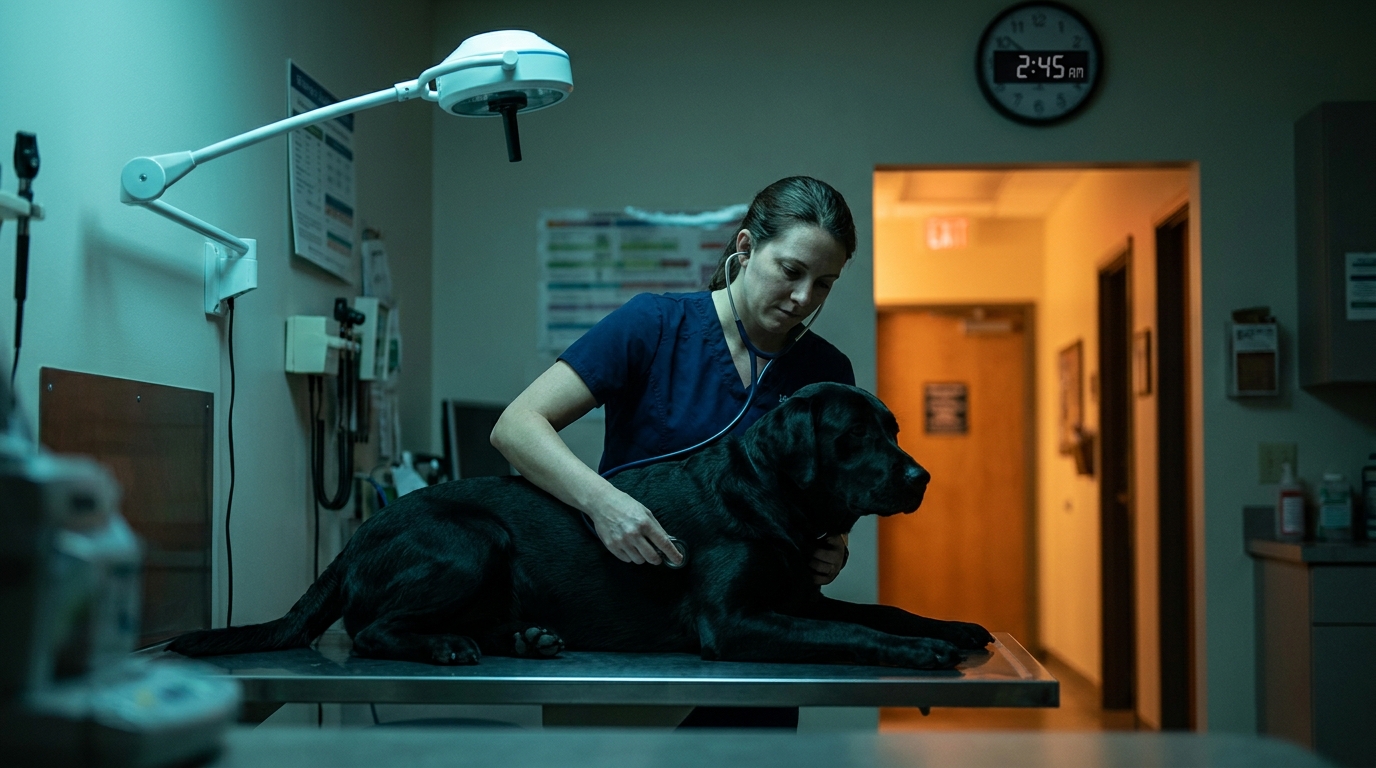
An ER vet exam averages $135 for dogs and $143 for cats before tests. See 2026 prices for x-rays, surgery, hospital stays, ways to pay and when to go.
Quick answer: A U.S. emergency vet exam alone averages about $135 for dogs and $143 for cats, and ranges from roughly $107 to $260. Tests and treatment are extra: an exam plus x-rays and basic bloodwork comes to roughly $680 to $740, and care for bloat or a swallowed object can run $2,000 to $7,000. Go to an ER now, whatever the cost, for trouble breathing, collapse, a seizure longer than five minutes or several in a row, a male cat straining with little or no urine, or retching with nothing coming up.
This article is general information, not a diagnosis. If your pet may be in danger, go to the nearest emergency animal hospital and call them on the way.
Typical Emergency Vet Costs in 2026
The first charge at any emergency hospital is the exam, sometimes called the emergency or triage fee. It pays for a veterinarian to assess your pet and decide what is needed. It does not include tests, medication or treatment, and those make up most of the bill.
The best national figures come from a 2025 study of all 50 states and Washington, D.C., carried out for Synchrony's CareCredit, a health and wellness credit card. It puts the average emergency exam at $135 for dogs (range $107 to $246) and $143 for cats (range $113 to $260). University teaching hospitals often charge more: North Carolina State's veterinary hospital lists a $292 emergency exam, and Colorado State lists $175 plus a $15 cleaning and safety fee.
| Where | Average ER exam, dogs | Average ER exam, cats |
|---|---|---|
| United States | $135 (range $107 to $246) | $143 (range $113 to $260) |
| Florida | $133 | $141 |
| New York | $159 | $170 |
| Virginia | $131 | $137 |
| Highest state (Hawaii) | $241 | $257 |
| Lowest state (Mississippi) | $108 | $115 |
Source: CareCredit, 2025 study of emergency exam fees by state. Averages, not quotes; your hospital's fee may differ.
Expect to pay before treatment starts
Many emergency hospitals, including the teaching hospitals below, collect the exam fee and a deposit before they treat. Once you approve a written estimate, the deposit is often a large share of it:
- The University of Florida's small animal hospital asks for 75% of the high end of the estimate on admission, including emergencies.
- Virginia Tech's teaching hospital asks for 75% of the estimate for patients who stay in the hospital.
- Ohio State gives no treatment until the emergency fee and a deposit are paid, and may ask for about $450 more to stabilize an unstable patient.
- North Carolina State asks for at least 100% of the low end of the estimate before admission.
Ask for the written estimate, ask what each line is for, and ask whether there is a lower-cost option, such as outpatient treatment instead of an overnight stay. Plan on being there a while: Ohio State says an emergency visit usually takes two to four hours or longer.
Estimated Costs for Common Emergency Procedures
These figures come from CareCredit's national averages, published estimates from two university teaching hospitals (Illinois, September 2025, and North Carolina State) and Trupanion insurance claims from 2020 to 2025. Private ERs in your area may charge more or less.
| Test, treatment or emergency | Typical cost | Source |
|---|---|---|
| Emergency x-rays (2 to 3 views) | $334 dog / $310 cat | CareCredit national average |
| Bloodwork: CBC and chemistry panel | CBC $104 / $79; chemistry $164 / $144 (dog / cat) | CareCredit national average |
| Ultrasound | $483 dog / $323 cat | CareCredit national average |
| IV catheter and one bag of fluids | $130 dog / $121 cat | CareCredit national average |
| One night in hospital at a general vet clinic | $619 dog / $582 cat (ER and ICU nights cost more) | CareCredit national average |
| Initial emergency stabilization | $600 to $900 | NC State Veterinary Hospital |
| ICU for 1 to 2 days, including ER tests | $2,000 to $4,000 | Univ. of Illinois teaching hospital |
| Blocked male cat, stable | $1,500 to $2,500 | Univ. of Illinois teaching hospital |
| Swallowed object: scope, surgery, or bowel resection | $2,000 to $3,000; $3,500 to $5,500; $5,000 to $7,000 | Univ. of Illinois teaching hospital |
| Bloat (GDV) surgery | $5,000 to $7,000 | Univ. of Illinois teaching hospital |
| Poisoning treatment (insurance claims) | $558 (onion) to $1,705 (antifreeze, detergents); chocolate $865, grapes or raisins $847, xylitol $1,396 | Trupanion claims, 2020 to 2025 |
Add a few of these together and the total climbs quickly. At average prices, an exam plus x-rays and a CBC and chemistry panel comes to about $737 for a dog and $676 for a cat, before any medication, fluids or an overnight stay. That is why there is no honest single "average ER bill". The total depends almost entirely on what is wrong.
Surgery and intensive care drive the biggest bills. Size matters too: at Illinois, a hospitalized pet over about 100 pounds adds about $200 a day in medication to the bill, or $500 a day if critically ill.
Recognizing When Your Pet Needs Immediate Care
Cost matters, but some signs mean the decision is already made. Go to the nearest emergency hospital now, and call them on the way, if your pet has any of these:
- Trouble breathing: fast or labored breathing, open-mouth breathing in a cat, or blue or gray gums.
- Collapse: fainting, can't stand or walk, or loss of consciousness.
- Seizures: one lasting longer than five minutes, or several in a row. A seizure that long is life-threatening and can push body temperature dangerously high.
- Retching with nothing coming up and a swelling belly: the classic sign of bloat (GDV). Reported death rates for bloat are about 15%, and signs lasting more than six hours before treatment raise that risk.
- A male cat straining in the litter box with little or no urine: a urinary blockage can be fatal and needs emergency treatment the same day.
- A known poison or toxic food: chocolate, grapes or raisins, xylitol, rat bait, antifreeze, human medication. Call a poison line or the ER immediately, and go in if they tell you to or you can't get through.
- Heavy bleeding, pale gums, or a weak or racing pulse.
- Trauma, such as being hit by a car or falling from a height, even if your pet seems fine.
- Severe vomiting or diarrhea, more than two or three times an hour, or vomiting blood.
For a poison, call a pet poison line on the way or before you leave: ASPCA Animal Poison Control at (888) 426-4435 or Pet Poison Helpline at (855) 764-7661. Both are open 24/7. Pet Poison Helpline charges $89 per incident, including follow-up calls, and ASPCA says a consultation fee may apply. The ASPCA says that in 50% to 75% of cases its experts find the exposure is not severe and the pet can be safely managed at home, so the expert on the line may tell you the ER is not needed. If you can't get through quickly, or your pet already has symptoms such as vomiting, trembling, wobbliness or collapse, go straight to the ER. Never make your pet vomit unless a vet or poison-control expert tells you to.
For more detail on specific signs, see our guide to when to go to the emergency vet.
When a Call or Video Visit Can Help You Decide
Many late-night worries are not emergencies: a single vomit in a dog who is otherwise bright, a mild limp, an itchy ear, a small scrape, soft stool with normal energy. If your pet has none of the red flags above, it is reasonable to call your regular vet's after-hours line or talk to a licensed vet by video before you drive to an ER.
Veterinary groups call this triage. The AAHA and AVMA telehealth guidelines define it as an assessment to decide whether your pet needs to be seen right away. It is not a diagnosis. A vet on video can watch your pet move and breathe, look at gums, eyes and skin, and ask the questions an ER would ask. Then they tell you whether to go now, book a daytime visit, or watch at home with clear limits.
It has limits, and they matter:
- A video vet cannot examine your pet with their hands, take x-rays, run bloodwork or give fluids. If they say go in, go in.
- If a red flag appears while you are waiting or talking, stop and go to the ER.
- Do not use a video visit to put off care for any red flag above, including a poison, breathing trouble, collapse, a long seizure, bloat signs, heavy bleeding, trauma or a blocked cat.
- Prescriptions are never guaranteed. In Florida, a vet who has only seen your pet by video can prescribe only FDA-approved animal drugs used as labeled, for up to 14 days (up to one month for flea and tick products), and cannot renew them without an in-person exam. Human drugs, compounded antibiotics or antifungals, and controlled substances need an in-person exam. In New York the rules for prescribing by video are unsettled. Read more in online vet vs. emergency vet.
Where RexVet Fits
RexVet is a 501(c)(3) nonprofit veterinary telehealth service with licensed vets for pets in Florida, New York and Virginia. If your pet has no red flags and you are not sure whether tonight's problem can wait, a RexVet vet can see your pet on live video, help you decide whether to go in, and give you a plan for the next few hours, including which signs mean you should go to the ER. If anything looks urgent, the vet will tell you to go now. In Florida, telehealth vets must also be able to give you the details of a physical clinic near you. A live video visit is $64.99, and the Family Plan is a one-time $120 for four visits over 12 months, no subscription. Book a video visit or read more about after-hours online vet care.
Ways to Pay for an Unexpected Vet Bill
Ask about payment before treatment begins, and check what your nearest ER accepts. Not every hospital offers payment plans: the University of Florida says it does not offer them and accepts CareCredit, and North Carolina State lists CareCredit as its only financing option.
| Option | How it works | Watch out for |
|---|---|---|
| CareCredit | A credit card for health costs. Many vets offer 6- to 24-month "no interest if paid in full" promotions. | It is deferred interest. If the balance is not paid off in time, interest is charged from the purchase date, at a 32.99% APR on new accounts (March 2026 terms). |
| Scratchpay | Payment plans of 12 to 24 months at 0% to 36% APR, with $15 down. Checking eligibility does not affect your credit score. | Your clinic has to accept it. Repayment may be reported to credit bureaus, and late fees apply. |
| Clinic payment plan | Some private hospitals split the bill. | Many do not, and teaching hospitals usually ask for most of the estimate up front. |
| RedRover Relief Urgent Care grant | About $250 on average, for life-threatening cases with a good expected outcome. Household income must be $60,000 a year or less. | It does not cover exams or tests, and cannot help when $500 or more is still needed. Applications open Monday 9 a.m. to Friday 4 p.m. Pacific, with a reply in 1 to 2 business days. |
| Waggle | A nonprofit crowdfunding site. With your vet's estimate, it reviews and posts your campaign, then pays the hospital directly. | Depends on donations, so the money may not arrive in time for tonight's deposit. |
| Pet insurance | Most plans reimburse you after you pay, typically 70% to 90% of eligible costs after the deductible. | New policies have waiting periods and exclusions. Only a few plans pay the hospital directly, such as Trupanion's VetDirect Pay at connected hospitals. |
Two well-known names do not help with emergencies today. The Pet Fund funds only non-urgent care, such as diabetes or thyroid treatment. The Brown Dog Foundation stopped operating on November 1, 2025.
If you live in Florida, a 2025 law that took effect January 1, 2026 bars waiting periods for accidents on new pet insurance policies and caps illness waiting periods at 30 days. Florida's law is based on the NAIC Pet Insurance Model Act; the NAIC lists no current activity on that model in New York or Virginia, so check the waiting periods on any policy you buy there. For how claims work with telehealth, see does pet insurance cover online vet visits. Florida pet parents in a bind can also read what to do if you can't afford an emergency vet in Florida.
Proactive Steps to Manage Future Emergencies
- Save the numbers now: your nearest 24-hour emergency hospital, your regular vet's after-hours line, and both poison lines.
- Know your pet's weight, medications and conditions, and keep records on your phone. Weight drives both doses and toxicity math.
- Decide how you would pay before you need to: an emergency fund, insurance (bought before problems start, because of waiting periods), or a financing account.
- Ask your regular vet which emergency hospital they refer to and whether they share records with it.
- Pet-proof for the season: holiday food, candy and plants cause many poisoning visits. See how much chocolate is toxic to dogs.
Frequently Asked Questions
How much is an emergency vet visit without insurance?
The exam alone averages about $135 for a dog and $143 for a cat in the U.S. With x-rays and basic bloodwork, a typical workup at average prices comes to roughly $680 to $740. Hospitalization, surgery or intensive care can push the bill into the thousands. Ask for a written estimate before you approve treatment.
Do emergency vets make you pay up front?
Often, yes. Many emergency hospitals, including the teaching hospitals we checked, collect the exam fee before treatment and a deposit once you approve an estimate. At the University of Florida and Ohio State, the deposit is 75% of the high end of the estimate.
Can I make payments at an emergency vet?
Sometimes. Many ERs accept CareCredit or Scratchpay, but not all offer in-house payment plans. Ask before treatment starts. Read financing terms carefully: CareCredit promotions are deferred interest, so interest is charged from the purchase date if the balance is not paid off in time.
Does pet insurance cover emergency vet visits?
Accident and illness plans usually reimburse eligible emergency costs after your deductible, often 70% to 90% of eligible costs. You normally pay the hospital first and file a claim. Pre-existing conditions are excluded and new policies usually have waiting periods, so insurance bought after a problem starts will not cover it.
Why is the emergency vet so much more expensive than my regular vet?
Emergency hospitals are staffed around the clock and keep oxygen, imaging, a lab, surgery and intensive care ready at all hours. The exam fee and the deposits reflect that standby cost. For problems that can safely wait, your regular vet is usually cheaper.
Is a video vet visit a replacement for the ER?
No. A video visit can help you decide whether a problem without red flags can wait, but it cannot examine, test or treat an emergency. Trouble breathing, collapse, long seizures, a blocked cat, bloat signs, poisoning or trauma all need an emergency hospital now.
Can an online vet in Florida, New York or Virginia help after hours?
For non-emergency questions, yes. A licensed vet can review your pet on video, help you decide whether to go in, and plan next steps. Any prescription is at the vet's discretion and limited by state law. In Florida, a video-only visit allows only FDA-approved animal drugs used as labeled, for up to 14 days (one month for flea and tick products), with no renewal until your pet is examined in person. New York's rules for prescribing by video are unsettled.
FAQs
How much is an emergency vet visit without insurance?
The exam alone averages about $135 for a dog and $143 for a cat in the U.S. With x-rays and basic bloodwork, a typical workup at average prices comes to roughly $680 to $740. Hospitalization, surgery or intensive care can push the bill into the thousands. Ask for a written estimate before you approve treatment.
Do emergency vets make you pay up front?
Often, yes. Many emergency hospitals, including the teaching hospitals we checked, collect the exam fee before treatment and a deposit once you approve an estimate. At the University of Florida and Ohio State, the deposit is 75% of the high end of the estimate.
Can I make payments at an emergency vet?
Sometimes. Many ERs accept CareCredit or Scratchpay, but not all offer in-house payment plans. Ask before treatment starts. Read financing terms carefully: CareCredit promotions are deferred interest, so interest is charged from the purchase date if the balance is not paid off in time.
Does pet insurance cover emergency vet visits?
Accident and illness plans usually reimburse eligible emergency costs after your deductible, often 70% to 90% of eligible costs. You normally pay the hospital first and file a claim. Pre-existing conditions are excluded and new policies usually have waiting periods, so insurance bought after a problem starts will not cover it.
Why is the emergency vet so much more expensive than my regular vet?
Emergency hospitals are staffed around the clock and keep oxygen, imaging, a lab, surgery and intensive care ready at all hours. The exam fee and the deposits reflect that standby cost. For problems that can safely wait, your regular vet is usually cheaper.
Is a video vet visit a replacement for the ER?
No. A video visit can help you decide whether a problem without red flags can wait, but it cannot examine, test or treat an emergency. Trouble breathing, collapse, long seizures, a blocked cat, bloat signs, poisoning or trauma all need an emergency hospital now.
Can an online vet in Florida, New York or Virginia help after hours?
For non-emergency questions, yes. A licensed vet can review your pet on video, help you decide whether to go in, and plan next steps. Any prescription is at the vet's discretion and limited by state law. In Florida, a video-only visit allows only FDA-approved animal drugs used as labeled, for up to 14 days (one month for flea and tick products), with no renewal until your pet is examined in person. New York's rules for prescribing by video are unsettled.
Medically Reviewed
Reviewed by Dr. Tiffany Delacruz, DVM — licensed veterinarian and CEO of RexVet. Last reviewed October 9, 2026.
Content is for informational purposes and does not replace professional veterinary advice.
Chief Executive Officer · Licensed Veterinarian
Dr. Delacruz is a licensed Doctor of Veterinary Medicine specializing in preventive care and veterinary telehealth. She reviews all health content on RexVet to ensure accuracy and clinical relevance.
Sources & References
- · American Veterinary Medical Association — Telehealth Guidelines
- · AVMA — Pet Care Resources
- · U.S. FDA — Animal & Veterinary
Need an Expert Opinion on This Topic?
Connect with a certified vet via video call in minutes
Talk to Vet Now