
Dog Losing Hair on Both Sides? Seasonal Flank Alopecia
By RexVet Team | Reviewed by Dr. Tiffany Delacruz, DVM
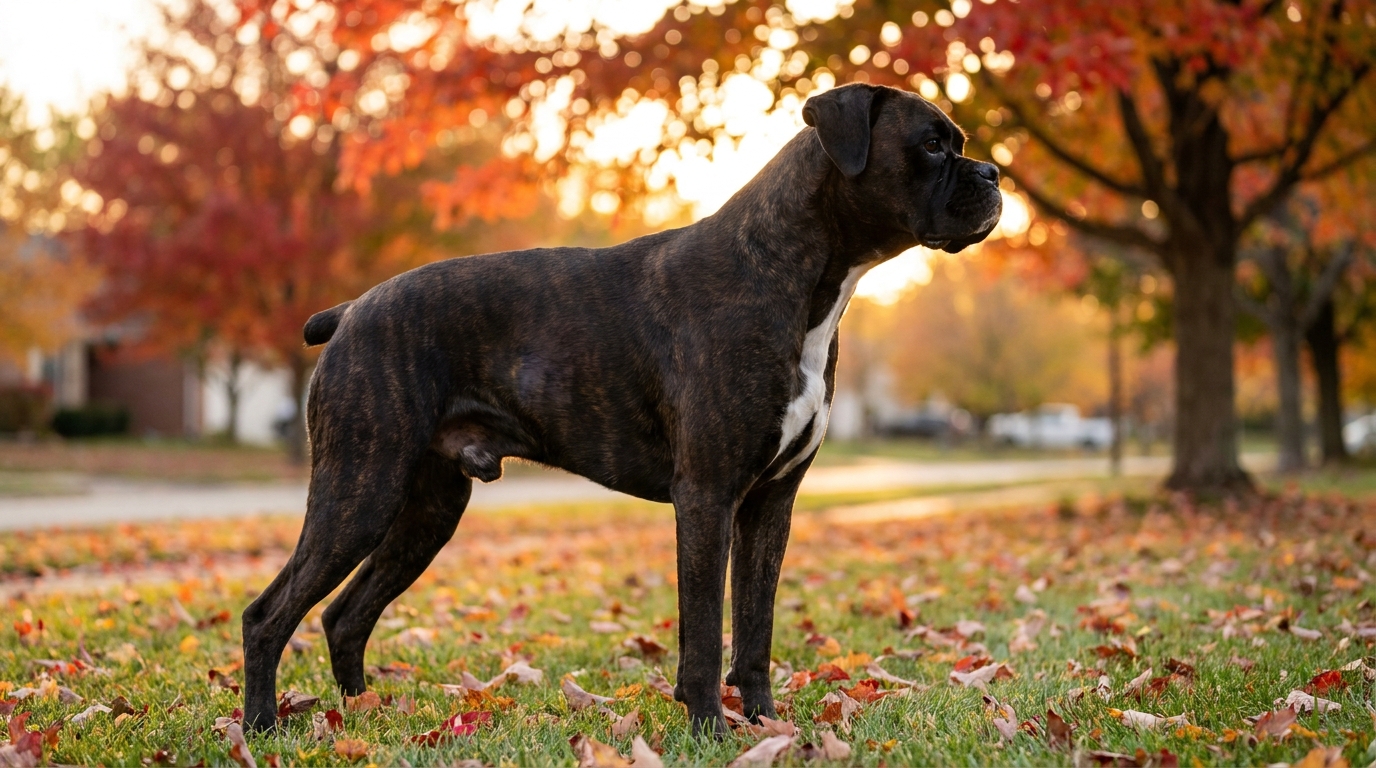
Dog losing hair on both sides as fall sets in? In boxers and bulldogs it is often seasonal flank alopecia, but hormone diseases can look alike.
Hair loss with much more drinking and peeing, a pot belly, heavy panting, weakness, or red, oozing or itchy skin is not simple seasonal hair loss: book an in-person exam soon, and go to an emergency vet now for collapse or trouble breathing.
Maybe you first spotted it while brushing your boxer on a cool autumn evening: a bald, slightly darker patch on one flank, and then a matching one on the other side. If the same thing happened last fall, the pattern may even feel familiar.
A matching pair of bald patches can have more than one cause, though, and some of those causes are not cosmetic at all. This guide walks through what seasonal flank alopecia looks like, the signs that point somewhere else, how a veterinarian confirms it, and what you can track at home in the meantime.
Dog losing hair on both sides: what seasonal flank alopecia looks like
Seasonal flank alopecia has a recognizable shape. VCA Animal Hospitals describes it this way: "Affected dogs lose hair in well-demarcated areas, typically on the flanks (both sides of the abdomen, just in front of the rear legs)."
Put simply, the bald patches tend to have clear edges, and they sit on the sides of the belly just ahead of the back legs. VCA adds that "in most cases, this hair loss is symmetrical: each side of the body is equally affected." Looking at your dog from above, the two sides often seem to mirror each other.
The skin itself can change too. According to VCA, "When the hair falls out, the visible skin is often darker than usual (hyperpigmented)." Darker bare skin fits the picture, but on its own it does not prove the diagnosis.
What you usually do not see is a bothered dog. PetMD notes: "Other than the hair loss itself, the condition does not cause the dog discomfort, itchiness, or irritation." That is exactly why itch, redness or scabs are such useful clues. They point to something else.
Signs it is something else: check these first
Several conditions can thin the coat on both sides of the body, and some of them affect the whole dog, not just the skin. Before anyone settles on seasonal flank alopecia, these are the signs that change the plan:
- If your dog collapses or has trouble breathing, go to an emergency vet now.
- If the hair loss comes with much more drinking and peeing, a pot belly, heavy panting or weakness, book an in-person exam soon.
- If the skin is red, oozing or itchy, or you see scabs or notice an odor, book an in-person exam soon.
Two hormone diseases are the classic look-alikes. For Cushing's disease, VCA says "the most common clinical signs are increased appetite, increased water consumption, and increased urination." VCA also notes that "many of these dogs develop a bloated or 'pot-bellied' appearance to their abdomen." You can read more about those changes in this guide to Cushing's disease in dogs.
Hypothyroidism looks different. VCA's page on hypothyroidism in dogs lists signs that include "weight gain without an increase in appetite," "lethargy (tiredness) and lack of desire to exercise," and "cold intolerance (gets cold easily)." A dog who is putting on weight without eating more, tiring easily and getting cold easily needs a closer look.
Then there is the skin itself. Itch, redness, scabs or odor point to a skin disease, such as mange, ringworm or an infection, rather than seasonal flank alopecia. None of these can be sorted out from an article or a photo alone. They need a veterinarian to examine the skin and run tests in person.
Why it starts in fall: the day-length link
Even the cause comes with a hedge. VCA says "it is thought to be caused by an abnormal response of the hair follicles to normal hormonal changes that occur with changing day length." The timing follows the calendar: "Typically, hair loss begins in the fall and hair regrows in the spring."
PetMD puts it in months: "most commonly the onset is between November and March in the Northern Hemisphere because of reduced daylight, with hair regrowth occurring spontaneously three to eight months later." That regrowth window is counted from when the hair loss starts, not from the first warm day of spring.
Geography matters here. VCA says, "This condition occurs primarily north of the 45-degree parallel." Florida, New York and Virginia sit south of that line, so seasonal flank alopecia is less common here. It can still happen, but living this far south is one more reason your veterinarian will want other causes ruled out before calling the hair loss seasonal.
Which dogs get it
Any dog can be affected. PetMD says seasonal flank alopecia "can be seen in any pure or mixed breed." Some breeds show up more often, though. According to VCA, "Breeds commonly affected include boxers, Airedale terriers, English bulldogs, French bulldogs, and schnauzers."
Age is part of the picture too. PetMD notes, "Typically, the condition is first seen in dogs 1 to 6 years old, and will continue throughout the dog's life." If the hair loss shows up for the very first time in a dog outside that age range, that is a stronger reason for a full workup.
The flanks are the usual spot, but not the only one. VCA says "hair loss can also occur in other areas, such as along the sides of the chest, at the tail base, or even across the bridge of the nose."
Breed and age are helpful clues, not a diagnosis. A French bulldog with bald flanks every November still needs a veterinarian to rule out other causes at least once, and again if the pattern changes.
How a vet confirms it
Confirming seasonal flank alopecia is mostly a process of ruling other things out. VCA explains, "Diagnosis of seasonal flank alopecia requires your veterinarian to rule out other possible causes for the hair loss." In practice that means a hands-on exam plus some lab work, and all of it happens in person.
- Bloodwork. VCA says "Bloodwork, including a complete blood cell count (CBC), serum biochemistry, and thyroid level, is often performed to rule out hormonal diseases that may cause similar patterns of hair loss."
- Skin scrapes and fungal cultures. In VCA's words, "Skin scrapes are used to rule out mange and fungal cultures are used to rule out ringworm." If ringworm is on the list, here is what to do if your dog has ringworm.
- Skin biopsy. "A skin biopsy can be used to confirm the diagnosis of seasonal flank alopecia," according to VCA.
Your veterinarian decides which of these tests your dog needs and in what order. Each one needs your dog in the exam room, so plan for at least one in-person visit when the hair loss is new.
Does it need treatment?
Once a veterinarian has ruled out other causes and confirmed seasonal flank alopecia, the outlook is good. VCA says, "As a cosmetic condition only, the prognosis for seasonal flank alopecia is excellent." PetMD adds that "most dogs will only need to be observed over time."
That reassurance belongs to a confirmed diagnosis, not to any bald patch. Cushing's disease, hypothyroidism, mange, ringworm and skin infections each need their own care, which is why the workup comes first.
You may wonder whether anything can speed up regrowth for cosmetic reasons. Whether any treatment is worth trying is a decision for your veterinarian after other causes are ruled out. It is not something to start on your own at home.
It also helps to be ready for one less common outcome. VCA notes, "Rarely, the hair may fall out and never fully regrow."
Tracking the pattern at home
A simple record makes any vet visit more useful, whether it happens in a clinic or by video. A few habits go a long way:
- Photograph both flanks in daylight from the same spot every few weeks.
- Write down when you first noticed the hair loss and when you see regrowth begin.
- Jot down anything new about drinking, appetite, weight and energy.
- Note whether the skin ever looks red, scabby or itchy, or starts to smell.
The record gets more valuable with time. VCA says, "In many cases, dogs with seasonal flank alopecia will be affected every year," so photos from one fall can be lined up against the next. If you want a veterinarian to see them, read our guide on how to upload pet photos and videos for an online vet review.
If the hair loss spreads beyond the flanks, or your dog seems tired, is drinking or peeing more, or gains weight, book an in-person exam rather than waiting. Bring your photos and notes along.
What a RexVet online vet can and cannot do for flank hair loss
RexVet is a non-profit veterinary telehealth service, and RexVet's veterinarians are licensed in Florida, New York and Virginia. When there are no emergency signs, a video visit is a practical way to talk through a pattern you have been watching.
On a video visit, a veterinarian can:
- review your photos and the year-to-year pattern of the hair loss;
- look on camera for itch, redness or signs of infection;
- ask the questions that help separate seasonal hair loss from thyroid or adrenal disease;
- help you decide which in-person tests make sense.
What a video visit cannot do matters just as much. A veterinarian on a screen cannot draw blood, do skin scrapes, run fungal cultures or take a biopsy. Those all happen in person, so a video visit can help you plan the next step but cannot confirm seasonal flank alopecia by itself.
If the veterinarian decides medication is appropriate, they can prescribe where state rules allow. In Florida, a veterinarian who has seen your pet only by video may prescribe only FDA-approved animal drugs used as labeled, for up to 14 days (1 month for flea-and-tick-only products), and cannot renew without an in-person exam. Seasonal flank alopecia itself is cosmetic, so the goal of the visit is a clear plan rather than a product.
RexVet's veterinarians are available 24/7, including nights, weekends and holidays, for pet parents in Florida, New York and Virginia. If your dog has no emergency signs, you can book a RexVet video visit for $64.99 and have your photos and notes ready to share.
When to be seen in person in Florida, New York or Virginia
Some situations call for an exam in a clinic, not on a screen. Book an in-person visit if:
- this is the first time your dog has lost hair this way;
- the hair loss has spread beyond the flanks;
- you see itch, redness, scabs or odor;
- your dog is drinking or peeing more than usual;
- you notice a change in weight or low energy;
- the hair loss began for the first time outside the 1-to-6-year range PetMD gives for when the condition is first seen.
Bloodwork, skin scrapes, fungal cultures and a biopsy all happen in person. And collapse or trouble breathing still means an emergency vet right away, not a scheduled appointment of any kind.
If you are in Florida and start with a video visit, Florida law (Fla. Stat. 474.2021) requires the telehealth veterinarian to give you "the contact information for at least one physical veterinary clinic in the vicinity of the patient's location." That way you have a place to go for the hands-on part of the workup.
Seasonal flank alopecia is a cosmetic condition, but it earns that label only after other causes are ruled out. If you would like a veterinarian to look over your photos and help plan the next step, RexVet's veterinarians are licensed in Florida, New York and Virginia and available 24/7, and you can book a video visit now for $64.99.
Frequently Asked Questions
Will my dog's hair grow back?
If your veterinarian confirms seasonal flank alopecia, PetMD says hair regrowth occurs spontaneously three to eight months after the hair loss starts. VCA notes that, rarely, the hair may fall out and never fully regrow. Your veterinarian can tell you what to expect for your own dog.
Is seasonal flank alopecia itchy or painful?
No. PetMD says that other than the hair loss itself, the condition does not cause the dog discomfort, itchiness, or irritation. Itch, redness, scabs or odor point to a different skin problem, so have your dog examined by a veterinarian.
Why is the bald skin darker?
VCA notes that when the hair falls out, the visible skin is often darker than usual, which is called hyperpigmentation. Darker skin alone does not confirm the diagnosis, so your veterinarian still needs to rule out other causes.
Can seasonal flank alopecia happen in Florida?
It can, but it is less common here. VCA says the condition occurs primarily north of the 45-degree parallel, and Florida, New York and Virginia sit south of that line. That is one more reason to have a veterinarian rule out other causes before calling the hair loss seasonal.
Will it come back every year?
Often, yes. VCA says that in many cases, dogs with seasonal flank alopecia will be affected every year, and PetMD notes that the condition will continue throughout the dog's life. Dated photos from each fall make it easier to spot a change in the pattern, and a change is worth an exam.
FAQs
Will my dog's hair grow back?
If your veterinarian confirms seasonal flank alopecia, PetMD says hair regrowth occurs spontaneously three to eight months after the hair loss starts. VCA notes that, rarely, the hair may fall out and never fully regrow. Your veterinarian can tell you what to expect for your own dog.
Is seasonal flank alopecia itchy or painful?
No. PetMD says that other than the hair loss itself, the condition does not cause the dog discomfort, itchiness, or irritation. Itch, redness, scabs or odor point to a different skin problem, so have your dog examined by a veterinarian.
Why is the bald skin darker?
VCA notes that when the hair falls out, the visible skin is often darker than usual, which is called hyperpigmentation. Darker skin alone does not confirm the diagnosis, so your veterinarian still needs to rule out other causes.
Can seasonal flank alopecia happen in Florida?
It can, but it is less common here. VCA says the condition occurs primarily north of the 45-degree parallel, and Florida, New York and Virginia sit south of that line. That is one more reason to have a veterinarian rule out other causes before calling the hair loss seasonal.
Will it come back every year?
Often, yes. VCA says that in many cases, dogs with seasonal flank alopecia will be affected every year, and PetMD notes that the condition will continue throughout the dog's life. Dated photos from each fall make it easier to spot a change in the pattern, and a change is worth an exam.
Medically Reviewed
Reviewed by Dr. Tiffany Delacruz, DVM — licensed veterinarian and CEO of RexVet. Last reviewed September 29, 2026.
Content is for informational purposes and does not replace professional veterinary advice.
Chief Executive Officer · Licensed Veterinarian
Dr. Delacruz is a licensed Doctor of Veterinary Medicine specializing in preventive care and veterinary telehealth. She reviews all health content on RexVet to ensure accuracy and clinical relevance.
Sources & References
- · American Veterinary Medical Association — Telehealth Guidelines
- · AVMA — Pet Care Resources
- · U.S. FDA — Animal & Veterinary
Need an Expert Opinion on This Topic?
Connect with a certified vet via video call in minutes
Talk to Vet Now