
Cat Acne: Chin Bumps, Blackheads, and Online Vet Advice
By RexVet Team | Reviewed by Dr. Tiffany Delacruz, DVM
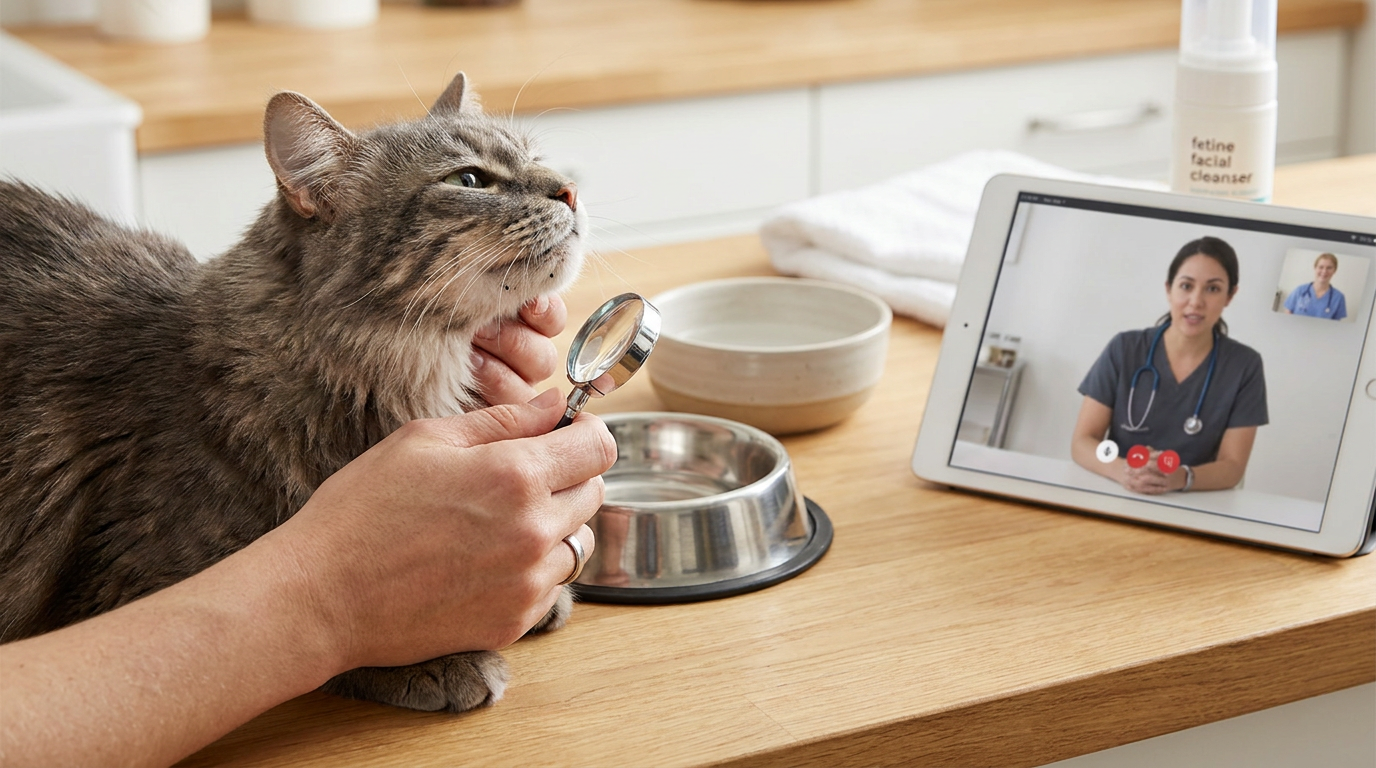
If you have noticed dark specks or small bumps on your feline friend, you might be dealing with a common skin condition. This guide to cat acne provides a helpful starting point for pet parents navigating these frustrating skin issues. Feline acne often manifests as blackheads, crusts, or swelling around the chin area, which can be caused by everything from plastic food bowls harboring bacteria to contact allergies . While it may look alarming, understanding the root cause is the first step toward relief.
Many owners worry that these spots indicate a serious infection, but often, simple hygiene changes can make a significant difference. This overview of cat acne is a critical resource because it helps you distinguish between mild irritation and conditions that require medical intervention. Because your pet cannot tell you if they are in pain, having a professional evaluate the symptoms remotely can save you a stressful trip to the clinic. By utilizing our virtual platform, you can get expert guidance on whether your cat needs a change in routine or a prescription treatment to help their skin heal comfortably.
What Is Feline Acne?
What Is Cat Acne?
Feline acne is a prevalent inflammatory skin condition that primarily targets the chin and lip areas of our pets. When hair follicles become clogged with excess keratin and oil, they form comedones, which are commonly known as blackheads. If you are researching cat acne, you likely want to understand why this happens. Essentially, the chin is a hotspot for bacteria because it is frequently exposed to food debris and moisture during grooming or eating, leading to localized inflammation .
While it might seem like a simple hygiene issue, feline acne can progress from mild black spots to painful, red, or swollen lesions if left unmanaged. Many pet parents find that switching from plastic bowls—which can harbor deep bacterial colonies—to stainless steel or ceramic alternatives significantly improves the condition. If you are worried about your pet, this overview of cat acne serves as a reminder that early intervention is key. By consulting a professional through our virtual platform, you can determine if your cat needs a simple routine change or if the skin requires a specific topical treatment to prevent further discomfort .
Identifying Common Signs of Cat Acne
What Cat Acne Looks Like
Recognizing the physical signs of feline skin issues is essential for early care. When you search for feline chin acne, you will often find that the condition presents in several distinct stages. The most common indicator is the appearance of small, dark, dirt-like specks on the chin, which are actually trapped oil and keratin in the hair follicles. If inflammation increases, these may develop into raised, firm red bumps that can feel tender to the touch. In more advanced cases, you might notice crusting, localized swelling, or patches of hair loss where the skin has become irritated. Cats often display discomfort by scratching or rubbing their faces against furniture, which can inadvertently introduce secondary bacteria and worsen the irritation. Understanding these visual cues is the first step in managing your pet's health. If you are ever uncertain about what you see, this guide to cat acne serves as a reminder that professional triage is just a click away. By documenting these symptoms, you can easily share them with a licensed vet through our virtual platform to determine the best path forward for your cat's comfort.
Common Triggers for Chin Bumps
Understanding why your feline companion develops skin issues is the first step in managing cat acne. The primary culprits are often found right in your kitchen. Plastic food and water bowls are porous, meaning they harbor deep-seated bacteria that transfer to your cat's chin every time they eat. Over time, this constant exposure clogs hair follicles, leading to the familiar blackheads and bumps.
Beyond material, poor cleaning habits exacerbate the issue. If bowls are not washed daily with hot, soapy water, biofilm builds up rapidly. Some cats also exhibit contact sensitivities to specific dyes or materials in their feeding stations. When you research feline acne, you will find that switching to stainless steel or glass dishes is a highly recommended, low-cost intervention. These materials are non-porous and significantly easier to sanitize, reducing the bacterial load on your pet's skin. If you remain unsure about the cause, our team provides advice on cat acne through virtual consultations, helping you triage these triggers without the stress of an in-person clinic visit.
Safe Home Care and Hygiene Tips
Maintaining a clean environment is the most effective way to manage your pet's skin health. When you research cat acne care, you will find that daily hygiene is paramount. Bacteria thrive in the microscopic crevices of plastic feeding dishes, so switching to shallow, wide stainless steel or ceramic bowls is a vital first step. These non-porous materials prevent bacterial buildup that often triggers flare-ups.
You should wash your cat's food and water bowls with hot, soapy water every single day to eliminate residue. If your cat has a messy eating style, gently wiping their chin with a warm, damp cloth after meals can prevent debris from clogging hair follicles. Avoid using harsh human acne treatments, as these can cause severe chemical burns or toxicity. If you are unsure about your home care routine, guidance on chin bumps and blackheads can be found through our professional triage service. Simply book a live video visit with a licensed veterinarian for $64.99 to see if your cat needs a prescription cleanser or if simple bowl sanitation will suffice. This proactive approach ensures your pet stays comfortable while saving you the stress of an unnecessary clinic visit.
What to Avoid on Your Cat
When you notice irritation on your pet, it is tempting to try home remedies, but you must be careful. Never attempt to pop, squeeze, or pick at any bumps on your cat's chin. Doing so can cause significant pain, introduce dangerous bacteria, and lead to deeper skin infections that are much harder to treat. Furthermore, avoid using any human acne products like salicylic acid, benzoyl peroxide, or tea tree oil. These substances are often toxic to felines and can cause severe chemical burns or systemic illness if ingested during grooming.
If you are researching chin bumps in cats, remember that professional guidance is the safest route. While you might want to resolve the issue quickly, using the wrong product can turn a minor case of feline acne into a serious medical emergency. Instead of experimenting with human medicine, utilize our platform for expert triage. When you search for cat acne treatments, you can connect with a licensed veterinarian to discuss safe, pet-specific alternatives. Seeking advice on cat acne through our service ensures your cat gets the right care without the stress of a clinic visit.
When to Seek Professional Veterinary Advice
While many cases of feline acne are mild, certain warning signs indicate that your pet needs professional medical attention. If you are researching your cat's chin bumps, look for symptoms that suggest a secondary infection or deeper issue. You should seek veterinary guidance if you notice persistent bleeding, thick discharge, or if the chin appears hot and painful to the touch. Additionally, if your cat stops eating or grooming due to discomfort, this is a clear sign that the condition requires urgent assessment.
Ignoring these symptoms can lead to chronic pain or severe abscesses that are difficult to treat at home. When you search for chin acne in cats, remember that early intervention prevents the need for invasive procedures. Our platform allows you to connect with a licensed veterinarian quickly to determine if your cat needs antibiotics or specialized topical care. By utilizing our virtual triage, you get expert insight into whether the situation is manageable or requires an in-person visit, ensuring your cat receives the right care while avoiding unnecessary stress. For just $64.99, you can get professional clarity on your cat's health today.
How Virtual Triage Helps Your Cat
Virtual triage revolutionizes how we manage chin bumps and blackheads by providing immediate, professional eyes on your pet's skin without the stress of a carrier or car ride. Studies suggest that over 60% of minor skin irritations can be effectively managed at home with the right guidance, saving pet parents significant time and money compared to emergency clinic visits. By using our secure video platform, you allow a licensed veterinarian to zoom in on the affected area, assess the severity of inflammation, and determine if the issue is a simple case of clogged hair follicles or a deeper infection requiring medication.
When you seek help with cat acne through our non-profit service, you gain access to tailored care plans that prioritize your cat's comfort. We help you distinguish between manageable debris and conditions like mange in cats or ringworm in cats that need specific treatments. This proactive approach ensures you avoid ineffective over-the-counter products while receiving expert, affordable advice. Connect with us today to get the clarity you need to help your feline friend feel their best again.
Ask a RexVet Expert for Help
When you are unsure if those chin spots are just dirt or a burgeoning infection, our RexVet service offers a simple, cost-effective solution. Searching for answers about feline acne can feel overwhelming, but our platform connects you directly with a licensed veterinarian who can visually assess your pet’s condition in real-time. This eliminates the guesswork and helps you avoid unnecessary, stressful trips to a physical clinic.
For a flat fee of just $64.99, you can book a live video visit, show a licensed vet your cat’s chin, and receive professional guidance tailored to your specific situation. Whether you need advice on switching to stainless steel bowls or require a prescription for a medicated wash, our team is here to help. Veterinary guidance on cat acne is now more accessible than ever, ensuring your feline friend gets the care they need from the comfort of your home. Click here to start your consultation today and get the peace of mind you deserve.
Frequently Asked Questions
What are the black spots on my cat’s chin?
Those tiny black specks are often the first sign of cat acne, which occurs when hair follicles on the chin become clogged with excess keratin and oil. These are essentially blackheads. While they might look like dirt or flea debris, they are a common skin issue. If you notice these spots, it is a good idea to monitor the area for any signs of swelling, redness, or crusting that could indicate a secondary infection.
Is cat acne serious?
In most cases, mild cat chin acne is not a medical emergency, but it should not be ignored. While simple blackheads may resolve with better hygiene, such as switching from plastic to stainless steel bowls, some cases can progress to painful, inflamed bumps or deep infections. If you see bleeding, discharge, or if your cat seems to be in pain, it is time to seek professional guidance to ensure the condition does not worsen.
Can I pop cat acne like a human pimple?
Never pop or squeeze your cat’s chin bumps. Doing so can introduce bacteria deeper into the skin, leading to a much more painful and serious infection. Human acne products are also toxic to cats and should never be applied to their skin. If you are concerned about the appearance of cat acne, the safest approach is to consult a professional who can provide a safe treatment plan.
Can I send a photo of cat acne to an online vet?
Yes, using a telehealth platform like RexVet is an excellent way to get expert input. You can book a live video visit and show your cat’s chin on camera or in a clear photo, which allows our licensed veterinarians to triage the condition remotely. This helps you determine if the issue is simple feline acne that can be managed at home or if it requires a prescription treatment or an in-person clinic visit, saving you the stress and cost of an unnecessary trip.
How can I prevent my cat from getting chin acne?
Prevention often starts with your cat’s environment. Follow these simple tips to keep your cat's chin healthy:
- Switch to stainless steel or ceramic bowls, as plastic can harbor bacteria.
- Wash food and water bowls daily with hot, soapy water.
- Keep your cat’s chin clean by gently wiping it with a warm, damp cloth after meals.
- Monitor for early signs of cat chin bumps to catch inflammation before it becomes a larger problem.
FAQs
What are the black spots on my cat’s chin?
Those tiny black specks are often the first sign of cat acne, which occurs when hair follicles on the chin become clogged with excess keratin and oil. These are essentially blackheads. While they might look like dirt or flea debris, they are a common skin issue. If you notice these spots, it is a good idea to monitor the area for any signs of swelling, redness, or crusting that could indicate a secondary infection.
Is cat acne serious?
In most cases, mild cat chin acne is not a medical emergency, but it should not be ignored. While simple blackheads may resolve with better hygiene, such as switching from plastic to stainless steel bowls, some cases can progress to painful, inflamed bumps or deep infections. If you see bleeding, discharge, or if your cat seems to be in pain, it is time to seek professional guidance to ensure the condition does not worsen.
Can I pop cat acne like a human pimple?
Never pop or squeeze your cat’s chin bumps. Doing so can introduce bacteria deeper into the skin, leading to a much more painful and serious infection. Human acne products are also toxic to cats and should never be applied to their skin. If you are concerned about the appearance of cat acne, the safest approach is to consult a professional who can provide a safe treatment plan.
Can I send a photo of cat acne to an online vet?
Yes, using a telehealth platform like RexVet is an excellent way to get expert input. You can book a live video visit and show your cat’s chin on camera or in a clear photo, which allows our licensed veterinarians to triage the condition remotely. This helps you determine if the issue is simple feline acne that can be managed at home or if it requires a prescription treatment or an in-person clinic visit, saving you the stress and cost of an unnecessary trip.
How can I prevent my cat from getting chin acne?
Prevention often starts with your cat’s environment. Follow these simple tips to keep your cat's chin healthy:
- Switch to stainless steel or ceramic bowls, as plastic can harbor bacteria.
- Wash food and water bowls daily with hot, soapy water.
- Keep your cat’s chin clean by gently wiping it with a warm, damp cloth after meals.
- Monitor for early signs of cat chin bumps to catch inflammation before it becomes a larger problem.
Medically Reviewed
Reviewed by Dr. Tiffany Delacruz, DVM — licensed veterinarian and CEO of RexVet. Last reviewed June 10, 2026.
Content is for informational purposes and does not replace professional veterinary advice.
Chief Executive Officer · Licensed Veterinarian
Dr. Delacruz is a licensed Doctor of Veterinary Medicine specializing in preventive care and veterinary telehealth. She reviews all health content on RexVet to ensure accuracy and clinical relevance.
Sources & References
- · American Veterinary Medical Association — Telehealth Guidelines
- · AVMA — Pet Care Resources
- · U.S. FDA — Animal & Veterinary
Need an Expert Opinion on This Topic?
Connect with a certified vet via video call in minutes
Talk to Vet Now